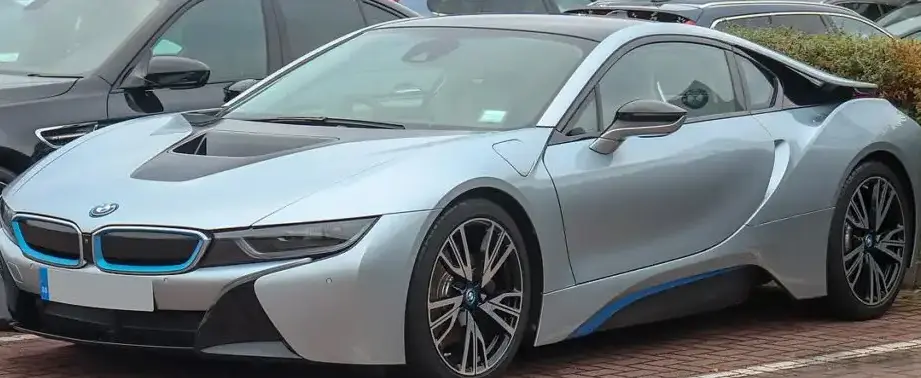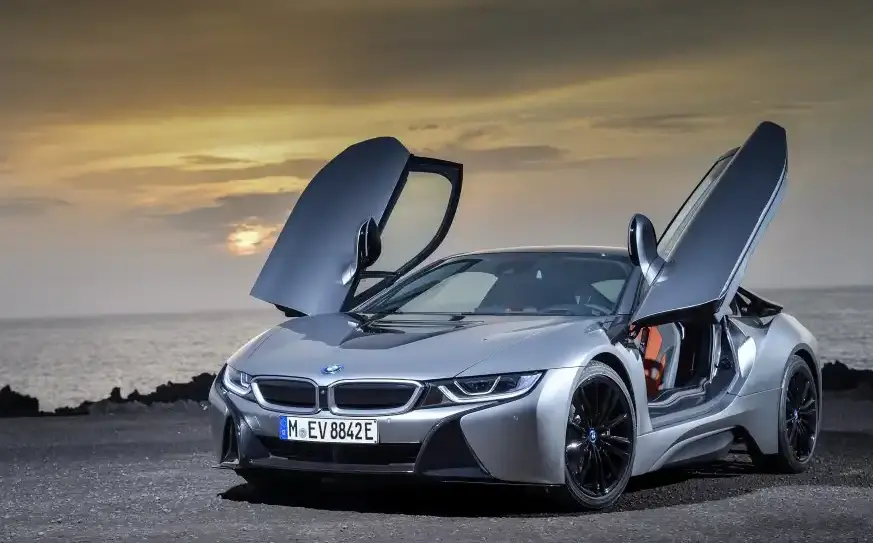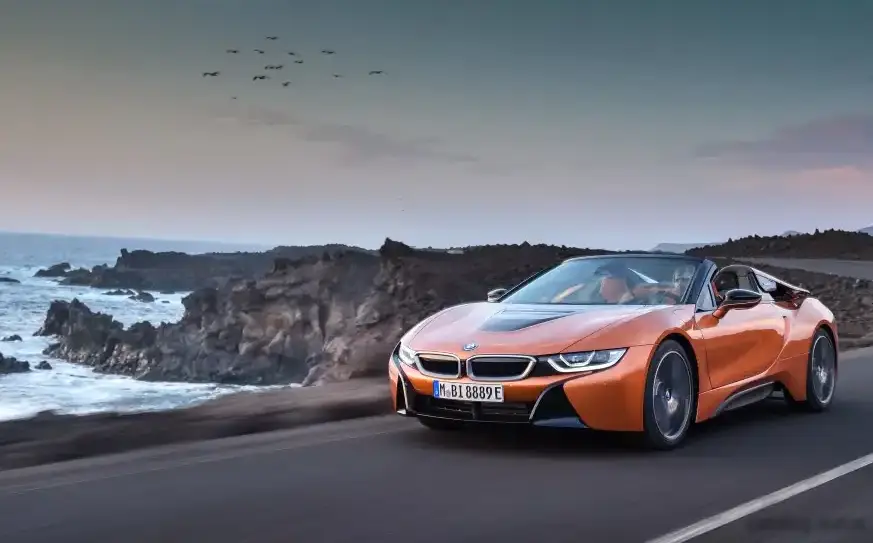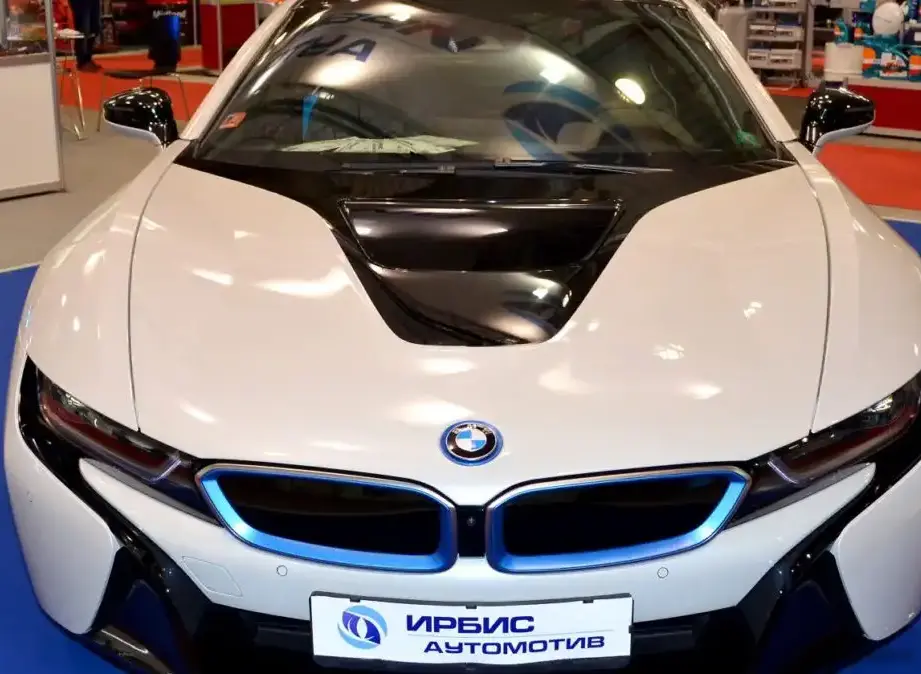
The BMW i8 Coupe (I12) 1.5/7.1 kWh (362 Hp) xDrive Automatic, produced from 2013 to November 2017, represents a pivotal moment in BMW’s engineering and design philosophy. Positioned as a halo vehicle, the i8 was BMW’s first mass-produced plug-in hybrid sports car, showcasing the brand’s commitment to sustainable performance. Built on the UKL2 platform (though often referred to as the I12 internally), it aimed to blend the excitement of a sports car with the efficiency of an electric vehicle. This specific configuration, combining a 1.5-liter turbocharged three-cylinder engine with an electric motor and all-wheel drive, was the primary offering throughout the i8’s production run, with minor variations in battery capacity over the years.
Technical Specifications
| Brand | BMW |
| Model | i8 |
| Generation | i8 Coupe (I12) |
| Type (Engine) | 1.5/7.1 kWh (362 Hp) xDrive Automatic |
| Start of production | 2013 |
| End of production | November, 2017 |
| Powertrain Architecture | PHEV (Plug-in Hybrid Electric Vehicle) |
| Body type | Coupe |
| Seats | 4 |
| Doors | 2 |
| Fuel consumption (economy) – combined (NEDC) | 2.1 l/100 km |
| Fuel consumption (economy) – combined (US mpg) | 112 US mpg |
| Fuel consumption (economy) – combined (UK mpg) | 134.5 UK mpg |
| Fuel consumption (economy) – combined (km/l) | 47.6 km/l |
| CO2 emissions (NEDC) | 49 g/km |
| Fuel Type | Petrol / electricity |
| Acceleration 0 – 100 km/h | 4.4 sec |
| Acceleration 0 – 62 mph | 4.4 sec |
| Acceleration 0 – 60 mph | 4.2 sec |
| Maximum speed | 250 km/h (155.34 mph) – Electronically limited |
| Emission standard | Euro 6 |
| Weight-to-power ratio | 4.1 kg/Hp, 243.8 Hp/tonne |
| Weight-to-torque ratio | 2.6 kg/Nm, 383.8 Nm/tonne |
| Gross battery capacity | 7.1 kWh |
| Net (usable) battery capacity | 5.2 kWh |
| Battery voltage | 355 V |
| Battery technology | Lithium-ion (Li-Ion) |
| Battery location | In the central tunnel |
| Recuperation output | 60 kW |
| All-electric range (NEDC) | 37 km (22.99 mi) |
| Average Energy consumption (NEDC) | 11.9 kWh/100 km (19.15 kWh/100 mi, 176 MPGe, 8.4 km/kWh, 5.2 mi/kWh) |
| Max speed (electric) | 120 km/h (74.56 mph) |
| Electric motor power | 131 Hp @ 4800 rpm |
| Electric motor Torque | 250 Nm @ 0 rpm (184.39 lb.-ft.) |
| Electric motor location | Front axle, Transverse |
| System power | 362 Hp |
| System torque | 570 Nm (420.41 lb.-ft.) |
| Power | 231 Hp @ 5800 rpm |
| Torque | 320 Nm @ 3700 rpm (236.02 lb.-ft. @ 3700 rpm) |
| Engine layout | Rear, Transverse |
| Engine Model/Code | B38K15T0 |
| Engine displacement | 1499 cm3 (91.47 cu. in.) |
| Number of cylinders | 3 |
| Engine configuration | Inline |
| Cylinder Bore | 82 mm (3.23 in.) |
| Piston Stroke | 94.5 mm (3.72 in.) |
| Compression ratio | 9.5:1 |
| Number of valves per cylinder | 4 |
| Fuel injection system | Direct injection |
| Engine aspiration | Twin-power turbo, Intercooler |
| Valvetrain | VALVETRONIC |
| Engine oil capacity | 4.25 l (4.49 US qt | 3.74 UK qt) |
| Kerb Weight | 1485 kg (3273.86 lbs.) |
| Max. weight | 1855 kg (4089.57 lbs.) |
| Max load | 370 kg (815.71 lbs.) |
| Trunk (boot) space – minimum | 154 l (5.44 cu. ft.) |
| Fuel tank capacity | 30 l (7.93 US gal | 6.6 UK gal) |
| Length | 4689 mm (184.61 in.) |
| Width | 1942 mm (76.46 in.) |
| Width including mirrors | 2218 mm (87.32 in.) |
| Height | 1298 mm (51.1 in.) |
| Wheelbase | 2800 mm (110.24 in.) |
| Front track | 1644 mm (64.72 in.) |
| Rear (Back) track | 1715 mm (67.52 in.) |
| Front overhang | 960 mm (37.8 in.) |
| Rear overhang | 929 mm (36.57 in.) |
| Ride height (ground clearance) | 117 mm (4.61 in.) |
| Drag coefficient (Cd) | 0.26 |
| Minimum turning circle (turning diameter) | 12.3 m (40.35 ft.) |
| Drivetrain Architecture | The Internal combustion engine (ICE) permanently drives the rear wheels of the vehicle, the electric motor drives the front wheels of the vehicle, capable of running in full electric mode, only by the Internal combustion engine (ICE) or in mixed mode. |
| Drive wheel | All wheel drive (4×4) |
| Number of gears and type of gearbox | 6 gears, automatic transmission |
| Front suspension | Double wishbone |
| Rear suspension | Independent multi-link suspension |
| Front brakes | Ventilated discs, 340×29.2 mm |
| Rear brakes | Ventilated discs, 340×19.2 mm |
| Assisting systems | ABS (Anti-lock braking system) |
| Steering type | Steering rack and pinion |
| Power steering | Electric Steering |
| Tires size | Front wheel tires: 195/50 R20Rear wheel tires: 215/45 R20 |
| Wheel rims size | Front wheel rims: 7J x 20Rear wheel rims: 7.5J x 20 |
Powertrain & Engine Architecture
The i8’s powertrain is a complex and innovative system. At its heart lies the BMW B38K15T0, a 1.5-liter turbocharged inline-three cylinder engine. This engine, part of BMW’s modular engine family, utilizes direct injection and VALVETRONIC variable valve timing to optimize efficiency and power delivery. Despite its small displacement, the engine produces 231 horsepower at 5800 rpm and 236 lb-ft of torque at 3700 rpm. This is coupled with a 131 hp electric motor driving the front wheels. The electric motor draws power from a 7.1 kWh lithium-ion battery pack located in the central tunnel of the vehicle, contributing to a low center of gravity and improved handling. The combined system output is 362 horsepower and 420 lb-ft of torque. The six-speed automatic transmission is specifically tuned for the hybrid system, prioritizing smooth shifts and efficiency. The xDrive all-wheel-drive system intelligently distributes power between the front and rear axles, maximizing traction and stability.
Driving Characteristics
The i8’s driving experience is unique. In electric-only mode, it offers a quiet and refined ride, capable of traveling up to 37 kilometers (23 miles) on a full charge. Switching to Sport mode engages both the engine and electric motor, delivering brisk acceleration – 0 to 60 mph in around 4.2 seconds. The automatic transmission is programmed for efficiency in Comfort mode, but shifts quickly and decisively in Sport mode. The low center of gravity, thanks to the battery placement, contributes to excellent handling and cornering stability. While not a traditional sports car in terms of raw power, the i8 offers a compelling blend of performance and efficiency, making it a surprisingly engaging driver’s car. The steering is precise, and the brakes provide strong stopping power.
Equipment & Trim Levels
The i8 came relatively well-equipped as standard. Interior features included leather upholstery, a premium sound system, navigation, and BMW’s iDrive infotainment system. Standard safety features included a full suite of airbags, ABS, and stability control. Optional extras included upgraded leather, a head-up display, and various cosmetic enhancements. The interior design was futuristic and minimalist, reflecting the car’s innovative technology. The i8’s doors, a combination of scissor and gullwing designs, were a distinctive feature, adding to its visual appeal and making ingress and egress a unique experience.
Chassis & Braking
The i8 utilizes a lightweight chassis constructed from carbon fiber reinforced plastic (CFRP) and aluminum. This construction significantly reduces weight, contributing to the car’s agility and efficiency. The front suspension features a double wishbone design, while the rear utilizes an independent multi-link setup. Brakes are ventilated discs all around, providing ample stopping power. The i8’s suspension is tuned for a balance between comfort and handling, offering a relatively compliant ride without sacrificing cornering stability. The standard tires were 195/50 R20 in the front and 215/45 R20 in the rear, mounted on 7J and 7.5J rims respectively.
Market Reception & Comparison
The BMW i8 received generally positive reviews from critics, who praised its innovative technology, striking design, and engaging driving experience. However, some criticized its limited rear seat space and relatively high price. Compared to other sports cars in its price range, the i8 offered a unique proposition – a plug-in hybrid powertrain that delivered both performance and efficiency. Against traditional gasoline-powered rivals, it offered comparable performance with significantly lower running costs. Compared to other plug-in hybrids, the i8 stood out for its sporty handling and distinctive styling. Fuel economy was exceptional for a sports car, achieving around 112 mpg in combined driving.
Legacy
The BMW i8 was a groundbreaking vehicle that demonstrated BMW’s commitment to sustainable mobility. While production ended in 2017, the i8 remains a sought-after vehicle in the used car market. Its innovative design and technology continue to inspire automotive enthusiasts. The powertrain, while complex, has proven to be relatively reliable, with few widespread issues reported. The i8 paved the way for BMW’s future electric and hybrid vehicles, and its influence can be seen in models like the i4 and iX. The i8’s legacy is one of innovation, design, and a bold vision for the future of automotive technology.