Technical Specifications
| Brand | BMW |
| Model | iX |
| Generation | iX (i20 LCI, facelift 2025) |
| Type (Engine) | M70 108.9 kWh (659 Hp) xDrive |
| Start of production | March, 2025 |
| Powertrain Architecture | BEV (Electric Vehicle) |
| Body type | SAV |
| Seats | 5 |
| Doors | 5 |
| Fuel Type | Electricity |
| Acceleration 0 – 100 km/h | 3.8 sec |
| Acceleration 0 – 62 mph | 3.8 sec |
| Acceleration 0 – 60 mph | 3.6 sec |
| Maximum speed | 250 km/h (155.34 mph) |
| Weight-to-power ratio | 3.9 kg/Hp, 255.4 Hp/tonne |
| Weight-to-torque ratio | 2.5 kg/Nm, 393.4 Nm/tonne |
| Net (usable) battery capacity | 108.9 kWh |
| Battery voltage | 369 V |
| Battery technology | Lithium-ion (Li-Ion) |
| Battery location | Below the floor |
| All-electric range (WLTP) | 521-600 km (323.73 – 372.82 mi) |
| Average Energy consumption (WLTP) | 23.5 kWh/100 km (37.82 kWh/100 mi, 89 MPGe, 4.3 km/kWh, 2.6 mi/kWh) |
| Electric motor 1 power | 258 Hp @ 8000 rpm |
| Electric motor 1 Torque | 365 Nm @ 0-5000 rpm (269.21 lb.-ft. @ 0-5000 rpm) |
| Electric motor 1 model/code | U220SF |
| Electric motor 1 location | Front axle, Transverse |
| Electric motor 1 type | Synchronous |
| Electric motor 2 power | 489 Hp @ 13000 rpm |
| Electric motor 2 Torque | 650 Nm @ 0-5000 rpm (479.42 lb.-ft. @ 0-5000 rpm) |
| Electric motor 2 model/code | O220SR |
| Electric motor 2 location | Rear axle, Transverse |
| Electric motor 2 type | Synchronous |
| System power | 659 Hp |
| System torque | 1015 Nm (748.63 lb.-ft.) |
| Kerb Weight | 2580 kg (5687.93 lbs.) |
| Max. weight | 3160 kg (6966.61 lbs.) |
| Max load | 580 kg (1278.68 lbs.) |
| Trunk (boot) space – minimum | 500 l (17.66 cu. ft.) |
| Trunk (boot) space – maximum | 1750 l (61.8 cu. ft.) |
| Max. roof load | 75 kg (165.35 lbs.) |
| Permitted trailer load with brakes (12%) | 2500 kg (5511.56 lbs.) |
| Permitted trailer load without brakes | 750 kg (1653.47 lbs.) |
| Permitted towbar download | 100 kg (220.46 lbs.) |
| Length | 4965 mm (195.47 in.) |
| Width | 1970 mm (77.56 in.) |
| Width including mirrors | 2230 mm (87.8 in.) |
| Height | 1695 mm (66.73 in.) |
| Wheelbase | 3000 mm (118.11 in.) |
| Front track | 1659 mm (65.31 in.) |
| Rear (Back) track | 1688 mm (66.46 in.) |
| Front overhang | 910 mm (35.83 in.) |
| Rear overhang | 1055 mm (41.54 in.) |
| Ride height (ground clearance) | 202 mm (7.95 in.) |
| Drag coefficient (Cd) | 0.26 |
| Minimum turning circle (turning diameter) | 12.8 m (41.99 ft.) |
| Approach angle | 18.8° |
| Departure angle | 20.7° |
| Ramp-over (brakeover) angle | 17.5° |
| Wading depth | 400 mm (15.75 in.) |
| Drivetrain Architecture | One electric motor drives the front wheels, one electric motor drives the rear wheels. |
| Drive wheel | All wheel drive (4×4) |
| Number of gears and type of gearbox | 1 gears, automatic transmission |
| Front suspension | Double wishbone, Air suspension |
| Rear suspension | Independent multi-link suspension, Air suspension |
| Front brakes | Ventilated discs, 348×36 mm |
| Rear brakes | Ventilated discs, 345×24 mm |
| Assisting systems | ABS (Anti-lock braking system), 4-wheel steering (4WS, active rear steering) |
| Steering type | Steering rack and pinion |
| Power steering | Electric Steering |
| Tires size | 275/40 R22 |
| Wheel rims size | 9.5J x 22 |
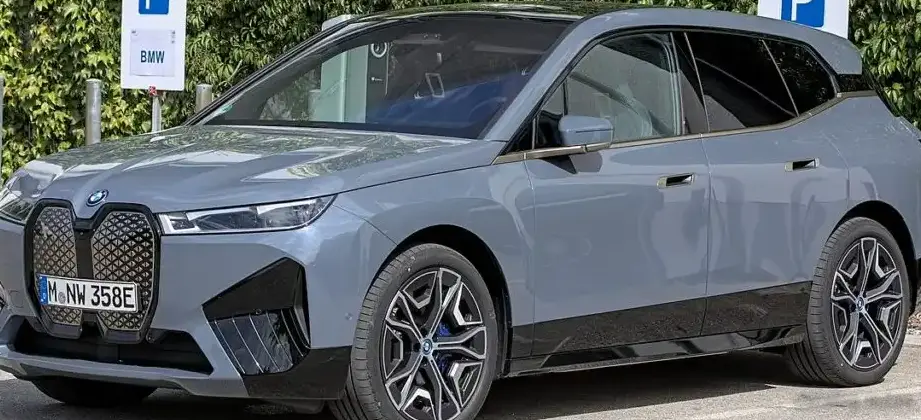
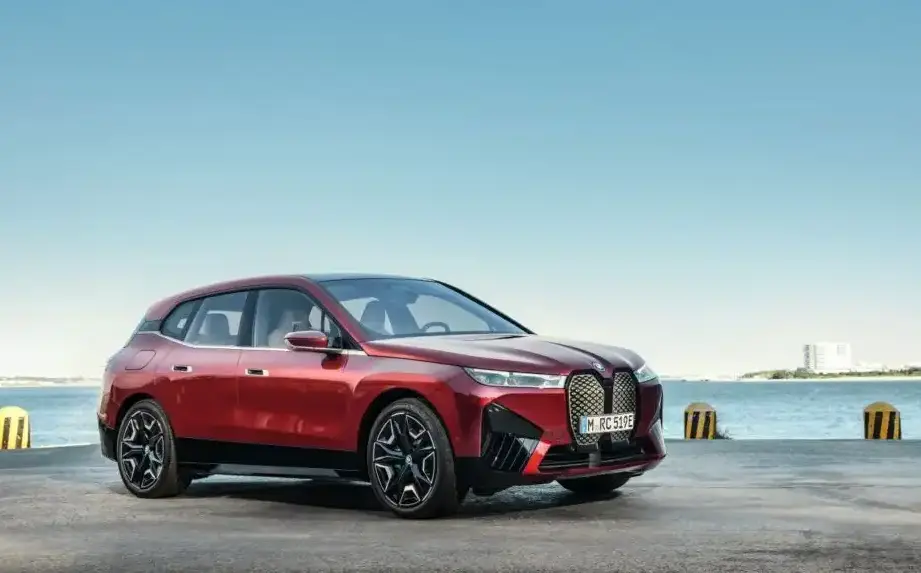
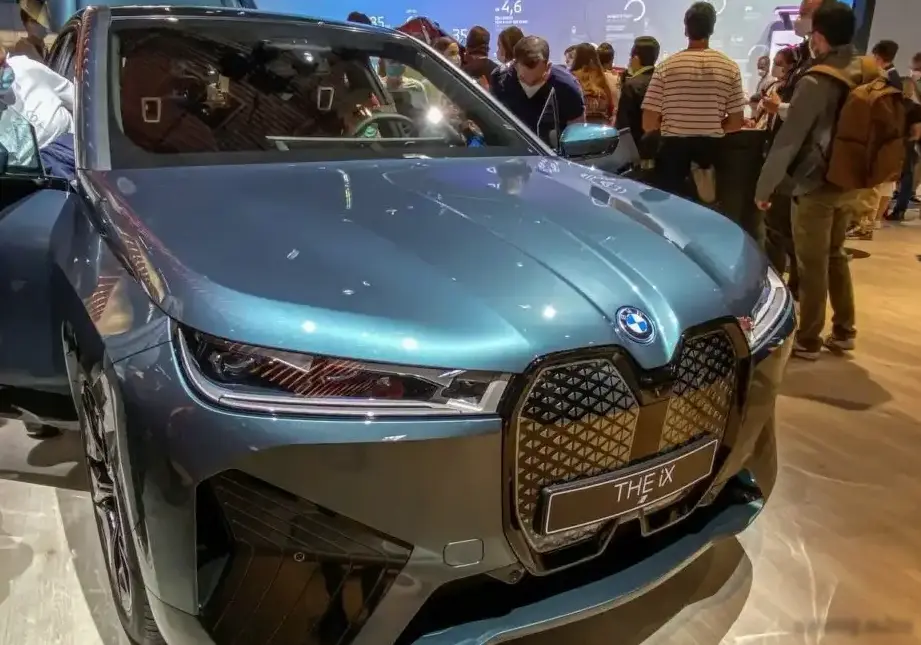
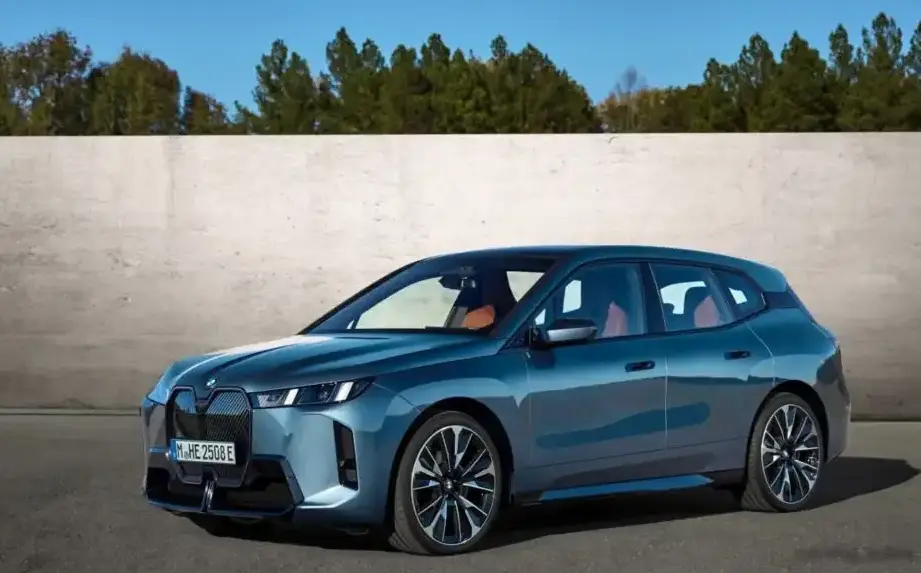
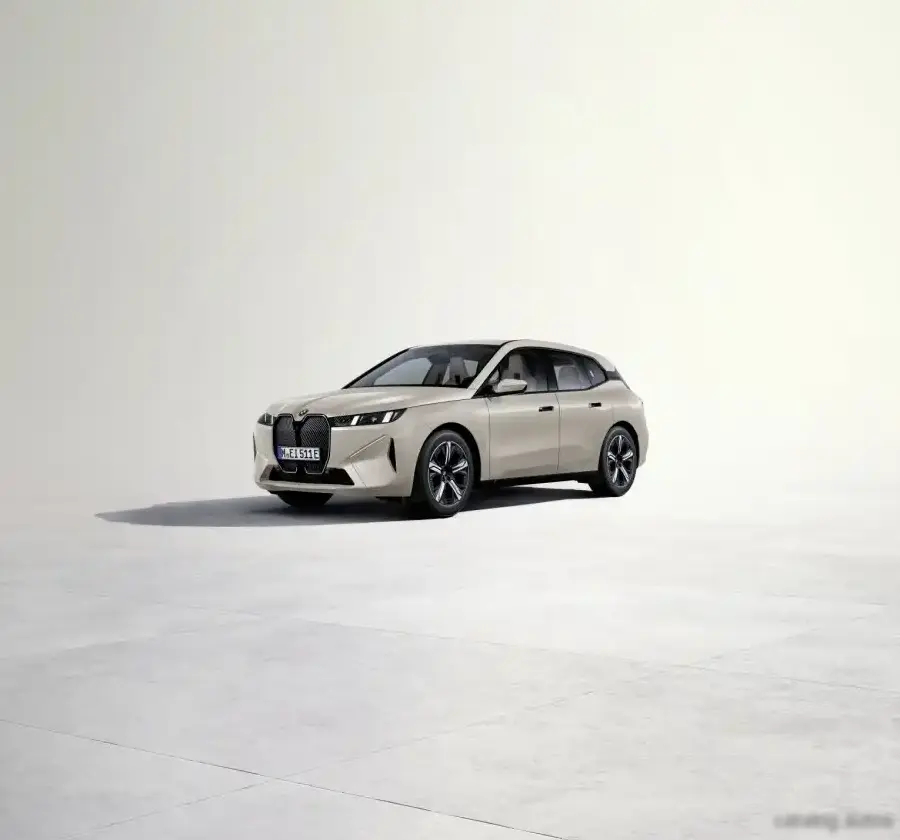
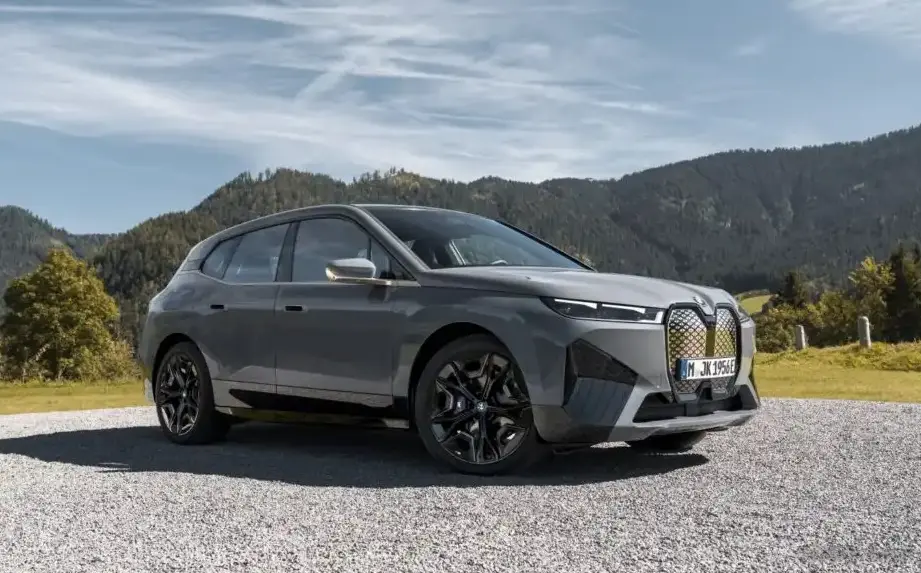
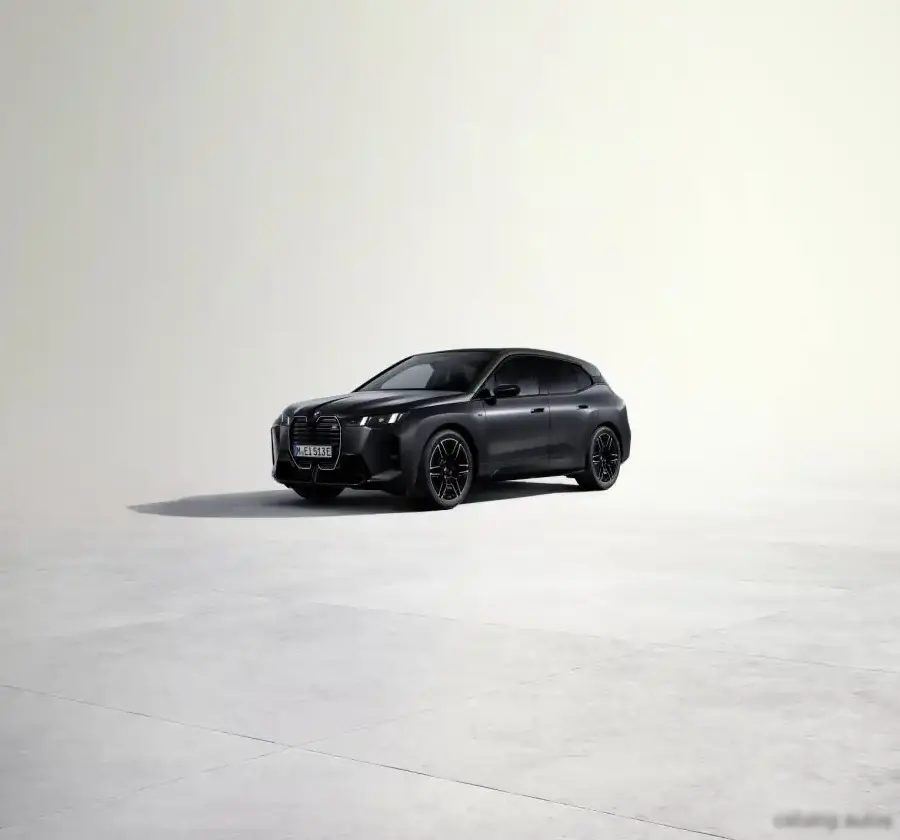
The BMW iX M70, launched in March 2025, is the high-performance variant of BMW’s flagship electric SUV. It builds upon the innovative iX platform (internally designated i20) and represents a significant step up in power and driving dynamics compared to the xDrive50 and xDrive40 models. The M70 is positioned as a direct competitor to other high-performance electric SUVs, offering a blend of luxury, technology, and exhilarating acceleration. The “LCI” designation indicates a facelift, bringing updated styling and potentially minor technological enhancements to the iX range.
Powertrain & Engine Architecture
The iX M70 utilizes a dual-motor, all-wheel-drive (xDrive) powertrain. The front axle houses the U220SF synchronous electric motor, producing 258 horsepower, while the rear axle features the more potent O220SR synchronous motor, generating 489 horsepower. Combined, these motors deliver a system output of 659 horsepower and a massive 1015 Nm (748.63 lb-ft) of torque. The powertrain operates on a 369V architecture and is powered by a 108.9 kWh lithium-ion battery pack located within the vehicle floor. Both motors employ advanced cooling systems to maintain optimal operating temperatures during demanding driving conditions. The single-speed automatic transmission is inherent to electric vehicle drivetrains, providing seamless and instant torque delivery. The M70 benefits from optimized power delivery software and control systems developed by BMW M, ensuring responsive and engaging performance.
Driving Characteristics
The iX M70 delivers truly impressive acceleration, achieving 0-60 mph in just 3.6 seconds and 0-100 km/h in 3.8 seconds. The dual-motor setup provides instant torque and exceptional traction, allowing for confident acceleration in various conditions. While the single-speed transmission doesn’t offer traditional gear changes, the electric motors’ broad torque curve provides a linear and powerful driving experience. Compared to the xDrive50, the M70 offers a significantly more aggressive throttle response and a noticeably quicker pace. The air suspension, standard on the M70, provides a comfortable ride while also minimizing body roll during cornering. The active rear steering system further enhances agility and stability, particularly at higher speeds.
Equipment & Trim Levels
The iX M70 comes standard with a comprehensive suite of features, reflecting its position as the flagship model. Interior appointments include premium leather upholstery, multi-contour seats with massage function, and a panoramic glass sunroof. The iX’s signature curved display, integrating a 14.9-inch information display and a 12.3-inch control display, is standard. Other standard features include BMW’s latest iDrive 8.5 operating system, a premium Bowers & Wilkins Diamond Surround Sound System, and a full suite of advanced driver-assistance systems (ADAS), including adaptive cruise control, lane keeping assist, and automatic emergency braking. Optional extras include various interior trim options, exterior paint colors, and individual customization options through BMW’s Individual program.
Chassis & Braking
The iX M70 utilizes a double-wishbone front suspension and an independent multi-link rear suspension, both incorporating air suspension with adaptive damping. This setup provides a comfortable ride while maintaining precise handling characteristics. The M70 features larger ventilated disc brakes (348x36mm front, 345x24mm rear) compared to lower trims, providing enhanced stopping power. The standard inclusion of 4-wheel steering (4WS) improves low-speed maneuverability and high-speed stability. The vehicle’s low center of gravity, thanks to the battery pack’s placement, contributes to its confident handling.
Market Reception & Comparison
The iX M70 has been generally well-received by automotive critics, praised for its blistering acceleration, luxurious interior, and advanced technology. Comparisons to rivals like the Tesla Model X Plaid often highlight the iX M70’s superior build quality and more refined driving experience. While the Tesla offers slightly quicker acceleration in some tests, the BMW provides a more balanced and engaging driving experience. Fuel economy, expressed as energy consumption, is rated at 23.5 kWh/100 km (89 MPGe), which is competitive within the high-performance electric SUV segment. Reliability data is still emerging, but BMW’s reputation for engineering quality suggests a high level of long-term dependability.
Legacy
The iX M70 represents a significant milestone in BMW’s electrification strategy, demonstrating the brand’s ability to deliver high-performance electric vehicles without compromising luxury or refinement. The powertrain technology and battery management systems employed in the M70 are likely to influence future BMW electric models. On the used car market, the iX M70 is expected to hold its value well due to its performance credentials and desirable features. The long-term reliability of the electric powertrain is anticipated to be strong, given the inherent simplicity and reduced mechanical complexity compared to internal combustion engines.