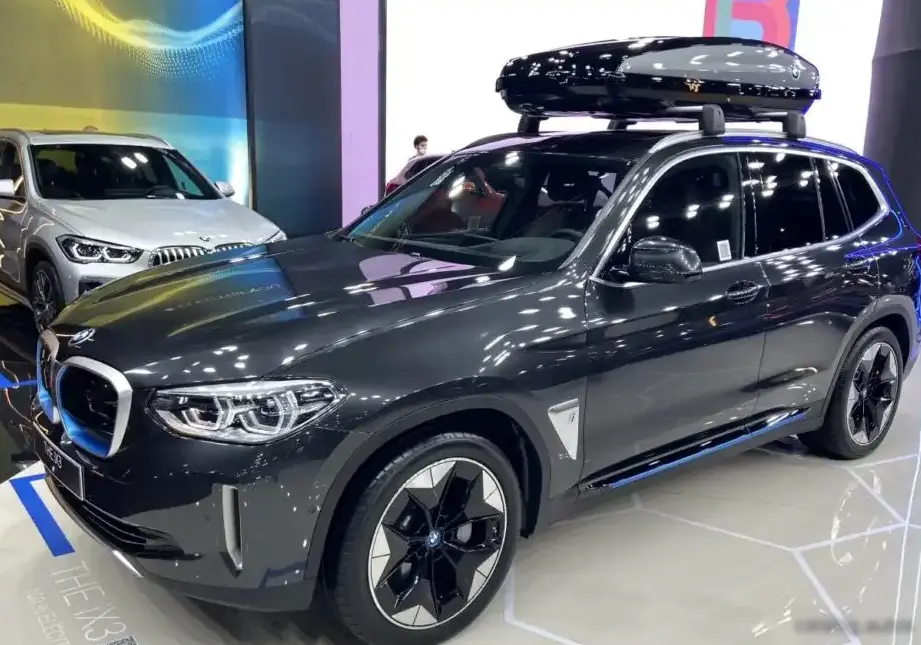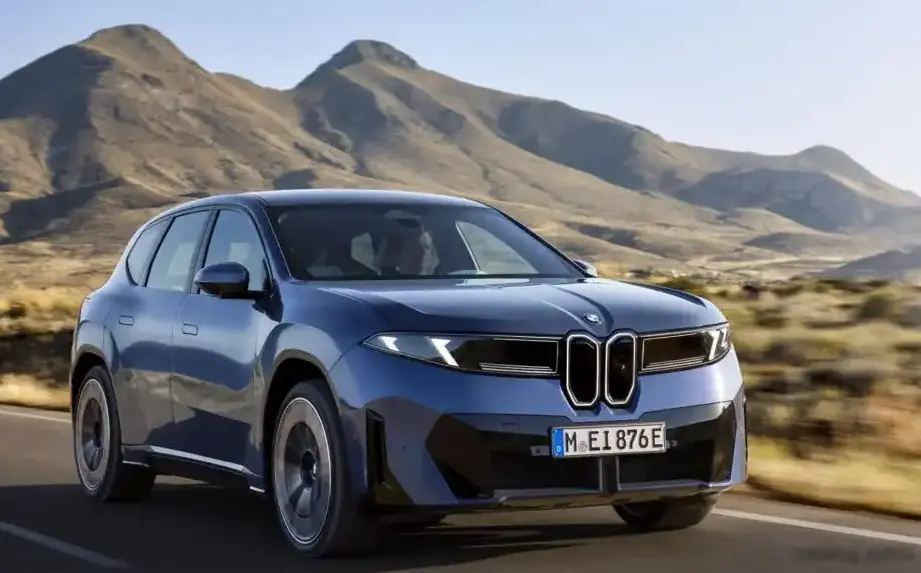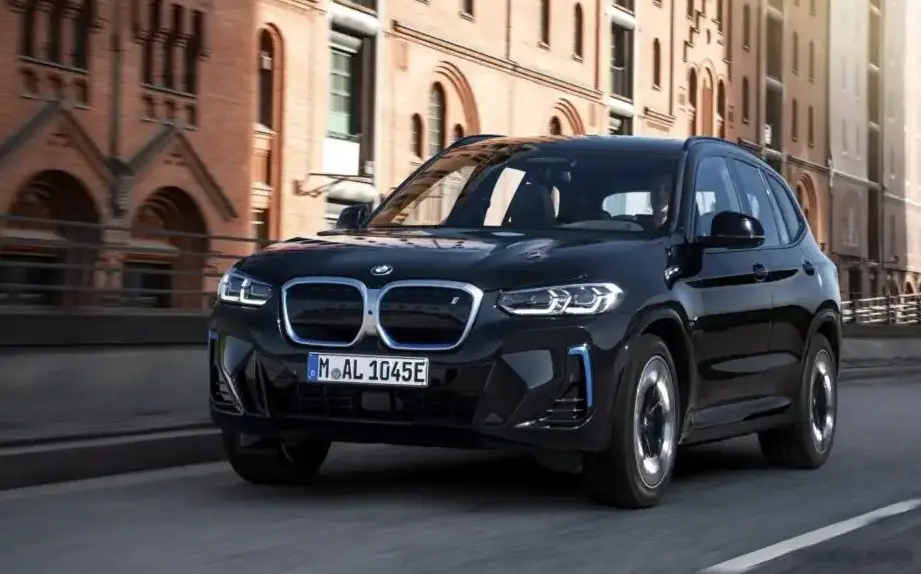
The BMW iX3, specifically the 80 kWh (286 Hp) variant produced from September 2021 to June 2025, represents BMW’s initial foray into a dedicated all-electric SUV. Built on the G08 platform – a modified version of the existing X3 architecture – the iX3 aimed to deliver a premium electric driving experience without compromising the practicality and driving dynamics expected of a BMW. This model served as a crucial stepping stone for BMW’s broader electrification strategy, showcasing their commitment to battery-electric vehicles (BEVs) and paving the way for future i-branded models. The facelift in 2021 brought minor cosmetic and technological updates, solidifying the iX3’s position in the growing luxury electric SUV segment.
Technical Specifications
| Brand | BMW |
| Model | iX3 |
| Generation | iX3 (G08, facelift 2021) |
| Type (Engine) | 80 kWh (286 Hp) |
| Start of production | September, 2021 |
| End of production | June, 2025 |
| Powertrain Architecture | BEV (Electric Vehicle) |
| Body type | SUV |
| Seats | 5 |
| Doors | 5 |
| Fuel Type | Electricity |
| Acceleration 0 – 100 km/h | 6.8 sec |
| Acceleration 0 – 62 mph | 6.8 sec |
| Acceleration 0 – 60 mph | 6.5 sec |
| Maximum speed | 180 km/h (111.85 mph) |
| Weight-to-power ratio | 7.6 kg/Hp, 130.9 Hp/tonne |
| Weight-to-torque ratio | 5.5 kg/Nm, 183.1 Nm/tonne |
| Gross battery capacity | 80 kWh |
| Net (usable) battery capacity | 74 kWh |
| Battery voltage | 400 V |
| Battery technology | Lithium-ion (Li-Ion) |
| Battery location | Below the floor |
| All-electric range (WLTP) | 453-461 km (281.48 – 286.45 mi) |
| Average Energy consumption (WLTP) | 18.5-18.9 kWh/100 km (29.77 – 30.42 kWh/100 mi) |
| MPGe | 113 – 111 |
| km/kWh | 5.4 – 5.3 |
| mi/kWh | 3.4 – 3.3 |
| Electric motor power | 286 Hp @ 6000 rpm |
| Electric motor Torque | 400 Nm (295.02 lb.-ft.) |
| Electric motor model/code | HA0001N0 |
| Maximum revolutions of the electric motor | 17000 rpm |
| Electric motor location | Rear axle, Transverse |
| Electric motor type | Synchronous |
| System power | 286 Hp @ 6000 rpm |
| System torque | 400 Nm (295.02 lb.-ft.) |
| Kerb Weight | 2185 kg (4817.1 lbs.) |
| Max. weight | 2725 kg (6007.6 lbs.) |
| Max load | 540 kg (1190.5 lbs.) |
| Trunk (boot) space – minimum | 510 l (18.01 cu. ft.) |
| Trunk (boot) space – maximum | 1560 l (55.09 cu. ft.) |
| Max. roof load | 100 kg (220.46 lbs.) |
| Permitted trailer load with brakes (8%) | 750 kg (1653.47 lbs.) |
| Permitted trailer load with brakes (12%) | 750 kg (1653.47 lbs.) |
| Permitted trailer load without brakes | 750 kg (1653.47 lbs.) |
| Permitted towbar download | 75 kg (165.35 lbs.) |
| Length | 4734 mm (186.38 in.) |
| Width | 1891 mm (74.45 in.) |
| Width including mirrors | 2138 mm (84.17 in.) |
| Height | 1668 mm (65.67 in.) |
| Wheelbase | 2864 mm (112.76 in.) |
| Front track | 1600 mm (62.99 in.) |
| Rear (Back) track | 1616 mm (63.62 in.) |
| Front overhang | 860 mm (33.86 in.) |
| Rear overhang | 1010 mm (39.76 in.) |
| Ride height (ground clearance) | 179 mm (7.05 in.) |
| Drag coefficient (Cd) | 0.29 |
| Minimum turning circle (turning diameter) | 12.1 m (39.7 ft.) |
| Approach angle | 23.1° |
| Departure angle | 20.9° |
| Ramp-over (brakeover) angle | 14.8° |
| Wading depth | 500 mm (19.69 in.) |
| Drivetrain Architecture | One electric motor drives the rear wheels. |
| Drive wheel | Rear wheel drive |
| Number of gears and type of gearbox | 1 gears, automatic transmission |
| Front suspension | Double wishbone |
| Rear suspension | Independent multi-link suspension |
| Front brakes | Ventilated discs |
| Rear brakes | Ventilated discs |
| Assisting systems | ABS (Anti-lock braking system) |
| Steering type | Steering rack and pinion |
| Power steering | Electric Steering |
| Tires size | 245/50 R19 105 W XL |
| Wheel rims size | 8J x 19 |
Powertrain & Engine Architecture
The iX3 utilizes a single rear-mounted electric motor, producing 286 horsepower and 400 Nm (295 lb-ft) of torque. This motor, designated HA0001N0, is a synchronous motor known for its efficiency and smooth power delivery. The 80 kWh battery pack, positioned low in the vehicle floor, provides a usable capacity of 74 kWh. The battery employs lithium-ion technology and operates at a nominal voltage of 400V. BMW opted for a liquid cooling system to maintain optimal battery temperature, crucial for both performance and longevity. The iX3 doesn’t have a traditional multi-gear transmission; instead, it employs a single-speed automatic gearbox, typical for electric vehicles, allowing for instant torque delivery. The power electronics and inverter are integrated into the drive unit, contributing to a compact and efficient powertrain.
Driving Characteristics
The rear-wheel-drive configuration of the iX3 contributes to a balanced driving experience. Acceleration from 0 to 60 mph takes approximately 6.5 seconds, making it competitive within the luxury electric SUV segment. The single-speed transmission provides seamless acceleration, and the instant torque of the electric motor delivers brisk responsiveness. Compared to potential higher-performance variants (which were never officially offered), the 80 kWh iX3 prioritizes efficiency and a more relaxed driving style. While not as overtly sporty as some rivals, the iX3 offers a comfortable and refined ride, characteristic of BMW’s X3 platform. The regenerative braking system allows for adjustable levels of deceleration, enhancing efficiency and providing a one-pedal driving experience.
Equipment & Trim Levels
The iX3 80 kWh typically came well-equipped as standard. Interior features included BMW’s iDrive infotainment system with a 12.3-inch touchscreen, a digital instrument cluster, and premium upholstery options. Standard safety features encompassed automatic emergency braking, lane departure warning, and parking assist. Optional extras included a panoramic sunroof, premium sound system, adaptive cruise control, and various driver assistance packages. The trim levels varied slightly by market, but generally offered options for enhanced interior finishes, exterior styling elements, and additional comfort features. The focus was on providing a luxurious and technologically advanced cabin experience.
Chassis & Braking
The iX3’s chassis is based on the X3 platform, but with modifications to accommodate the battery pack and electric powertrain. It features a double-wishbone front suspension and an independent multi-link rear suspension, tuned for a balance of comfort and handling. Ventilated disc brakes are used on all four wheels, providing ample stopping power. The iX3 incorporates ABS (Anti-lock Braking System) and electronic stability control as standard safety features. Due to the lower center of gravity afforded by the battery pack’s placement, the iX3 exhibits reduced body roll compared to its internal combustion engine counterpart.
Market Reception & Comparison
The BMW iX3 was generally well-received by automotive critics, praised for its refined driving experience, comfortable ride, and efficient powertrain. However, some reviewers noted that its range was slightly less competitive than some rivals, and its rear-wheel-drive configuration might not be ideal for all weather conditions. Compared to other trims within the broader X3 lineup, the iX3 offered a significantly different driving experience, prioritizing electric power and efficiency over traditional gasoline or diesel engines. Its price point positioned it competitively within the luxury electric SUV segment, appealing to buyers seeking a premium electric vehicle with the BMW badge.
Legacy
The BMW iX3 served as an important stepping stone in BMW’s electrification journey. While production ended in June 2025, the iX3 demonstrated BMW’s ability to adapt its existing platforms to accommodate electric powertrains. The powertrain itself has proven to be relatively reliable, with few widespread issues reported. On the used car market, the iX3 remains a desirable option for buyers seeking a well-equipped and refined electric SUV. Its combination of BMW build quality, comfortable ride, and reasonable range continues to make it a compelling choice in the growing electric vehicle landscape.