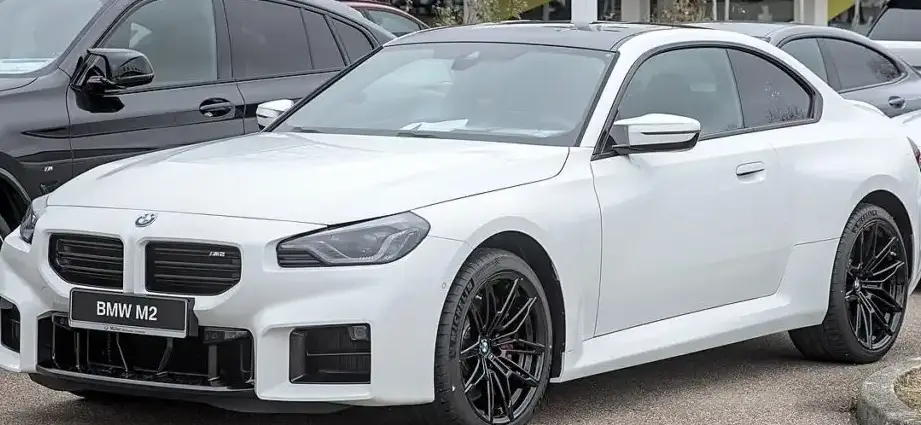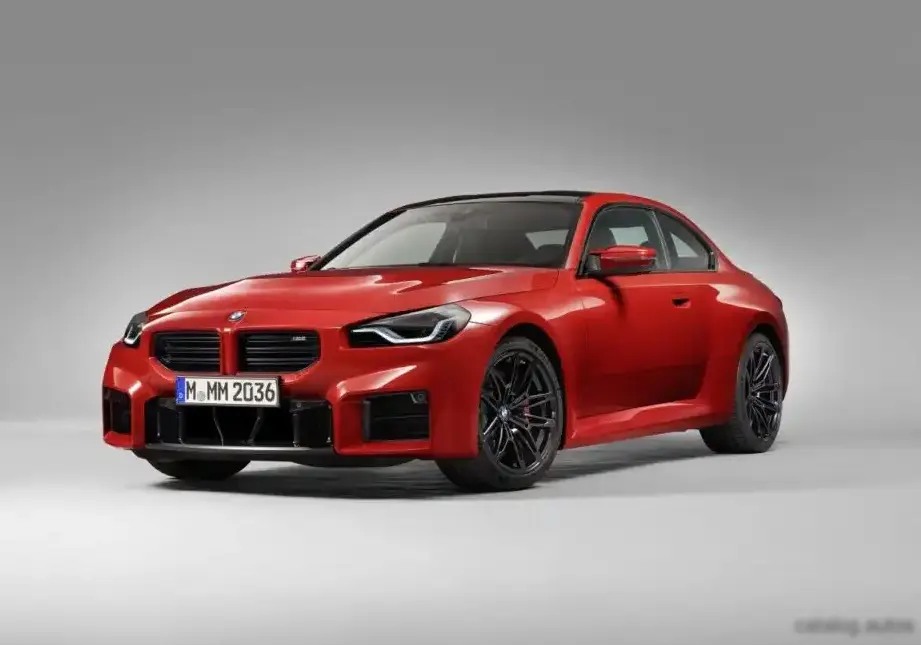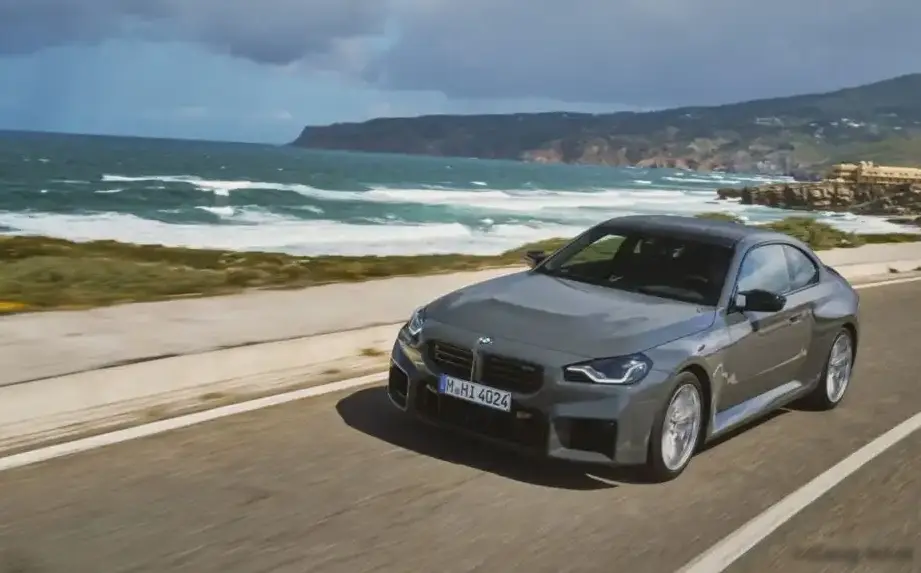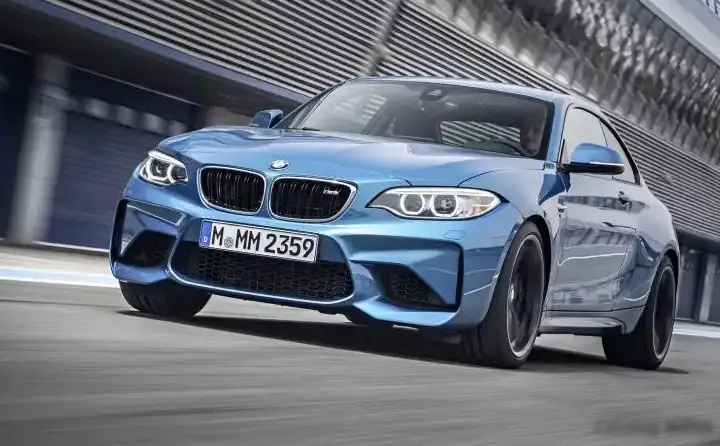
The BMW M2 Competition, produced from September 2018 to July 2021, represented a significant evolution of the F87 M2 coupe. Positioned as the higher-performance variant within the M2 lineup, it addressed criticisms leveled at the original M2’s engine, offering a substantial power increase and enhanced track capability. Built on the BMW 2 Series platform, the M2 Competition aimed to deliver a pure driving experience in a compact, rear-wheel-drive package. It served as a direct competitor to models like the Porsche Cayman GTS and the Audi TT RS, appealing to enthusiasts seeking a focused and engaging sports car.
Technical Specifications
| Brand | BMW |
| Model | M2 |
| Generation | M2 coupe (F87) |
| Type (Engine) | Competition 3.0 (410 Hp) |
| Start of production | September, 2018 |
| End of production | July, 2021 |
| Powertrain Architecture | Internal Combustion engine |
| Body type | Coupe |
| Seats | 4 |
| Doors | 2 |
| Fuel consumption (combined) | 9.9-10.0 l/100 km (23.8 – 23.5 US mpg, 28.5 – 28.2 UK mpg, 10.1 – 10 km/l) |
| CO2 emissions | 225-228 g/km |
| Fuel Type | Petrol (Gasoline) |
| Acceleration 0 – 100 km/h | 4.4 sec |
| Acceleration 0 – 62 mph | 4.4 sec |
| Acceleration 0 – 60 mph | 4.2 sec |
| Maximum speed | 250 km/h (155.34 mph) |
| Emission standard | Euro 6 |
| Weight-to-power ratio | 3.8 kg/Hp, 264.5 Hp/tonne |
| Weight-to-torque ratio | 2.8 kg/Nm, 354.8 Nm/tonne |
| Power | 410 Hp @ 5250-7000 rpm |
| Power per litre | 137.6 Hp/l |
| Torque | 550 Nm @ 2350-5200 rpm (405.66 lb.-ft. @ 2350-5200 rpm) |
| Engine layout | Front, Longitudinal |
| Engine Model/Code | S55B30A |
| Engine displacement | 2979 cm3 (181.79 cu. in.) |
| Number of cylinders | 6 |
| Engine configuration | Inline |
| Cylinder Bore | 84 mm (3.31 in.) |
| Piston Stroke | 89.6 mm (3.53 in.) |
| Compression ratio | 10.2:1 |
| Number of valves per cylinder | 4 |
| Fuel injection system | Direct injection |
| Engine aspiration | Twin-power turbo, Intercooler |
| Engine oil capacity | 6.5 l (6.87 US qt | 5.72 UK qt) |
| Coolant | 14.5 l (15.32 US qt | 12.76 UK qt) |
| Kerb Weight | 1550 kg (3417.17 lbs.) |
| Max. weight | 2010 kg (4431.29 lbs.) |
| Max load | 460 kg (1014.13 lbs.) |
| Trunk (boot) space – minimum | 390 l (13.77 cu. ft.) |
| Fuel tank capacity | 52 l (13.74 US gal | 11.44 UK gal) |
| Max. roof load | 75 kg (165.35 lbs.) |
| Length | 4461 mm (175.63 in.) |
| Width | 1854 mm (72.99 in.) |
| Height | 1410 mm (55.51 in.) |
| Wheelbase | 2693 mm (106.02 in.) |
| Front track | 1579 mm (62.17 in.) |
| Rear (Back) track | 1601 mm (63.03 in.) |
| Ride height (ground clearance) | 118 mm (4.65 in.) |
| Drag coefficient (Cd) | 0.36 |
| Minimum turning circle (turning diameter) | 11.7 m (38.39 ft.) |
| Drivetrain Architecture | Rear wheel drive |
| Number of gears and type of gearbox | 6 gears, manual transmission |
| Front suspension | Double wishbone |
| Rear suspension | Independent multi-link suspension |
| Front brakes | Ventilated discs |
| Rear brakes | Ventilated discs |
| Assisting systems | ABS (Anti-lock braking system) |
| Steering type | Steering rack and pinion |
| Power steering | Electric Steering |
| Tires size | 245/35 ZR19 93Y; 265/35 ZR19 98Y |
| Wheel rims size | 9.0J x 19; 10.0J x 19 |
Powertrain & Engine Architecture
The heart of the M2 Competition is the S55B30A engine, a 3.0-liter inline-six cylinder engine derived from the BMW M3 and M4. This represented a significant upgrade over the N55 engine found in the original M2. The S55 features a closed-deck engine block, forged crankshaft, and reinforced connecting rods, enhancing its durability and ability to withstand higher boost pressures. It utilizes direct fuel injection and a twin-scroll, single turbocharger setup, delivering 410 horsepower at 5,250-7,000 rpm and 405.66 lb-ft of torque between 2,350 and 5,200 rpm. The engine’s cooling system was also upgraded to handle the increased thermal load. The M2 Competition exclusively came with a six-speed manual transmission, a deliberate choice by BMW to maintain a purist driving experience.
Driving Characteristics
The M2 Competition’s driving experience is characterized by its responsiveness and balance. The increased power and torque, combined with the precise manual transmission, provide exhilarating acceleration. The rear-wheel-drive configuration and limited-slip differential contribute to excellent traction and cornering ability. Compared to the original M2, the Competition feels noticeably more potent and refined. While the original M2 offered a playful, tail-happy character, the Competition is more composed and predictable, making it a more capable track car. The gear ratios are well-matched to the engine’s powerband, providing strong acceleration in all gears. The steering is precise and communicative, offering ample feedback to the driver.
Equipment & Trim Levels
The M2 Competition came relatively well-equipped as standard. Key features included sport seats, a leather-wrapped steering wheel, automatic climate control, and a BMW iDrive infotainment system with a 8.8-inch touchscreen display. Optional extras included a sunroof, upgraded audio system (Harman Kardon), carbon fiber interior trim, and various driver assistance systems like adaptive cruise control and lane departure warning. Interior upholstery options typically included a combination of leather and Alcantara. Exterior color choices were extensive, with both metallic and non-metallic paint options available.
Chassis & Braking
The M2 Competition features a robust chassis designed to handle the increased power. It utilizes a double-wishbone front suspension and an independent multi-link rear suspension. The suspension components were specifically tuned to provide a balance between comfort and performance. Braking duties are handled by ventilated discs at all four corners, providing ample stopping power. The M2 Competition also features BMW’s Dynamic Stability Control (DSC) system, which can be adjusted to allow for varying degrees of intervention. The standard tire size is 245/35 ZR19 at the front and 265/35 ZR19 at the rear, providing excellent grip.
Market Reception & Comparison
The M2 Competition was widely praised by automotive critics for its performance, handling, and overall driving experience. It was lauded as one of the most engaging and rewarding sports cars on the market. Compared to the original M2, the Competition was seen as a significant improvement, addressing concerns about the engine’s power output. Fuel economy, while not a primary concern for buyers in this segment, averaged around 23.8-23.5 US mpg in combined driving. Reliability has generally been good, although some owners have reported minor issues with the cooling system. Compared to competitors like the Porsche Cayman GTS, the M2 Competition offered a more raw and visceral driving experience at a slightly lower price point.
Legacy
The M2 Competition has established itself as a highly desirable and collectible sports car. The S55 engine is known for its robustness and tunability, making it a popular choice for modifications. On the used car market, well-maintained examples command a premium price. The M2 Competition represents a high point in BMW’s recent history, offering a compelling blend of performance, handling, and driver engagement. It’s considered by many enthusiasts to be a modern classic, and its legacy will likely endure for years to come. The powertrain, while requiring regular maintenance, has proven to be relatively reliable, contributing to its continued appeal in the used car market.