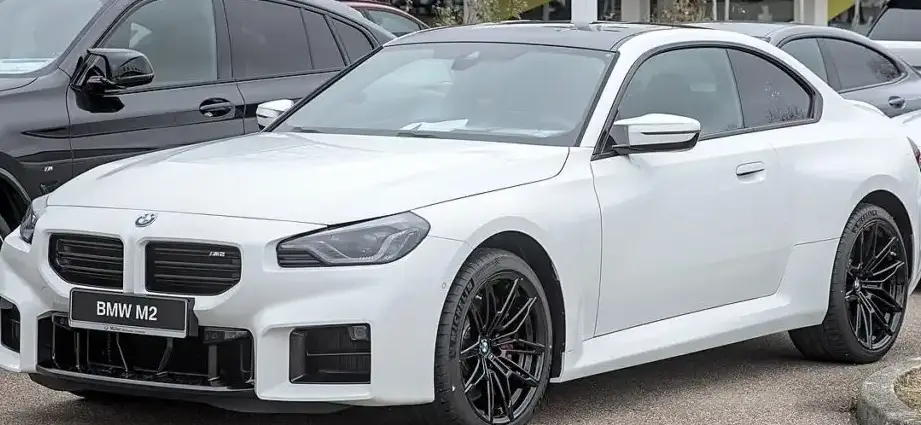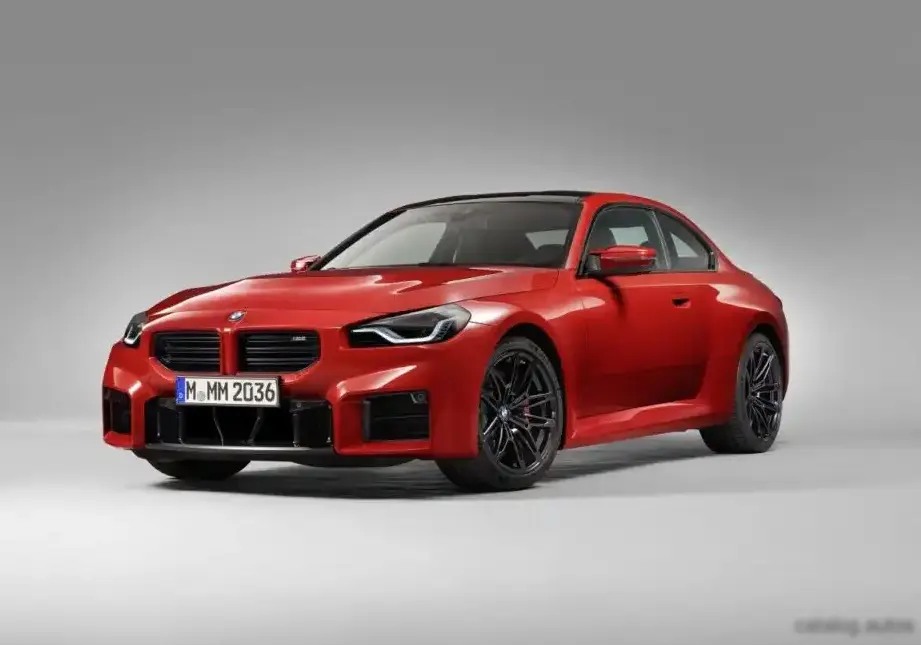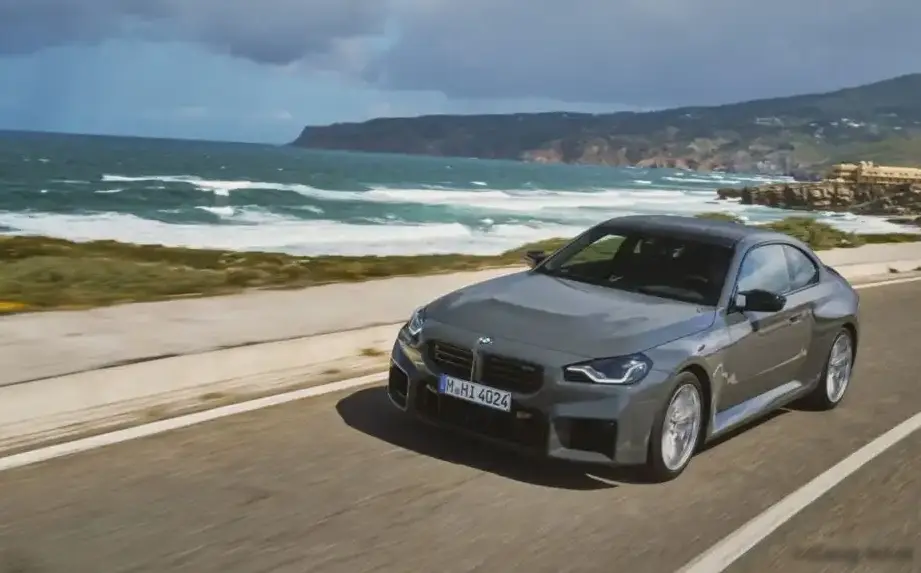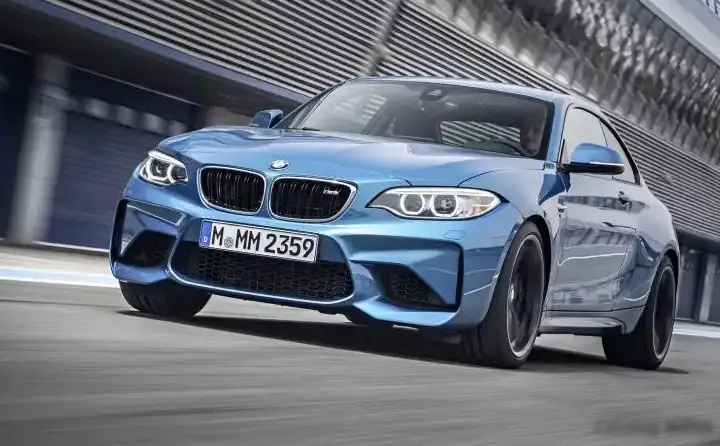
The BMW M2 CS (Competition Sport) is a high-performance coupe produced by BMW M GmbH from March to September 2020. Positioned as the most focused and powerful iteration of the F87 M2 generation, the CS aimed to bridge the gap between the standard M2 Competition and the more track-oriented M2 Racing models. It represented a limited-run, enthusiast-focused offering, building upon the already acclaimed M2 platform with significant upgrades to the engine, chassis, and aerodynamics. The CS was exclusively offered with a six-speed manual transmission, emphasizing driver engagement and a purist driving experience.
Technical Specifications
| Brand | BMW |
| Model | M2 |
| Generation | M2 coupe (F87) |
| Type (Engine) | CS 3.0 (450 Hp) |
| Start of production | March, 2020 |
| End of production | September, 2020 |
| Powertrain Architecture | Internal Combustion engine |
| Body type | Coupe |
| Seats | 4 |
| Doors | 2 |
| Fuel consumption (economy) – urban | 14.4-14.9 l/100 km (16.3 – 15.8 US mpg, 19.6 – 19 UK mpg, 6.9 – 6.7 km/l) |
| Fuel consumption (economy) – extra urban | 7.7-7.8 l/100 km (30.5 – 30.2 US mpg, 36.7 – 36.2 UK mpg, 13 – 12.8 km/l) |
| Fuel consumption (economy) – combined | 10.2-10.4 l/100 km (23.1 – 22.6 US mpg, 27.7 – 27.2 UK mpg, 9.8 – 9.6 km/l) |
| CO2 emissions | 233-238 g/km |
| Fuel Type | Petrol (Gasoline) |
| Acceleration 0 – 100 km/h | 4.2 sec |
| Acceleration 0 – 62 mph | 4.2 sec |
| Acceleration 0 – 60 mph | 4 sec |
| Maximum speed | 280 km/h (173.98 mph) |
| Emission standard | Euro 6d – TEMP |
| Weight-to-power ratio | 3.4 kg/Hp, 290.3 Hp/tonne |
| Weight-to-torque ratio | 2.8 kg/Nm, 354.8 Nm/tonne |
| Power | 450 Hp @ 6250 rpm |
| Power per litre | 151.1 Hp/l |
| Torque | 550 Nm @ 2350-5500 rpm (405.66 lb.-ft. @ 2350-5500 rpm) |
| Engine layout | Front, Longitudinal |
| Engine Model/Code | S55B30A |
| Engine displacement | 2979 cm3 (181.79 cu. in.) |
| Number of cylinders | 6 |
| Engine configuration | Inline |
| Cylinder Bore | 84 mm (3.31 in.) |
| Piston Stroke | 89.6 mm (3.53 in.) |
| Compression ratio | 10.2:1 |
| Number of valves per cylinder | 4 |
| Fuel injection system | Direct injection |
| Engine aspiration | Twin-power turbo, Intercooler |
| Valvetrain | VALVETRONIC |
| Engine oil capacity | 6.5 l (6.87 US qt | 5.72 UK qt) |
| Coolant | 14.5 l (15.32 US qt | 12.76 UK qt) |
| Kerb Weight | 1550 kg (3417.17 lbs.) |
| Max. weight | 2010 kg (4431.29 lbs.) |
| Max load | 460 kg (1014.13 lbs.) |
| Trunk (boot) space – minimum | 390 l (13.77 cu. ft.) |
| Fuel tank capacity | 52 l (13.74 US gal | 11.44 UK gal) |
| Length | 4461 mm (175.63 in.) |
| Width | 1871 mm (73.66 in.) |
| Height | 1414 mm (55.67 in.) |
| Wheelbase | 2693 mm (106.02 in.) |
| Front track | 1579 mm (62.17 in.) |
| Rear (Back) track | 1601 mm (63.03 in.) |
| Ride height (ground clearance) | 118 mm (4.65 in.) |
| Drag coefficient (Cd) | 0.37 |
| Minimum turning circle (turning diameter) | 11.7 m (38.39 ft.) |
| Drivetrain Architecture | Rear wheel drive |
| Drive wheel | Rear wheel drive |
| Number of gears and type of gearbox | 6 gears, manual transmission |
| Front suspension | Double wishbone |
| Rear suspension | Independent multi-link suspension |
| Front brakes | Ventilated discs |
| Rear brakes | Ventilated discs |
| Assisting systems | ABS (Anti-lock braking system) |
| Steering type | Steering rack and pinion |
| Power steering | Electric Steering |
| Tires size | 245/35 ZR19 93Y; 265/35 ZR19 98Y |
| Wheel rims size | 9.0J x 19; 10.0J x 19 |
INTRODUCTION
The BMW M2 CS, produced for a limited eight-month run, represents the pinnacle of the F87 M2 series. Building on the already highly regarded M2 Competition, the CS (Competition Sport) was engineered for enhanced track performance and driver engagement. It featured a significant power increase, weight reduction, and aerodynamic improvements over its predecessor. The CS was positioned above the M2 Competition in BMW’s lineup, offering a more exclusive and focused driving experience for enthusiasts. It was a direct response to demand for a more hardcore version of the M2, and served as a precursor to the fully redesigned G87 M2.
Powertrain & Engine Architecture
At the heart of the M2 CS lies the S55B30A, a 3.0-liter inline-six engine derived from the M3 and M4. This engine is a significant upgrade over the N55 engine found in the original M2, and even offers a power bump over the M2 Competition. The S55 features a twin-scroll turbocharger, direct fuel injection, and BMW’s VALVETRONIC variable valve timing system. In the M2 CS, the engine is tuned to produce 450 horsepower at 6,250 rpm and 550 Nm (405.66 lb-ft) of torque between 2,350 and 5,500 rpm. This represents a 30 horsepower increase over the M2 Competition. The engine’s longitudinal layout contributes to balanced weight distribution. The sole transmission option was a six-speed manual, chosen specifically to enhance driver involvement.
Driving Characteristics
The M2 CS delivers a noticeably more visceral and engaging driving experience compared to the M2 Competition. The increased power output, combined with the manual transmission, provides a direct connection between driver and machine. The six-speed gearbox features shorter ratios, contributing to quicker acceleration. The car feels responsive and eager to rev, with a linear power delivery that builds strongly towards the redline. While still perfectly usable on the road, the CS is clearly optimized for track driving, with improved handling and braking performance. The manual transmission requires more driver skill than the optional dual-clutch transmission offered on the M2 Competition, but rewards the driver with a more rewarding and connected experience.
Equipment & Trim Levels
The M2 CS came standard with a comprehensive list of performance-oriented features. Interior appointments included carbon fiber trim, M Sport seats upholstered in black leather with contrasting blue stitching, and an M Sport steering wheel. Standard equipment also included adaptive M suspension, M Sport brakes with blue calipers, and a carbon fiber roof, contributing to weight reduction. Optional extras included a Club Sport Package, which added a roll bar and six-point harnesses, further enhancing track readiness. The interior focused on functionality and driver focus, eschewing excessive luxury in favor of a performance-oriented environment.
Chassis & Braking
The M2 CS benefits from a number of chassis and braking upgrades. The suspension features adaptive dampers, allowing drivers to adjust the ride quality to suit their preferences. The front and rear tracks are wider than the standard M2, improving stability and cornering grip. The braking system utilizes large, ventilated discs at all four corners, providing exceptional stopping power. The standard M Sport brakes are highly capable, while optional carbon ceramic brakes were available for even more demanding track use. The lightweight carbon fiber roof and other weight-saving measures contribute to a lower center of gravity, further enhancing handling.
Market Reception & Comparison
The M2 CS was widely praised by automotive critics for its exceptional performance and engaging driving experience. It was lauded as a true driver’s car, offering a rare combination of power, handling, and driver involvement. Compared to the M2 Competition, the CS offered a more focused and refined driving experience, albeit at a higher price point. The manual transmission was a key differentiator, appealing to enthusiasts who preferred a more traditional driving experience. Fuel economy, while not a primary concern for buyers of this vehicle, was respectable for its performance level, averaging around 23 mpg combined. Reliability was generally good, consistent with other BMW M models.
Legacy
The M2 CS has quickly become a highly sought-after collector’s item. Its limited production run and exceptional driving characteristics have made it a favorite among BMW enthusiasts. The S55 engine, while known for requiring diligent maintenance, is generally considered robust when properly cared for. The M2 CS represents a high point in the F87 M2 lineage, and its influence can be seen in the subsequent G87 M2. On the used car market, prices for well-maintained examples have steadily increased, reflecting the car’s desirability and rarity. The M2 CS stands as a testament to BMW’s commitment to building engaging and rewarding driving machines.