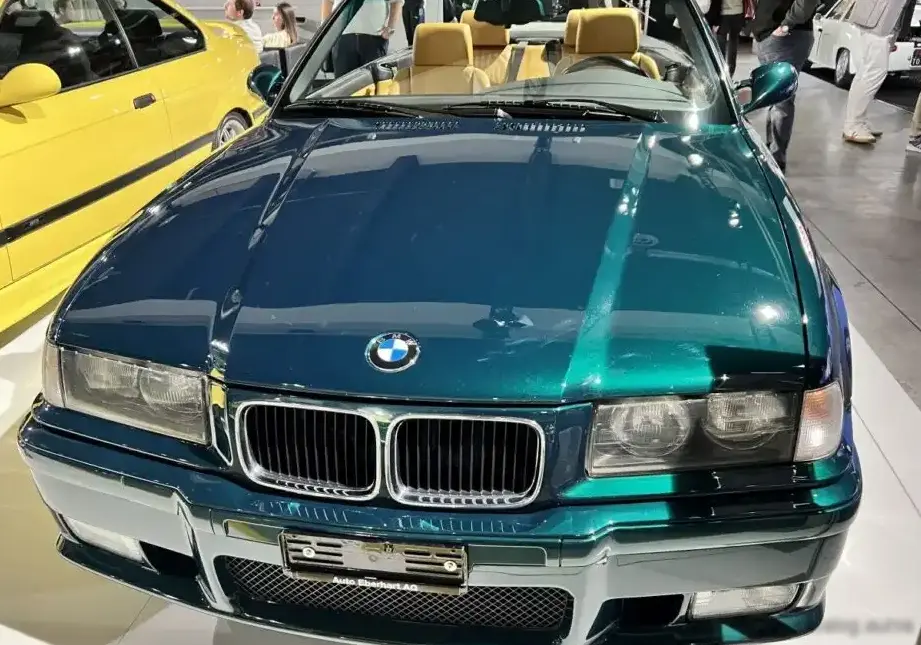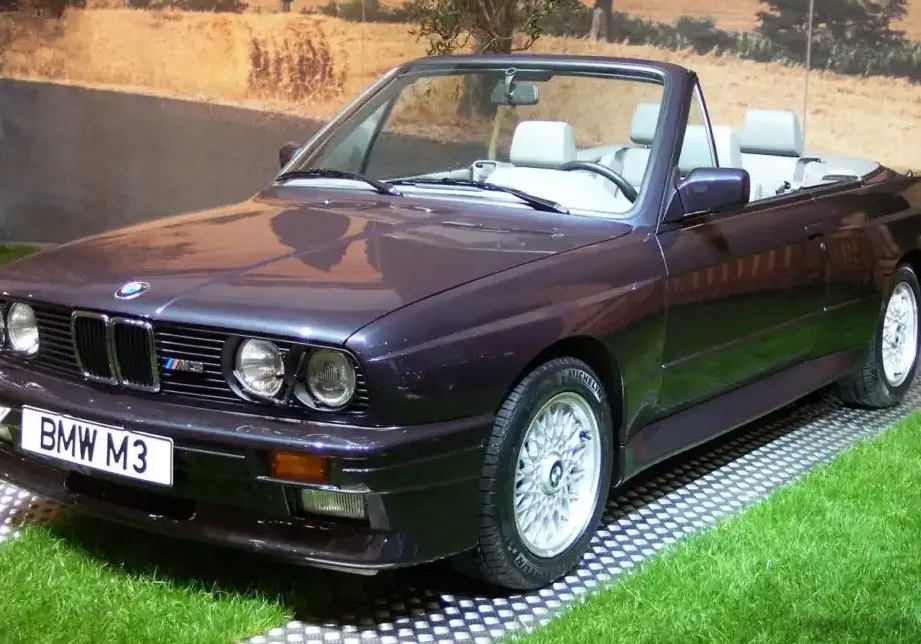
The BMW M3 Convertible (E30) 2.3, produced between 1988 and 1991, represents a unique and highly sought-after iteration of the iconic E30 M3. Positioned as the open-top variant of the groundbreaking first-generation M3, it combined the performance pedigree of the coupe with the added enjoyment of convertible motoring. Built on the E30 chassis (specifically the 1HX0 platform for right-hand drive models and A3 for left-hand drive), the M3 Convertible offered a compelling package for enthusiasts seeking a thrilling driving experience. While the coupe dominated motorsport, the convertible carved its own niche as a premium performance vehicle.
Technical Specifications
| Brand | BMW |
| Model | M3 |
| Generation | M3 Convertible (E30) |
| Type (Engine) | 2.3 (200 Hp) |
| Start of production | 1988 |
| End of production | 1991 |
| Powertrain Architecture | Internal Combustion engine |
| Body type | Cabriolet |
| Seats | 4 |
| Doors | 2 |
| Fuel consumption (urban) | 12.6 l/100 km (18.7 US mpg, 22.4 UK mpg, 7.9 km/l) |
| Fuel consumption (extra urban) | 7.8 l/100 km (30.2 US mpg, 36.2 UK mpg, 12.8 km/l) |
| Fuel consumption (combined) | 8.9 l/100 km (26.4 US mpg, 31.7 UK mpg, 11.2 km/l) |
| Fuel Type | Petrol (Gasoline) |
| Acceleration 0 – 100 km/h | 7.3 sec |
| Acceleration 0 – 62 mph | 7.3 sec |
| Acceleration 0 – 60 mph | 6.9 sec |
| Maximum speed | 233 km/h (144.78 mph) |
| Weight-to-power ratio | 6.8 kg/Hp, 147.1 Hp/tonne |
| Weight-to-torque ratio | 5.7 kg/Nm, 176.5 Nm/tonne |
| Power | 200 Hp @ 6750 rpm |
| Power per litre | 86.9 Hp/l |
| Torque | 240 Nm @ 4750 rpm (177.01 lb.-ft. @ 4750 rpm) |
| Engine layout | Front, Longitudinal |
| Engine Model/Code | S14B23 |
| Engine displacement | 2302 cm3 (140.48 cu. in.) |
| Number of cylinders | 4 |
| Engine configuration | Inline |
| Cylinder Bore | 93.4 mm (3.68 in.) |
| Piston Stroke | 84 mm (3.31 in.) |
| Compression ratio | 10.5:1 |
| Number of valves per cylinder | 4 |
| Fuel injection system | Multi-port manifold injection |
| Engine aspiration | Naturally aspirated engine |
| Engine oil capacity | 4.4 l (4.65 US qt | 3.87 UK qt) |
| Coolant capacity | 9 l (9.51 US qt | 7.92 UK qt) |
| Kerb Weight | 1360 kg (2998.29 lbs.) |
| Max. weight | 1720 kg (3791.95 lbs.) |
| Max load | 360 kg (793.66 lbs.) |
| Trunk (boot) space – minimum | 303 l (10.7 cu. ft.) |
| Fuel tank capacity | 62 l (16.38 US gal | 13.64 UK gal) |
| Length | 4345 mm (171.06 in.) |
| Width | 1680 mm (66.14 in.) |
| Height | 1370 mm (53.94 in.) |
| Wheelbase | 2565 mm (100.98 in.) |
| Front track | 1414 mm (55.67 in.) |
| Rear (Back) track | 1435 mm (56.5 in.) |
| Drag coefficient (Cd) | 0.36 |
| Minimum turning circle | 11.1 m (36.42 ft.) |
| Drivetrain Architecture | Rear wheel drive |
| Number of gears | 5 gears, manual transmission |
| Front brakes | Ventilated discs |
| Rear brakes | Disc |
| Assisting systems | ABS (Anti-lock braking system) |
| Steering type | Steering rack and pinion |
| Power steering | Hydraulic Steering |
| Tires size | 205/55 R15 |
| Wheel rims size | 15 |
Powertrain & Engine Architecture
At the heart of the E30 M3 Convertible lay the S14B23, a 2.3-liter inline-four cylinder engine. This engine was a high-revving, naturally aspirated unit derived from the BMW M1’s M88 engine, but significantly modified for improved responsiveness and durability. The S14 featured a cast iron block and an aluminum cylinder head with four valves per cylinder, operated by double overhead camshafts. Bosch Motronic fuel injection and ignition control managed the air-fuel mixture and spark timing, contributing to the engine’s smooth power delivery. The 200 horsepower output was achieved through a high 10.5:1 compression ratio and careful tuning. The engine’s longitudinal front-mounted layout, coupled with a five-speed manual transmission, provided a classic sports car driving experience. The transmission was known for its precise shift feel and robust construction.
Driving Characteristics
The M3 Convertible 2.3 offered a distinctly engaging driving experience. While slightly heavier than the coupe due to the convertible top mechanism and associated reinforcement, it still delivered impressive performance. Acceleration from 0-60 mph took approximately 6.9 seconds, and it could reach a top speed of 144.78 mph. The engine’s peak torque of 177 lb-ft arrived at 4750 rpm, providing strong mid-range pull. The five-speed manual transmission allowed drivers to fully exploit the engine’s powerband. Compared to later, more powerful M3 variants, the 2.3-liter engine felt more approachable and less demanding, making it a rewarding car for both experienced drivers and newcomers to the sports car world. The suspension, while firm, provided a good balance between handling precision and ride comfort.
Equipment & Trim Levels
The M3 Convertible was positioned as a premium offering within the E30 range. Standard equipment included sport seats, a leather-wrapped steering wheel, and a comprehensive instrument cluster. Power windows and central locking were also typically included. Optional extras included a limited-slip differential, which significantly enhanced traction, and a sunroof. Interior upholstery was typically cloth, but leather options were available. The dashboard layout was characteristic of the E30, with a driver-focused design and clear, easy-to-read gauges. The convertible top was manually operated, adding to the driver involvement.
Chassis & Braking
The E30 M3 Convertible utilized a reinforced chassis compared to standard E30 models, designed to compensate for the loss of structural rigidity inherent in a convertible design. The suspension featured MacPherson struts at the front and semi-trailing arms at the rear, with anti-roll bars to reduce body roll. Braking duties were handled by ventilated discs at the front and solid discs at the rear, with ABS (Anti-lock Braking System) as standard equipment. The ABS system provided enhanced braking control, particularly in adverse conditions. The car rode on 15-inch alloy wheels, typically fitted with 205/55 R15 tires.
Market Reception & Comparison
The M3 Convertible was generally well-received by automotive critics, who praised its performance, handling, and overall driving experience. However, some noted the slight weight penalty compared to the coupe and the impact on structural rigidity. Compared to other E30 M3 variants, such as the later 2.5-liter models, the 2.3-liter version offered a more balanced and accessible driving experience. It was often seen as a more practical and usable M3, suitable for everyday driving as well as spirited weekend excursions. Fuel economy, while not a primary concern for M3 buyers, was reasonable for a performance car of its era, averaging around 26.4 US mpg in combined driving.
Legacy
The BMW M3 Convertible (E30) 2.3 remains a highly collectible and desirable classic car. Its combination of performance, style, and open-air enjoyment has ensured its enduring appeal. The S14 engine is known for its durability, although regular maintenance is essential to keep it in top condition. Today, well-maintained examples command high prices in the used car market. The E30 M3 Convertible is widely regarded as a landmark vehicle in automotive history, representing a golden age of sports car design and engineering. It continues to be celebrated by enthusiasts as a true driver’s car.