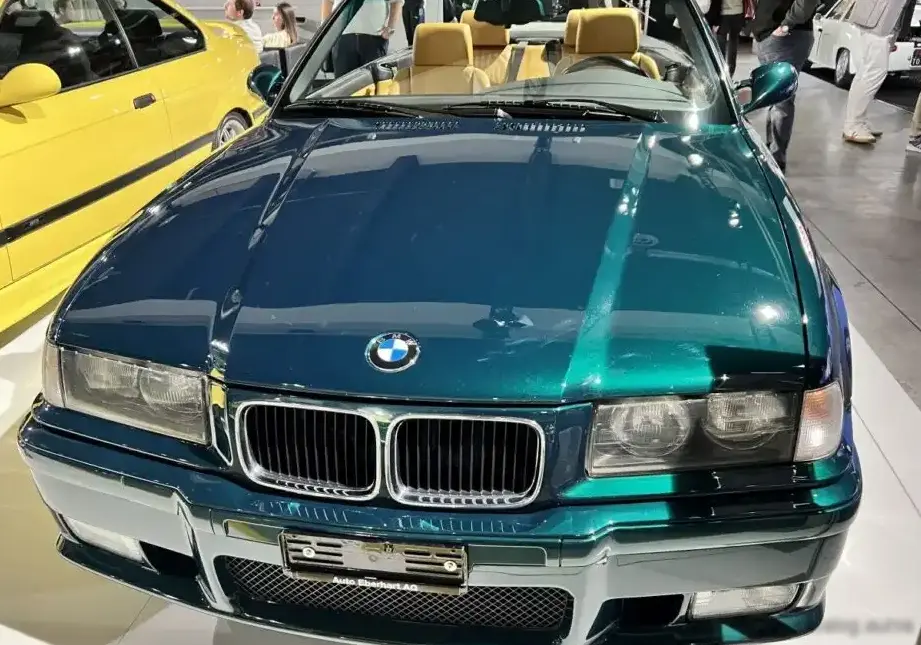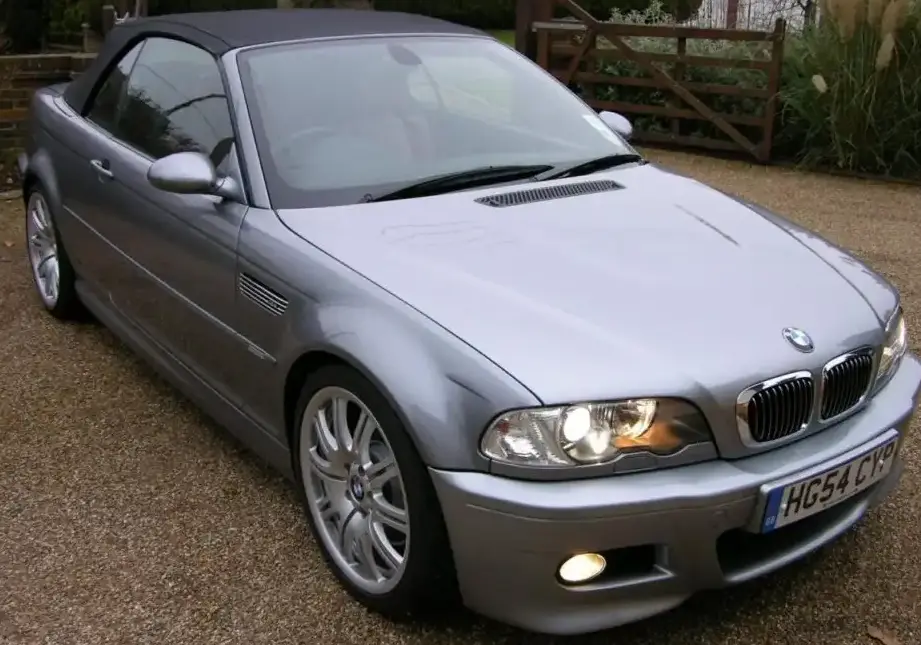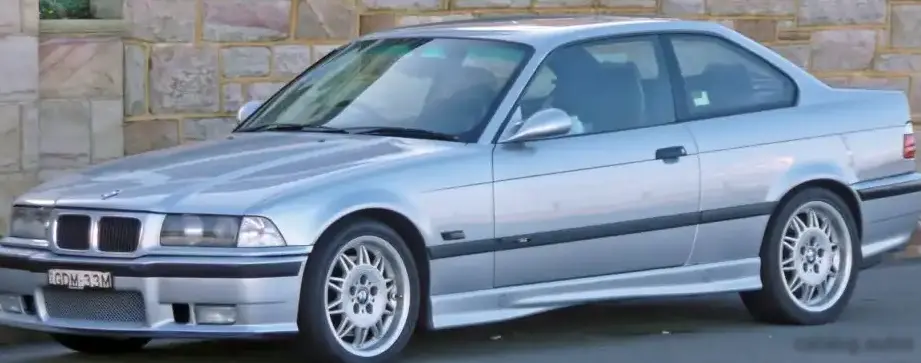
The BMW M3 Coupe (E36) GT 3.0, produced from 1994 to 1995, represents a high-performance iteration of the iconic E36 M3. Positioned as a limited-production, more focused variant, the GT 3.0 aimed to deliver an enhanced driving experience compared to the standard M3 Coupe. It was primarily marketed in Europe, serving as a bridge between the standard M3 and the more track-focused M3 Lightweight. The GT 3.0 utilized a larger displacement engine and subtle chassis refinements to achieve its performance goals, making it a sought-after model among enthusiasts.
Technical Specifications
| Brand | BMW |
| Model | M3 |
| Generation | M3 Coupe (E36) |
| Type (Engine) | GT 3.0 (295 Hp) |
| Start of production | 1994 |
| End of production | 1995 |
| Powertrain Architecture | Internal Combustion engine |
| Body type | Coupe |
| Seats | 4 |
| Doors | 2 |
| Fuel consumption (economy) – urban | 13 l/100 km (18.1 US mpg, 21.7 UK mpg, 7.7 km/l) |
| Fuel consumption (economy) – extra urban | 7.9 l/100 km (29.8 US mpg, 35.8 UK mpg, 12.7 km/l) |
| Fuel consumption (economy) – combined | 9.1 l/100 km (25.8 US mpg, 31 UK mpg, 11 km/l) |
| Fuel Type | Petrol (Gasoline) |
| Acceleration 0 – 100 km/h | 5.9 sec |
| Acceleration 0 – 62 mph | 5.9 sec |
| Acceleration 0 – 60 mph | 5.6 sec |
| Maximum speed | 250 km/h (155.34 mph) |
| Weight-to-power ratio | 4.9 kg/Hp, 204.9 Hp/tonne |
| Weight-to-torque ratio | 4.5 kg/Nm, 224.3 Nm/tonne |
| Power | 295 Hp @ 7000 rpm |
| Power per litre | 98.7 Hp/l |
| Torque | 323 Nm @ 3900 rpm (238.23 lb.-ft. @ 3900 rpm) |
| Engine layout | Front, Longitudinal |
| Engine Model/Code | S50B30 |
| Engine displacement | 2990 cm3 (182.46 cu. in.) |
| Number of cylinders | 6 |
| Engine configuration | Inline |
| Cylinder Bore | 86 mm (3.39 in.) |
| Piston Stroke | 85.8 mm (3.38 in.) |
| Compression ratio | 10.8:1 |
| Number of valves per cylinder | 4 |
| Fuel injection system | Multi-port manifold injection |
| Engine aspiration | Naturally aspirated engine |
| Valvetrain | DOHC |
| Engine oil capacity | 7 l (7.4 US qt | 6.16 UK qt) |
| Coolant | 10.8 l (11.41 US qt | 9.5 UK qt) |
| Kerb Weight | 1440 kg (3174.66 lbs.) |
| Trunk (boot) space – minimum | 405 l (14.3 cu. ft.) |
| Fuel tank capacity | 65 l (17.17 US gal | 14.3 UK gal) |
| Length | 4433 mm (174.53 in.) |
| Width | 1710 mm (67.32 in.) |
| Height | 1335 mm (52.56 in.) |
| Wheelbase | 2700 mm (106.3 in.) |
| Front track | 1422 mm (55.98 in.) |
| Rear (Back) track | 1444 mm (56.85 in.) |
| Ride height (ground clearance) | 110 mm (4.33 in.) |
| Drag coefficient (Cd) | 0.32 |
| Minimum turning circle (turning diameter) | 10.7 m (35.1 ft.) |
| Drivetrain Architecture | Rear wheel drive |
| Number of gears and type of gearbox | 5 gears, manual transmission |
| Front brakes | Ventilated discs |
| Rear brakes | Ventilated discs |
| Assisting systems | ABS (Anti-lock braking system) |
| Steering type | Steering rack and pinion |
| Power steering | Hydraulic Steering |
| Tires size | 235/40 R17 |
| Wheel rims size | 17 |
INTRODUCTION
The E36 M3 GT 3.0 was a limited-run coupe designed to offer a more engaging and performance-oriented experience than the standard E36 M3. Built for the 1994 and 1995 model years, it featured a larger 3.0-liter inline-six engine, subtle aerodynamic enhancements, and a focus on driver involvement. The GT 3.0 was never officially imported to the United States, making it a rare and desirable vehicle for collectors and enthusiasts. It sat above the standard M3 in terms of performance and exclusivity, but below the even more focused M3 Lightweight which was primarily intended for racing.
Powertrain & Engine Architecture
The heart of the M3 GT 3.0 is the S50B30 engine, a 2,990 cc (182.46 cu. in.) inline-six cylinder powerplant. This engine is based on the M50B25 found in standard E36 models, but extensively modified for increased performance. Key upgrades included a larger bore (86 mm) and a longer stroke (85.8 mm), along with higher compression (10.8:1) and revised camshafts. The engine utilized individual throttle bodies and a Bosch Motronic 3.1 engine management system, controlling multi-port fuel injection. The S50B30 produced 295 horsepower at 7,000 rpm and 323 Nm (238.23 lb-ft) of torque at 3,900 rpm. The GT 3.0 exclusively came with a 5-speed manual transmission, designed to handle the increased power output and provide a direct connection to the drivetrain. The transmission featured revised gear ratios optimized for performance.
Driving Characteristics
The M3 GT 3.0 delivers a noticeably more potent driving experience than the standard E36 M3. The increased displacement and revised engine tuning result in stronger acceleration throughout the rev range. The 0-60 mph sprint takes approximately 5.6 seconds, and the car reaches a top speed of 155.34 mph (250 km/h). The manual transmission provides precise gear changes and allows the driver to fully exploit the engine’s power. The GT 3.0 feels more responsive and eager to rev than its standard counterpart. While still a comfortable daily driver, the GT 3.0’s suspension and steering provide a firmer, more connected feel, enhancing driver confidence during spirited driving. The car’s balance is excellent, making it predictable and enjoyable on winding roads.
Equipment & Trim Levels
The M3 GT 3.0 was relatively sparsely equipped compared to some contemporary luxury coupes, reflecting its focus on performance. Standard features included sport seats, a leather-wrapped steering wheel, and a basic audio system. The interior trim was typically finished in black. Optional extras included air conditioning, a sunroof, and upgraded audio systems. The GT 3.0 featured unique exterior styling cues, including a subtle rear spoiler and specific wheel designs. The interior was largely functional and driver-focused, with minimal distractions.
Chassis & Braking
The chassis of the M3 GT 3.0 is based on the standard E36 M3, but with subtle refinements. The suspension features stiffer springs and dampers, providing improved handling and reduced body roll. The GT 3.0 retained the M3’s multi-link rear suspension, which contributed to its excellent road holding. Braking duties are handled by ventilated discs on all four wheels, equipped with ABS. The braking system provides ample stopping power for both street and track use. The car’s weight distribution is nearly 50/50, contributing to its balanced handling characteristics.
Market Reception & Comparison
The M3 GT 3.0 was well-received by automotive journalists and enthusiasts. Critics praised its increased performance, improved handling, and driver-focused character. Compared to the standard M3, the GT 3.0 offered a more engaging and rewarding driving experience. However, the GT 3.0’s limited production run and higher price point made it less accessible than the standard M3. Compared to the M3 Lightweight, the GT 3.0 offered a slightly more comfortable ride and a more refined interior, while the Lightweight was even more focused on track performance. Fuel economy, while not a primary concern for buyers of this vehicle, was rated at around 25.8 US mpg combined.
Legacy
The M3 GT 3.0 has become a highly sought-after collector’s item. Its limited production run, combined with its enhanced performance and driving dynamics, has made it a favorite among BMW enthusiasts. The S50B30 engine is considered one of the best inline-six engines ever produced by BMW. The GT 3.0’s robust mechanicals and relatively simple design contribute to its long-term reliability. Well-maintained examples command high prices in the used car market today, reflecting their rarity and desirability. The M3 GT 3.0 stands as a testament to BMW’s commitment to performance and driver engagement during the E36 generation.