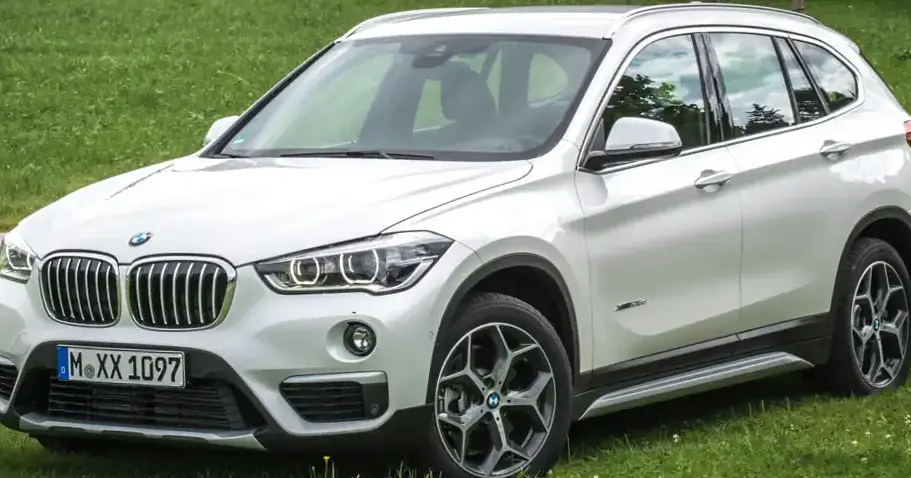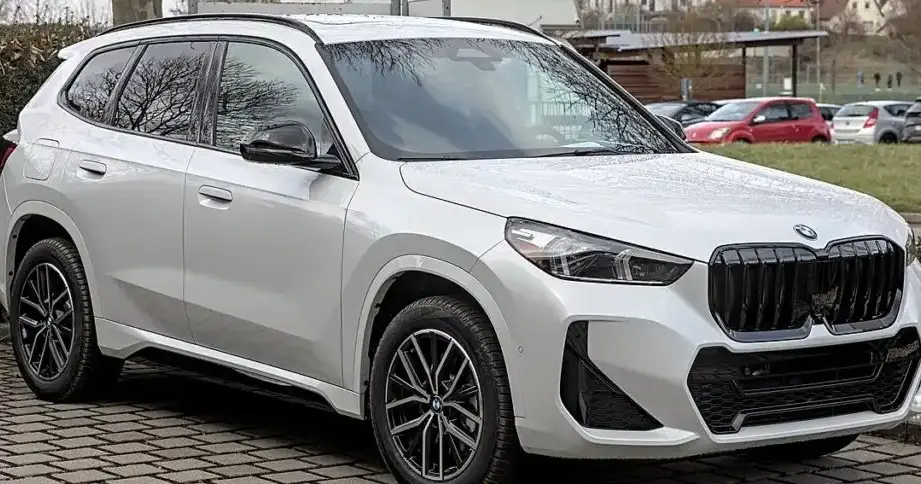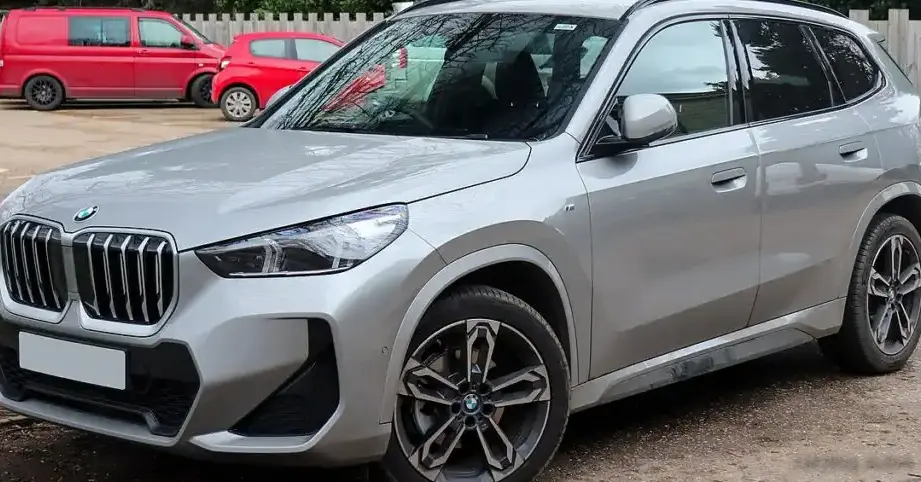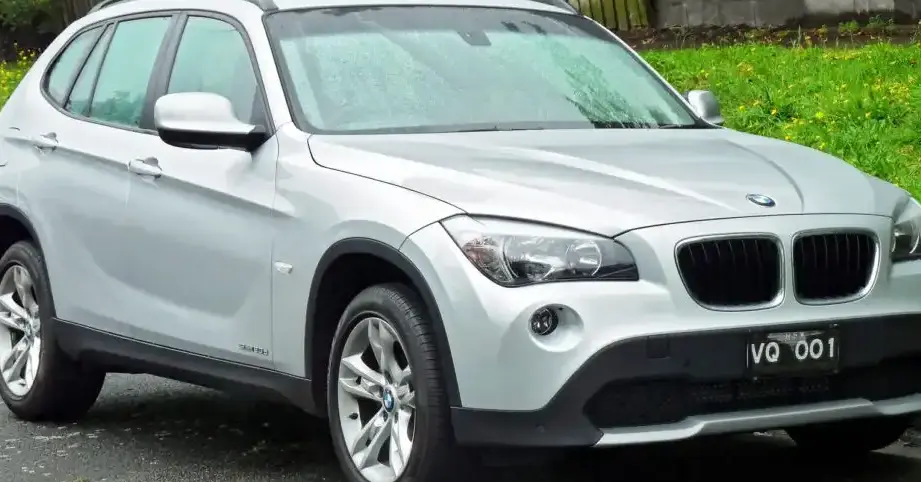
The BMW X1 (F48, facelift 2019) 16d Steptronic represents a key entry point into the second generation of BMW’s compact SUV, produced from 2019 to 2022. Positioned as a fuel-efficient and practical option within the X1 lineup, this variant utilized a 1.5-liter three-cylinder diesel engine paired with a seven-speed Steptronic automatic transmission. It catered to buyers prioritizing economy and ease of use over outright performance, particularly in European markets where diesel engines remained popular. The facelift brought styling updates and technological enhancements to the F48 platform, solidifying the X1’s position as a competitive offering in the premium compact SUV segment.
Technical Specifications
| Brand | BMW |
| Model | X1 |
| Generation | X1 (F48, facelift 2019) |
| Type (Engine) | 16d (116 Hp) Steptronic |
| Start of production | 2019 |
| End of production | 2022 |
| Powertrain Architecture | Internal Combustion engine |
| Body type | SUV |
| Seats | 5 |
| Doors | 5 |
| Fuel consumption (urban) | 4.6-4.8 l/100 km (51.1 – 49 US mpg, 61.4 – 58.9 UK mpg, 21.7 – 20.8 km/l) |
| Fuel consumption (extra urban) | 3.9-4.2 l/100 km (60.3 – 56 US mpg, 72.4 – 67.3 UK mpg, 25.6 – 23.8 km/l) |
| Fuel consumption (combined) | 4.2-4.4 l/100 km (56 – 53.5 US mpg, 67.3 – 64.2 UK mpg, 23.8 – 22.7 km/l) |
| CO2 emissions | 107-116 g/km |
| Fuel Type | Diesel |
| Acceleration 0 – 100 km/h | 11.5 sec |
| Acceleration 0 – 62 mph | 11.5 sec |
| Acceleration 0 – 60 mph | 10.9 sec |
| Maximum speed | 190 km/h (118.06 mph) |
| Emission standard | Euro 6d ISC |
| Weight-to-power ratio | 12.9 kg/Hp, 77.3 Hp/tonne |
| Weight-to-torque ratio | 5.6 kg/Nm, 180 Nm/tonne |
| Power | 116 Hp @ 4000 rpm |
| Power per litre | 77.5 Hp/l |
| Torque | 270 Nm @ 1750-2250 rpm (199.14 lb.-ft. @ 1750-2250 rpm) |
| Engine layout | Front, Transverse |
| Engine Model/Code | B37C15U0 |
| Engine displacement | 1496 cm3 (91.29 cu. in.) |
| Number of cylinders | 3 |
| Engine configuration | Inline |
| Cylinder Bore | 84 mm (3.31 in.) |
| Piston Stroke | 90 mm (3.54 in.) |
| Compression ratio | 16.5:1 |
| Number of valves per cylinder | 4 |
| Fuel injection system | Diesel Commonrail |
| Engine aspiration | Twin-power turbo, Intercooler |
| Engine oil capacity | 4.8 l (5.07 US qt | 4.22 UK qt) |
| Coolant | 6 l (6.34 US qt | 5.28 UK qt) |
| Kerb Weight | 1500 kg (3306.93 lbs.) |
| Max. weight | 2040 kg (4497.43 lbs.) |
| Max load | 540 kg (1190.5 lbs.) |
| Trunk (boot) space – minimum | 505 l (17.83 cu. ft.) |
| Trunk (boot) space – maximum | 1550 l (54.74 cu. ft.) |
| Fuel tank capacity | 51 l (13.47 US gal | 11.22 UK gal) |
| Max. roof load | 75 kg (165.35 lbs.) |
| Permitted trailer load with brakes (12%) | 1700 kg (3747.86 lbs.) |
| Permitted trailer load without brakes | 750 kg (1653.47 lbs.) |
| Permitted towbar download | 80 kg (176.37 lbs.) |
| Length | 4447 mm (175.08 in.) |
| Width | 1821 mm (71.69 in.) |
| Width including mirrors | 2060 mm (81.1 in.) |
| Height | 1598 mm (62.91 in.) |
| Wheelbase | 2670 mm (105.12 in.) |
| Front track | 1561 mm (61.46 in.) |
| Rear (Back) track | 1562 mm (61.5 in.) |
| Front overhang | 848 mm (33.39 in.) |
| Rear overhang | 929 mm (36.57 in.) |
| Ride height (ground clearance) | 183 mm (7.2 in.) |
| Drag coefficient (Cd) | 0.28-0.32 |
| Minimum turning circle (turning diameter) | 11.4 m (37.4 ft.) |
| Drivetrain Architecture | The Internal combustion engine (ICE) drives the front wheels of the vehicle. |
| Drive wheel | Front wheel drive |
| Number of gears and type of gearbox | 7 gears, automatic transmission Steptronic |
| Front suspension | Independent coil spring |
| Rear suspension | Independent multi-link suspension |
| Front brakes | Ventilated discs |
| Rear brakes | Ventilated discs |
| Assisting systems | ABS (Anti-lock braking system) |
| Steering type | Steering rack and pinion |
| Power steering | Electric Steering |
| Tires size | 225/55 R17 97W |
| Wheel rims size | 7.5J x 17 |
INTRODUCTION
The BMW X1 F48 16d Steptronic, launched in 2019 as part of the facelift for the second-generation X1, offered a compelling blend of practicality, efficiency, and BMW’s signature driving dynamics. Built on the UKL2 platform (BMW’s front-wheel-drive architecture, also known as 1HX0/A3), this variant was specifically designed to appeal to buyers seeking a premium compact SUV with low running costs. The 16d designation signifies the engine’s displacement class and power output, while “Steptronic” denotes the use of BMW’s eight-speed automatic transmission. This model served as a crucial entry point into the X1 range, particularly in Europe, where smaller displacement diesel engines were favored due to tax incentives and fuel economy regulations.
Powertrain & Engine Architecture
At the heart of the X1 16d Steptronic lies the B37C15U0 engine, a 1.5-liter inline three-cylinder diesel. This engine is part of BMW’s modular engine family, designed for efficiency and scalability. It features a single turbocharger, direct common-rail fuel injection, and four valves per cylinder. The B37 engine utilizes a sophisticated turbocharging system to deliver a respectable 116 horsepower and 270 Nm (199 lb-ft) of torque. The Steptronic eight-speed automatic transmission is a torque-converter type, known for its smooth shifts and efficiency. It’s programmed to prioritize fuel economy in normal driving conditions, with the ability to shift more aggressively in Sport mode. The transmission’s gear ratios are optimized to keep the engine within its peak torque band, maximizing efficiency and providing adequate acceleration.
Driving Characteristics
The X1 16d Steptronic delivers a comfortable and refined driving experience, prioritizing ease of use over outright performance. Acceleration from 0-60 mph takes around 10.9 seconds, which is adequate for everyday driving but doesn’t offer particularly sporty performance. The automatic transmission contributes to a relaxed driving experience, seamlessly shifting gears and minimizing the need for driver intervention. While the three-cylinder engine can be slightly noisy under hard acceleration, it’s generally well-isolated in the cabin. The front-wheel-drive configuration provides predictable handling, and the suspension is tuned to offer a good balance between comfort and control. Compared to higher-output X1 variants, such as the xDrive20d, the 16d feels less powerful, especially when fully loaded or tackling steep inclines. However, its lower weight and efficient engine contribute to superior fuel economy.
Equipment & Trim Levels
The X1 16d Steptronic typically came equipped with a generous array of standard features. These included BMW’s iDrive infotainment system with a 6.5-inch display (later upgraded to larger screens), automatic climate control, and a suite of safety features such as ABS, stability control, and multiple airbags. Interior upholstery was typically cloth, with options for leather upgrades. Common optional extras included parking sensors, a reversing camera, navigation system, and a panoramic sunroof. Trim levels varied depending on the market, but generally offered packages that added features like upgraded interior trim, alloy wheels, and advanced driver-assistance systems.
Chassis & Braking
The X1 16d Steptronic utilizes a MacPherson strut front suspension and a multi-link rear suspension, providing a comfortable ride and good handling characteristics. The front brakes are ventilated discs, while the rear brakes are typically solid discs, although some models may have ventilated rear discs depending on the specific configuration and market. The steering is electrically assisted, offering a precise and responsive feel. The chassis is designed to minimize weight and maximize rigidity, contributing to the X1’s overall stability and handling. Stabilizer bars are fitted to both the front and rear axles to reduce body roll during cornering.
Market Reception & Comparison
The X1 16d Steptronic was generally well-received by automotive critics as a practical and efficient entry-level premium SUV. Its fuel economy was a major selling point, particularly in Europe, where diesel fuel was often cheaper than gasoline. Compared to other trims in the X1 lineup, the 16d offered a more affordable price point, making it accessible to a wider range of buyers. However, some critics noted its relatively modest performance compared to the more powerful X1 variants. In terms of reliability, the B37 engine has proven to be generally robust, although regular maintenance is essential to ensure long-term durability. Compared to competitors like the Audi Q3 and Mercedes-Benz GLA, the X1 16d offered a compelling combination of value, efficiency, and driving dynamics.
Legacy
The BMW X1 F48 16d Steptronic has established itself as a reliable and economical used car option. The B37 engine, while not known for its blistering performance, is generally considered durable and relatively inexpensive to maintain. The Steptronic transmission is also known for its reliability, provided it’s serviced according to BMW’s recommendations. As a result, well-maintained examples of the X1 16d continue to hold their value in the used car market, appealing to buyers seeking a practical and affordable premium SUV. The success of this variant helped solidify the X1’s position as a popular choice in the compact SUV segment, paving the way for future iterations of the model.