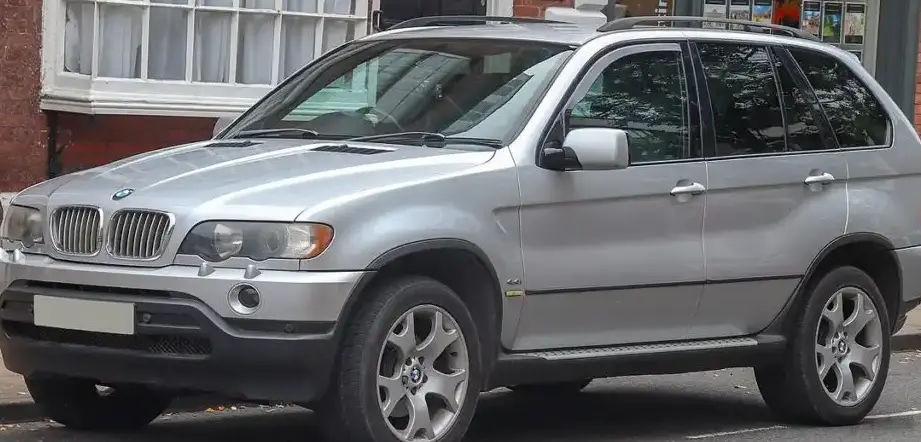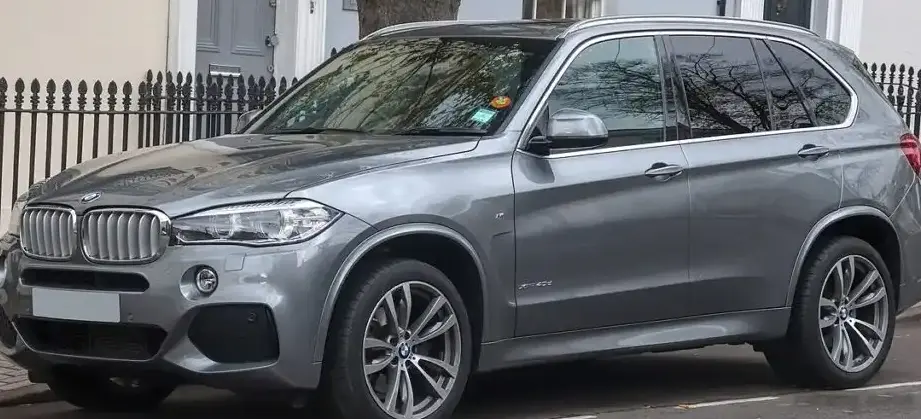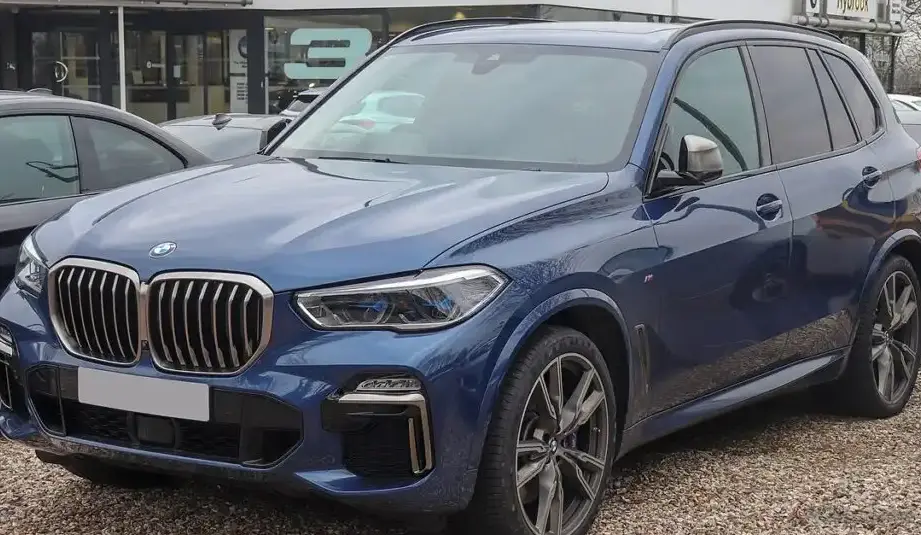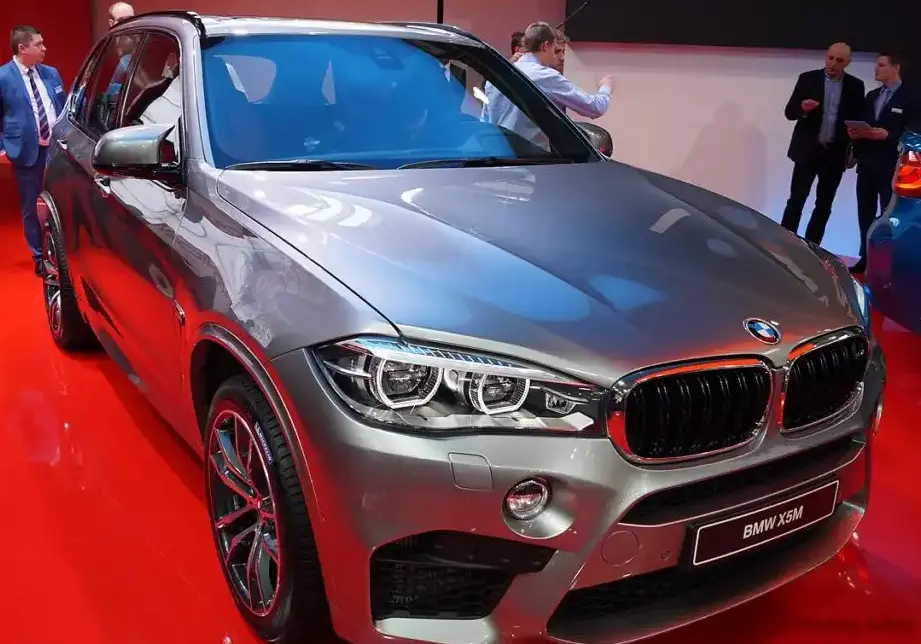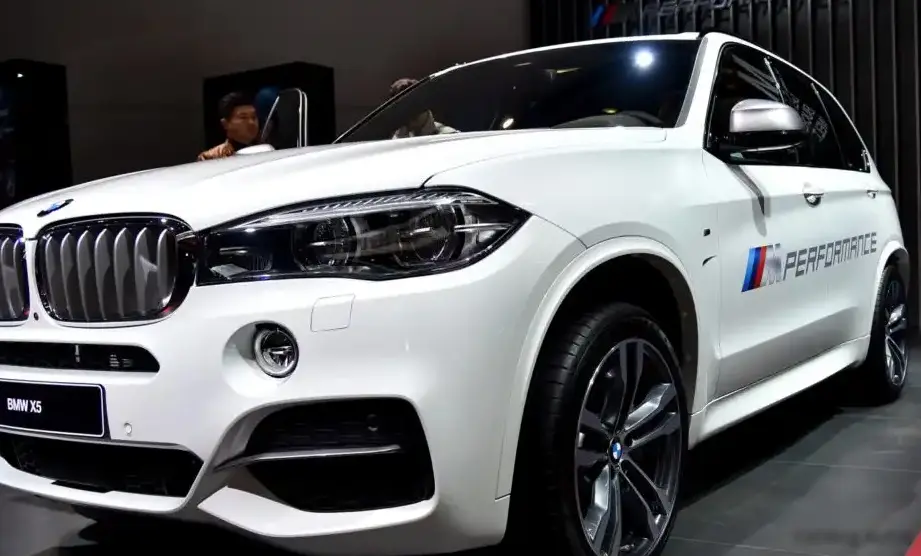
The BMW X5 (F15) 50i xDrive Steptronic, produced from 2013 to 2018, represents the high-performance variant of the second-generation X5 series. Positioned as the flagship engine option, it catered to buyers seeking a blend of luxury, space, and substantial power within the mid-size SUV segment. The F15 generation X5 marked a significant evolution for the model, introducing a more aggressive design language and a host of advanced technologies. The 50i, with its twin-turbocharged V8 engine, stood at the top of the X5 hierarchy, offering a distinct driving experience compared to the four-cylinder and six-cylinder models.
Technical Specifications
| Brand | BMW |
| Model | X5 |
| Generation | X5 (F15) |
| Type (Engine) | 50i (450 Hp) xDrive Steptronic |
| Start of production | 2013 |
| End of production | 2018 |
| Powertrain Architecture | Internal Combustion engine |
| Body type | SAV (Sports Activity Vehicle) |
| Seats | 5-7 |
| Doors | 5 |
| Fuel consumption (urban) | 14.0-14.1 l/100 km (16.8 – 16.7 US mpg, 20.2 – 20 UK mpg, 7.1 – 7.1 km/l) |
| Fuel consumption (extra urban) | 8.3 l/100 km (28.3 US mpg, 34 UK mpg, 12 km/l) |
| Fuel consumption (combined) | 10.4-10.5 l/100 km (22.6 – 22.4 US mpg, 27.2 – 26.9 UK mpg, 9.6 – 9.5 km/l) |
| CO2 emissions | 242-244 g/km |
| Fuel Type | Petrol (Gasoline) |
| Acceleration 0 – 100 km/h | 5 sec |
| Acceleration 0 – 62 mph | 5 sec |
| Acceleration 0 – 60 mph | 4.8 sec |
| Maximum speed | 250 km/h (155.34 mph) |
| Emission standard | Euro 6 |
| Weight-to-power ratio | 4.8 kg/Hp, 206.9 Hp/tonne |
| Weight-to-torque ratio | 3.3 kg/Nm, 298.9 Nm/tonne |
| Power | 450 Hp @ 5500-6000 rpm |
| Power per litre | 102.4 Hp/l |
| Torque | 650 Nm @ 2000-4500 rpm (479.42 lb.-ft. @ 2000-4500 rpm) |
| Engine layout | Front, Longitudinal |
| Engine Model/Code | N63B44B |
| Engine displacement | 4395 cm3 (268.2 cu. in.) |
| Number of cylinders | 8 |
| Engine configuration | V-engine |
| Cylinder Bore | 89 mm (3.5 in.) |
| Piston Stroke | 88.3 mm (3.48 in.) |
| Compression ratio | 10:1 |
| Number of valves per cylinder | 4 |
| Fuel injection system | Direct injection |
| Engine aspiration | Twin-power turbo, Intercooler |
| Engine oil capacity | 9.5 l (10.04 US qt | 8.36 UK qt) |
| Coolant | 14.9 l (15.74 US qt | 13.11 UK qt) |
| Kerb Weight | 2175 kg (4795.05 lbs.) |
| Max. weight | 2885 kg (6360.34 lbs.) |
| Max load | 710 kg (1565.28 lbs.) |
| Trunk (boot) space – minimum | 650 l (22.95 cu. ft.) |
| Trunk (boot) space – maximum | 1870 l (66.04 cu. ft.) |
| Fuel tank capacity | 85 l (22.45 US gal | 18.7 UK gal) |
| Max. roof load | 100 kg (220.46 lbs.) |
| Permitted trailer load with brakes (12%) | 2700 kg (5952.48 lbs.) |
| Permitted trailer load without brakes | 750 kg (1653.47 lbs.) |
| Permitted towbar download | 140 kg (308.65 lbs.) |
| Length | 4886 mm (192.36 in.) |
| Width | 1938 mm (76.3 in.) |
| Width including mirrors | 2184 mm (85.98 in.) |
| Height | 1762 mm (69.37 in.) |
| Wheelbase | 2933 mm (115.47 in.) |
| Front track | 1640 mm (64.57 in.) |
| Rear (Back) track | 1646 mm (64.8 in.) |
| Front overhang | 890 mm (35.04 in.) |
| Rear overhang | 1063 mm (41.85 in.) |
| Ride height (ground clearance) | 209 mm (8.23 in.) |
| Drag coefficient (Cd) | 0.33 |
| Minimum turning circle (turning diameter) | 12.7 m (41.67 ft.) |
| Approach angle | 25° |
| Departure angle | 20° |
| Ramp-over (brakeover) angle | 20° |
| Wading depth | 500 mm (19.69 in.) |
| Drive wheel | All wheel drive (4×4) |
| Number of gears and type of gearbox | 8 gears, automatic transmission Steptronic |
| Front brakes | Ventilated discs |
| Rear brakes | Ventilated discs |
| Assisting systems | ABS (Anti-lock braking system) |
| Steering type | Steering rack and pinion |
| Power steering | Electric Steering |
| Tires size | 255/50 R19; 285/45 R19; 275/40 R20; 315/35 R20 |
| Wheel rims size | 9J x 19; 10J x 19; 10J x 20; 11J x 20 |
INTRODUCTION
The BMW X5 F15 50i xDrive Steptronic, launched in 2013, represented the pinnacle of performance within the second-generation X5 lineup. Built on the F15 platform, it offered a luxurious and powerful alternative to competitors like the Porsche Cayenne and Range Rover Sport. The “50i” designation signified its engine – a 4.4-liter twin-turbocharged V8 – and the “xDrive” indicated BMW’s intelligent all-wheel-drive system. The Steptronic transmission referred to the eight-speed automatic gearbox. This variant aimed to deliver a refined yet engaging driving experience, appealing to buyers who prioritized power and capability without sacrificing comfort.
Powertrain & Engine Architecture
At the heart of the X5 50i lies the N63B44B engine, a 4.4-liter twin-turbocharged V8. This engine is a significant departure from earlier BMW V8s, employing direct injection and variable valve timing (Valvetronic) on both intake and exhaust sides. The twin-scroll turbochargers are positioned within the V of the engine, contributing to a more compact design and improved responsiveness. The N63 engine is known for its robust power delivery and relatively smooth operation. The eight-speed Steptronic automatic transmission is a crucial component, offering quick and seamless gear changes. It features a torque converter lock-up clutch for improved efficiency and a manual shift mode for driver control. The transmission is programmed to adapt to driving style, providing both comfortable cruising and spirited acceleration.
Driving Characteristics
The X5 50i delivers a markedly different driving experience compared to the lower-powered X5 variants. The 450 horsepower and 650 Nm (479 lb-ft) of torque provide effortless acceleration, with a 0-60 mph time of around 4.8 seconds. The eight-speed transmission is well-matched to the engine’s powerband, providing ample torque in every gear. The xDrive all-wheel-drive system ensures excellent traction in all weather conditions, enhancing stability and control. While the X5 50i is a large SUV, it handles surprisingly well, with precise steering and minimal body roll. The suspension is tuned for comfort, but it also provides a secure and planted feel on the road. Compared to the X5 35i (inline-six) or the X5 40i, the 50i offers a significantly more powerful and refined driving experience, albeit with a trade-off in fuel economy.
Equipment & Trim Levels
The X5 50i came standard with a comprehensive list of features, reflecting its position as the range-topping model. Standard equipment included leather upholstery, power-adjustable front seats with memory function, a premium sound system, a navigation system, and a panoramic sunroof. Optional extras were plentiful, including adaptive cruise control, a head-up display, ventilated front seats, and a rear-seat entertainment system. Interior trim options ranged from wood veneers to aluminum accents, allowing buyers to personalize the cabin to their preferences. The X5 50i also offered a variety of driver assistance systems, such as lane departure warning and blind-spot monitoring.
Chassis & Braking
The X5 50i features a robust chassis designed to handle the engine’s power and provide a comfortable ride. The suspension consists of double wishbones at the front and a multi-link setup at the rear. Adaptive dampers were often included, allowing drivers to adjust the suspension stiffness to suit their driving style. The braking system consists of ventilated discs on all four wheels, providing ample stopping power. Larger brake rotors and upgraded calipers were available as an option. The X5 50i’s steering is a rack-and-pinion system with electric power assistance, offering precise and responsive handling.
Market Reception & Comparison
The X5 50i was generally well-received by automotive critics, who praised its powerful engine, luxurious interior, and capable handling. However, some reviewers noted its relatively high price and fuel consumption. Compared to the X5 35i, the 50i offered a significant performance upgrade but came at a substantial cost. The X5 40i, introduced later in the F15 lifecycle, offered a compromise between performance and efficiency. The 50i’s fuel economy, averaging around 22 mpg combined, was considerably lower than the other X5 variants. Reliability was generally good, although some owners reported issues with the turbochargers and cooling system.
Legacy
The BMW X5 F15 50i remains a desirable SUV in the used car market, particularly for buyers seeking a blend of performance, luxury, and practicality. The N63 engine, while powerful, requires diligent maintenance to ensure long-term reliability. Regular oil changes and inspections of the cooling system are crucial. Despite its age, the X5 50i still offers a competitive level of technology and features. Its robust construction and powerful engine ensure that it remains a capable and enjoyable vehicle for years to come. The F15 50i solidified the X5’s reputation as a leading contender in the luxury SUV segment, paving the way for future high-performance X5 models.