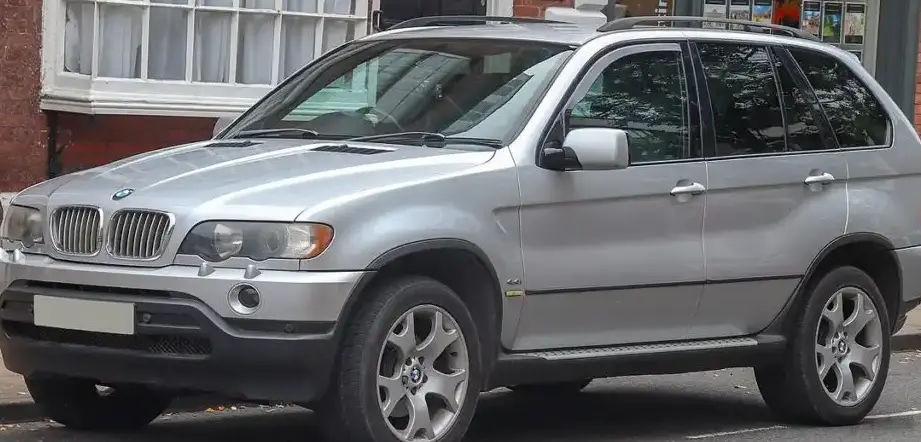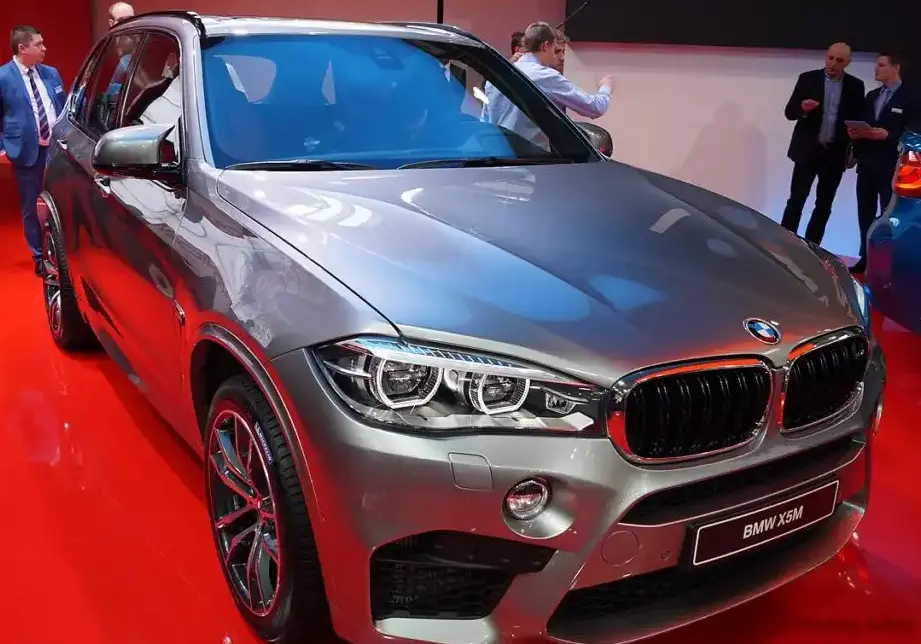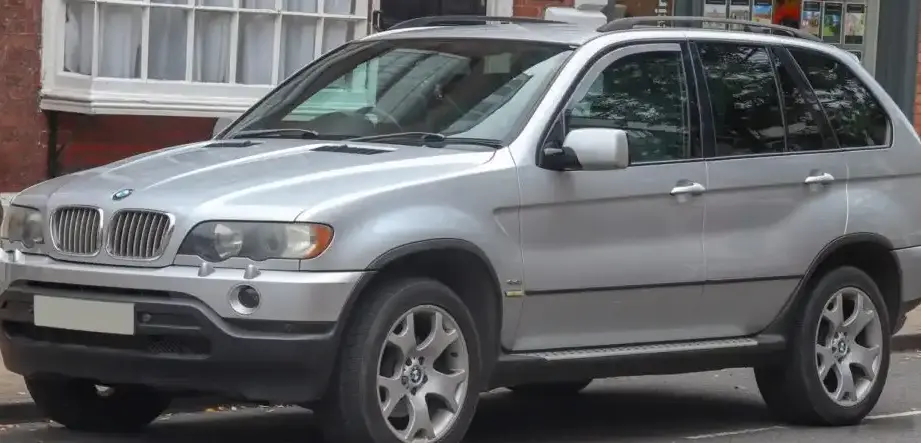
The BMW X5 (G05) 30d xDrive Steptronic, produced from 2018 to 2020, represents a key variant within the third generation of BMW’s popular Sports Activity Vehicle (SAV). Positioned as a mid-range offering, it catered to buyers seeking a balance between performance, fuel efficiency, and practicality, particularly in European markets where diesel engines remained highly favored. This seven-seat configuration further broadened its appeal to families. The G05 generation marked a significant evolution for the X5, incorporating advanced technology and a more refined driving experience compared to its predecessors.
Technical Specifications
| Brand | BMW |
| Model | X5 |
| Generation | X5 (G05) |
| Type | 30d (265 Hp) xDrive Steptronic 7 Seat |
| Start of production | 2018 |
| End of production | August, 2020 |
| Powertrain Architecture | Internal Combustion engine |
| Body type | SAV |
| Seats | 7 |
| Doors | 5 |
| Fuel consumption (urban) | 6.8-7.7 l/100 km (34.6 – 30.5 US mpg) |
| Fuel consumption (extra urban) | 5.6-6.3 l/100 km (42 – 37.3 US mpg) |
| Fuel consumption (combined) | 6.0-6.8 l/100 km (39.2 – 34.6 US mpg) |
| CO2 emissions | 158-179 g/km |
| Fuel Type | Diesel |
| Acceleration 0 – 100 km/h | 6.5 sec |
| Acceleration 0 – 62 mph | 6.5 sec |
| Acceleration 0 – 60 mph | 6.2 sec |
| Maximum speed | 230 km/h (142.92 mph) |
| Emission standard | Euro 6 |
| Weight-to-power ratio | 8.2 kg/Hp, 121.3 Hp/tonne |
| Weight-to-torque ratio | 3.5 kg/Nm, 283.8 Nm/tonne |
| Power | 265 Hp @ 4000 rpm |
| Torque | 620 Nm @ 2000-2500 rpm (457.29 lb.-ft. @ 2000-2500 rpm) |
| Engine layout | Front, Longitudinal |
| Engine Model/Code | B57D30A |
| Engine displacement | 2993 cm3 (182.64 cu. in.) |
| Number of cylinders | 6 |
| Engine configuration | Inline |
| Cylinder Bore | 84 mm (3.31 in.) |
| Piston Stroke | 90 mm (3.54 in.) |
| Compression ratio | 16.5:1 |
| Number of valves per cylinder | 4 |
| Fuel injection system | Diesel Commonrail |
| Engine aspiration | Twin-power turbo, Intercooler |
| Engine oil capacity | 6.5 l (6.87 US qt | 5.72 UK qt) |
| Coolant | 10 l (10.57 US qt | 8.8 UK qt) |
| Kerb Weight | 2185 kg (4817.1 lbs.) |
| Max. weight | 3090 kg (6812.28 lbs.) |
| Max load | 905 kg (1995.18 lbs.) |
| Trunk (boot) space – minimum | 645 l (22.78 cu. ft.) |
| Trunk (boot) space – maximum | 1860 l (65.69 cu. ft.) |
| Fuel tank capacity | 80 l (21.13 US gal | 17.6 UK gal) |
| Max. roof load | 100 kg (220.46 lbs.) |
| Permitted trailer load with brakes (12%) | 2700 kg (5952.48 lbs.) |
| Permitted trailer load without brakes | 750 kg (1653.47 lbs.) |
| Permitted towbar download | 140 kg (308.65 lbs.) |
| Length | 4922 mm (193.78 in.) |
| Width | 2004 mm (78.9 in.) |
| Width including mirrors | 2218 mm (87.32 in.) |
| Height | 1745 mm (68.7 in.) |
| Wheelbase | 2975 mm (117.13 in.) |
| Front track | 1666 mm (65.59 in.) |
| Rear (Back) track | 1685 mm (66.34 in.) |
| Front overhang | 874 mm (34.41 in.) |
| Rear overhang | 1073 mm (42.24 in.) |
| Ride height (ground clearance) | 214 mm (8.43 in.) |
| Drag coefficient (Cd) | 0.31 |
| Minimum turning circle (turning diameter) | 12.6 m (41.34 ft.) |
| Approach angle | 25.2° |
| Departure angle | 22.3° |
| Ramp-over (brakeover) angle | 20.2° |
| Wading depth | 500 mm (19.69 in.) |
| Drivetrain Architecture | The Internal combustion engine (ICE) drives permanently the four wheels of the vehicle. |
| Drive wheel | All wheel drive (4×4) |
| Number of gears and type of gearbox | 8 gears, automatic transmission Steptronic |
| Front suspension | Double wishbone |
| Rear suspension | Double wishbone |
| Front brakes | Ventilated discs |
| Rear brakes | Ventilated discs |
Powertrain & Engine Architecture
The heart of the X5 30d is the BMW B57D30A, a 3.0-liter inline-six diesel engine. This engine is a member of the modular BMW engine family, known for its robust construction and efficiency. The B57 utilizes a sophisticated diesel commonrail fuel injection system, delivering fuel at extremely high pressures for optimized combustion. A twin-power turbocharger, consisting of two turbochargers of different sizes, provides a broad torque curve and minimizes turbo lag. The engine also features an intercooler to further enhance performance by cooling the intake air. The 8-speed Steptronic automatic transmission is a crucial component, offering smooth and efficient gear changes. This transmission is known for its quick responsiveness and ability to adapt to driving conditions. The transmission’s gear ratios are tuned to maximize fuel economy while still providing adequate acceleration.
Driving Characteristics
The X5 30d, with its 265 horsepower and 457 lb-ft of torque, delivers a comfortable and capable driving experience. While not as overtly sporty as higher-performance X5 variants (like the M50i), it provides ample power for everyday driving and highway cruising. The automatic transmission contributes to a relaxed driving style, particularly in city traffic. Acceleration from 0-60 mph takes around 6.2 seconds, which is respectable for a large SUV. Compared to the X5 xDrive40i (with its gasoline engine), the 30d offers superior fuel economy and low-end torque, making it ideal for towing or navigating challenging terrain. However, the gasoline engine provides a more responsive and refined power delivery. The xDrive all-wheel-drive system ensures excellent traction in all weather conditions.
Equipment & Trim Levels
The X5 30d typically came well-equipped as standard. Interior features included leather upholstery, power-adjustable front seats with memory function, a premium sound system, and a large infotainment screen with iDrive controller. Standard safety features included automatic emergency braking, lane departure warning, and parking sensors. The seven-seat configuration featured a third-row bench seat, suitable for children or occasional adult passengers. Optional extras included adaptive cruise control, a panoramic sunroof, upgraded leather options, and various driver-assistance packages. Trim levels beyond the base model often added cosmetic enhancements, such as different wheel designs and interior trim materials.
Chassis & Braking
The G05 X5 utilizes a robust chassis with a double-wishbone suspension setup at both the front and rear. This suspension design provides a comfortable ride and precise handling. The 30d variant typically featured ventilated disc brakes on all four wheels, providing ample stopping power. Anti-lock braking system (ABS) and electronic stability control (ESC) were standard safety features. The suspension tuning was geared towards comfort and stability, rather than outright sportiness, reflecting the 30d’s positioning as a more practical and fuel-efficient option.
Market Reception & Comparison
The X5 30d was generally well-received by automotive critics, particularly in Europe. Reviewers praised its fuel efficiency, comfortable ride, and spacious interior. The diesel engine was seen as a good match for the X5’s size and weight, providing ample torque for effortless cruising. Compared to the X5 xDrive40i, the 30d offered a more economical option, albeit with slightly less performance. Against competitors like the Audi Q7 and Mercedes-Benz GLE, the X5 30d held its own, offering a compelling combination of luxury, practicality, and driving dynamics.
Legacy
The B57 engine family, including the B57D30A found in the X5 30d, has proven to be remarkably reliable. While diesel engines can be susceptible to issues with the diesel particulate filter (DPF) if not properly maintained, the B57 has generally demonstrated good longevity. On the used car market, the X5 30d remains a popular choice, particularly for buyers seeking a well-equipped and fuel-efficient luxury SUV. Its reputation for reliability and relatively low running costs contribute to its continued desirability. However, potential buyers should ensure that the DPF has been properly maintained and that the vehicle has a full service history.