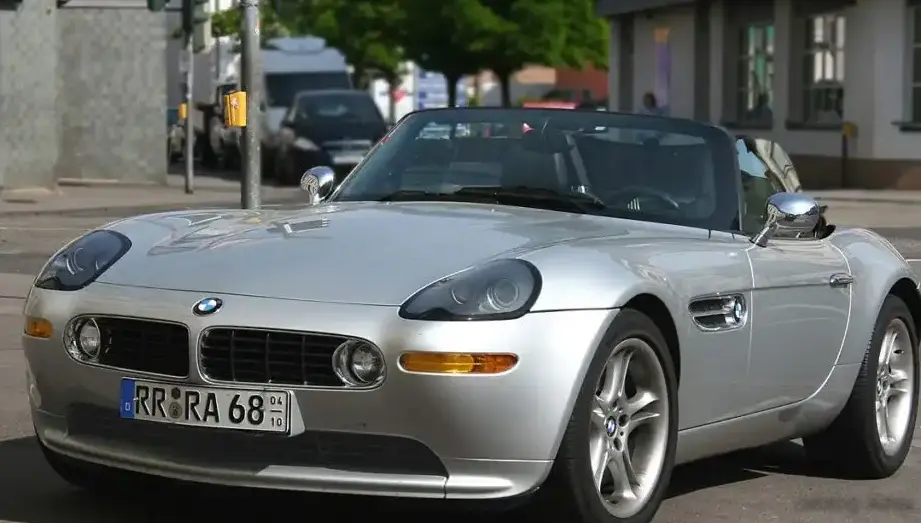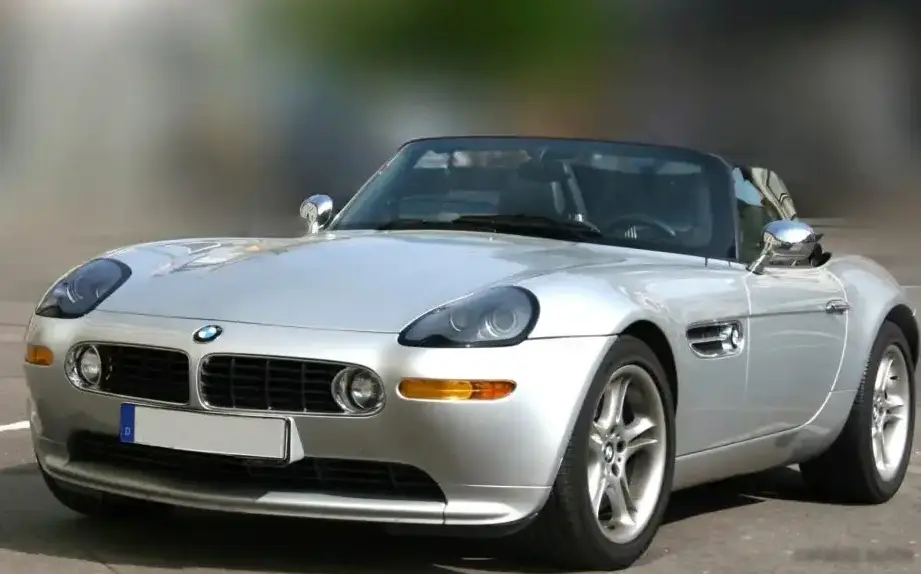
The BMW Z8 (E52) 4.9, produced between 2000 and 2005, represents a bold return to the classic roadster formula for the German automaker. Designed under the leadership of Chris Bangle, the Z8 aimed to evoke the spirit of the iconic BMW 507 of the 1950s, blending retro styling with modern performance and technology. This flagship roadster was positioned as a premium offering, competing with the Mercedes-Benz SL and Porsche Boxster. The 4.9 variant, powered by the S62B50 engine, was the sole engine option offered throughout its production run, emphasizing a focus on high performance rather than offering a range of choices. It was built on a bespoke aluminum chassis, a significant investment for BMW, and featured a unique blend of aluminum and steel body panels.
Technical Specifications
| Brand | BMW |
| Model | Z8 |
| Generation | Z8 (E52) |
| Type (Engine) | 4.9 (400 Hp) |
| Start of production | 2000 year |
| End of production | 2005 year |
| Powertrain Architecture | Internal Combustion engine |
| Body type | Cabriolet |
| Seats | 2 |
| Doors | 2 |
| Fuel consumption (economy) – urban | 21.1 l/100 km (11.1 US mpg, 13.4 UK mpg, 4.7 km/l) |
| Fuel consumption (economy) – extra urban | 10.6 l/100 km (22.2 US mpg, 26.6 UK mpg, 9.4 km/l) |
| Fuel consumption (economy) – combined | 14.5 l/100 km (16.2 US mpg, 19.5 UK mpg, 6.9 km/l) |
| Fuel Type | Petrol (Gasoline) |
| Acceleration 0 – 100 km/h | 4.7 sec |
| Acceleration 0 – 62 mph | 4.7 sec |
| Acceleration 0 – 60 mph | 4.5 sec |
| Maximum speed | 250 km/h (155.34 mph) |
| Weight-to-power ratio | 4.2 kg/Hp, 241 Hp/tonne |
| Weight-to-torque ratio | 3.3 kg/Nm, 301.2 Nm/tonne |
| Power | 400 Hp @ 6600 rpm |
| Power per litre | 81 Hp/l |
| Torque | 500 Nm @ 3800 rpm (368.78 lb.-ft. @ 3800 rpm) |
| Engine layout | Front, Longitudinal |
| Engine Model/Code | S62B50 |
| Engine displacement | 4941 cm3 (301.52 cu. in.) |
| Number of cylinders | 8 |
| Engine configuration | V-engine |
| Cylinder Bore | 94 mm (3.7 in.) |
| Piston Stroke | 89 mm (3.5 in.) |
| Compression ratio | 11:1 |
| Number of valves per cylinder | 4 |
| Fuel injection system | Multi-port manifold injection |
| Engine aspiration | Naturally aspirated engine |
| Valvetrain | DOHC |
| Engine oil capacity | 7.5 l (7.93 US qt | 6.6 UK qt) |
| Coolant | 12.5 l (13.21 US qt | 11 UK qt) |
| Kerb Weight | 1660 kg (3659.67 lbs.) |
| Max. weight | 1900 kg (4188.78 lbs.) |
| Max load | 240 kg (529.11 lbs.) |
| Trunk (boot) space – minimum | 203 l (7.17 cu. ft.) |
| Fuel tank capacity | 73 l (19.28 US gal | 16.06 UK gal) |
| Length | 4400 mm (173.23 in.) |
| Width | 1830 mm (72.05 in.) |
| Height | 1317 mm (51.85 in.) |
| Wheelbase | 2505 mm (98.62 in.) |
| Front track | 1550 mm (61.02 in.) |
| Rear (Back) track | 1570 mm (61.81 in.) |
| Drivetrain Architecture | The Internal combustion engine (ICE) drives the rear wheels of the vehicle. |
| Drive wheel | Rear wheel drive |
| Number of gears and type of gearbox | 6 gears, manual transmission |
| Front suspension | Spring Strut |
| Rear suspension | Coil spring |
| Front brakes | Ventilated discs |
| Rear brakes | Disc |
| Assisting systems | ABS (Anti-lock braking system) |
| Steering type | Steering rack and pinion |
| Power steering | Hydraulic Steering |
| Tires size | 245/45 R18; 275/40 R18 |
| Wheel rims size | 18 |
Powertrain & Engine Architecture
The heart of the Z8 4.9 is the S62B50, a 4.9-liter naturally aspirated V8 engine. This engine is derived from the M5’s S62 engine, but with some modifications tailored for the Z8’s roadster application. It features individual throttle bodies, double VANOS (variable valve timing), and a high 11:1 compression ratio. The engine utilizes multi-port fuel injection, delivering a robust 400 horsepower at 6,600 rpm and 368 lb-ft of torque at 3,800 rpm. The engine’s longitudinal front-mid layout contributes to a balanced weight distribution. The sole transmission option was a six-speed manual gearbox, chosen to complement the engine’s performance characteristics and appeal to driving enthusiasts. The absence of an automatic transmission option underscored the Z8’s focus on a pure driving experience.
Driving Characteristics
The Z8 4.9 delivers a thrilling driving experience characterized by its responsive engine, precise steering, and well-controlled chassis. The 4.5-second 0-60 mph acceleration time and a top speed of 155 mph (electronically limited) are indicative of its performance capabilities. The manual transmission provides direct control, allowing drivers to fully exploit the engine’s power band. The chassis, with its aluminum construction, is remarkably rigid, minimizing body roll and contributing to a confident feel in corners. While the ride is firm, it’s not overly harsh, providing a reasonable level of comfort for a high-performance roadster. The steering is communicative and provides excellent feedback, enhancing driver engagement.
Equipment & Trim Levels
The Z8 was exceptionally well-equipped, reflecting its premium positioning. Standard features included leather upholstery, power-adjustable seats, automatic climate control, a premium sound system, and xenon headlights. A power-retractable hardtop was standard, providing coupe-like security and weather protection. Optional extras included upgraded leather trim, a navigation system (a relatively new feature at the time), and various cosmetic enhancements. The interior design was driver-focused, with a clean and functional layout. The Z8 did not offer a wide range of trim levels; customization was primarily achieved through the selection of optional equipment and exterior paint colors.
Chassis & Braking
The Z8’s chassis is a masterpiece of engineering, featuring an aluminum space frame construction. This lightweight yet incredibly rigid structure provides a solid foundation for the suspension and contributes to the car’s excellent handling. The suspension consists of independent spring struts at the front and a multi-link coil spring setup at the rear. Braking duties are handled by ventilated disc brakes at all four corners, equipped with ABS (Anti-lock Braking System). The braking system provides ample stopping power and resists fade even under demanding conditions. The steering system utilizes a rack-and-pinion setup with hydraulic power assistance, offering precise and responsive control.
Market Reception & Comparison
The BMW Z8 received generally positive reviews from automotive critics. It was praised for its stunning design, exhilarating performance, and sophisticated driving experience. However, some critics noted its relatively high price and the firm ride. Compared to the Porsche Boxster, the Z8 offered a more powerful engine and a more luxurious interior, but at a significantly higher price point. Against the Mercedes-Benz SL, the Z8 provided a more engaging driving experience, but the SL offered a more comfortable ride and a more refined interior. Fuel economy, unsurprisingly, was not a strong point, averaging around 16 mpg in combined driving.
Legacy
The BMW Z8 is now considered a modern classic, highly sought after by collectors and enthusiasts. Its unique design, powerful engine, and engaging driving dynamics have cemented its place in automotive history. While the S62B50 engine is generally reliable, maintenance can be expensive due to its complexity and the cost of parts. The aluminum chassis requires careful inspection for corrosion, particularly in areas exposed to road salt. Despite these potential maintenance concerns, the Z8 remains a desirable and rewarding vehicle to own, offering a unique blend of style, performance, and driving pleasure. Its limited production run and iconic status ensure that it will continue to appreciate in value in the years to come.