
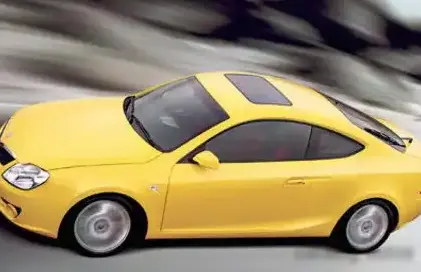
The Brilliance M3 1.8i R4 16V Turbo, produced between 2008 and 2011, represents a relatively short-lived but ambitious attempt by the Brilliance Auto Group to enter the compact coupe market. Positioned as a sporty offering within the M3 range, this variant aimed to provide a more engaging driving experience than its naturally aspirated counterparts. The M3 itself was a significant model for Brilliance, representing a move towards more independent design and engineering, though heavily influenced by Mitsubishi technology. This particular 170 horsepower turbocharged version was intended to appeal to younger buyers seeking a stylish and relatively affordable coupe.
Technical Specifications
| Brand | Brilliance |
| Model | M3 |
| Generation | M3 |
| Type (Engine) | 1.8i R4 16V Turbo (170 Hp) |
| Start of production | 2008 |
| End of production | 2011 |
| Powertrain Architecture | Internal Combustion engine |
| Body type | Coupe |
| Seats | 4 |
| Doors | 3 |
| Fuel Type | Petrol (Gasoline) |
| Power | 170 Hp @ 5500 rpm |
| Power per litre | 94.8 Hp/l |
| Torque | 235 Nm @ 2000 rpm |
| Torque (lb-ft) | 173.33 lb.-ft. @ 2000 rpm |
| Engine layout | Front, Transverse |
| Engine Model/Code | BL |
| Engine displacement | 1793 cm3 |
| Engine displacement (cu. in.) | 109.42 cu. in. |
| Number of cylinders | 4 |
| Engine configuration | Inline |
| Number of valves per cylinder | 4 |
| Fuel injection system | Multi-port manifold injection |
| Engine aspiration | Turbocharger, Intercooler |
| Drivetrain Architecture | The Internal combustion engine (ICE) drives the front wheels of the vehicle. |
| Drive wheel | Front wheel drive |
| Number of gears and type of gearbox | 5 gears, manual transmission |
| Front suspension | Independent type McPherson |
| Rear suspension | Double wishbone |
| Front brakes | Disc |
| Rear brakes | Disc |
| Assisting systems | ABS (Anti-lock braking system) |
| Power steering | Hydraulic Steering |
Powertrain & Engine Architecture
The heart of the Brilliance M3 1.8i Turbo is the BL engine, a 1.8-liter inline-four cylinder gasoline engine. This engine utilizes a single overhead camshaft (SOHC) design with four valves per cylinder, contributing to its relatively high specific output. The key feature, of course, is the turbocharger and intercooler system. While specific details regarding the turbocharger itself are scarce, it’s understood to be a relatively small unit designed to provide boost across a broad RPM range, minimizing turbo lag. Fuel delivery is managed by a multi-port fuel injection system, a common setup for engines of this era. The engine’s block is cast iron, providing durability, while the cylinder head is aluminum to reduce weight. The engine was paired exclusively with a five-speed manual transmission, chosen to complement the sporty intentions of the turbocharged variant. The transmission itself is a standard configuration, prioritizing durability and ease of maintenance over outright performance.
Driving Characteristics
The 170 horsepower and 173 lb-ft of torque offered by the M3 1.8i Turbo provided a noticeable performance upgrade over the base model M3. While not a sports car by any stretch, the turbocharger delivered a useful surge of power in the mid-range, making overtaking maneuvers and highway cruising more effortless. The five-speed manual transmission, while not particularly sporty in its ratios, allowed drivers to keep the engine within its optimal power band. Acceleration from 0 to 60 mph was estimated to be around 8.5-9 seconds, respectable for a coupe of this size and price point in the late 2000s. Handling was adequate, with the McPherson strut front suspension and double wishbone rear setup providing a reasonably comfortable ride. However, the front-wheel-drive configuration and relatively narrow tires limited grip during aggressive cornering.
Equipment & Trim Levels
The Brilliance M3 1.8i Turbo was generally positioned as the mid-range trim level within the M3 lineup. Standard equipment included air conditioning, power windows and locks, a basic audio system, and ABS brakes. Interior upholstery was typically cloth, though leather options were sometimes available as an extra-cost upgrade. The dashboard featured a straightforward design with analog gauges and a centrally mounted infotainment system (often a basic radio/CD player). Optional extras included alloy wheels, a sunroof, and upgraded audio systems. The overall interior quality was considered adequate for the price, but lacked the refinement of more established European or Japanese competitors.
Chassis & Braking
The M3’s chassis was a typical unibody construction, prioritizing cost-effectiveness and ease of manufacturing. The front suspension utilized independent McPherson struts, while the rear employed a double wishbone setup. This configuration aimed to balance ride comfort with handling stability. Braking duties were handled by disc brakes on all four wheels, a welcome feature compared to the drum brakes found on some lower-spec M3 models. ABS was standard, providing enhanced braking performance in emergency situations. Steering was hydraulic power-assisted, offering a reasonable level of feedback and ease of use. Stabilizer bars were fitted to both the front and rear axles to reduce body roll during cornering.
Market Reception & Comparison
The Brilliance M3 1.8i Turbo received mixed reviews from automotive critics. While the turbocharged engine was praised for its performance improvement, the car was often criticized for its bland styling, mediocre interior quality, and lack of brand recognition. Compared to rivals like the Hyundai Tiburon or the Mitsubishi Eclipse, the M3 Turbo offered a similar level of performance but lacked the established reputation and refinement of those models. Fuel economy was reasonable, averaging around 28-32 mpg in mixed driving conditions. Reliability was also a concern, with some reports of issues with the turbocharger and fuel injection system.
Legacy
The Brilliance M3 1.8i Turbo, while not a commercial success, represents an interesting chapter in the history of the Brilliance Auto Group. It demonstrated the company’s ambition to develop more sophisticated and performance-oriented vehicles. Today, the M3 Turbo is a relatively rare sight on the roads. Its long-term reliability is mixed, with some owners reporting few issues while others have experienced problems with the engine and transmission. As a used car, the M3 Turbo offers an affordable entry point into the world of turbocharged coupes, but potential buyers should be aware of the potential maintenance costs and the limited availability of spare parts. The car remains a curiosity, a testament to a Chinese automaker’s attempt to carve out a niche in a competitive market.
