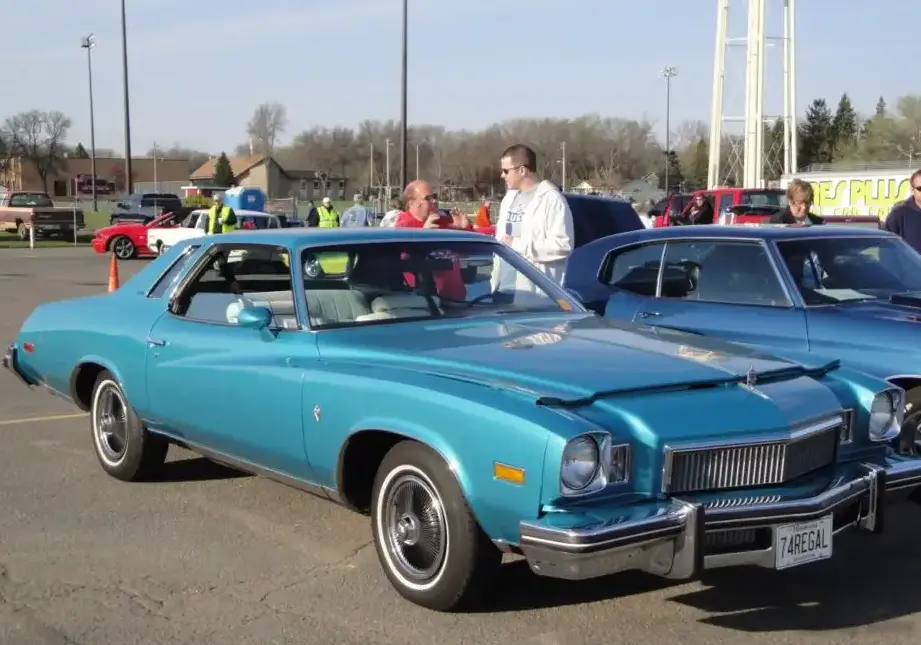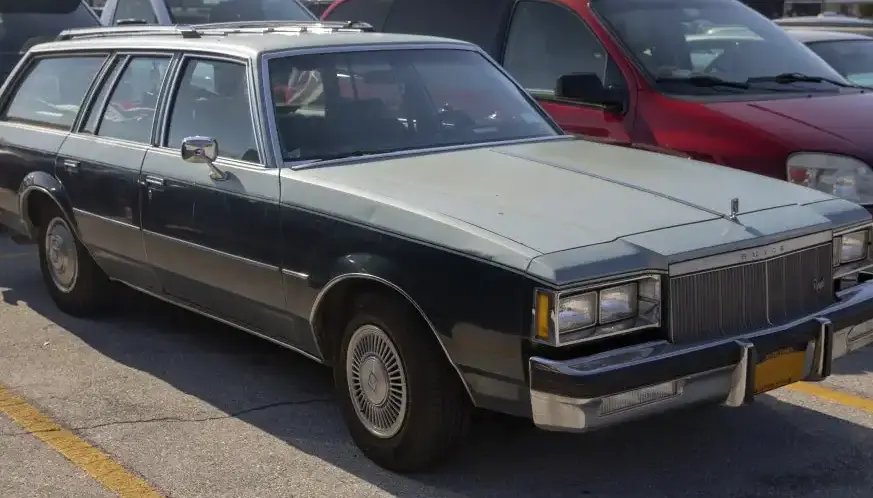
The Buick Regal II Station Wagon, produced for the 1982 and 1983 model years, represented a continued offering in the American station wagon market. This generation, based on the A-body platform, aimed to provide a spacious and comfortable family vehicle. The 4.1 V6 engine paired with an automatic transmission was a mid-range offering within the Regal II lineup, positioned between the base inline-six and the more powerful V8 options. It catered to buyers seeking a balance of performance and fuel economy in a large, practical package.
Technical Specifications
| Brand | Buick |
| Model | Regal |
| Generation | Regal II Station Wagon |
| Type (Engine) | 4.1 V6 (127 Hp) Automatic |
| Start of production | 1982 |
| End of production | 1983 |
| Powertrain Architecture | Internal Combustion engine |
| Body type | Station wagon (estate) |
| Seats | 5 |
| Doors | 5 |
| Fuel consumption (urban) | 12.4 l/100 km (19 US mpg, 22.8 UK mpg, 8.1 km/l) |
| Fuel consumption (extra urban) | 8.1 l/100 km (29 US mpg, 34.9 UK mpg, 12.3 km/l) |
| Fuel consumption (combined) | 10.7 l/100 km (22 US mpg, 26.4 UK mpg, 9.3 km/l) |
| Fuel Type | Petrol (Gasoline) |
| Weight-to-power ratio | 12.6 kg/Hp, 79.1 Hp/tonne |
| Weight-to-torque ratio | 5.8 kg/Nm, 173.2 Nm/tonne |
| Power | 127 Hp @ 4000 rpm |
| Power per litre | 30.8 Hp/l |
| Torque | 278 Nm @ 2000 rpm (205.04 lb.-ft. @ 2000 rpm) |
| Engine layout | Front, Longitudinal |
| Engine Model/Code | LC4 |
| Engine displacement | 4128 cm3 (251.91 cu. in.) |
| Number of cylinders | 6 |
| Engine configuration | V-engine |
| Cylinder Bore | 100.71 mm (3.96 in.) |
| Piston Stroke | 86.36 mm (3.4 in.) |
| Compression ratio | 8:1 |
| Number of valves per cylinder | 2 |
| Fuel injection system | Carburettor |
| Engine aspiration | Naturally aspirated engine |
| Engine oil capacity | 4.7 l (4.97 US qt | 4.14 UK qt) |
| Coolant capacity | 12.5 l (13.21 US qt | 11 UK qt) |
| Kerb Weight | 1605 kg (3538.42 lbs.) |
| Fuel tank capacity | 68 l (17.96 US gal | 14.96 UK gal) |
| Length | 4996 mm (196.69 in.) |
| Width | 1808 mm (71.18 in.) |
| Height | 1435 mm (56.5 in.) |
| Wheelbase | 2746 mm (108.11 in.) |
| Front track | 1486 mm (58.5 in.) |
| Rear track | 1466 mm (57.72 in.) |
| Drag coefficient (Cd) | 0.53 |
| Minimum turning circle | 12.8 m (41.99 ft.) |
| Drivetrain Architecture | Rear wheel drive |
| Drive wheel | Rear wheel drive |
| Number of gears | 3 |
| Gearbox type | Automatic transmission Hydramatic |
| Front suspension | Independent coil spring |
| Rear suspension | De-Dion suspension |
| Front brakes | Ventilated discs |
| Rear brakes | Drum |
| Steering type | Cone worm with recirculation balls |
| Tires size | 195/75 R14 |
| Wheel rims size | 14 |
Introduction
The Buick Regal II Station Wagon with the 4.1L V6 and automatic transmission was a key offering in Buick’s lineup during the early 1980s. Built on the GM A-body platform, it shared its underpinnings with other popular models like the Chevrolet Malibu and Pontiac Grand LeMans. The station wagon body style was a practical choice for families, offering ample cargo space and passenger comfort. This particular variant aimed to provide a step up in performance from the base inline-six models, while remaining more affordable than the larger displacement V8 engines available.
Powertrain & Engine Architecture
The heart of this Regal II was the 4.1-liter (251 cubic inch) V6 engine, designated the LC4. This engine was a relatively simple design, featuring a cast iron block and cylinder heads, with a two-barrel carburetor handling fuel delivery. The engine produced 127 horsepower at 4000 rpm and 278 Nm (205 lb-ft) of torque at 2000 rpm. The engine utilized a pushrod valvetrain with two valves per cylinder. The automatic transmission was a three-speed Hydramatic, a common and generally reliable unit for the era. While not known for its cutting-edge technology, the powertrain was designed for durability and ease of maintenance.
Driving Characteristics
The 127 hp V6, coupled with the three-speed automatic, provided adequate, but not exhilarating, performance. Acceleration was reasonable for the time, but the Regal II Station Wagon was not a sporty vehicle. The automatic transmission’s gear ratios were geared towards comfortable cruising rather than quick acceleration. Compared to the manual transmission versions, the automatic resulted in a noticeable decrease in responsiveness. The higher-output V8 models offered significantly more power and quicker acceleration, while the base inline-six provided better fuel economy at the expense of performance. The rear-wheel-drive configuration offered a balanced feel, but handling was typical of large American cars of the era – comfortable but not particularly sharp.
Equipment & Trim Levels
The 4.1L V6 automatic Regal II Station Wagon typically came standard with features like cloth upholstery, a basic AM radio, and power steering. Air conditioning was a popular option, as were power windows and locks. The interior was generally functional and comfortable, with a focus on practicality rather than luxury. Trim levels varied, but generally included options for upgraded interior fabrics, exterior moldings, and wheel covers. The station wagon benefited from a large cargo area, accessible through a rear tailgate.
Chassis & Braking
The Regal II Station Wagon utilized a traditional body-on-frame construction. The front suspension was an independent coil spring design, while the rear suspension employed a De-Dion axle setup. This configuration aimed to provide a comfortable ride, but didn’t offer the handling precision of more modern independent rear suspensions. Braking duties were handled by ventilated discs in the front and drum brakes in the rear. Steering was accomplished via a cone worm and recirculation ball system, which provided a relatively heavy but predictable feel. The 195/75 R14 tires were standard, offering a balance of ride comfort and grip.
Market Reception & Comparison
The Buick Regal II Station Wagon with the 4.1L V6 automatic was generally well-received as a practical and comfortable family vehicle. Critics noted its spacious interior and decent fuel economy (around 22 mpg combined). However, it wasn’t praised for its performance or handling. Compared to the inline-six models, the V6 offered a noticeable improvement in power, but at the cost of slightly reduced fuel economy. The V8 models provided significantly more performance, but were more expensive to purchase and operate. Reliability was generally good, although the carburetor could require occasional adjustments.
Legacy
The Buick Regal II Station Wagon, particularly the 4.1L V6 automatic variant, has become a relatively affordable classic car. The LC4 V6 engine is known for its durability, although carburetor maintenance can be a concern. Parts availability is generally good, thanks to the widespread use of the A-body platform. Today, these wagons are appreciated by enthusiasts for their retro styling, spacious interiors, and relatively simple mechanicals. While not a high-performance vehicle, the 4.1L V6 automatic Regal II Station Wagon represents a solid and dependable piece of American automotive history.