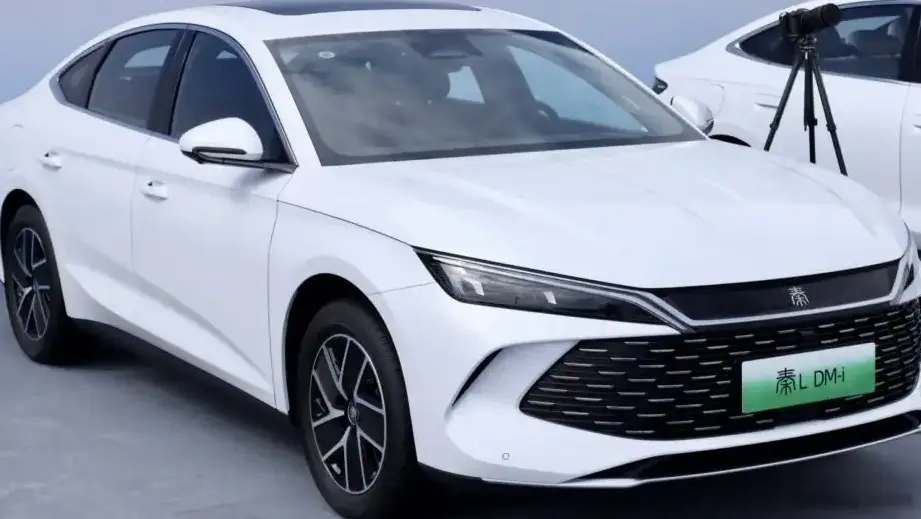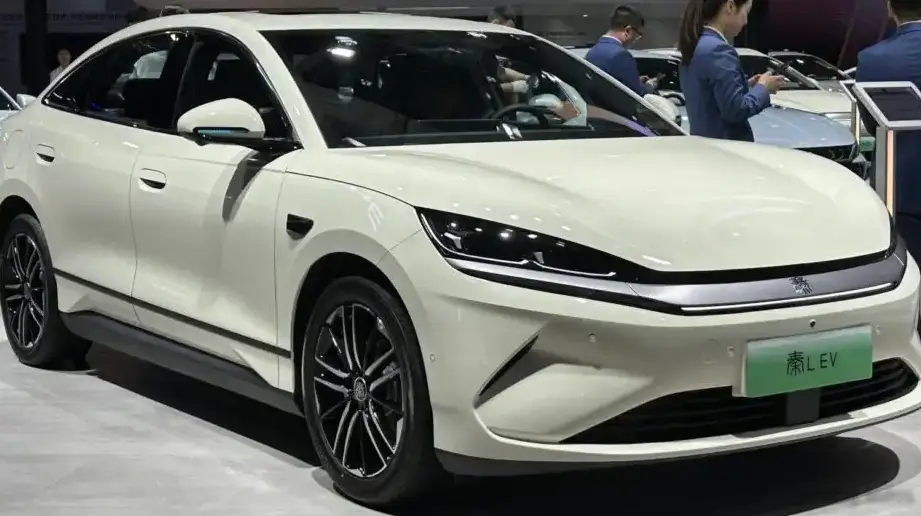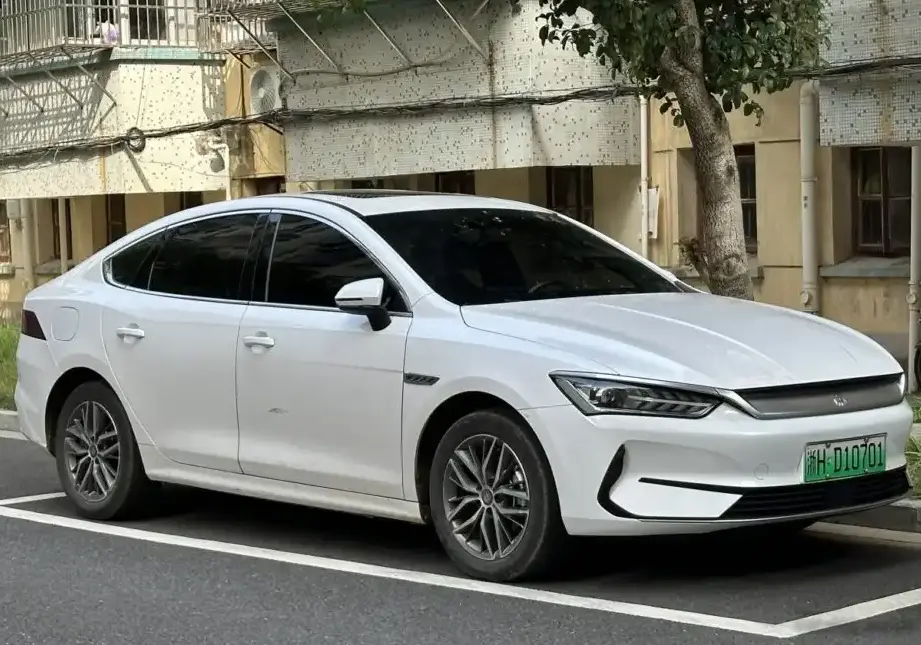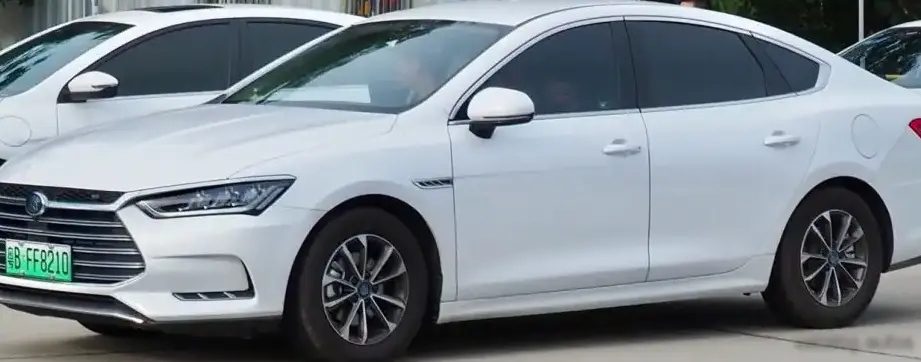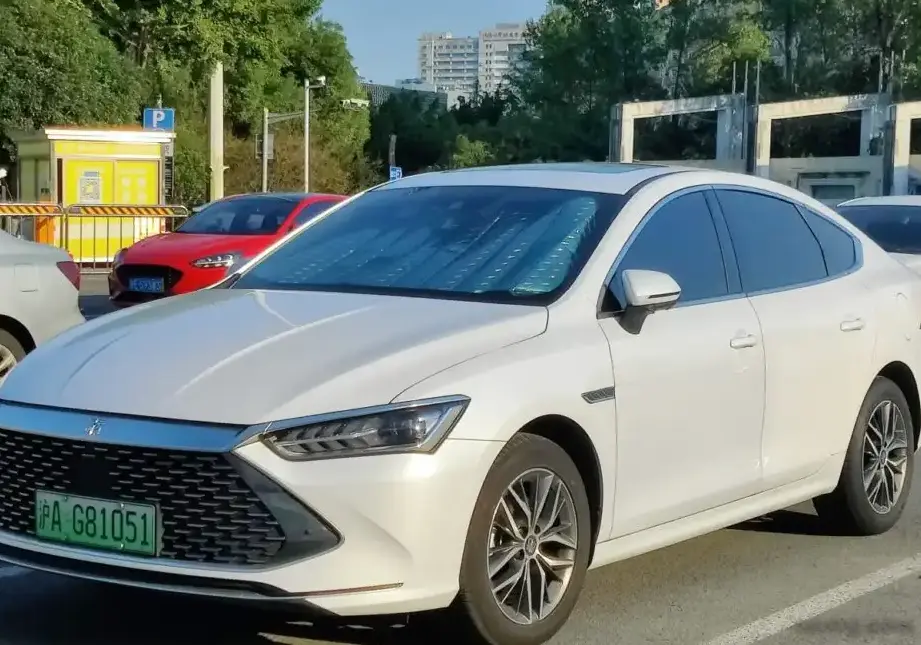
The BYD Qin Plus II DM-i, specifically the facelifted version introduced in March 2021 and produced through April 2024, represents a significant step in BYD’s development of plug-in hybrid electric vehicles (PHEVs). This variant, equipped with a 1.5-liter gasoline engine paired with an 18.32 kWh battery and an electric motor, delivers a combined system output of 197 horsepower. Positioned as a mid-range offering within the Qin Plus II lineup, it aimed to provide a balance between fuel efficiency, performance, and affordability in the highly competitive Chinese automotive market. The DM-i designation signifies BYD’s “Dual Motor Intelligence” technology, prioritizing electric drive while utilizing the internal combustion engine for range extension and efficiency.
Technical Specifications
| Brand | BYD |
| Model | Qin |
| Generation | Qin Plus II (facelift 2021) |
| Type (Engine) | DM-i 1.5L 18.32 kWh (197 Hp) Plug-in Hybrid E-CVT |
| Start of production | March, 2021 |
| End of production | April, 2024 |
| Powertrain Architecture | PHEV (Plug-in Hybrid Electric Vehicle) |
| Body type | Sedan |
| Seats | 5 |
| Doors | 4 |
| Fuel consumption (economy) – combined (NEDC) | 3.8 l/100 km (61.9 US mpg, 74.3 UK mpg, 26.3 km/l) |
| Fuel Type | Petrol / electricity |
| Acceleration 0 – 100 km/h | 7.3 sec |
| Acceleration 0 – 62 mph | 7.3 sec |
| Acceleration 0 – 60 mph | 6.9 sec |
| Maximum speed | 185 km/h (114.95 mph) |
| Emission standard | China VI |
| Gross battery capacity | 18.32 kWh |
| Battery technology | Lithium iron phosphate (LiFePO4) |
| Battery location | Below the floor |
| All-electric range (NEDC) | 120 km (74.56 mi) |
| Electric motor power | 197 Hp |
| Electric motor Torque | 325 Nm (239.71 lb.-ft.) |
| Electric motor location | Front, Transverse |
| Electric motor type | Synchronous |
| System power | 197 Hp |
| System torque | 325 Nm (239.71 lb.-ft.) |
| Power | 110 Hp |
| Torque | 135 Nm (99.57 lb.-ft.) |
| Engine layout | Front, Transverse |
| Engine Model/Code | Xiaoyun/BYD472QA |
| Engine displacement | 1498 cm3 (91.41 cu. in.) |
| Number of cylinders | 4 |
| Engine configuration | Inline |
| Number of valves per cylinder | 4 |
| Fuel injection system | Multi-port manifold injection |
| Engine aspiration | Naturally aspirated engine |
| Valvetrain | DOHC, VVT |
| Fuel tank capacity | 48 l (12.68 US gal | 10.56 UK gal) |
| Length | 4765 mm (187.6 in.) |
| Width | 1837 mm (72.32 in.) |
| Height | 1495 mm (58.86 in.) |
| Wheelbase | 2718 mm (107.01 in.) |
| Front track | 1580 mm (62.2 in.) |
| Rear (Back) track | 1590 mm (62.6 in.) |
| Minimum turning circle (turning diameter) | 11 m (36.09 ft.) |
| Drivetrain Architecture | Front wheel drive. PHEV. ICE and electric motor drive the front wheels. |
| Number of gears and type of gearbox | automatic transmission E-CVT |
| Front suspension | Independent type McPherson |
| Rear suspension | Torsion |
| Front brakes | Ventilated discs |
| Rear brakes | Disc |
| Assisting systems | ABS (Anti-lock braking system) |
| Steering type | Steering rack and pinion |
| Power steering | Electric Steering |
| Tires size | 215/55 R17 |
| Wheel rims size | 17 |
Powertrain & Engine Architecture
The Qin Plus II DM-i utilizes a parallel hybrid architecture. The core of the powertrain is the BYD-developed 1.5-liter naturally aspirated four-cylinder engine (code Xiaoyun/BYD472QA). This engine produces 110 horsepower and 99.57 lb.-ft. of torque. It’s paired with a permanent magnet synchronous electric motor generating 197 horsepower and 239.71 lb.-ft. of torque. The engine employs multi-point fuel injection and a double overhead camshaft (DOHC) valvetrain with variable valve timing (VVT). The 18.32 kWh lithium iron phosphate (LiFePO4) battery pack is positioned under the floor, contributing to a lower center of gravity and maximizing cabin space. The “E-CVT” transmission isn’t a traditional continuously variable transmission, but rather a single-speed reduction gear coupled with the electric motor, allowing for seamless transitions between electric and hybrid modes. The DM-i system prioritizes electric drive whenever possible, switching to the gasoline engine for range extension or when higher power demands are needed.
Driving Characteristics
The 1.8L/Automatic combination delivers a surprisingly refined driving experience. In pure electric mode, the Qin Plus II DM-i offers near-silent operation and brisk acceleration, particularly in urban environments. The electric motor provides instant torque, resulting in responsive performance. When the gasoline engine engages, the transition is generally smooth and unobtrusive. The E-CVT transmission contributes to a seamless power delivery, although it lacks the sporty feel of a traditional multi-gear automatic. Compared to the standard gasoline-powered Qin Plus II models, the DM-i variant offers significantly improved fuel economy and a quieter cabin. While not as dynamically engaging as some competitors, the DM-i prioritizes comfort and efficiency, making it well-suited for daily commuting and long-distance travel.
Equipment & Trim Levels
The Qin Plus II DM-i typically came standard with features such as LED headlights, a touchscreen infotainment system (usually 10.1 or 12.8 inches), Bluetooth connectivity, and a suite of driver-assistance systems including ABS, electronic stability control, and parking sensors. Higher trim levels added features like leather upholstery, a panoramic sunroof, automatic climate control, and advanced driver-assistance systems such as adaptive cruise control and lane-keeping assist. Interior upholstery was generally cloth on base models, upgrading to leatherette or genuine leather on higher trims. Dashboard configurations varied slightly depending on the trim level, but all models featured a modern and minimalist design.
Chassis & Braking
The Qin Plus II DM-i utilizes a front-wheel-drive layout. The front suspension employs an independent McPherson strut design, while the rear suspension features a torsion beam setup. This configuration provides a comfortable ride quality, although it’s not particularly sporty. Braking duties are handled by ventilated discs at the front and solid discs at the rear. The inclusion of ABS (Anti-lock Braking System) is standard, enhancing safety and stability during emergency braking. Steering is rack-and-pinion with electric power assistance, providing light and precise steering feel.
Market Reception & Comparison
The BYD Qin Plus II DM-i was generally well-received in the Chinese market. Critics praised its fuel efficiency, comfortable ride, and quiet cabin. The plug-in hybrid powertrain offered a compelling alternative to traditional gasoline-powered vehicles, particularly in cities with restrictions on internal combustion engine vehicles. Compared to other trims in the Qin Plus II lineup, the DM-i variant offered superior fuel economy and a more refined driving experience, but at a higher price point. Its main competitors included other PHEV sedans from Chinese manufacturers such as Geely and Changan.
Legacy
The BYD Qin Plus II DM-i played a crucial role in establishing BYD as a leader in the Chinese new energy vehicle market. The DM-i technology proved to be highly successful, and BYD has continued to refine and expand its plug-in hybrid offerings. In the used car market, the Qin Plus II DM-i remains a popular choice due to its fuel efficiency, reliability, and relatively low running costs. The LiFePO4 battery technology is known for its durability and safety, contributing to the long-term reliability of the powertrain. While battery degradation is a factor in all electric and hybrid vehicles, the Qin Plus II DM-i has generally demonstrated good battery health over time.