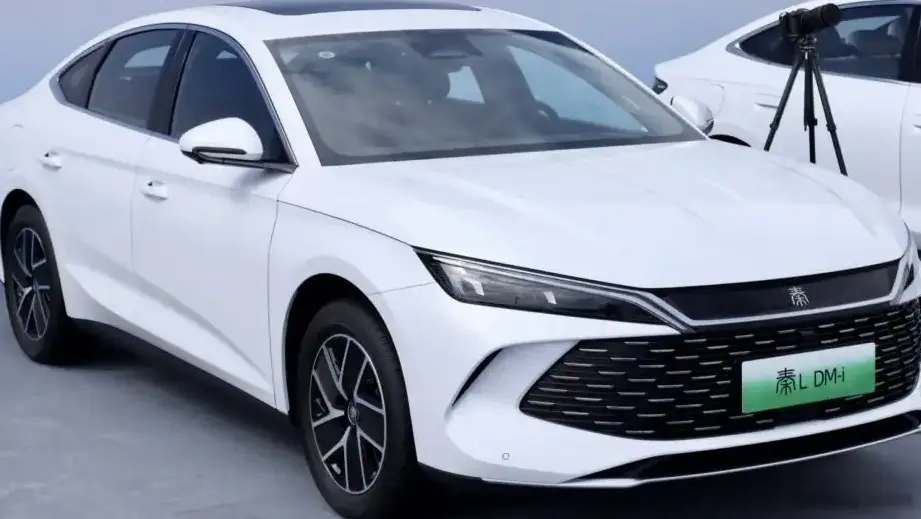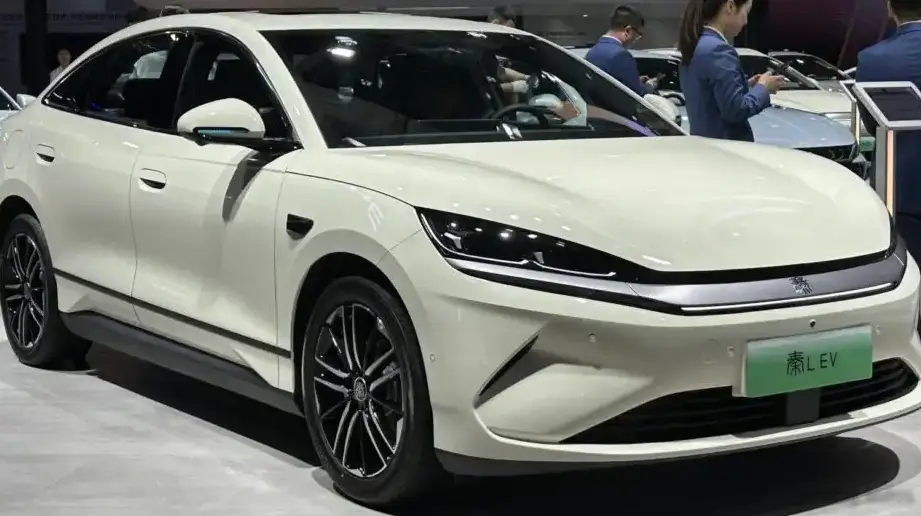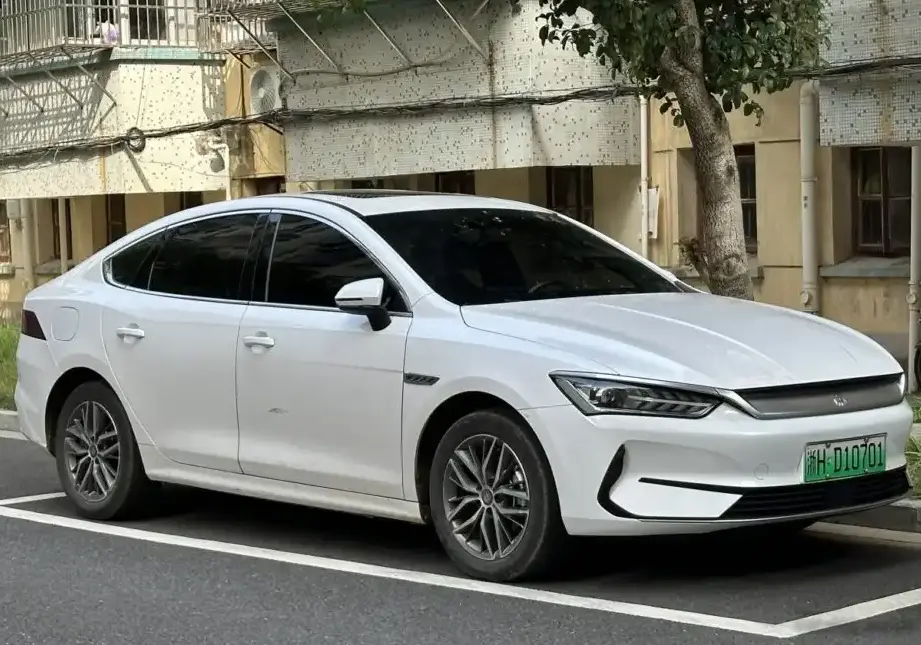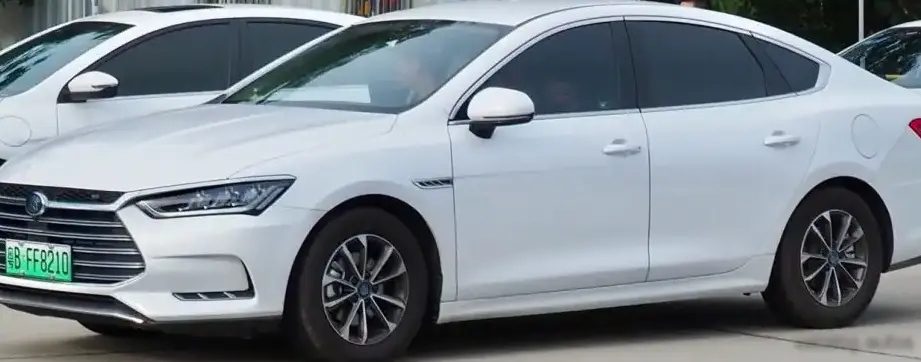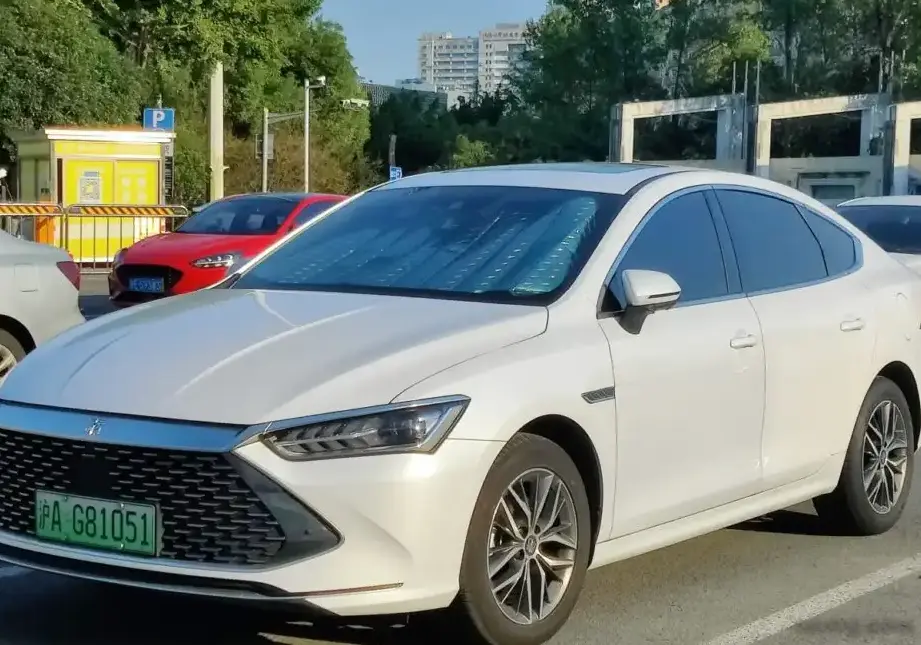
The BYD Qin Plus II DM-i, specifically the facelifted 2021 model with the 1.5L engine, 8.32 kWh battery, and 180 horsepower combined output, represents a significant step in BYD’s development of plug-in hybrid electric vehicles (PHEVs). Introduced in March 2021 and continuing production through April 2024, this variant occupied a key position within the Qin Plus II lineup, offering a balance of fuel efficiency, performance, and affordability. It was primarily aimed at the Chinese domestic market, where demand for PHEVs was rapidly increasing due to government incentives and growing environmental awareness. The “DM-i” designation signifies BYD’s Dual-Mode-i technology, prioritizing electric driving while retaining the flexibility of a gasoline engine for extended range.
Technical Specifications
| Brand | BYD |
| Model | Qin |
| Generation | Qin Plus II (facelift 2021) |
| Type | DM-i 1.5L 8.32 kWh (180 Hp) Plug-in Hybrid E-CVT |
| Start of production | March, 2021 |
| End of production | April, 2024 |
| Powertrain Architecture | PHEV (Plug-in Hybrid Electric Vehicle) |
| Body type | Sedan |
| Seats | 5 |
| Doors | 4 |
| Fuel consumption (combined NEDC) | 3.8 l/100 km (61.9 US mpg, 74.3 UK mpg, 26.3 km/l) |
| Fuel Type | Petrol / electricity |
| Acceleration 0 – 100 km/h | 7.9 sec |
| Acceleration 0 – 62 mph | 7.9 sec |
| Acceleration 0 – 60 mph | 7.5 sec |
| Maximum speed | 185 km/h (114.95 mph) |
| Emission standard | China VI |
| Gross battery capacity | 8.32 kWh |
| Battery technology | Lithium iron phosphate (LiFePO4) |
| Battery location | Below the floor |
| All-electric range (NEDC) | 55 km (34.18 mi) |
| Electric motor power | 180 Hp |
| Electric motor Torque | 316 Nm (233.07 lb.-ft.) |
| Electric motor location | Front, Transverse |
| Electric motor type | Synchronous |
| System power | 180 Hp |
| System torque | 316 Nm (233.07 lb.-ft.) |
| Engine Power | 110 Hp |
| Power per litre | 73.4 Hp/l |
| Engine Torque | 135 Nm (99.57 lb.-ft.) |
| Engine layout | Front, Transverse |
| Engine Model/Code | Xiaoyun/BYD472QA |
| Engine displacement | 1498 cm3 (91.41 cu. in.) |
| Number of cylinders | 4 |
| Engine configuration | Inline |
| Number of valves per cylinder | 4 |
| Fuel injection system | Multi-port manifold injection |
| Engine aspiration | Naturally aspirated engine |
| Valvetrain | DOHC, VVT |
| Fuel tank capacity | 48 l (12.68 US gal | 10.56 UK gal) |
| Length | 4765 mm (187.6 in.) |
| Width | 1837 mm (72.32 in.) |
| Height | 1495 mm (58.86 in.) |
| Wheelbase | 2718 mm (107.01 in.) |
| Front track | 1580 mm (62.2 in.) |
| Rear track | 1590 mm (62.6 in.) |
| Minimum turning circle | 11 m (36.09 ft.) |
| Drivetrain | Front wheel drive |
| Gearbox | automatic transmission E-CVT |
| Front suspension | Independent type McPherson |
| Rear suspension | Torsion |
| Front brakes | Ventilated discs |
| Rear brakes | Disc |
| Steering type | Steering rack and pinion |
| Power steering | Electric Steering |
| Tires size | 225/60 R16; 215/55 R17 |
| Wheel rims size | 16; 17 |
Powertrain & Engine Architecture
The Qin Plus II DM-i utilizes BYD’s DM-i hybrid system, which centers around a 1.5-liter naturally aspirated four-cylinder gasoline engine (code Xiaoyun/BYD472QA) paired with an electric motor. The engine produces 110 horsepower and 99.57 lb.-ft. of torque. The electric motor, a synchronous unit, delivers 180 horsepower and 233.07 lb.-ft. of torque. The combined system output is rated at 180 horsepower. A key feature of the DM-i system is its focus on electric driving. The gasoline engine primarily acts as a generator to charge the 8.32 kWh lithium iron phosphate (LiFePO4) battery pack, allowing for a NEDC-rated all-electric range of 55 km (34.18 miles). The E-CVT (electronically controlled continuously variable transmission) seamlessly blends power from both the engine and motor, optimizing efficiency and performance. The engine employs multi-port fuel injection and a double overhead camshaft (DOHC) valvetrain with variable valve timing (VVT).
Driving Characteristics
The 1.8L/Automatic configuration delivers a smooth and refined driving experience, particularly in urban environments where it can operate primarily on electric power. Acceleration from 0-60 mph is quoted at around 7.5 seconds, which is respectable for a vehicle in this class. The E-CVT provides seamless acceleration, avoiding the stepped shifts of a traditional automatic transmission. Compared to the standard gasoline-only versions of the Qin Plus II, the DM-i offers significantly improved fuel economy. While higher-output gasoline engines provided more spirited performance, they lacked the DM-i’s electric driving capability and fuel efficiency. The DM-i prioritizes efficiency and comfort over outright sportiness.
Equipment & Trim Levels
The Qin Plus II DM-i typically came well-equipped, even in its base trim levels. Standard features often included automatic climate control, a touchscreen infotainment system (typically 10.1 or 12.8 inches), Bluetooth connectivity, and a suite of safety features like ABS, electronic stability control, and airbags. Higher trim levels added features such as leather upholstery, a panoramic sunroof, a 360-degree camera system, and advanced driver-assistance systems (ADAS) like adaptive cruise control and lane keeping assist. Interior upholstery was generally cloth in lower trims, upgrading to leatherette or genuine leather in higher specifications. Dashboard configurations varied slightly depending on the trim level, with more premium trims featuring upgraded materials and finishes.
Chassis & Braking
The Qin Plus II DM-i utilizes a front-wheel-drive layout. The front suspension employs an independent McPherson strut design, while the rear suspension uses a torsion beam setup. This configuration provides a good balance of ride comfort and handling. Braking duties are handled by ventilated discs at the front and solid discs at the rear. ABS (Anti-lock Braking System) is standard, enhancing safety during emergency braking situations. Steering is rack and pinion with electric power assistance.
Market Reception & Comparison
The Qin Plus II DM-i was generally well-received in the Chinese market. Critics praised its fuel efficiency, smooth driving experience, and relatively affordable price point. Compared to other PHEV models in the same segment, the Qin Plus II DM-i offered a competitive range and performance. Its reliance on the LiFePO4 battery chemistry was also seen as a positive, as these batteries are known for their safety and longevity. However, some reviewers noted that the interior materials could be improved in certain areas. Compared to the gasoline-only versions of the Qin Plus II, the DM-i commanded a price premium, but the fuel savings and electric driving capability often justified the extra cost for many buyers.
Legacy
The BYD Qin Plus II DM-i played a crucial role in establishing BYD as a leader in the Chinese PHEV market. The DM-i technology has proven to be reliable, and the powertrain continues to be a popular choice among used car buyers. The LiFePO4 battery pack has demonstrated good longevity, and the overall maintenance costs are relatively low. As of today, the Qin Plus II DM-i remains a viable option for those seeking an affordable and fuel-efficient plug-in hybrid sedan. Its success paved the way for BYD’s continued expansion into the global EV market.