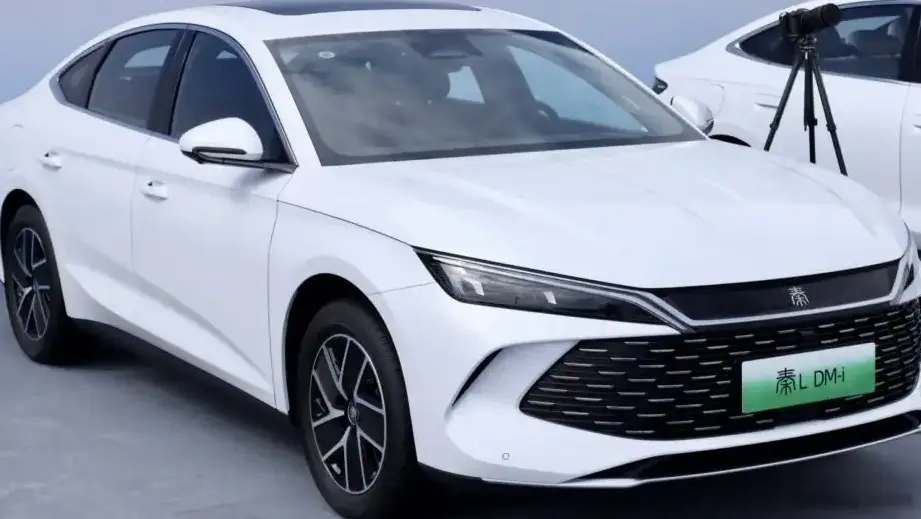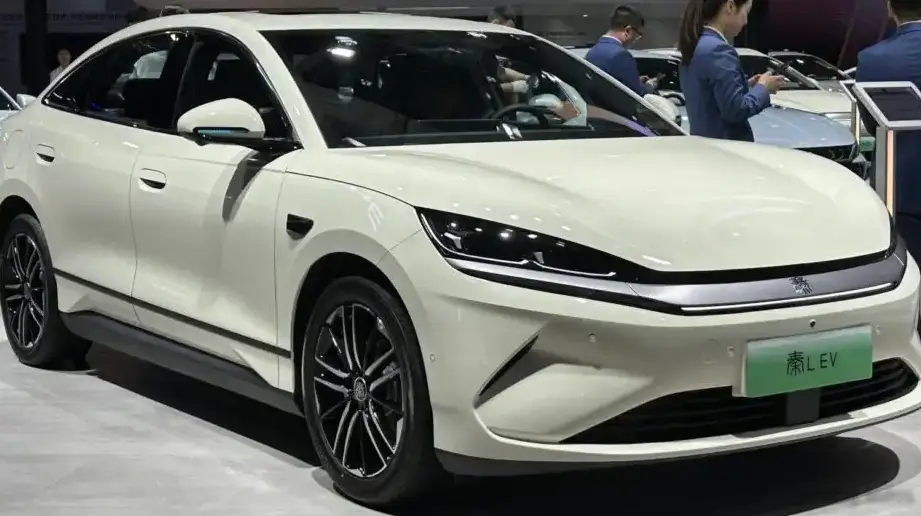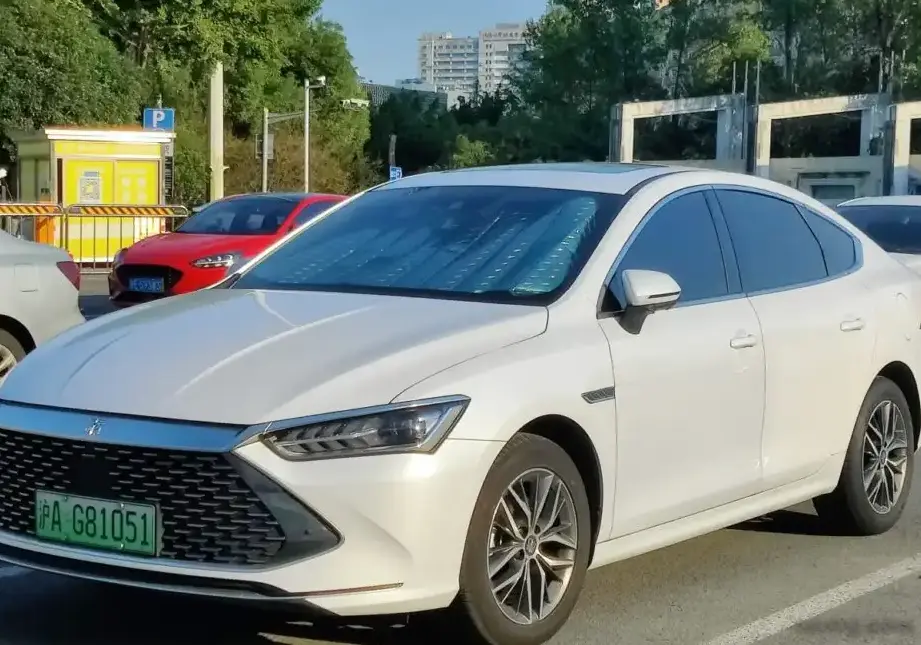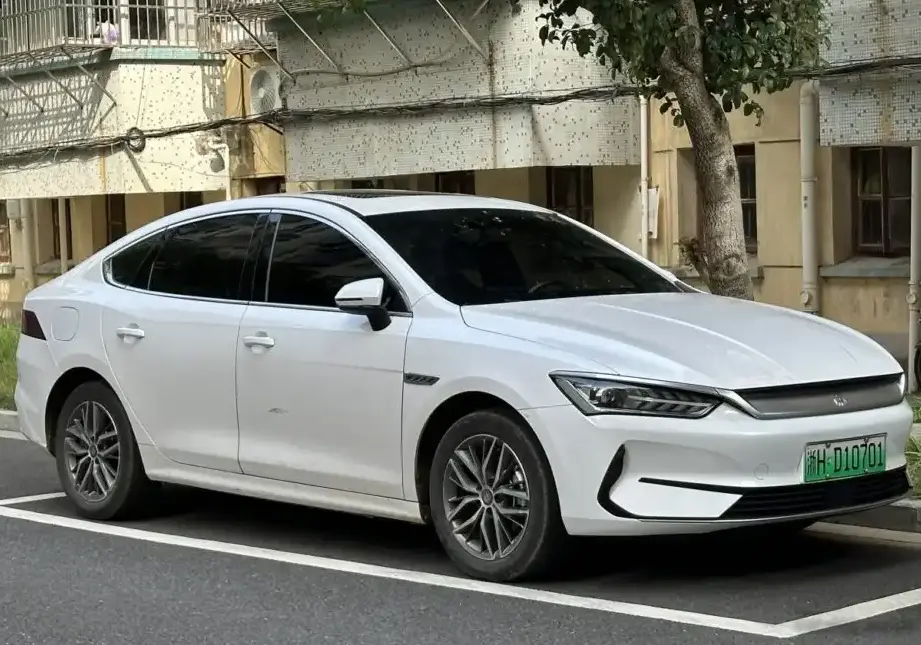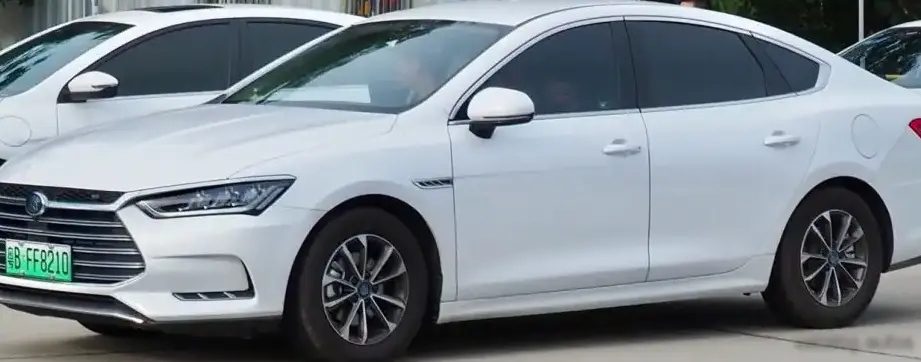
The BYD Qin Pro II DM 1.5T (310 Hp) Plug-in Hybrid DCT is a compact sedan produced by the Chinese automaker BYD from March 2019 to March 2021. Representing a significant step forward in BYD’s “Dual Mode” technology, this variant combined a turbocharged gasoline engine with an electric motor and a relatively large battery pack for its time, offering both all-electric driving capability and extended range through hybrid operation. It was positioned as a mid-to-upper trim level within the Qin Pro II range, appealing to consumers seeking fuel efficiency and modern technology. The Qin Pro II DM aimed to capitalize on growing demand for new energy vehicles in China, offering a compelling alternative to traditional gasoline-powered sedans.
Technical Specifications
| Brand | BYD |
| Model | Qin |
| Generation | Qin Pro II |
| Type | DM 1.5T (310 Hp) Plug-in Hybrid DCT |
| Start of production | March, 2019 |
| End of production | March, 2021 |
| Powertrain Architecture | PHEV (Plug-in Hybrid Electric Vehicle) |
| Body type | Sedan |
| Seats | 5 |
| Doors | 4 |
| Fuel Type | Petrol / electricity |
| Acceleration 0 – 100 km/h | 5.9 sec |
| Acceleration 0 – 62 mph | 5.9 sec |
| Acceleration 0 – 60 mph | 5.6 sec |
| Emission standard | China VI |
| Weight-to-power ratio | 5.5 kg/Hp, 183.4 Hp/tonne |
| Weight-to-torque ratio | 3.4 kg/Nm, 292.9 Nm/tonne |
| Gross battery capacity | 9 kWh |
| Battery technology | Lithium nickel manganese cobalt oxides (Li-NMC) |
| Battery location | Below the floor |
| All-electric range (CLTC) | 53 km / 32.93 mi |
| Electric motor power | 150 Hp |
| Electric motor Torque | 250 Nm / 184.39 lb.-ft. |
| Electric motor location | Front, Transverse |
| Electric motor type | Synchronous |
| System power | 310 Hp |
| System torque | 495 Nm / 365.09 lb.-ft. |
| Power | 160 Hp @ 5200 rpm |
| Torque | 245 Nm @ 1600-4000 rpm / 180.7 lb.-ft. @ 1600-4000 rpm |
| Engine layout | Front, Transverse |
| Engine Model/Code | BYD476ZQB |
| Engine displacement | 1497 cm3 / 91.35 cu. in. |
| Number of cylinders | 4 |
| Engine configuration | Inline |
| Number of valves per cylinder | 4 |
| Fuel injection system | Direct injection |
| Engine aspiration | Turbocharger, Intercooler |
| Valvetrain | DOHC |
| Kerb Weight | 1690 kg / 3725.81 lbs. |
| Trunk (boot) space – minimum | 450 l / 15.89 cu. ft. |
| Fuel tank capacity | 39 l / 10.3 US gal | 8.58 UK gal |
| Length | 4765 mm / 187.6 in. |
| Width | 1837 mm / 72.32 in. |
| Height | 1495 mm / 58.86 in. |
| Wheelbase | 2718 mm / 107.01 in. |
| Front track | 1580 mm / 62.2 in. |
| Rear (Back) track | 1590 mm / 62.6 in. |
| Number of gears and type of gearbox | 6 gears, automatic transmission DCT |
| Front suspension | Independent type McPherson |
| Rear suspension | Independent multi-link suspension |
| Front brakes | Ventilated discs |
| Rear brakes | Disc |
| Tires size | 225/60 R16 |
| Wheel rims size | 16 |
Powertrain & Engine Architecture
The Qin Pro II DM 1.5T utilizes a plug-in hybrid powertrain centered around BYD’s BYD476ZQB 1.5-liter turbocharged inline-four cylinder gasoline engine. This engine produces 160 horsepower at 5200 rpm and 245 Nm (180.7 lb-ft) of torque between 1600 and 4000 rpm. It features direct fuel injection and a dual overhead camshaft (DOHC) valvetrain. The engine is paired with a 150 horsepower electric motor, delivering an additional 250 Nm (184.39 lb-ft) of torque. The combined system output reaches 310 horsepower and 495 Nm (365.09 lb-ft) of torque. A 9 kWh lithium nickel manganese cobalt oxide (Li-NMC) battery pack, positioned under the floor, provides an all-electric range of 53 kilometers (32.93 miles) based on the CLTC (China Light-Duty Vehicle Test Cycle) standard. Power is delivered to the front wheels via a 6-speed dual-clutch transmission (DCT). The powertrain allows for operation in three primary modes: all-electric, hybrid, and gasoline-only.
Driving Characteristics
The 1.5T DM variant offered a noticeably quicker acceleration than its naturally aspirated counterparts. The 0-60 mph time of approximately 5.6 seconds was competitive for its class. The DCT transmission provided relatively quick and smooth gear changes, enhancing the driving experience. In electric mode, the vehicle offered near-silent operation and instant torque, making it ideal for city driving. In hybrid mode, the engine and electric motor worked in tandem, providing a balance of performance and fuel efficiency. While the electric motor provided a boost in low-end torque, the gasoline engine was responsible for maintaining higher speeds and providing sustained power. Compared to the standard gasoline versions, the added weight of the battery pack and electric motor did slightly impact handling, but the independent suspension setup helped to mitigate this effect.
Equipment & Trim Levels
The Qin Pro II DM 1.5T typically came well-equipped, reflecting its position as a mid-to-upper trim level. Standard features included automatic climate control, a touchscreen infotainment system with smartphone connectivity, power-adjustable seats, and a suite of safety features such as ABS, electronic stability control, and airbags. Interior upholstery was generally a combination of leatherette and fabric. Optional extras included a panoramic sunroof, upgraded sound system, and advanced driver-assistance systems (ADAS) like adaptive cruise control and lane departure warning. The dashboard layout was modern and driver-focused, with a digital instrument cluster providing key vehicle information.
Chassis & Braking
The Qin Pro II DM 1.5T utilized an independent McPherson strut suspension in the front and an independent multi-link suspension in the rear. This setup provided a comfortable ride quality and decent handling characteristics. The front brakes were ventilated discs, while the rear brakes were solid discs. The electric power steering system offered light and precise steering feel. The vehicle was equipped with ABS (Anti-lock Braking System) as standard, enhancing braking performance and safety. The suspension was tuned to balance comfort and handling, taking into account the added weight of the hybrid components.
Market Reception & Comparison
The Qin Pro II DM 1.5T was generally well-received in the Chinese market, where demand for plug-in hybrid vehicles was strong. Critics praised its fuel efficiency, performance, and technology features. Compared to other trims in the Qin Pro II lineup, the DM 1.5T offered a significant improvement in fuel economy and acceleration. It competed with other plug-in hybrid sedans from domestic and international automakers, such as the Geely Emgrand PHEV and the Toyota Prius Prime. While the initial purchase price was higher than the standard gasoline versions, the long-term cost of ownership was often lower due to reduced fuel consumption and government incentives.
Legacy
The BYD Qin Pro II DM 1.5T played a crucial role in establishing BYD as a leading manufacturer of new energy vehicles in China. The powertrain proved to be relatively reliable, with few widespread issues reported. On the used car market, these models continue to be sought after by buyers looking for a fuel-efficient and technologically advanced sedan. The success of the Qin Pro II DM paved the way for BYD to develop and launch even more sophisticated plug-in hybrid and electric vehicles, solidifying its position as a major player in the global automotive industry. The vehicle’s design and technology influenced subsequent BYD models, contributing to the brand’s overall evolution.