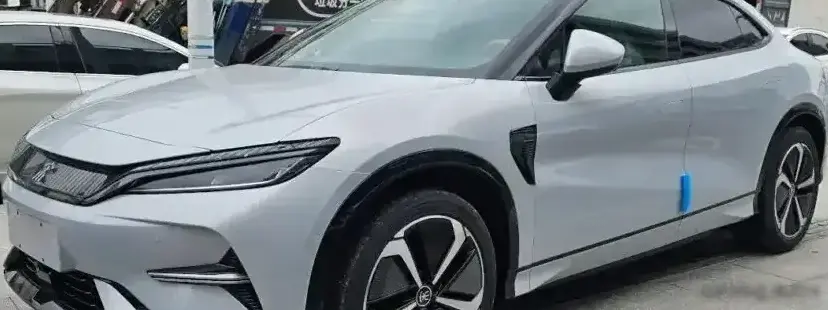
The BYD Song L EV, specifically the 87.04 kWh (313 Hp) variant, represents a significant entry into the rapidly expanding electric SUV market. Introduced in December 2023, this model is positioned as a technologically advanced and spacious option within BYD’s Song L lineup, which blends SUV practicality with a fastback-inspired design. It’s primarily targeted towards the Chinese domestic market, but signals BYD’s growing ambitions for global expansion. The Song L EV utilizes BYD’s e-Platform 3.0, showcasing the company’s advancements in electric vehicle technology and battery integration. This particular trim level aims to balance performance, range, and affordability within the Song L family.
Technical Specifications
| Brand | BYD |
| Model | Song L |
| Generation | Song L EV |
| Type (Engine) | 87.04 kWh (313 Hp) Electric |
| Start of production | December, 2023 |
| Powertrain Architecture | BEV (Electric Vehicle) |
| Body type | SUV, Fastback |
| Seats | 5 |
| Doors | 5 |
| Fuel Type | Electricity |
| Acceleration 0 – 100 km/h | 6.9 sec |
| Acceleration 0 – 62 mph | 6.9 sec |
| Acceleration 0 – 60 mph | 6.6 sec |
| Gross battery capacity | 87.04 kWh |
| Battery technology | Lithium iron phosphate (LiFePO4) |
| Battery location | Below the floor |
| All-electric range (CLTC) | 662 km (411.35 mi) |
| Electric motor power | 313 Hp |
| Electric motor Torque | 360 Nm (265.52 lb.-ft.) |
| Electric motor location | Rear axle, Transverse |
| Electric motor type | Synchronous |
| System power | 313 Hp |
| System torque | 360 Nm (265.52 lb.-ft.) |
| Trunk (boot) space – minimum | 410 l (14.48 cu. ft.) |
| Trunk (boot) space – maximum | 1053 l (37.19 cu. ft.) |
| Length | 4840 mm (190.55 in.) |
| Width | 1950 mm (76.77 in.) |
| Height | 1560 mm (61.42 in.) |
| Wheelbase | 2930 mm (115.35 in.) |
| Minimum turning circle | 11.4 m (37.4 ft.) |
| Drivetrain | Rear wheel drive |
| Number of gears | 1 |
| Gearbox type | Automatic transmission |
| Front suspension | Double wishbone |
| Rear suspension | Independent multi-link suspension |
| Front brakes | Ventilated discs |
| Rear brakes | Ventilated discs |
| Tires size (Front) | 245/45 R20 |
| Tires size (Rear) | 265/45 R20 |
| Wheel rims size (Front) | 20 |
| Wheel rims size (Rear) | 20 |
Powertrain & Engine Architecture
The BYD Song L EV 87.04 kWh utilizes a single electric motor mounted transversely on the rear axle, delivering rear-wheel drive. This configuration contributes to a balanced weight distribution and efficient power delivery. The motor itself is a synchronous type, known for its high efficiency and smooth operation. The heart of the system is the 87.04 kWh Lithium Iron Phosphate (LiFePO4) battery pack, positioned under the vehicle floor to optimize space and lower the center of gravity. LiFePO4 chemistry is favored for its enhanced thermal stability and longer cycle life compared to traditional Nickel Manganese Cobalt (NMC) batteries, although it typically offers slightly lower energy density. BYD’s battery management system (BMS) plays a crucial role in optimizing battery performance, ensuring safety, and extending its lifespan. The vehicle employs a single-speed automatic transmission, typical for electric vehicles, providing seamless acceleration without the need for multiple gears.
Driving Characteristics
The 313 horsepower and 360 Nm (265.52 lb.-ft) of torque provide brisk acceleration, with a 0-60 mph time of approximately 6.6 seconds. While not a performance-focused EV, the Song L EV offers ample power for everyday driving and highway merging. The rear-wheel-drive configuration contributes to a more engaging driving experience compared to front-wheel-drive alternatives. The single-speed transmission delivers instant torque, resulting in smooth and linear acceleration. Compared to potential higher-performance variants of the Song L, this version prioritizes efficiency and range over outright speed. The relatively low center of gravity, thanks to the underfloor battery pack, enhances stability and handling.
Equipment & Trim Levels
The Song L EV 87.04 kWh trim typically includes a comprehensive suite of standard features. These commonly include a large touchscreen infotainment system, digital instrument cluster, leatherette upholstery, automatic climate control, and a panoramic sunroof. Advanced driver-assistance systems (ADAS) such as adaptive cruise control, lane keeping assist, and automatic emergency braking are also standard. Optional extras may include premium audio systems, ventilated front seats, and a 360-degree camera system. The interior design emphasizes a modern and minimalist aesthetic, with high-quality materials and a focus on user-friendliness.
Chassis & Braking
The Song L EV features a double wishbone suspension setup at the front and an independent multi-link suspension at the rear, providing a comfortable and controlled ride. Ventilated disc brakes are used on all four wheels, ensuring adequate stopping power. The electric steering system offers precise and responsive handling. The vehicle’s chassis is designed to maximize rigidity and minimize weight, contributing to improved handling and efficiency. The standard tire size is 245/45 R20 for the front and 265/45 R20 for the rear, providing a good balance of grip and comfort.
Market Reception & Comparison
The BYD Song L EV has been well-received in the Chinese market, praised for its spacious interior, advanced technology, and competitive pricing. Critics have noted the vehicle’s comfortable ride, smooth acceleration, and long electric range. Compared to other EVs in its class, the Song L EV offers a compelling value proposition, particularly considering its standard features and battery capacity. Its LiFePO4 battery chemistry is seen as a positive attribute by many, offering enhanced safety and longevity. However, some reviewers have pointed out that the interior design, while modern, may not appeal to all tastes.
Legacy
The BYD Song L EV 87.04 kWh represents a significant step forward for BYD in terms of electric vehicle technology and design. Its use of LiFePO4 battery chemistry and advanced driver-assistance systems positions it as a competitive offering in the rapidly evolving EV market. While long-term reliability data is still emerging, BYD’s reputation for battery technology and quality control suggests that the Song L EV should prove to be a durable and dependable vehicle. As BYD expands its global presence, the Song L EV is likely to play a key role in establishing the brand as a major player in the electric vehicle industry. The vehicle’s success will depend on its ability to maintain its competitive pricing and continue to innovate in terms of battery technology and performance.