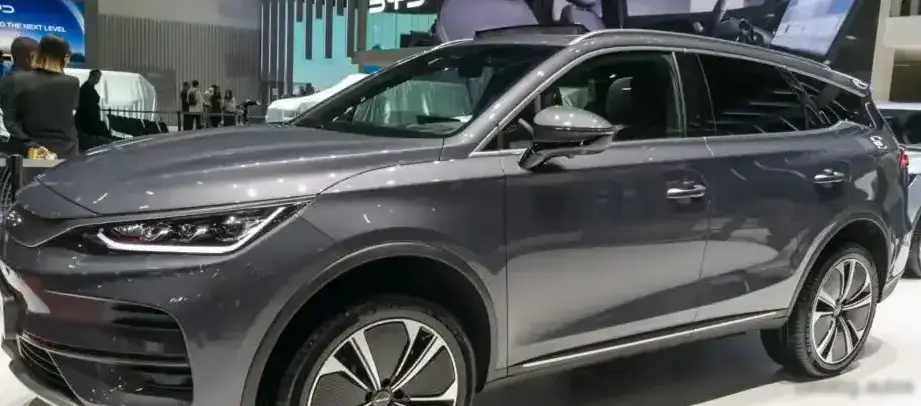
The BYD Tang II, specifically the facelifted 2021 model equipped with the 108.8 kWh battery pack and dual-motor all-wheel-drive (AWD) system producing a combined 517 horsepower, represents a significant step forward in BYD’s electric vehicle offerings. Introduced in June 2022 and produced through April 2025, this variant aimed to compete in the growing market for large, all-electric SUVs, primarily targeting consumers seeking a blend of performance, range, and spaciousness. The Tang II is positioned as a flagship model within BYD’s lineup, showcasing the company’s advancements in battery technology and electric powertrain engineering. It’s important to note that BYD, Build Your Dreams, is a Chinese manufacturer rapidly expanding its global presence, and the Tang II was initially designed with the Chinese market in mind, before being introduced to select international markets.
Technical Specifications
| Brand | BYD |
| Model | Tang |
| Generation | Tang II (facelift 2021) |
| Type (Engine) | EV 108.8 kWh (517 Hp) AWD |
| Start of production | June, 2022 |
| End of production | April, 2025 |
| Powertrain Architecture | BEV (Electric Vehicle) |
| Body type | SUV, Crossover |
| Seats | 6-7 |
| Doors | 5 |
| Fuel Type | Electricity |
| Acceleration 0 – 100 km/h | 4.4 sec |
| Acceleration 0 – 62 mph | 4.4 sec |
| Acceleration 0 – 60 mph | 4.2 sec |
| Gross battery capacity | 108.8 kWh |
| Battery technology | Lithium iron phosphate (LiFePO4) |
| Battery location | Below the floor |
| All-electric range (CLTC) | 635 km / 394.57 mi |
| Electric motor 1 power | 245 Hp |
| Electric motor 1 Torque | 350 Nm / 258.15 lb.-ft. |
| Electric motor 1 location | Front axle, Transverse |
| Electric motor 1 type | Synchronous |
| Electric motor 2 power | 272 Hp |
| Electric motor 2 Torque | 350 Nm / 258.15 lb.-ft. |
| Electric motor 2 location | Rear axle, Transverse |
| Electric motor 2 type | Synchronous |
| System power | 517 Hp |
| System torque | 700 Nm / 516.29 lb.-ft. |
| Length | 4900 mm / 192.91 in. |
| Width | 1950 mm / 76.77 in. |
| Height | 1725 mm / 67.91 in. |
| Wheelbase | 2820 mm / 111.02 in. |
| Front track | 1650 mm / 64.96 in. |
| Rear track | 1630 mm / 64.17 in. |
| Minimum turning circle | 11.8 m / 38.71 ft. |
| Drivetrain Architecture | One electric motor drives the front wheels, one electric motor drives the rear wheels. |
| Drive wheel | All wheel drive (4×4) |
| Number of gears | 1 |
| Gearbox type | Automatic transmission |
| Front suspension | Independent type McPherson |
| Rear suspension | Independent multi-link suspension |
| Front brakes | Ventilated discs |
| Rear brakes | Ventilated discs |
| Assisting systems | ABS (Anti-lock braking system) |
| Steering type | Steering rack and pinion |
| Power steering | Electric Steering |
| Tires size | 265/45 R21 |
| Wheel rims size | 21 |
Powertrain & Engine Architecture
The Tang II’s powertrain is built around a dual-motor, all-wheel-drive (AWD) configuration. The front motor produces 245 horsepower, while the rear motor delivers 272 horsepower, combining for a total system output of 517 horsepower and 700 Nm (516 lb-ft) of torque. Both motors utilize a synchronous electric motor design, known for its efficiency and power density. The 108.8 kWh battery pack employs Lithium Iron Phosphate (LiFePO4) chemistry. LiFePO4 batteries are favored for their enhanced thermal stability, longer cycle life, and reduced reliance on conflict minerals compared to Nickel Manganese Cobalt (NMC) batteries, although they generally offer slightly lower energy density. The battery is positioned under the vehicle floor, contributing to a lower center of gravity and improved handling. The single-speed automatic transmission is a direct-drive system, typical of electric vehicles, maximizing efficiency by eliminating the energy losses associated with multi-gear transmissions. The vehicle’s electronic control unit (ECU) manages power distribution between the front and rear motors, optimizing traction and performance based on driving conditions.
Driving Characteristics
The 517 hp AWD Tang II delivers brisk acceleration, achieving 0-60 mph in approximately 4.2 seconds. The dual-motor setup provides instant torque, resulting in responsive acceleration in all situations. The single-speed transmission offers seamless power delivery, without the gear changes experienced in internal combustion engine vehicles. Compared to lower-powered, rear-wheel-drive versions of the Tang (which are also available in some markets), the 517 hp AWD model offers significantly enhanced performance and all-weather capability. The lower center of gravity, thanks to the underfloor battery pack, contributes to stable handling. While the Tang II is a relatively large SUV, the electric powertrain and sophisticated torque vectoring system make it feel surprisingly agile. Regenerative braking is adjustable, allowing drivers to customize the level of deceleration when lifting off the throttle, maximizing energy recovery and extending range.
Equipment & Trim Levels
The Tang II 108.8 kWh AWD typically comes well-equipped as a flagship model. Standard features generally include a large touchscreen infotainment system (often exceeding 12 inches), a digital instrument cluster, leather upholstery, heated and ventilated front seats, a panoramic sunroof, and a comprehensive suite of advanced driver-assistance systems (ADAS). These ADAS features often include adaptive cruise control, lane keeping assist, automatic emergency braking, and blind-spot monitoring. Optional extras could include premium audio systems, upgraded interior trim materials, and a more sophisticated air purification system. The Tang II is typically offered with six or seven seats, providing flexibility for families. The interior design emphasizes a modern aesthetic with clean lines and high-quality materials.
Chassis & Braking
The Tang II utilizes an independent McPherson strut suspension at the front and an independent multi-link suspension at the rear, providing a comfortable ride and good handling characteristics. Ventilated disc brakes are fitted on all four wheels, providing ample stopping power. The electronic stability control (ESC) system works in conjunction with the ABS (Anti-lock Braking System) to maintain control during emergency braking maneuvers. The steering system is an electric power-assisted rack and pinion setup, offering precise and responsive steering feel. The vehicle rides on 21-inch alloy wheels, fitted with 265/45 R21 tires, providing a good balance of grip and ride comfort.
Market Reception & Comparison
The BYD Tang II received generally positive reviews, with critics praising its performance, range, spacious interior, and advanced technology. However, some reviewers noted that the styling might not appeal to all tastes. Compared to other electric SUVs in its class, such as the Tesla Model Y or the Ford Mustang Mach-E, the Tang II offered a compelling combination of value and features. Its LiFePO4 battery chemistry was seen as a positive attribute by some, due to its safety and longevity. Fuel economy, expressed as miles per gallon equivalent (MPGe), is competitive with other electric SUVs, with a CLTC range of 635 km (394.57 miles). Reliability data is still emerging, as the Tang II is a relatively new model, but BYD has a growing reputation for building durable and reliable electric vehicles.
Legacy
The BYD Tang II 108.8 kWh AWD represents a significant milestone in BYD’s ambition to become a global leader in the electric vehicle market. Its combination of performance, range, and technology helped to establish BYD as a serious contender in the large electric SUV segment. The LiFePO4 battery technology used in the Tang II is likely to become increasingly common in future electric vehicles, as manufacturers seek to improve safety and reduce costs. On the used car market, the Tang II is expected to hold its value reasonably well, due to its desirable features and growing demand for electric vehicles. The vehicle’s long-term reliability will be a key factor in its continued success in the used car market.