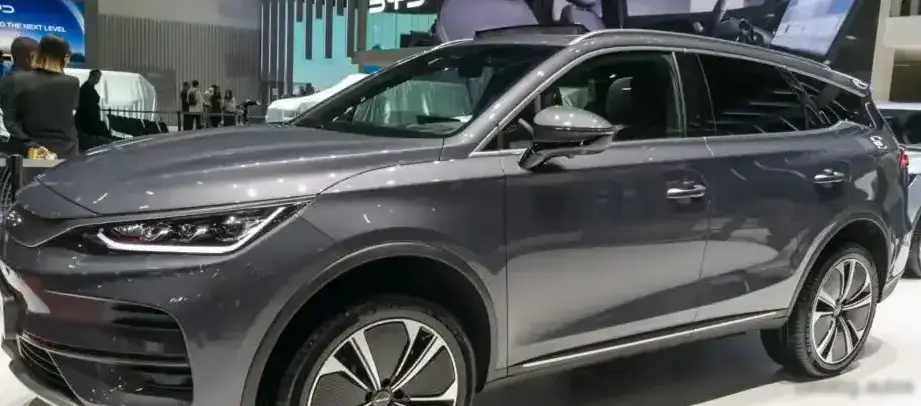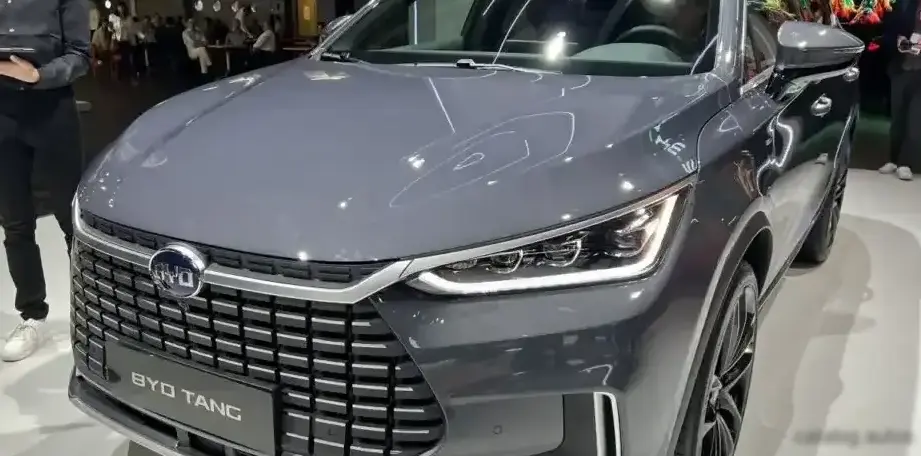
The BYD Tang II, specifically the facelifted 2021 model equipped with an 86.4 kWh battery and dual electric motors producing a combined 517 horsepower, represents a significant step forward in BYD’s electric vehicle offerings. Production began in June 2022 and continued through April 2025. Positioned as a flagship SUV within BYD’s lineup, the Tang II aimed to compete with established electric SUVs in both the Chinese domestic market and increasingly, in international markets. This variant, with its substantial battery capacity and all-wheel-drive configuration, was designed to offer a blend of performance, range, and practicality for families seeking a zero-emission vehicle.
Technical Specifications
| Brand | BYD |
| Model | Tang |
| Generation | Tang II (facelift 2021) |
| Type (Engine) | EV 86.4 kWh (517 Hp) AWD |
| Start of production | June, 2022 |
| End of production | April, 2025 |
| Powertrain Architecture | BEV (Electric Vehicle) |
| Body type | SUV, Crossover |
| Seats | 6-7 |
| Doors | 5 |
| Fuel Type | Electricity |
| Acceleration 0 – 100 km/h | 4.6 sec |
| Acceleration 0 – 62 mph | 4.6 sec |
| Acceleration 0 – 60 mph | 4.4 sec |
| Maximum speed | 180 km/h (111.85 mph) |
| Weight-to-power ratio | 4.8 kg/Hp, 207.7 Hp/tonne |
| Weight-to-torque ratio | 3.7 kg/Nm, 273.2 Nm/tonne |
| Gross battery capacity | 86.4 kWh |
| Battery voltage | 640 V |
| Battery technology | Lithium iron phosphate (LiFePO4) |
| Battery weight | 617 kg (1360.25 lbs) |
| Battery location | Below the floor |
| All-electric range (WLTP) | 400 km (248.55 mi) |
| Average Energy consumption (WLTP) | 23.8 kWh/100 km (38.3 kWh/100 mi, 88 MPGe, 4.2 km/kWh, 2.6 mi/kWh) |
| Electric motor 1 location | Front axle, Transverse |
| Electric motor 1 type | Synchronous |
| Electric motor 2 location | Rear axle, Transverse |
| Electric motor 2 type | Synchronous |
| System power | 517 Hp |
| System torque | 680 Nm (501.54 lb.-ft.) |
| Kerb Weight | 2489 kg (5487.31 lbs) |
| Max. weight | 3060 kg (6746.15 lbs) |
| Max load | 571 kg (1258.84 lbs) |
| Trunk (boot) space – minimum | 235 l (8.3 cu. ft.) |
| Trunk (boot) space – maximum | 1655 l (58.45 cu. ft.) |
| Max. roof load | 75 kg (165.35 lbs) |
| Length | 4870 mm (191.73 in) |
| Width | 1950 mm (76.77 in) |
| Width including mirrors | 2180 mm (85.83 in) |
| Height | 1725 mm (67.91 in) |
| Wheelbase | 2820 mm (111.02 in) |
| Front track | 1650 mm (64.96 in) |
| Rear (Back) track | 1630 mm (64.17 in) |
| Drag coefficient (Cd) | 0.335 |
| Minimum turning circle | 11.8 m (38.71 ft) |
| Drivetrain Architecture | One electric motor drives the front wheels, one electric motor drives the rear wheels. |
| Drive wheel | All wheel drive (4×4) |
| Number of gears | 1 |
| Gearbox type | Automatic transmission |
| Front suspension | McPherson |
| Rear suspension | Independent multi-link suspension |
| Front brakes | Ventilated discs |
| Assisting systems | ABS (Anti-lock braking system) |
| Steering type | Steering rack and pinion |
| Power steering | Electric Steering |
| Wheel rims size | 20; 22 |
Powertrain & Engine Architecture
The Tang II’s powertrain is built around a dual-motor, all-wheel-drive (AWD) system. Both the front and rear axles are powered by synchronous electric motors. The combined output of these motors is 517 horsepower and 680 Nm (501.54 lb-ft) of torque. The vehicle utilizes an 86.4 kWh Lithium Iron Phosphate (LiFePO4) battery pack, chosen for its thermal stability and longevity, mounted under the floor to optimize the vehicle’s center of gravity. The battery operates at a high voltage of 640V, enabling faster charging times. The single-speed automatic transmission is a direct-drive system typical of electric vehicles, providing seamless acceleration. BYD’s battery management system (BMS) plays a crucial role in optimizing battery performance, extending its lifespan, and ensuring safety.
Driving Characteristics
The 517 hp and AWD configuration deliver brisk acceleration, with a 0-60 mph time of around 4.4 seconds. The instant torque characteristic of electric motors provides strong off-the-line acceleration. The Tang II offers a refined driving experience, with minimal noise and vibration. The low center of gravity, thanks to the underfloor battery pack, contributes to stable handling. While the single-speed transmission simplifies operation, it lacks the gear ratios found in traditional internal combustion engine vehicles, potentially impacting efficiency at sustained high speeds. Compared to lower-powered versions of the Tang, this variant offers a significantly more engaging and dynamic driving experience.
Equipment & Trim Levels
The Tang II 86.4 kWh AWD typically came well-equipped, reflecting its position as a premium offering. Standard features often included a large touchscreen infotainment system, a panoramic sunroof, leather upholstery, heated and ventilated front seats, and a comprehensive suite of advanced driver-assistance systems (ADAS) such as adaptive cruise control, lane keeping assist, and automatic emergency braking. Higher trim levels added features like premium audio systems, massaging seats, and more sophisticated interior trim materials. The 6-7 seat configuration provided flexibility for families, while the spacious interior offered ample headroom and legroom for all passengers.
Chassis & Braking
The Tang II utilizes a McPherson strut front suspension and an independent multi-link rear suspension, providing a comfortable ride and good handling characteristics. Ventilated disc brakes are used on all four wheels, offering strong stopping power. The electronic stability control (ESC) system and anti-lock braking system (ABS) work in conjunction to enhance safety and control. The vehicle’s weight, at approximately 2489 kg (5487.31 lbs), is relatively high due to the large battery pack, but the AWD system and well-tuned suspension help to mitigate the effects of this weight.
Market Reception & Comparison
The BYD Tang II received generally positive reviews, with critics praising its performance, range, and spacious interior. Its competitive pricing, particularly in the Chinese market, made it an attractive alternative to established electric SUVs from brands like Tesla and Volkswagen. Compared to other Tang variants, the 86.4 kWh AWD model offered significantly improved range and performance, justifying its higher price tag. Fuel economy, measured in terms of kWh per 100 km, was competitive with other electric SUVs in its class. Reliability reports have been generally positive, with BYD’s LiFePO4 battery technology proving to be durable and long-lasting.
Legacy
The BYD Tang II 86.4 kWh AWD represents a pivotal model in BYD’s transition to becoming a global leader in electric vehicle technology. Its combination of performance, range, and practicality helped to establish BYD as a serious contender in the electric SUV segment. The LiFePO4 battery technology used in the Tang II has become a hallmark of BYD’s electric vehicles, known for its safety and longevity. On the used car market, these models continue to hold their value, reflecting the growing demand for electric vehicles and the reputation of BYD for building reliable and well-equipped cars.