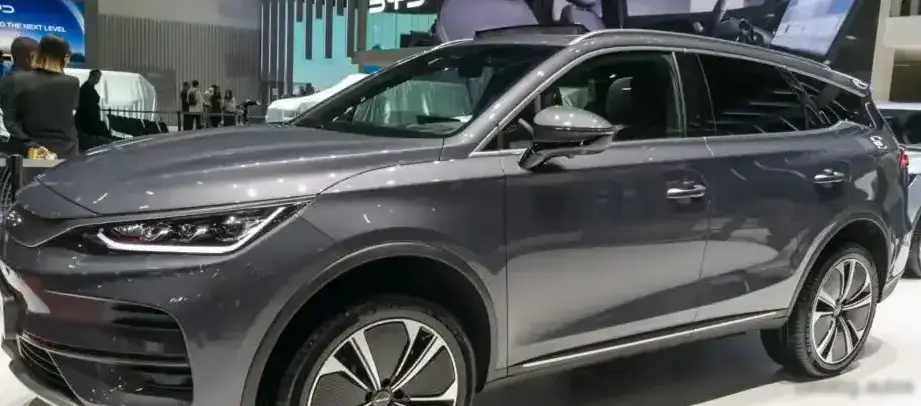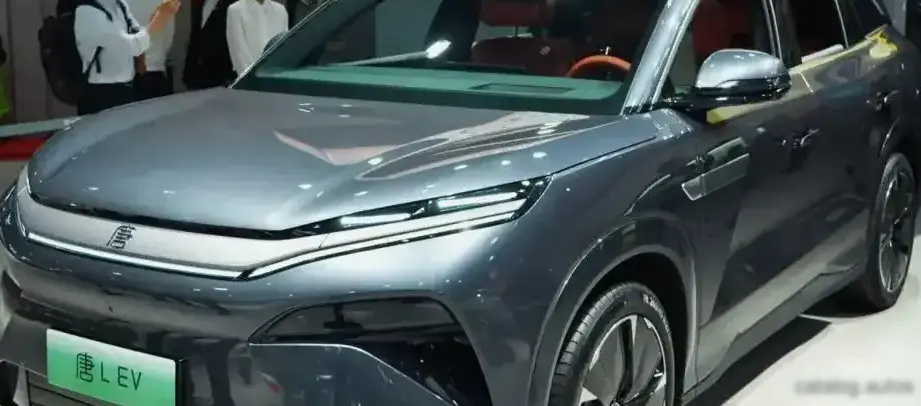
The BYD Tang L 100.5 kWh (680 Hp) Electric is a fully electric, seven-seat SUV introduced by the Chinese manufacturer BYD in April 2025. Representing the top-tier performance variant of the Tang L series, it’s positioned as a premium offering within BYD’s expanding electric vehicle lineup. The Tang L aims to compete in the growing market for large, all-electric SUVs, offering a blend of performance, range, and practicality. It leverages BYD’s expertise in battery technology and electric powertrain development, targeting consumers seeking a spacious and powerful electric vehicle.
Technical Specifications
| Brand | BYD |
| Model | Tang |
| Generation | Tang L |
| Type (Engine) | 100.5 kWh (680 Hp) Electric |
| Start of production | April, 2025 |
| Powertrain Architecture | BEV (Electric Vehicle) |
| Body type | SUV, Crossover |
| Seats | 7 |
| Doors | 5 |
| Fuel Type | Electricity |
| Acceleration 0 – 100 km/h | 6.9 sec |
| Acceleration 0 – 62 mph | 6.9 sec |
| Acceleration 0 – 60 mph | 6.6 sec |
| Maximum speed | 240 km/h (149.13 mph) |
| Gross battery capacity | 100.5 kWh |
| Battery voltage | 1000 V |
| Battery technology | Lithium iron phosphate (LiFePO4) |
| Battery location | Below the floor |
| All-electric range (CLTC) | 670 km (416.32 mi) |
| Electric motor power | 680 Hp |
| Electric motor Torque | 420 Nm (309.78 lb.-ft.) |
| Maximum revolutions of the electric motor | 30511 rpm |
| Electric motor location | Rear axle, Transverse |
| Electric motor type | Synchronous |
| System power | 680 Hp |
| System torque | 420 Nm (309.78 lb.-ft.) |
| Trunk (boot) space – maximum | 1960 l (69.22 cu. ft.) |
| Length | 5040 mm (198.43 in.) |
| Width | 1996 mm (78.58 in.) |
| Height | 1760 mm (69.29 in.) |
| Wheelbase | 2950 mm (116.14 in.) |
| Front track | 1716 mm (67.56 in.) |
| Rear (Back) track | 1730 mm (68.11 in.) |
| Minimum turning circle | 11.6 m (38.06 ft.) |
| Drivetrain Architecture | One electric motor drives the rear wheels. |
| Drive wheel | Rear wheel drive |
| Number of gears and type of gearbox | 1 gears, automatic transmission |
| Front suspension | Double wishbone |
| Rear suspension | Independent multi-link suspension |
| Front brakes | Ventilated discs |
| Rear brakes | Ventilated discs |
| Assisting systems | ABS (Anti-lock braking system) |
| Steering type | Steering rack and pinion |
| Power steering | Electric Steering |
| Tires size | Front wheel tires: 255/50 R20Rear wheel tires: 275/45 R20 |
| Wheel rims size | Front wheel rims: 20Rear wheel rims: 20 |
Powertrain & Engine Architecture
The BYD Tang L 100.5 kWh Electric utilizes a Blade Battery, a lithium iron phosphate (LiFePO4) battery pack with a capacity of 100.5 kWh. This battery technology is known for its enhanced safety and thermal stability compared to traditional lithium-ion batteries. The 1000V architecture allows for faster charging times. Power is delivered to the rear wheels via a single, transversely mounted synchronous electric motor producing 680 horsepower and 420 Nm (309.78 lb.-ft.) of torque. The single-speed automatic transmission provides seamless acceleration. The motor’s high maximum revolutions of 30511 rpm contribute to its responsive performance.
Driving Characteristics
The Tang L 100.5 kWh delivers brisk acceleration, achieving 0-60 mph in approximately 6.6 seconds. The rear-wheel-drive configuration provides a balanced driving experience, although it may exhibit some understeer during aggressive cornering. The single-speed transmission offers linear power delivery, eliminating the need for gear changes. Compared to potential future variants with dual-motor all-wheel drive, this rear-wheel-drive model prioritizes efficiency and simplicity. The substantial battery pack lowers the center of gravity, enhancing stability and handling. The regenerative braking system allows for one-pedal driving, maximizing energy recovery and reducing brake wear.
Equipment & Trim Levels
As the top-tier variant, the Tang L 100.5 kWh Electric comes standard with a comprehensive suite of features. These include a large touchscreen infotainment system, a panoramic sunroof, premium leather upholstery, heated and ventilated front seats, and advanced driver-assistance systems (ADAS) such as adaptive cruise control, lane keeping assist, and automatic emergency braking. Optional extras may include a premium sound system, a head-up display, and upgraded interior trim materials. The spacious interior comfortably accommodates seven passengers, with ample legroom and headroom in all three rows.
Chassis & Braking
The Tang L features a double wishbone front suspension and an independent multi-link rear suspension, providing a comfortable and controlled ride. Ventilated disc brakes are fitted on all four wheels, ensuring strong stopping power. The electric power steering system offers precise and responsive steering feel. The vehicle’s relatively low center of gravity, thanks to the underfloor battery pack, contributes to its stability and handling. Standard safety features include ABS (Anti-lock Braking System) and electronic stability control.
Market Reception & Comparison
The BYD Tang L 100.5 kWh Electric has been generally well-received by automotive critics, who praise its spacious interior, long range, and strong performance. Its CLTC range of 670 km (416.32 mi) is competitive within the large electric SUV segment. Compared to other trims in the Tang L lineup, the 100.5 kWh variant offers significantly more power and range, justifying its higher price point. Fuel economy, expressed as energy consumption, is a key selling point, offering substantial savings compared to gasoline-powered SUVs. Reliability is still being assessed as the model is relatively new, but BYD’s reputation for battery technology and electric powertrain durability is a positive indicator.
Legacy
The BYD Tang L 100.5 kWh Electric represents a significant step forward for BYD in the electric SUV market. Its advanced battery technology, powerful electric motor, and spacious interior position it as a compelling alternative to established players in the segment. The long-term reliability of the Blade Battery and the electric powertrain remains to be seen, but early indications are promising. As the electric vehicle market continues to grow, the Tang L is expected to play an increasingly important role in BYD’s global expansion and its commitment to sustainable transportation. The vehicle’s impact on the used car market will depend on factors such as battery degradation and the availability of charging infrastructure.