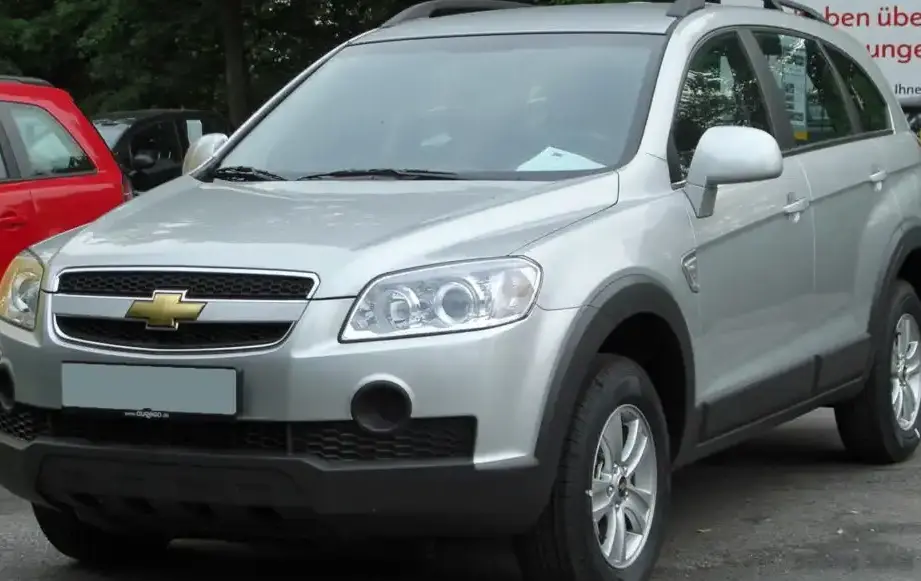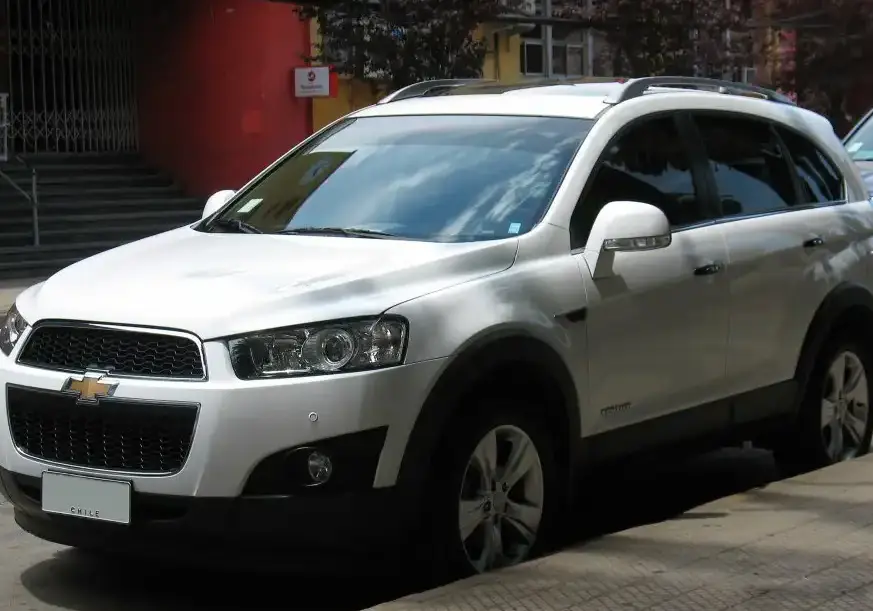
The Chevrolet Captiva I (facelift 2013) 2.2 VCDi 16V (163 Hp) Automatic represents a mid-cycle refresh of the first-generation Captiva, produced from 2013 to 2014. Positioned as a mainstream, family-oriented SUV, this variant aimed to provide a balance of practicality, fuel efficiency, and reasonable performance within the Captiva range. It was primarily marketed in Europe and other international markets, offering a diesel-powered option with the convenience of an automatic transmission. The facelift brought styling updates and minor mechanical revisions to the original Captiva, enhancing its appeal in a competitive segment.
Technical Specifications
| Brand | Chevrolet |
| Model | Captiva |
| Generation | Captiva I (facelift 2013) |
| Type (Engine) | 2.2 VCDi 16V (163 Hp) Automatic |
| Start of production | 2013 |
| End of production | 2014 |
| Powertrain Architecture | Internal Combustion engine |
| Body type | SUV |
| Seats | 7 |
| Doors | 5 |
| Fuel consumption (urban) | 9.9 l/100 km (23.8 US mpg, 28.5 UK mpg, 10.1 km/l) |
| Fuel consumption (extra urban) | 6.1 l/100 km (38.6 US mpg, 46.3 UK mpg, 16.4 km/l) |
| Fuel consumption (combined) | 7.5 l/100 km (31.4 US mpg, 37.7 UK mpg, 13.3 km/l) |
| CO2 emissions | 198 g/km |
| Fuel Type | Diesel |
| Acceleration 0 – 100 km/h | 11.1 sec |
| Acceleration 0 – 62 mph | 11.1 sec |
| Acceleration 0 – 60 mph | 10.5 sec |
| Maximum speed | 184 km/h (114.33 mph) |
| Emission standard | Euro 5 |
| Weight-to-power ratio | 11.2 kg/Hp, 89.2 Hp/tonne |
| Weight-to-torque ratio | 5.2 kg/Nm, 191.5 Nm/tonne |
| Power | 163 Hp @ 3800 rpm |
| Power per litre | 73.1 Hp/l |
| Torque | 350 Nm @ 2000 rpm (258.15 lb.-ft. @ 2000 rpm) |
| Engine layout | Front, Transverse |
| Engine displacement | 2231 cm3 (136.14 cu. in.) |
| Number of cylinders | 4 |
| Engine configuration | Inline |
| Cylinder Bore | 86 mm (3.39 in.) |
| Piston Stroke | 96 mm (3.78 in.) |
| Compression ratio | 16.3:1 |
| Number of valves per cylinder | 4 |
| Fuel injection system | Diesel Commonrail |
| Engine aspiration | Turbocharger, Intercooler |
| Valvetrain | DOHC |
| Engine oil capacity | 6.8 l (7.19 US qt | 5.98 UK qt) |
| Coolant | 9 l (9.51 US qt | 7.92 UK qt) |
| Kerb Weight | 1828 kg (4030.05 lbs.) |
| Max. weight | 2505 kg (5522.58 lbs.) |
| Max load | 677 kg (1492.53 lbs.) |
| Trunk (boot) space – minimum | 97 l (3.43 cu. ft.) |
| Trunk (boot) space – maximum | 1577 l (55.69 cu. ft.) |
| Fuel tank capacity | 65 l (17.17 US gal | 14.3 UK gal) |
| Max. roof load | 100 kg (220.46 lbs.) |
| Permitted trailer load with brakes (12%) | 1700 kg (3747.86 lbs.) |
| Permitted trailer load without brakes | 750 kg (1653.47 lbs.) |
| Length | 4673 mm (183.98 in.) |
| Width | 1849-1868 mm (72.8 – 73.54 in.) |
| Height | 1756 mm (69.13 in.) |
| Wheelbase | 2707 mm (106.57 in.) |
| Front track | 1569 mm (61.77 in.) |
| Rear (Back) track | 1576 mm (62.05 in.) |
| Minimum turning circle | 12.27 m (40.26 ft.) |
| Drivetrain Architecture | Front wheel drive |
| Number of gears | 6 |
| Gearbox type | Automatic transmission |
| Front suspension | Independent type McPherson |
| Rear suspension | Independent multi-link suspension |
| Front brakes | Ventilated discs |
| Rear brakes | Ventilated discs |
| Assisting systems | ABS (Anti-lock braking system) |
| Steering type | Steering rack and pinion |
| Power steering | Hydraulic Steering |
| Tires size | 235/60 R17 |
| Wheel rims size | 7.0J x 17 |
INTRODUCTION
The Chevrolet Captiva I, launched in 2006, was Chevrolet’s entry into the compact SUV segment, designed to compete with vehicles like the Nissan X-Trail and Honda CR-V. The 2013 facelift brought revised front and rear styling, an updated interior, and improvements to the engine range. The 2.2 VCDi 16V Automatic variant, producing 163 horsepower, was a key offering in many European markets. It provided a diesel engine known for its fuel efficiency and torque, paired with a six-speed automatic transmission for ease of driving. This combination aimed to appeal to families needing space and practicality, without sacrificing comfort or economy. The Captiva’s seven-seat configuration was a significant selling point, making it a versatile option for larger families.
Powertrain & Engine Architecture
The heart of this Captiva variant is the 2.2-liter, four-cylinder diesel engine, designated with engine codes like Z22D1. This engine utilizes a common rail direct injection system, delivering fuel directly into the combustion chamber at extremely high pressure. This technology, coupled with a turbocharger and intercooler, optimizes combustion for increased power and efficiency. The engine features a double overhead camshaft (DOHC) valvetrain with four valves per cylinder, enhancing breathing and contributing to its power output. The six-speed automatic transmission, sourced from Aisin, was chosen for its smooth shifting and reliability. It’s a conventional torque converter automatic, offering a balance between comfort and efficiency. The transmission control unit (TCU) manages gear selection based on throttle position, vehicle speed, and engine load.
Driving Characteristics
The 163 hp and 350 Nm (258 lb-ft) of torque provided by the 2.2 VCDi engine offered adequate performance for everyday driving. Acceleration from 0-60 mph took around 10.5 seconds, and top speed was approximately 114 mph. While not a particularly sporty SUV, the engine delivered strong low-end torque, making it easy to navigate city streets and handle inclines. The automatic transmission, while smooth, wasn’t particularly quick to downshift, which could sometimes feel sluggish during overtaking maneuvers. Compared to the higher-output 2.4-liter gasoline engine or even the more powerful diesel variants, this 2.2L automatic felt less responsive. However, it excelled in fuel economy, achieving around 31.4 mpg on combined cycles, making it a cost-effective choice for long journeys.
Equipment & Trim Levels
The 2.2 VCDi Automatic Captiva typically came with a reasonable level of standard equipment. This included air conditioning, power windows, central locking, and a basic audio system with CD player. Higher trim levels, such as LS and LT, added features like alloy wheels, rear parking sensors, cruise control, and an upgraded infotainment system. Interior upholstery was typically cloth, with leather options available as an extra cost. Safety features included ABS brakes, electronic stability control, and multiple airbags. Optional extras often included a sunroof, navigation system, and heated seats.
Chassis & Braking
The Captiva I utilized a front-wheel-drive platform with independent suspension all around. The front suspension employed a McPherson strut setup, while the rear featured a multi-link design. This configuration aimed to provide a comfortable ride and decent handling. The brakes consisted of ventilated discs on all four wheels, providing adequate stopping power for the vehicle’s weight. The hydraulic power steering offered a reasonable level of assistance, although it lacked the feel of more modern electric systems. Stabilizer bars were fitted to both the front and rear axles to reduce body roll during cornering.
Market Reception & Comparison
The Chevrolet Captiva I (facelift 2013) 2.2 VCDi Automatic received mixed reviews. Critics praised its spacious interior, seven-seat capability, and fuel-efficient diesel engine. However, it was often criticized for its somewhat unrefined engine noise, average handling, and relatively basic interior materials. Compared to rivals like the Nissan X-Trail and Kia Sportage, the Captiva offered a competitive price point but lacked the overall sophistication and driving dynamics of some competitors. The 2.2L diesel automatic was often seen as a sensible choice for those prioritizing economy and practicality over performance.
Legacy
The Chevrolet Captiva I, including the 2.2 VCDi Automatic variant, has established a reputation for reasonable reliability, although some owners have reported issues with the diesel particulate filter (DPF) and the automatic transmission. The engine itself is generally considered durable, provided it receives regular maintenance. In the used car market, these Captivas represent an affordable option for families needing a spacious and practical SUV. However, potential buyers should be aware of the potential maintenance costs associated with diesel engines and automatic transmissions, particularly as the vehicles age. The Captiva I paved the way for the second-generation Captiva, which addressed some of the shortcomings of the original model.