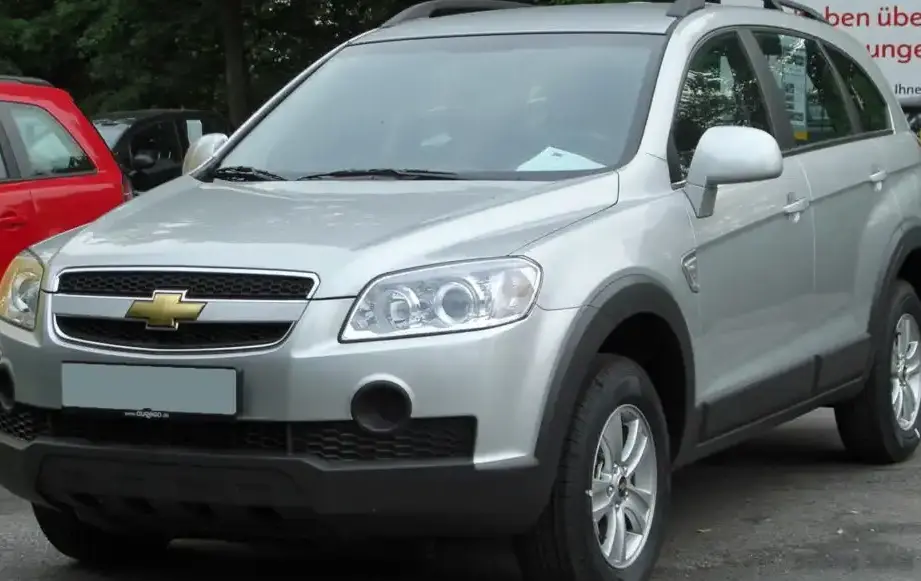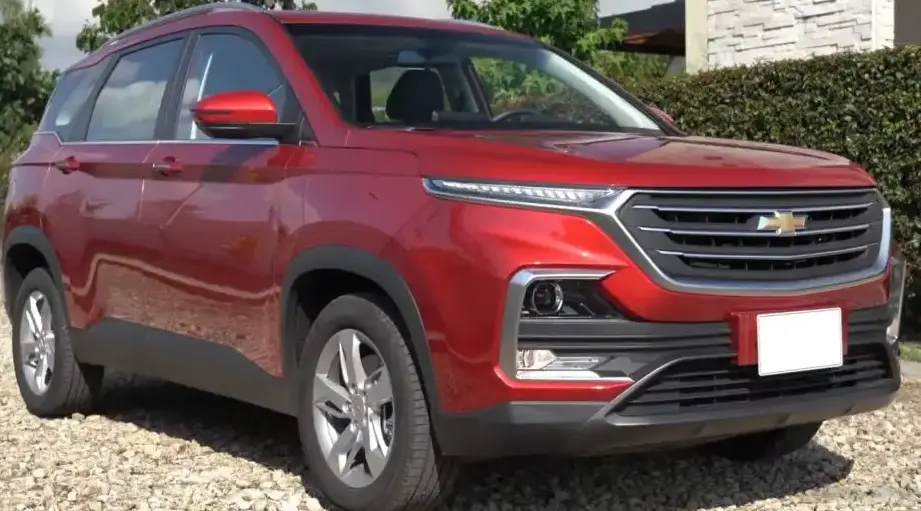
The Chevrolet Captiva II 1.5 Turbo (149 hp) CVT 7-Seat, produced between April 2019 and April 2021, represented a key offering in Chevrolet’s global SUV lineup. Positioned as a family-oriented vehicle, it aimed to provide affordable seven-passenger capability with a focus on fuel efficiency and ease of driving. This variant was primarily marketed in regions where larger SUVs were less common, offering a more compact alternative while still accommodating larger families. It utilized the General Motors’ global platform, sharing components with other vehicles in the GM portfolio. The Captiva II, in general, was a significant update to the original Captiva, offering improved styling, technology, and refinement.
Technical Specifications
| Brand | Chevrolet |
| Model | Captiva |
| Generation | Captiva II |
| Type | 1.5 Turbo (149 Hp) CVT 7 Seat |
| Start of production | April, 2019 |
| End of production | April, 2021 |
| Powertrain Architecture | Internal Combustion engine |
| Body type | SUV |
| Seats | 7 |
| Doors | 5 |
| Fuel Type | Petrol (Gasoline) |
| Emission standard | Euro 5 |
| Power | 149 Hp @ 5200 rpm |
| Power per litre | 102.7 Hp/l |
| Torque | 249 Nm @ 1600 rpm |
| Torque (lb-ft) | 183.65 lb.-ft. @ 1600 rpm |
| Engine layout | Front, Transverse |
| Engine Model/Code | LJO |
| Engine displacement | 1451 cm3 |
| Engine displacement (cu. in.) | 88.55 cu. in. |
| Number of cylinders | 4 |
| Engine configuration | Inline |
| Number of valves per cylinder | 4 |
| Fuel injection system | Multi-port manifold injection |
| Engine aspiration | Turbocharger, Intercooler |
| Valvetrain | DOHC |
| Engine oil capacity | 4 l |
| Engine oil capacity (US qt/UK qt) | 4.23 US qt | 3.52 UK qt |
| Coolant capacity | 7.1 l |
| Coolant capacity (US qt/UK qt) | 7.5 US qt | 6.25 UK qt |
| Max. weight | 2160 kg |
| Max. weight (lbs) | 4761.98 lbs |
| Trunk (boot) space – maximum | 1081 l |
| Trunk (boot) space – maximum (cu. ft.) | 38.18 cu. ft. |
| Fuel tank capacity | 52 l |
| Fuel tank capacity (US gal/UK gal) | 13.74 US gal | 11.44 UK gal |
| Length | 4655 mm |
| Length (in.) | 183.27 in. |
| Width | 1835 mm |
| Width (in.) | 72.24 in. |
| Height | 1750 mm |
| Height (in.) | 68.9 in. |
| Wheelbase | 2750 mm |
| Wheelbase (in.) | 108.27 in. |
| Drivetrain Architecture | The Internal combustion engine (ICE) drives the front wheels of the vehicle. |
| Drive wheel | Front wheel drive |
| Number of gears and type of gearbox | automatic transmission CVT |
| Front suspension | Independent type McPherson |
| Rear suspension | Torsion |
| Front brakes | Disc |
| Rear brakes | Disc |
| Assisting systems | ABS (Anti-lock braking system) |
| Steering type | Steering rack and pinion |
| Power steering | Electric Steering |
| Tires size | 215/55 R18 |
| Wheel rims size | 18 |
Powertrain & Engine Architecture
The Chevrolet Captiva II 1.5 Turbo utilized the LJO engine code, a 1.5-liter inline-four cylinder gasoline engine. This engine featured a single scroll turbocharger with an intercooler, designed to improve efficiency and reduce turbo lag. The engine employed multi-point fuel injection and a double overhead camshaft (DOHC) valvetrain, contributing to its relatively smooth operation. The engine’s 149 horsepower output at 5200 rpm and 249 Nm (183.65 lb-ft) of torque at 1600 rpm were respectable for its displacement, prioritizing fuel economy over outright performance. Paired with this engine was a continuously variable transmission (CVT), chosen for its smooth power delivery and contribution to improved fuel efficiency. The CVT lacked traditional gear steps, instead offering a seamless range of ratios to keep the engine operating in its optimal power band.
Driving Characteristics
The 1.5 Turbo CVT combination in the Captiva II delivered a comfortable, if not particularly sporty, driving experience. The CVT’s programming prioritized smooth acceleration and fuel efficiency, resulting in a less engaging feel compared to a traditional automatic or manual transmission. Acceleration was adequate for everyday driving, but passing maneuvers required careful planning. The CVT’s “stepped” mode, if equipped, offered a more conventional feel by simulating gear changes. The front-wheel-drive configuration contributed to predictable handling, but lacked the all-weather capability of an all-wheel-drive system. The relatively light weight of the vehicle, compared to larger SUVs, helped to mitigate the engine’s modest power output.
Equipment & Trim Levels
The 1.5 Turbo CVT 7-Seat trim typically included standard features such as air conditioning, power windows and locks, a basic infotainment system with Bluetooth connectivity, and safety features like ABS and airbags. Higher trim levels, when available, added features like alloy wheels, a more advanced infotainment system with a larger touchscreen, rear parking sensors, and a rearview camera. Interior upholstery was typically cloth, with optional leather available on higher trims. The seven-seat configuration featured a split-folding second and third-row bench, allowing for flexible cargo space. Optional extras often included a sunroof, upgraded audio system, and various cosmetic enhancements.
Chassis & Braking
The Captiva II utilized a McPherson strut independent suspension in the front and a torsion beam suspension in the rear. This setup provided a reasonable balance between ride comfort and handling. The front brakes were ventilated discs, while the rear brakes were solid discs. ABS (Anti-lock Braking System) was standard, enhancing braking performance and stability. Electric power steering provided light and easy steering feel, making it convenient for urban driving. The vehicle’s suspension was tuned for comfort, prioritizing a smooth ride over sporty handling characteristics. Stabilizer bars were included to reduce body roll during cornering.
Market Reception & Comparison
The Chevrolet Captiva II 1.5 Turbo CVT 7-Seat was generally well-received as a practical and affordable family vehicle. Critics praised its spacious interior, comfortable ride, and fuel efficiency. However, some reviewers noted the engine’s lack of outright power and the CVT’s somewhat uninspiring driving experience. Compared to other trims in the Captiva II lineup, such as those with larger engines, the 1.5 Turbo offered a more economical option, appealing to budget-conscious buyers. It competed with other compact SUVs in its segment, such as the Hyundai Creta and Kia Sportage, offering a similar level of practicality and value.
Legacy
The Chevrolet Captiva II 1.5 Turbo CVT 7-Seat has proven to be a relatively reliable vehicle in the used car market. The 1.5-liter turbo engine, while not known for exceptional performance, has demonstrated reasonable durability with proper maintenance. The CVT transmission, however, requires regular fluid changes to ensure longevity. Common issues reported by owners include minor electrical glitches and wear and tear on suspension components. Overall, the Captiva II 1.5 Turbo remains a viable option for buyers seeking an affordable and spacious seven-passenger SUV, offering a good balance of practicality, fuel efficiency, and reliability.