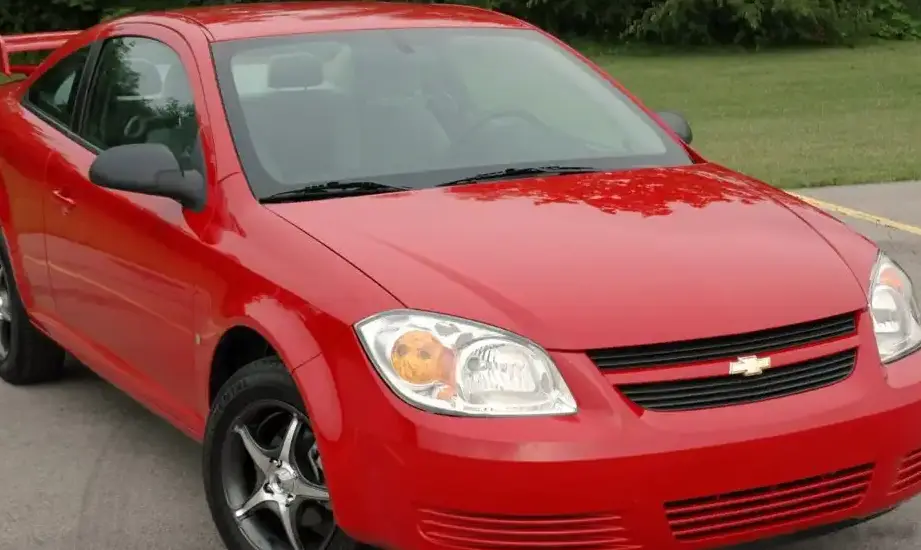
The Chevrolet Cobalt Coupe 2.0i 16V SS, produced from 2004 to 2010, represented the performance-oriented variant of the first-generation Cobalt coupe. Positioned as the top-tier trim level, the SS (Super Sport) model aimed to deliver a more engaging driving experience than the base Cobalt models. It was a key offering in Chevrolet’s compact car lineup, targeting buyers seeking a sporty and affordable coupe. The Cobalt itself was designed to replace the Cavalier, offering a more modern design and improved features. The SS variant, with its supercharged engine, was a direct response to the growing demand for performance in the entry-level market.
Technical Specifications
| Brand | Chevrolet |
| Model | Cobalt |
| Generation | Cobalt Coupe |
| Type (Engine) | 2.0 i 16V SS (205 Hp) |
| Start of production | 2004 |
| End of production | 2010 |
| Powertrain Architecture | Internal Combustion engine |
| Body type | Coupe |
| Seats | 5 |
| Doors | 2 |
| Fuel consumption (urban) | 10.2 l/100 km (23.1 US mpg) |
| Fuel consumption (extra urban) | 7.4 l/100 km (31.8 US mpg) |
| Fuel consumption (combined) | 9 l/100 km (26.1 US mpg) |
| Fuel Type | Petrol (Gasoline) |
| Weight-to-power ratio | 6.2 kg/Hp, 160.9 Hp/tonne |
| Weight-to-torque ratio | 5.5 kg/Nm, 180.5 Nm/tonne |
| Power | 205 Hp @ 5600 rpm |
| Power per litre | 102.6 Hp/l |
| Torque | 230 Nm @ 4400 rpm (169.64 lb.-ft. @ 4400 rpm) |
| Engine layout | Front, Transverse |
| Engine Model/Code | LSJ |
| Engine displacement | 1998 cm3 (121.93 cu. in.) |
| Number of cylinders | 4 |
| Engine configuration | Inline |
| Cylinder Bore | 86 mm (3.39 in.) |
| Piston Stroke | 86 mm (3.39 in.) |
| Compression ratio | 9.5:1 |
| Number of valves per cylinder | 4 |
| Fuel injection system | Multi-port manifold injection |
| Engine aspiration | Supercharger, Intercooler |
| Engine oil capacity | 5.7 l (6.02 US qt | 5.02 UK qt) |
| Coolant capacity | 7 l (7.4 US qt | 6.16 UK qt) |
| Kerb Weight | 1274 kg (2808.69 lbs.) |
| Fuel tank capacity | 49 l (12.94 US gal | 10.78 UK gal) |
| Length | 4580 mm (180.31 in.) |
| Width | 1725 mm (67.91 in.) |
| Height | 1415 mm (55.71 in.) |
| Wheelbase | 2624 mm (103.31 in.) |
| Front track | 1449 mm (57.05 in.) |
| Rear track | 1476 mm (58.11 in.) |
| Drivetrain Architecture | Front wheel drive |
| Number of gears | 5 |
| Type of gearbox | Manual transmission |
| Front suspension | Transverse stabilizer |
| Rear suspension | Leaf spring |
| Front brakes | Disc |
| Rear brakes | Disc |
| Assisting systems | ABS (Anti-lock braking system) |
| Steering type | Steering rack and pinion |
| Tires size | 215/45 R18 |
Powertrain & Engine Architecture
The heart of the Cobalt SS was the LSJ 2.0-liter inline-four engine. This engine was a significant departure from the naturally aspirated engines found in other Cobalt trims. The LSJ featured a Roots-type supercharger with an intercooler, boosting power output to 205 horsepower and 230 Nm (169.64 lb.-ft.) of torque. The engine utilized multi-port fuel injection and a 9.5:1 compression ratio. The supercharger provided instant throttle response and a broad torque curve, making the SS feel considerably quicker than its counterparts. The engine was transversely mounted, driving the front wheels. The five-speed manual transmission was the only transmission option available for the SS, emphasizing its performance focus. The LSJ engine was also used in other GM vehicles like the Saturn Ion Red Line and the HHR SS.
Driving Characteristics
The Cobalt SS, equipped with the 2.0-liter supercharged engine and manual transmission, offered a noticeably more spirited driving experience. Acceleration was brisk, and the supercharger provided a distinct power delivery. While not a track-focused machine, the SS was capable of delivering enjoyable performance on public roads. The five-speed manual transmission allowed for precise gear selection, and the relatively short gear ratios helped to maximize acceleration. Compared to the base Cobalt models, the SS had a firmer suspension tuning, which improved handling and reduced body roll. However, this also resulted in a slightly harsher ride quality. The steering was responsive, providing good feedback to the driver. The SS’s performance was a significant step up from the standard Cobalt, making it a compelling option for those seeking a sporty and affordable coupe.
Equipment & Trim Levels
The Cobalt SS came standard with a number of features designed to enhance its sporty appeal. These included sport seats with enhanced bolstering, a leather-wrapped steering wheel, and unique exterior styling cues such as a rear spoiler and aggressive front fascia. Standard interior features included air conditioning, power windows and locks, and an AM/FM stereo. Optional extras included a premium sound system, sunroof, and upgraded interior trim. The SS trim was distinguished by its unique badging and styling elements, setting it apart from the more pedestrian Cobalt models. The interior, while functional, was largely focused on providing a driver-centric experience rather than luxurious appointments.
Chassis & Braking
The Cobalt SS featured a MacPherson strut front suspension and a leaf spring rear suspension. While the leaf spring rear suspension was a cost-saving measure, it was tuned to provide acceptable handling characteristics. The SS also benefited from a thicker front stabilizer bar compared to other Cobalt trims, further improving handling. The braking system consisted of disc brakes on all four wheels, providing adequate stopping power. ABS (Anti-lock Braking System) was standard equipment. The SS also featured larger tires (215/45 R18) compared to other Cobalt models, which improved grip and handling. The chassis was designed to balance affordability with performance, and the SS’s suspension and braking upgrades helped to deliver a more engaging driving experience.
Market Reception & Comparison
The Chevrolet Cobalt SS received generally positive reviews from automotive critics. It was praised for its strong acceleration, responsive handling, and affordable price. However, some critics noted the somewhat basic interior and the less-than-refined ride quality. Compared to other sporty compact coupes of the time, such as the Honda Civic Si and the Mazda3, the Cobalt SS offered a compelling value proposition. It provided similar levels of performance at a lower price point. Fuel economy was reasonable, with combined fuel consumption rated at around 26.1 US mpg. Reliability was generally good, although some owners reported minor issues with the supercharger and fuel system. The Cobalt SS appealed to buyers who wanted a fun-to-drive coupe without breaking the bank.
Legacy
The Chevrolet Cobalt SS, particularly the 2.0-liter supercharged version, has gained a following among enthusiasts. The LSJ engine is known for its tunability and potential for increased power output. The Cobalt SS remains a relatively affordable option in the used car market, making it an attractive choice for those seeking a sporty and engaging coupe. While not a collector’s item, the SS is appreciated for its performance and its role in Chevrolet’s history. The LSJ engine’s robust design and readily available aftermarket support contribute to its continued popularity among car enthusiasts. The Cobalt SS represents a period when Chevrolet offered a genuinely sporty and affordable option in the compact car segment.