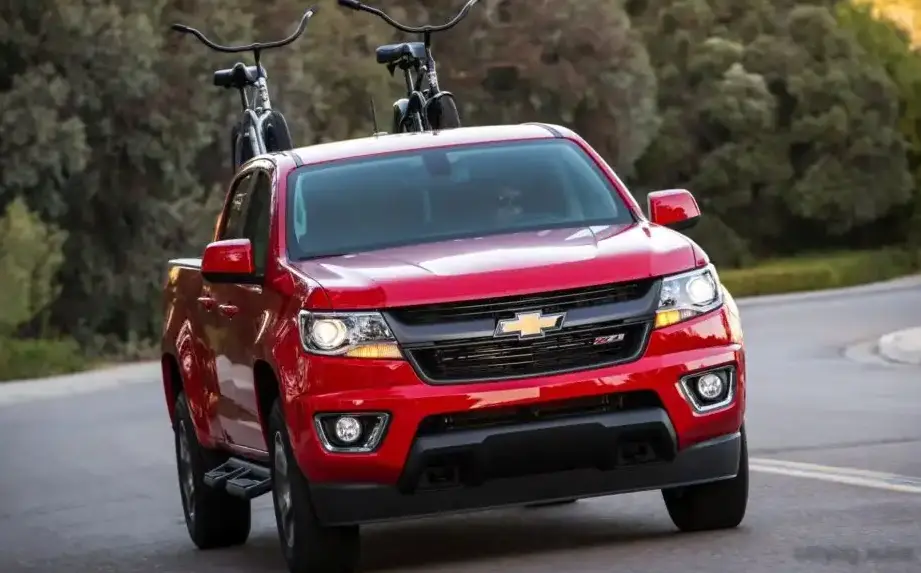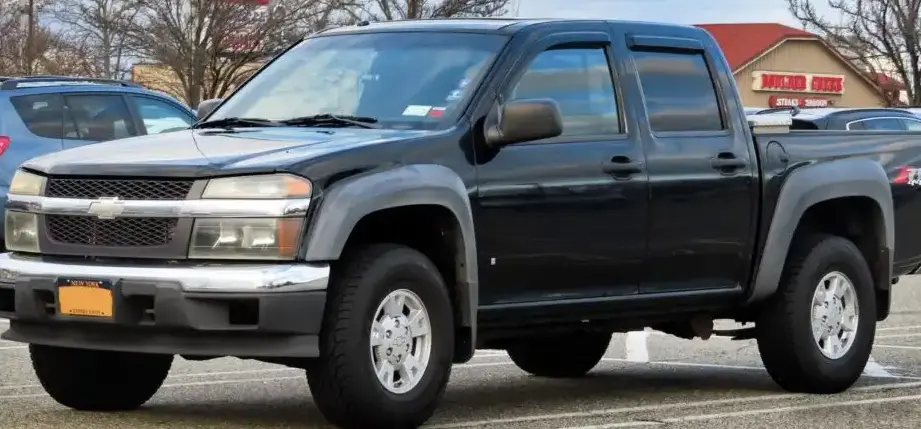
The Chevrolet Colorado I 3.7i 4WD, produced from 2009 to 2012, represents a significant entry in Chevrolet’s mid-size pickup truck offerings. This variant occupied a position in the lineup aimed at buyers needing a balance of capability and affordability, slotting in above the base 2.9L four-cylinder models and below the more powerful V8 options. The Colorado I, launched in 2004, was Chevrolet’s first foray into a truly mid-sized pickup after decades of focusing on full-size trucks, designed to compete with offerings like the Toyota Tacoma and Ford Ranger. The 3.7i 4WD model specifically targeted customers who required four-wheel drive for work or recreational purposes, but didn’t necessarily need the ultimate towing or hauling capacity of the larger engine options.
Technical Specifications
| Brand | Chevrolet |
| Model | Colorado |
| Generation | Colorado I |
| Type (Engine) | 3.7 i (242 Hp) 4WD |
| Start of production | 2009 |
| End of production | 2012 |
| Powertrain Architecture | Internal Combustion engine |
| Body type | Pick-up |
| Seats | 5 |
| Doors | 4 |
| Fuel Type | Petrol (Gasoline) |
| Power | 242 Hp @ 5600 rpm |
| Power per litre | 66.2 Hp/l |
| Torque | 328 Nm @ 4600 rpm |
| Torque (lb-ft) | 241.92 lb.-ft. @ 4600 rpm |
| Engine layout | Front, Longitudinal |
| Engine Model/Code | LLR |
| Engine displacement | 3657 cm3 |
| Engine displacement (cu. in.) | 223.16 cu. in. |
| Number of cylinders | 5 |
| Engine configuration | Inline |
| Number of valves per cylinder | 4 |
| Fuel injection system | Multi-port manifold injection |
| Engine aspiration | Naturally aspirated engine |
| Valvetrain | DOHC |
| Engine oil capacity | 5.7 l |
| Engine oil capacity (US qt) | 6.02 US qt |
| Engine oil capacity (UK qt) | 5.02 UK qt |
| Coolant | 10 l |
| Coolant (US qt) | 10.57 US qt |
| Coolant (UK qt) | 8.8 UK qt |
| Length | 5260 mm |
| Length (in.) | 207.09 in. |
| Height | 1700 mm |
| Height (in.) | 66.93 in. |
| Wheelbase | 3200 mm |
| Wheelbase (in.) | 125.98 in. |
| Front track | 1460 mm |
| Front track (in.) | 57.48 in. |
| Rear track | 1460 mm |
| Rear track (in.) | 57.48 in. |
| Drive wheel | All wheel drive (4×4) |
| Number of gears | 5 |
| Type of gearbox | Manual transmission |
| Front brakes | Ventilated discs |
| Rear brakes | Drum |
| Assisting systems | ABS (Anti-lock braking system) |
Powertrain & Engine Architecture
The heart of the Colorado I 3.7i 4WD is the LLR 3.7-liter inline five-cylinder engine. This engine, part of Chevrolet’s Vortec family, utilizes a cast iron block and aluminum cylinder heads. The engine employs multi-port fuel injection, delivering fuel directly into the intake ports, and a double overhead camshaft (DOHC) valvetrain for improved breathing and efficiency. The 3.7L engine was designed to provide a good balance of power and fuel economy, offering a step up from the base four-cylinder while remaining more affordable and efficient than the V8 options. The five-cylinder configuration was somewhat unusual for the American market at the time, offering a compromise between the smoothness of a V6 and the simplicity of an inline-four. The standard transmission for this variant was a five-speed manual, providing drivers with direct control over the engine’s power delivery.
Driving Characteristics
The 3.7i 4WD Colorado offered a respectable driving experience for a mid-size pickup. With 242 horsepower and 328 Nm (241.92 lb-ft) of torque, it provided adequate acceleration for everyday driving and light hauling. The five-speed manual transmission allowed for precise gear selection, maximizing the engine’s power band. Compared to the base 2.9L engine, the 3.7i offered a noticeable improvement in responsiveness and towing capacity. However, it didn’t possess the raw power of the 5.3L V8. The 4WD system provided enhanced traction in off-road conditions and inclement weather, making it a versatile choice for those living in areas with challenging terrain. The gear ratios were tuned for a balance of fuel efficiency and usable power, prioritizing everyday drivability over outright performance.
Equipment & Trim Levels
The Colorado I 3.7i 4WD was typically offered in Work Truck (WT), LS, and LT trim levels. The WT trim was the most basic, focusing on functionality and affordability. The LS trim added features like air conditioning, power windows and locks, and an upgraded audio system. The LT trim, the most well-equipped, included features such as alloy wheels, a premium audio system, and upgraded interior trim. Standard safety features across all trims included ABS brakes. Optional extras included a towing package, a sunroof, and leather upholstery. Interior upholstery typically consisted of cloth on the WT and LS trims, with leather available on the LT. The dashboard layout was functional and straightforward, prioritizing ease of use over aesthetic flair.
Chassis & Braking
The Chevrolet Colorado I utilized a body-on-frame construction, providing a robust and durable platform. The front suspension consisted of independent coil springs, while the rear suspension employed leaf springs. This configuration was typical for pickup trucks of the era, prioritizing load-carrying capacity and durability. The 3.7i 4WD models featured ventilated disc brakes in the front and drum brakes in the rear. The braking system was adequate for the vehicle’s weight and performance, but lacked the stopping power of more advanced braking systems found on some competitors. Stabilizer bars were included to reduce body roll during cornering, improving handling stability.
Market Reception & Comparison
The Chevrolet Colorado I 3.7i 4WD received mixed reviews from automotive critics. While praised for its comfortable ride and capable 4WD system, some critics found the inline-five engine to be somewhat unrefined and lacking in power compared to V6 engines offered by competitors. Fuel economy was considered average for its class. Compared to the 2.9L four-cylinder Colorado, the 3.7i offered a significant performance upgrade, but at a higher price point. Compared to the 5.3L V8, the 3.7i provided better fuel economy and a lower purchase price, but sacrificed towing capacity and overall power. Reliability was generally considered good, with the Vortec engine proving to be durable and long-lasting.
Legacy
The Chevrolet Colorado I 3.7i 4WD remains a relatively affordable and capable used pickup truck. The LLR engine, while not known for being exceptionally powerful, has proven to be reasonably reliable with proper maintenance. Common issues include oil leaks and occasional sensor failures. The availability of parts is generally good, and the truck’s relatively simple design makes it relatively easy to repair. Today, these Colorados are often found being used as work trucks, weekend project vehicles, or as affordable transportation for those needing the utility of a pickup. While not a collector’s item, the 3.7i 4WD Colorado represents a solid and dependable mid-size truck option from the early 2000s.