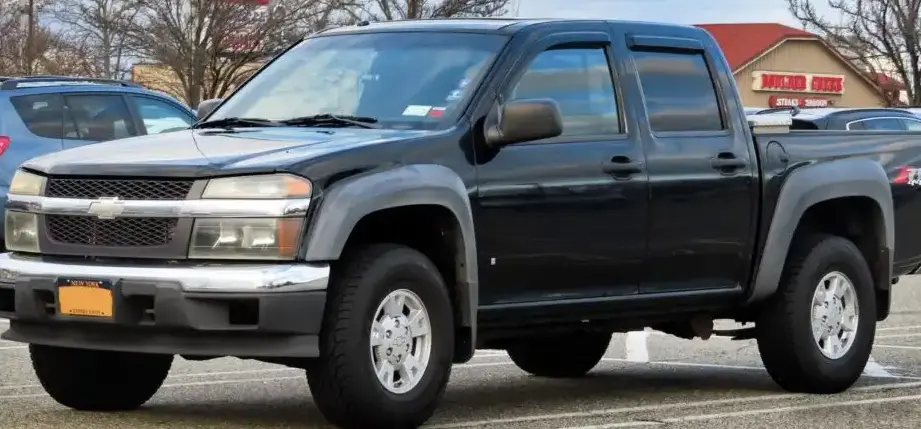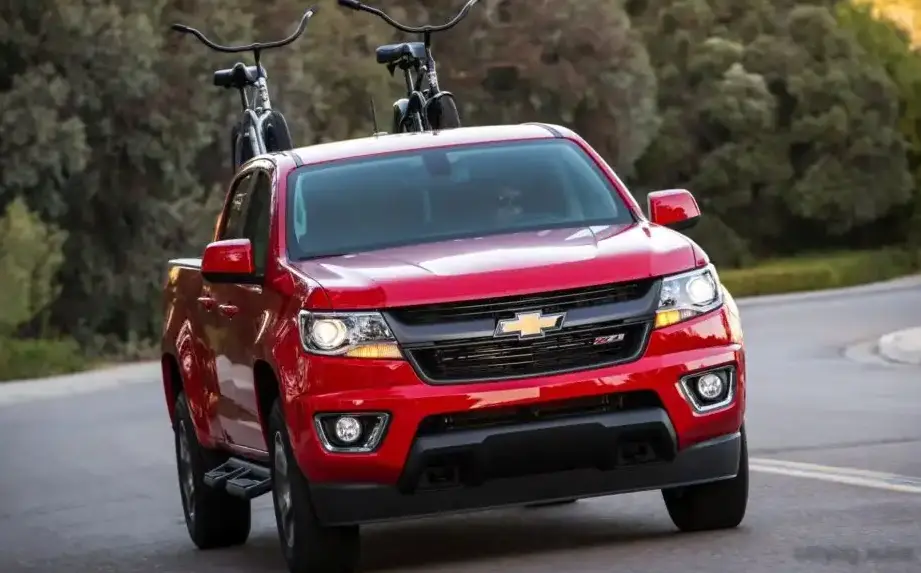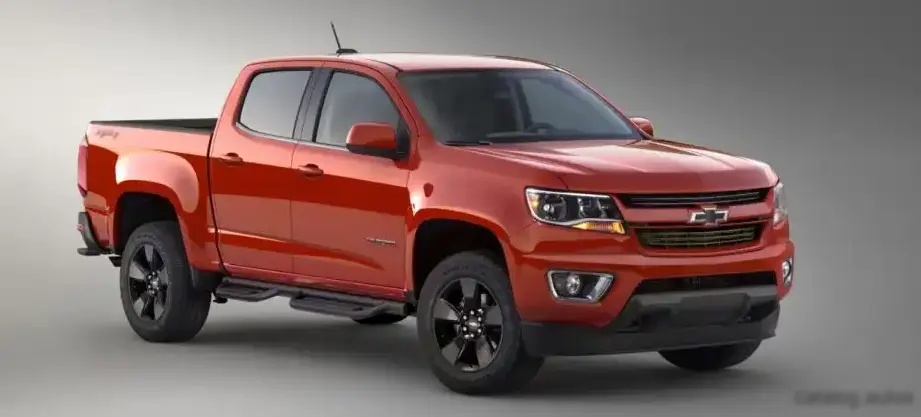
The Chevrolet Colorado II Crew Cab Short Box 2.8d (186 hp) 4WD Automatic was a mid-size pickup truck produced by Chevrolet from 2017 to 2020. It represented the second generation of the Colorado, introduced in 2017, and was positioned as a versatile option within the lineup, offering a balance between capability, comfort, and fuel efficiency. This particular variant, equipped with the 2.8-liter Duramax turbocharged diesel engine and an eight-speed automatic transmission, aimed to appeal to buyers needing towing capacity and all-weather capability without the expense of larger, full-size trucks. It was primarily sold in North and South America.
Technical Specifications
| Brand | Chevrolet |
| Model | Colorado |
| Generation | Colorado II Crew Cab Short Box |
| Type (Engine) | 2.8d (186 Hp) 4WD Automatic |
| Start of production | 2017 |
| End of production | 2020 |
| Powertrain Architecture | Internal Combustion engine |
| Body type | Pick-up |
| Seats | 5 |
| Doors | 4 |
| Fuel consumption (urban) | 12.4 l/100 km (19 US mpg) |
| Fuel consumption (extra urban) | 8.4 l/100 km (28 US mpg) |
| Fuel Type | Diesel |
| Weight-to-power ratio | 11.4 kg/Hp |
| Weight-to-torque ratio | 4.3 kg/Nm |
| Power | 186 Hp @ 3400 rpm |
| Power per litre | 67 Hp/l |
| Torque | 500 Nm @ 2000 rpm (368.78 lb.-ft. @ 2000 rpm) |
| Maximum engine speed | 5000 rpm |
| Engine layout | Front, Longitudinal |
| Engine Model/Code | LWN |
| Engine displacement | 2776 cm3 (169.4 cu. in.) |
| Number of cylinders | 4 |
| Engine configuration | Inline |
| Cylinder Bore | 94 mm (3.7 in.) |
| Piston Stroke | 100 mm (3.94 in.) |
| Number of valves per cylinder | 4 |
| Fuel injection system | Diesel Commonrail |
| Engine aspiration | Turbocharger, Intercooler |
| Valvetrain | DOHC |
| Engine oil capacity | 5.7 l (6.02 US qt | 5.02 UK qt) |
| Coolant capacity | 10.5 l (11.1 US qt | 9.24 UK qt) |
| Kerb Weight | 2129-2153 kg (4693.64 – 4746.55 lbs.) |
| Max. weight | 2812 kg (6199.4 lbs.) |
| Max load | 659-683 kg (1452.85 – 1505.76 lbs.) |
| Trunk (boot) space – maximum | 1169 l (41.28 cu. ft.) |
| Fuel tank capacity | 79 l (20.87 US gal | 17.38 UK gal) |
| AdBlue tank | 20.4 l (5.39 US gal | 4.49 UK gal) |
| Permitted trailer load with brakes (12%) | 3447 kg (7599.33 lbs.) |
| Length | 5403 mm (212.72 in.) |
| Width | 1886 mm (74.25 in.) |
| Height | 1794 mm (70.63 in.) |
| Wheelbase | 3258 mm (128.27 in.) |
| Ride height (ground clearance) | 208 mm (8.19 in.) |
| Drivetrain Architecture | All wheel drive (4×4) |
| Number of gears and type of gearbox | 8 gears, automatic transmission Hydra-Matic |
| Front suspension | Independent coil spring |
| Rear suspension | Rigid axle suspension, Leaf spring |
| Front brakes | Disc, 310 mm |
| Rear brakes | Disc, 324 mm |
| Assisting systems | ABS (Anti-lock braking system) |
| Steering type | Steering rack and pinion |
| Power steering | Electric Steering |
| Tires size | 265/70 R16; 255/65 R17 |
| Wheel rims size | 7J x 16; 7.5J x 16; 8J x 17 |
INTRODUCTION
The Chevrolet Colorado II, launched in 2017, represented a significant upgrade over its predecessor. The Crew Cab Short Box configuration offered a spacious cabin and a shorter bed length, making it suitable for both family use and light-duty hauling. The 2.8-liter Duramax diesel engine, paired with the eight-speed automatic transmission and four-wheel drive, was a popular choice for those needing increased torque and all-weather capability. This combination positioned the Colorado as a strong competitor to the Toyota Tacoma and Ford Ranger in the mid-size truck segment. It was built on the GM 31XX platform, shared with the GMC Canyon.
Powertrain & Engine Architecture
The heart of this Colorado variant is the 2.8-liter (2776 cc) Duramax turbocharged diesel engine, designated with the engine code LWN. This engine is an inline-four cylinder design, featuring a cast iron block and an aluminum cylinder head. It utilizes a common rail direct fuel injection system, delivering fuel at extremely high pressures for optimized combustion. The engine employs a variable geometry turbocharger (VGT) and an intercooler to enhance power and efficiency. The valvetrain is a Double Overhead Camshaft (DOHC) configuration with four valves per cylinder, contributing to improved breathing and performance.
The eight-speed Hydra-Matic automatic transmission was a key component of this powertrain. It provided a wide range of gear ratios, optimizing engine performance for both on-road cruising and off-road crawling. The transmission features electronically controlled shifts and a torque converter lock-up clutch for improved fuel economy. The 4WD system is a part-time system, allowing the driver to switch between two-wheel drive and four-wheel drive modes as needed.
Driving Characteristics
The 186 horsepower and 500 Nm (368 lb-ft) of torque delivered by the 2.8-liter Duramax engine provided adequate performance for everyday driving and moderate towing. While not as quick as gasoline-powered variants, the diesel engine offered a significant advantage in low-end torque, making it well-suited for hauling heavy loads or navigating challenging terrain. The eight-speed automatic transmission helped to keep the engine in its optimal power band, providing smooth and responsive shifts. Compared to the 2.5L four-cylinder gasoline engine, the diesel offered substantially more torque, but less peak horsepower. Compared to the 3.6L V6 gasoline engine, the diesel provided comparable horsepower but significantly more torque, especially at lower RPMs. The automatic transmission, while convenient, didn’t offer the same level of driver engagement as a manual transmission.
Equipment & Trim Levels
The 2.8d 4WD Automatic trim typically included standard features such as air conditioning, power windows and locks, a rearview camera, and a basic infotainment system with a touchscreen display. Higher trim levels, such as the LT and Z71, added features like leather upholstery, heated front seats, a premium audio system, and advanced safety technologies. Optional extras included a navigation system, a sunroof, and a trailering package. Interior upholstery was typically cloth on lower trims and leather on higher trims. Dashboard configurations varied slightly depending on the trim level, but generally featured a straightforward layout with easy-to-use controls.
Chassis & Braking
The Colorado II featured an independent coil spring front suspension and a rigid axle suspension with leaf springs in the rear. This setup provided a good balance between ride comfort and load-carrying capacity. The front brakes were disc brakes measuring 310mm, while the rear brakes were also disc brakes measuring 324mm. An Anti-lock Braking System (ABS) was standard equipment. The steering system was a rack-and-pinion setup with electric power steering, providing responsive and precise handling. Stabilizer bars were included on both the front and rear axles to reduce body roll during cornering.
Market Reception & Comparison
The Chevrolet Colorado II, particularly the 2.8d 4WD Automatic variant, received generally positive reviews from automotive critics. It was praised for its comfortable ride, capable diesel engine, and versatile interior. Fuel economy was a strong point, with the diesel engine offering significantly better mileage than the gasoline engines. However, some critics noted that the interior materials were not as refined as those found in some competitors. Compared to the Toyota Tacoma, the Colorado offered a more comfortable ride and a more modern interior, but the Tacoma was often praised for its reliability and resale value. Compared to the Ford Ranger, the Colorado offered a more powerful diesel engine, but the Ranger was often praised for its sporty handling.
Legacy
The 2.8-liter Duramax diesel engine in the Colorado II has proven to be a relatively reliable powertrain, although some owners have reported issues with the diesel particulate filter (DPF) and the fuel injection system. Proper maintenance, including regular oil changes and DPF regeneration, is crucial for ensuring long-term reliability. On the used car market, the 2.8d 4WD Automatic Colorado II remains a popular choice for buyers seeking a capable and fuel-efficient mid-size pickup truck. Its combination of power, capability, and comfort continues to make it a compelling option in its class. The availability of aftermarket parts and accessories also contributes to its enduring appeal.