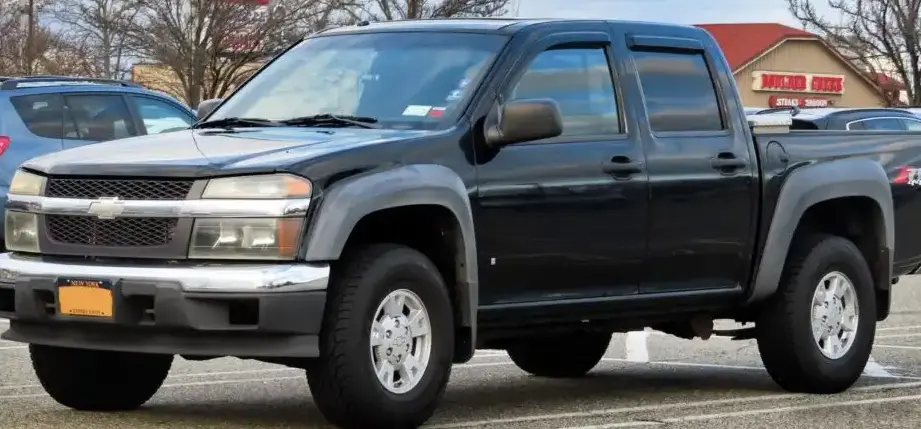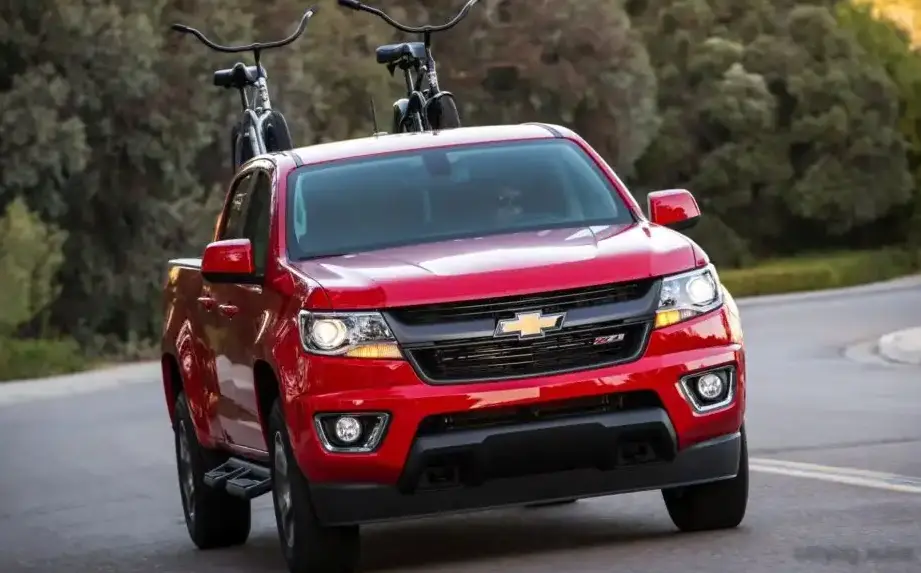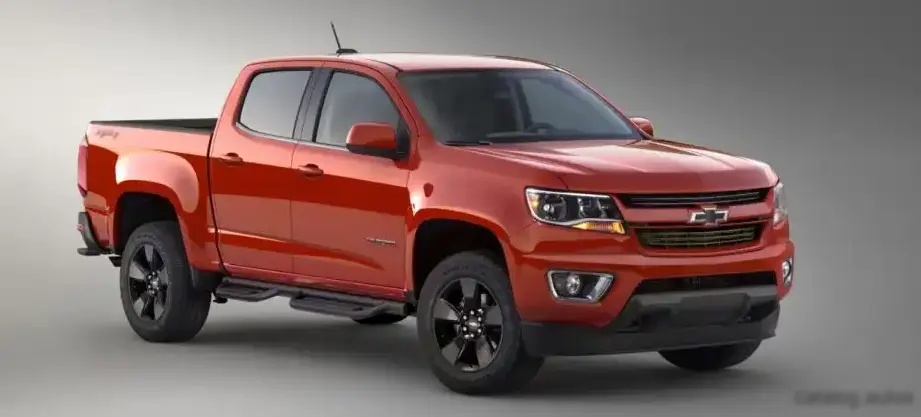
The Chevrolet Colorado II Crew Cab Short Box 2.8d (186 hp) Automatic, produced from 2017 to 2020, represents a significant iteration of Chevrolet’s mid-size pickup truck offering in the North American market. Positioned as a versatile and capable workhorse, this variant aimed to provide a balance between diesel fuel efficiency, towing capacity, and everyday usability. It falls within the second generation of the Colorado (designated as the Colorado II), which was a collaborative effort with GMC (resulting in the Canyon) and globally shared with models like the Holden Colorado and Isuzu D-Max. This particular configuration, combining the 2.8-liter Duramax diesel engine with a six-speed automatic transmission, was a popular choice for buyers seeking a capable truck without the higher price tag of the more powerful gasoline engine options.
Technical Specifications
| Brand | Chevrolet |
| Model | Colorado |
| Generation | Colorado II Crew Cab Short Box |
| Type (Engine) | 2.8d (186 Hp) Automatic |
| Start of production | 2017 |
| End of production | 2020 |
| Powertrain Architecture | Internal Combustion engine |
| Body type | Pick-up |
| Seats | 5 |
| Doors | 4 |
| Fuel consumption (urban) | 11.8 l/100 km (19.9 US mpg) |
| Fuel consumption (extra urban) | 7.8 l/100 km (30.2 US mpg) |
| Fuel Type | Diesel |
| Weight-to-power ratio | 10.9 kg/Hp |
| Weight-to-torque ratio | 4 kg/Nm |
| Power | 186 Hp @ 3400 rpm |
| Torque | 500 Nm @ 2000 rpm (368.78 lb.-ft. @ 2000 rpm) |
| Maximum engine speed | 5000 rpm |
| Engine layout | Front, Longitudinal |
| Engine Model/Code | LWN |
| Engine displacement | 2776 cm3 (169.4 cu. in.) |
| Number of cylinders | 4 |
| Engine configuration | Inline |
| Cylinder Bore | 94 mm (3.7 in.) |
| Piston Stroke | 100 mm (3.94 in.) |
| Number of valves per cylinder | 4 |
| Fuel injection system | Diesel Commonrail |
| Engine aspiration | Turbocharger, Intercooler |
| Valvetrain | DOHC |
| Engine oil capacity | 5.7 l (6.02 US qt | 5.02 UK qt) |
| Coolant capacity | 10.5 l (11.1 US qt | 9.24 UK qt) |
| Kerb Weight | 2022-2046 kg (4457.75 – 4510.66 lbs.) |
| Max. weight | 2722 kg (6000.98 lbs.) |
| Max load | 676-700 kg (1490.32 – 1543.24 lbs.) |
| Trunk (boot) space – maximum | 1169 l (41.28 cu. ft.) |
| Fuel tank capacity | 79 l (20.87 US gal | 17.38 UK gal) |
| AdBlue tank | 20.4 l (5.39 US gal | 4.49 UK gal) |
| Permitted trailer load with brakes (12%) | 3493 kg (7700.75 lbs.) |
| Length | 5403 mm (212.72 in.) |
| Width | 1886 mm (74.25 in.) |
| Height | 1795 mm (70.67 in.) |
| Wheelbase | 3258 mm (128.27 in.) |
| Ride height (ground clearance) | 210 mm (8.27 in.) |
| Drivetrain Architecture | Rear wheel drive |
| Number of gears and type of gearbox | 6 gears, automatic transmission Hydra-Matic |
| Front suspension | Independent coil spring |
| Rear suspension | Rigid axle suspension, Leaf spring |
| Front brakes | Disc, 310 mm |
| Rear brakes | Disc, 324 mm |
| Assisting systems | ABS (Anti-lock braking system) |
| Steering type | Steering rack and pinion |
| Power steering | Electric Steering |
| Tires size | 265/70 R16 |
| Wheel rims size | 7J x 16; 7.5J x 16 |
Powertrain & Engine Architecture
The heart of this Colorado variant is the 2.8-liter (2776 cc) Duramax turbocharged diesel engine, identified by the engine code LWN. This inline-four cylinder engine utilizes a common rail direct fuel injection system, delivering fuel at extremely high pressures for optimized combustion. The engine features a double overhead camshaft (DOHC) valvetrain, operating 16 valves (four per cylinder). A variable geometry turbocharger (VGT) and intercooler work in tandem to boost power and improve efficiency. The Duramax engine is known for its robust construction and durability, designed to withstand the demands of truck applications. The six-speed Hydra-Matic automatic transmission was paired with this engine, offering smooth shifting and a wide gear ratio spread. This transmission was chosen for its ability to handle the engine’s torque output and provide a comfortable driving experience.
Driving Characteristics
The 186 horsepower and 368 lb-ft of torque produced by the 2.8d engine provided adequate, though not exhilarating, performance for the Colorado. Acceleration was respectable, but the automatic transmission sometimes felt hesitant during quick overtaking maneuvers. The engine’s peak torque, available at a relatively low 2000 rpm, made it well-suited for towing and hauling. Compared to the available 2.5L four-cylinder gasoline engine or the more powerful 3.6L V6, the diesel offered significantly better fuel economy and towing capacity, but at the expense of outright speed. The automatic transmission’s gear ratios were tuned for efficiency and usability, prioritizing smooth operation over sporty responsiveness. The rear-wheel-drive configuration provided a traditional truck feel, while available four-wheel-drive systems enhanced traction in challenging conditions.
Equipment & Trim Levels
The 2.8d Automatic trim typically fell into the mid-range of the Colorado II lineup. Standard features generally included air conditioning, power windows and locks, a basic infotainment system with a touchscreen display, and a rearview camera. Higher trim levels, such as the LT and Z71, added features like leather upholstery, heated front seats, a premium audio system, and advanced safety technologies. Optional extras included a navigation system, a trailering package, and various appearance upgrades. Interior upholstery was typically cloth on the base trims, with leather available on higher-end models. The dashboard layout was functional and straightforward, prioritizing ease of use over stylistic flair.
Chassis & Braking
The Colorado II utilized a body-on-frame construction, providing a robust and durable platform. The front suspension consisted of independent coil springs, while the rear suspension employed a traditional leaf spring setup. This configuration was chosen for its load-carrying capacity and durability. Braking duties were handled by disc brakes on all four wheels, with the front discs measuring 310mm and the rear discs measuring 324mm. An Anti-lock Braking System (ABS) was standard. The chassis was tuned to provide a comfortable ride quality while maintaining good handling characteristics. Stabilizer bars were included to reduce body roll during cornering.
Market Reception & Comparison
The Chevrolet Colorado II 2.8d Automatic was generally well-received by automotive critics. Reviewers praised its fuel efficiency, towing capacity, and comfortable ride. However, some criticized its relatively modest power output and the sometimes-sluggish performance of the automatic transmission. Compared to the gasoline-powered Colorado trims, the diesel offered superior fuel economy and torque, making it a popular choice for buyers who frequently towed or hauled heavy loads. Against competitors like the Toyota Tacoma and Ford Ranger, the Colorado offered a compelling combination of features and value.
Legacy
The 2.8-liter Duramax diesel engine and the six-speed Hydra-Matic automatic transmission have proven to be relatively reliable powertrains. While some owners have reported issues with the diesel particulate filter (DPF) and emissions control systems, these are common concerns with modern diesel engines. On the used car market, the Colorado II 2.8d Automatic remains a popular choice for buyers seeking a capable and fuel-efficient mid-size pickup truck. Its durability and relatively low maintenance costs contribute to its continued appeal. The combination of diesel power and automatic convenience makes it a practical and versatile option for a wide range of applications.