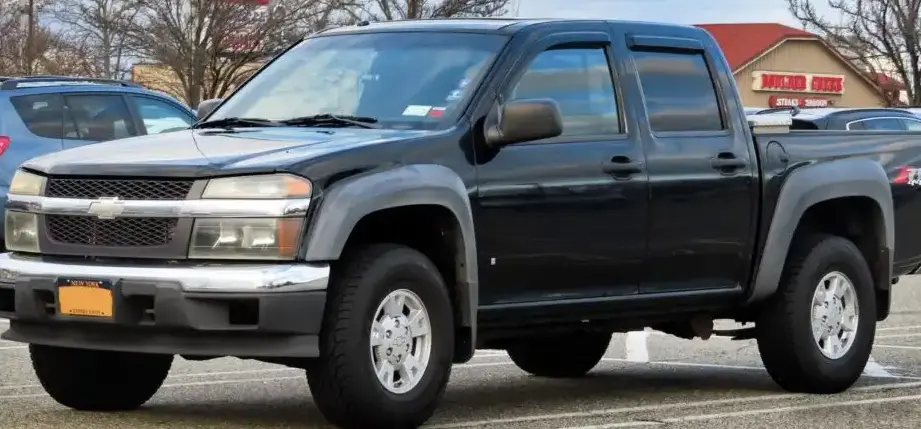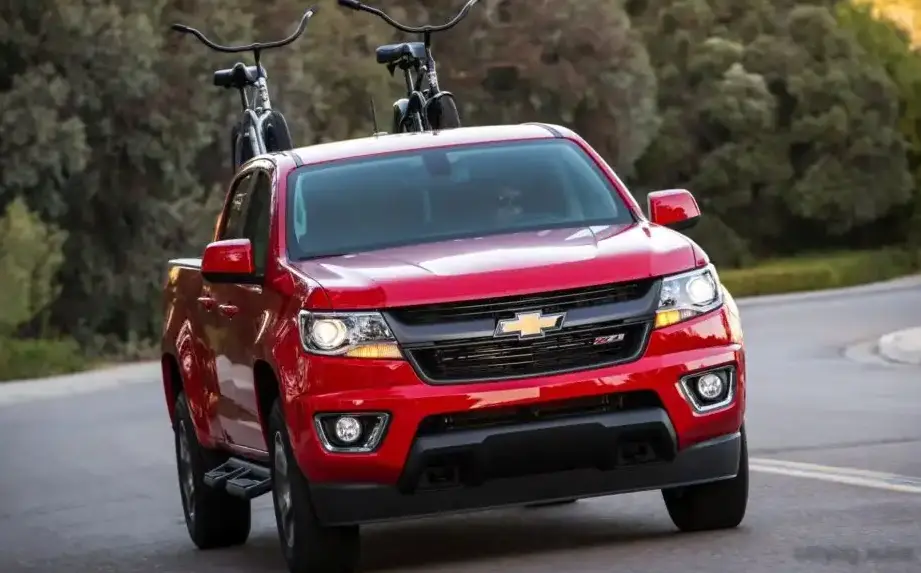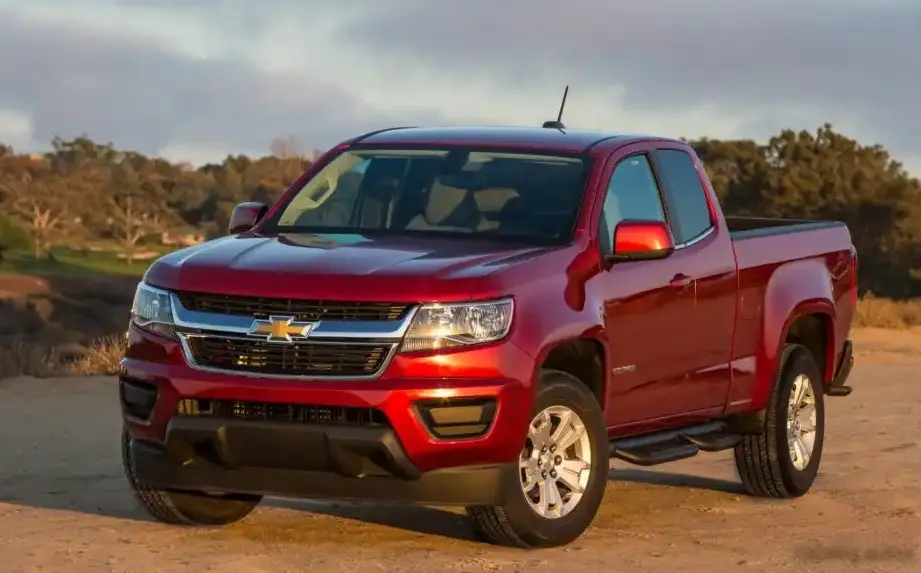
The Chevrolet Colorado II Extended Cab Long Box 2.5i (200 Hp) was a mid-size pickup truck produced by Chevrolet from 2015 to 2020. Positioned as a work-oriented and value-focused offering within the second generation Colorado lineup (2015-2023), this variant catered to buyers seeking a capable truck without the higher price tags associated with the more powerful V6 or diesel engine options. It served as a key entry point into the Colorado range, particularly in markets where fuel efficiency and affordability were prioritized. The Colorado II represented a significant redesign for the model, moving away from the smaller, more car-like first generation and embracing a more traditional, rugged pickup truck aesthetic and capability.
Technical Specifications
| Brand | Chevrolet |
| Model | Colorado |
| Generation | Colorado II Extended Cab Long Box |
| Type (Engine) | 2.5i (200 Hp) |
| Start of production | 2015 |
| End of production | 2020 |
| Powertrain Architecture | Internal Combustion engine |
| Body type | Pick-up |
| Seats | 5 |
| Doors | 2 |
| Fuel consumption (economy) – urban | 12.4 l/100 km (19 US mpg) |
| Fuel consumption (economy) – extra urban | 9 l/100 km (26.1 US mpg) |
| Fuel Type | Petrol (Gasoline) |
| Weight-to-power ratio | 9 kg/Hp |
| Weight-to-torque ratio | 6.9 kg/Nm |
| Power | 200 Hp @ 6300 rpm |
| Power per litre | 81.4 Hp/l |
| Torque | 259 Nm @ 4400 rpm (191.03 lb.-ft. @ 4400 rpm) |
| Maximum engine speed | 7000 rpm |
| Engine layout | Front, Longitudinal |
| Engine Model/Code | LCV |
| Engine displacement | 2457 cm3 (149.94 cu. in.) |
| Number of cylinders | 4 |
| Engine configuration | Inline |
| Cylinder Bore | 88 mm (3.46 in.) |
| Piston Stroke | 101 mm (3.98 in.) |
| Compression ratio | 11.3:1 |
| Number of valves per cylinder | 4 |
| Fuel injection system | Direct injection |
| Engine aspiration | Naturally aspirated engine |
| Valvetrain | DOHC, VVT |
| Engine oil capacity | 4.7 l (4.97 US qt | 4.14 UK qt) |
| Coolant | 9.1 l (9.62 US qt | 8.01 UK qt) |
| Kerb Weight | 1796 kg (3959.5 lbs.) |
| Max. weight | 2449 kg (5399.12 lbs.) |
| Max load | 653 kg (1439.62 lbs.) |
| Trunk (boot) space – maximum | 1414 l (49.93 cu. ft.) |
| Fuel tank capacity | 79 l (20.87 US gal | 17.38 UK gal) |
| Permitted trailer load with brakes (12%) | 1588 kg (3500.94 lbs.) |
| Length | 5403 mm (212.72 in.) |
| Width | 1886 mm (74.25 in.) |
| Height | 1788 mm (70.39 in.) |
| Wheelbase | 3258 mm (128.27 in.) |
| Front track | 1586 mm (62.44 in.) |
| Rear (Back) track | 1586 mm (62.44 in.) |
| Ride height (ground clearance) | 213 mm (8.39 in.) |
| Minimum turning circle (turning diameter) | 12.6 m (41.34 ft.) |
| Approach angle | 17.7° |
| Departure angle | 22.6° |
| Ramp-over (brakeover) angle | 22° |
| Drivetrain Architecture | Rear wheel drive |
| Drive wheel | Rear wheel drive |
| Number of gears and type of gearbox | 6 gears, manual transmission Eaton N8D |
| Front suspension | Independent coil spring |
| Rear suspension | Rigid axle suspension, Leaf spring |
| Front brakes | Disc, 310×27 mm |
| Rear brakes | Disc, 324×18 mm |
| Assisting systems | ABS (Anti-lock braking system) |
| Steering type | Steering rack and pinion |
| Power steering | Electric Steering |
| Tires size | 265/70 R16; 255/65 R17 |
| Wheel rims size | 7J x 16; 7.5J x 16; 8J x 17 |
Powertrain & Engine Architecture
The 2.5i Colorado utilized the LCV inline-four cylinder engine, a naturally aspirated powerplant producing 200 horsepower and 259 Nm (191 lb-ft) of torque. This engine featured direct fuel injection, a double overhead camshaft (DOHC) valvetrain with variable valve timing (VVT), and a compression ratio of 11.3:1. The engine was mounted longitudinally in the chassis. The standard transmission for this variant was a six-speed manual transmission manufactured by Eaton (model N8D). While an automatic transmission was available on other Colorado trims, the 2.5L engine was primarily paired with the manual gearbox in the base models. This configuration prioritized fuel economy and affordability over outright performance.
Driving Characteristics
The 2.5L engine, coupled with the six-speed manual transmission, provided adequate, though not exhilarating, performance. Acceleration was modest, and the engine required frequent downshifting for passing maneuvers or climbing hills. The manual transmission offered precise shifts, but the relatively long throws could feel less refined compared to the automatic options available on higher trims. The gear ratios were tuned for fuel efficiency, resulting in a higher final drive ratio. Compared to the available 3.6L V6, the 2.5L felt significantly less powerful, but it offered a more engaging driving experience for those who preferred a manual transmission. The rear-wheel-drive configuration contributed to a relatively simple and durable drivetrain.
Equipment & Trim Levels
The 2.5i Extended Cab Long Box typically served as the base trim level for the Colorado II. Standard features generally included air conditioning, a basic audio system with USB connectivity, power windows and locks, and steel wheels. The interior upholstery was typically vinyl or a durable cloth material. Optional extras included an upgraded audio system, alloy wheels, a trailer hitch, and various appearance packages. The Extended Cab configuration provided limited rear seating, suitable for occasional passengers or cargo. The Long Box bed offered a substantial cargo capacity, making it suitable for hauling materials or equipment.
Chassis & Braking
The Colorado II featured a body-on-frame construction, providing a robust and durable platform for hauling and towing. The front suspension utilized independent coil springs, while the rear suspension employed a traditional leaf spring setup. This configuration prioritized load-carrying capacity and durability over ride comfort. Braking duties were handled by disc brakes on all four wheels, with ABS (Anti-lock Braking System) as standard equipment. The braking system was adequate for the vehicle’s weight and performance, but it lacked the advanced features found on higher-end trucks.
Market Reception & Comparison
The 2.5L Colorado was generally well-received as an affordable and practical work truck. Critics noted its fuel efficiency and durability, but also pointed out its lack of refinement and modest performance. Compared to the V6 and diesel-powered Colorado trims, the 2.5L offered significantly lower fuel economy and acceleration. However, it also carried a lower price tag and was generally less expensive to maintain. In the mid-size pickup truck segment, the Colorado II competed with models like the Toyota Tacoma, Ford Ranger, and Nissan Frontier. The 2.5L Colorado often appealed to buyers who prioritized value and practicality over performance and luxury.
Legacy
The 2.5L engine and six-speed manual transmission combination in the Chevrolet Colorado II proved to be a relatively reliable powertrain. While not known for its blistering performance, the engine was generally durable and capable of handling moderate workloads. In the used car market, these models are often sought after by buyers looking for an affordable and dependable pickup truck. Maintenance costs are typically lower compared to the V6 or diesel variants, making them an attractive option for budget-conscious buyers. The simplicity of the powertrain contributes to its long-term reliability, and parts availability remains good.