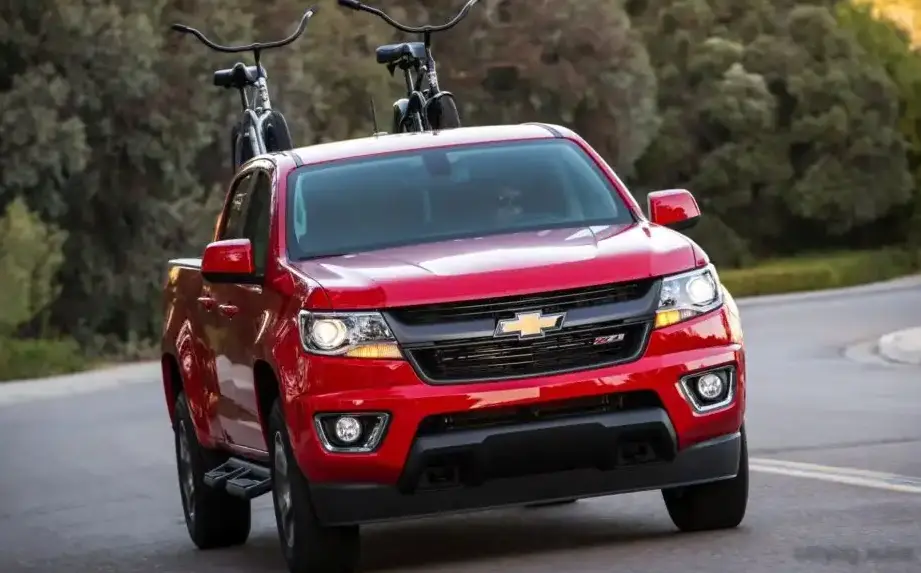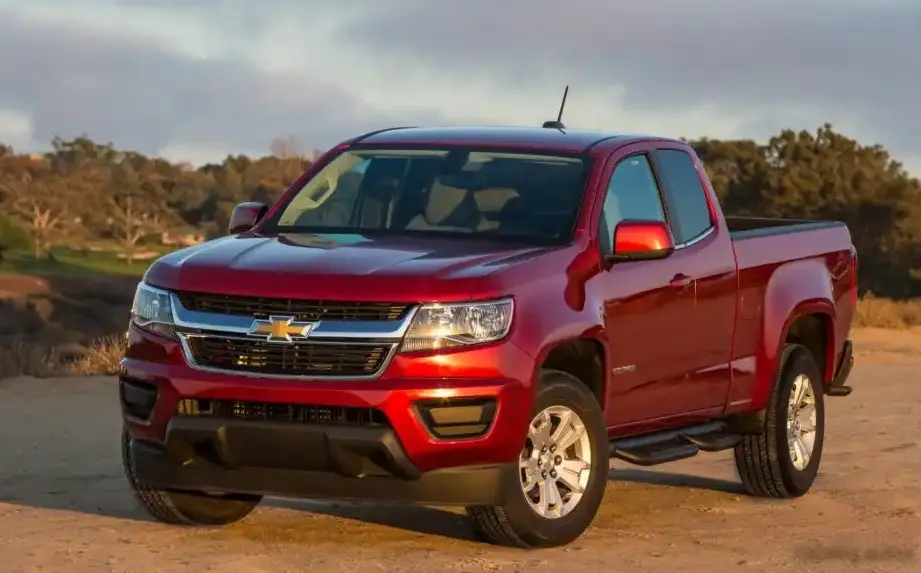
The Chevrolet Colorado II Extended Cab Long Box 2.5i (200 Hp) 4WD Automatic, produced from 2015 to 2020, represents a mid-cycle update to Chevrolet’s popular mid-size pickup truck. This variant occupied a significant position within the Colorado II lineup, offering a balance between capability, fuel efficiency, and affordability. It was primarily marketed towards buyers needing a versatile truck for both work and personal use, particularly in regions where all-wheel drive was advantageous. The Colorado II, built on the GM GMT-31XX platform, aimed to recapture market share in a segment increasingly dominated by foreign manufacturers. This specific configuration – the 2.5-liter inline-four engine paired with a six-speed automatic transmission and four-wheel drive – was a common choice for customers prioritizing practicality over outright performance.
Technical Specifications
| Brand | Chevrolet |
| Model | Colorado |
| Generation | Colorado II Extended Cab Long Box |
| Type (Engine) | 2.5i (200 Hp) 4WD Automatic |
| Start of production | 2015 |
| End of production | 2020 |
| Powertrain Architecture | Internal Combustion engine |
| Body type | Pick-up |
| Seats | 5 |
| Doors | 2 |
| Fuel consumption (urban) | 12.4 l/100 km (19 US mpg) |
| Fuel consumption (extra urban) | 9.4 l/100 km (25 US mpg) |
| Fuel Type | Petrol (Gasoline) |
| Weight-to-power ratio | 9.4 kg/Hp |
| Weight-to-torque ratio | 7.3 kg/Nm |
| Power | 200 Hp @ 6300 rpm |
| Power per litre | 81.4 Hp/l |
| Torque | 259 Nm @ 4400 rpm (191.03 lb.-ft. @ 4400 rpm) |
| Maximum engine speed | 7000 rpm |
| Engine layout | Front, Longitudinal |
| Engine Model/Code | LCV |
| Engine displacement | 2457 cm3 (149.94 cu. in.) |
| Number of cylinders | 4 |
| Engine configuration | Inline |
| Cylinder Bore | 88 mm (3.46 in.) |
| Piston Stroke | 101 mm (3.98 in.) |
| Compression ratio | 11.3:1 |
| Number of valves per cylinder | 4 |
| Fuel injection system | Direct injection |
| Engine aspiration | Naturally aspirated engine |
| Valvetrain | DOHC, VVT |
| Engine oil capacity | 4.7 l (4.97 US qt | 4.14 UK qt) |
| Coolant | 9.1 l (9.62 US qt | 8.01 UK qt) |
| Kerb Weight | 1878 kg (4140.28 lbs.) |
| Max. weight | 2540 kg (5599.74 lbs.) |
| Max load | 662 kg (1459.46 lbs.) |
| Trunk (boot) space – maximum | 1414 l (49.93 cu. ft.) |
| Fuel tank capacity | 79 l (20.87 US gal | 17.38 UK gal) |
| Permitted trailer load with brakes (12%) | 1588 kg (3500.94 lbs.) |
| Length | 5403 mm (212.72 in.) |
| Width | 1886 mm (74.25 in.) |
| Height | 1785 mm (70.28 in.) |
| Wheelbase | 3258 mm (128.27 in.) |
| Front track | 1586 mm (62.44 in.) |
| Rear (Back) track | 1586 mm (62.44 in.) |
| Ride height (ground clearance) | 212 mm (8.35 in.) |
| Minimum turning circle (turning diameter) | 12.6 m (41.34 ft.) |
| Drivetrain Architecture | All wheel drive (4×4) |
| Number of gears and type of gearbox | 6 gears, automatic transmission Hydra-Matic |
| Front suspension | Independent coil spring |
| Rear suspension | Rigid axle suspension, Leaf spring |
| Front brakes | Disc, 310×27 mm |
| Rear brakes | Disc, 324×18 mm |
| Assisting systems | ABS (Anti-lock braking system) |
| Steering type | Steering rack and pinion |
| Power steering | Electric Steering |
| Tires size | 265/70 R16; 255/65 R17 |
| Wheel rims size | 7J x 16; 7.5J x 16; 8J x 17 |
Powertrain & Engine Architecture
The heart of this Colorado variant is the 2.5-liter inline-four cylinder engine, designated as the LCV engine code by Chevrolet. This engine utilizes direct fuel injection, a technology that improves fuel efficiency and power output by injecting fuel directly into the combustion chamber. The engine also features a Double Overhead Camshaft (DOHC) valvetrain with Variable Valve Timing (VVT), further optimizing performance and efficiency across the engine’s operating range. The 200 horsepower and 259 lb-ft of torque are respectable figures for a naturally aspirated engine of this displacement. The Hydra-Matic 6L40 six-speed automatic transmission was chosen for its smooth shifting and durability. This transmission is electronically controlled, adapting shift points based on driving conditions and throttle input. The longitudinal engine layout, coupled with the four-wheel-drive system, provides enhanced traction and stability, particularly in challenging terrain.
Driving Characteristics
The 2.5-liter engine and six-speed automatic combination delivers adequate, though not exhilarating, performance. Acceleration is sufficient for everyday driving and moderate towing, but it won’t compete with the quicker V6-powered Colorado models. The automatic transmission is well-tuned, providing smooth gear changes and responsive downshifts. The 4WD system offers a selectable mode, allowing drivers to switch between two-wheel drive for fuel economy and four-wheel drive for increased traction. The gear ratios are optimized for towing and hauling, but this can result in higher engine speeds at highway cruising speeds. Compared to the manual transmission versions, the automatic offers greater convenience, especially in stop-and-go traffic, but sacrifices some driver engagement and fuel efficiency. The ride quality is typical for a body-on-frame pickup truck – firm but generally comfortable.
Equipment & Trim Levels
The Extended Cab Long Box 2.5i 4WD Automatic typically came standard with features such as air conditioning, power windows and locks, a basic audio system, and a rearview camera. The interior upholstery was usually cloth, with durable plastic trim. Higher trim levels, such as the LT, added features like alloy wheels, upgraded audio systems, and more comfortable seating. Optional extras included a navigation system, a premium sound system, leather upholstery, and a towing package. The Extended Cab configuration provided additional storage space behind the front seats, making it suitable for families or those needing to carry extra gear.
Chassis & Braking
The Colorado II utilizes a traditional body-on-frame construction, providing a robust and durable platform. The front suspension consists of independent coil springs, while the rear suspension employs a rigid axle with leaf springs. This setup is designed to handle heavy loads and provide a comfortable ride. The braking system features disc brakes on all four wheels, with ABS (Anti-lock Braking System) as standard equipment. The front brakes measure 310x27mm, while the rear brakes are 324x18mm. The steering is rack-and-pinion with electric power steering, offering precise control and ease of maneuverability.
Market Reception & Comparison
The Chevrolet Colorado II Extended Cab Long Box 2.5i 4WD Automatic was generally well-received by critics as a practical and capable mid-size pickup truck. However, some reviewers noted that the 2.5-liter engine lacked the power and refinement of the available V6 options. Fuel economy was considered average for its class. Compared to the V6 models, the 2.5-liter version offered a lower price point and slightly better fuel efficiency, making it an attractive option for budget-conscious buyers. Reliability reports have been generally positive, with few major issues reported with the powertrain.
Legacy
The 2.5-liter engine and six-speed automatic transmission combination in the Colorado II has proven to be a relatively reliable powertrain. While not known for exceptional performance, it has demonstrated good durability and longevity. In the used car market, these Colorado models represent a good value for buyers seeking a capable and affordable pickup truck. Maintenance costs are generally reasonable, and parts availability is good. The Colorado II helped Chevrolet regain a foothold in the competitive mid-size pickup truck segment, paving the way for future generations of the Colorado.