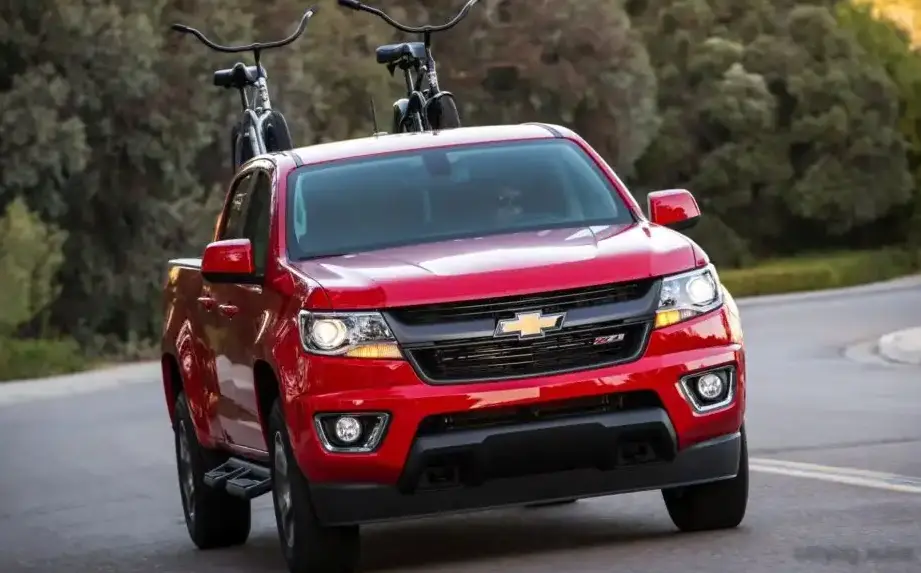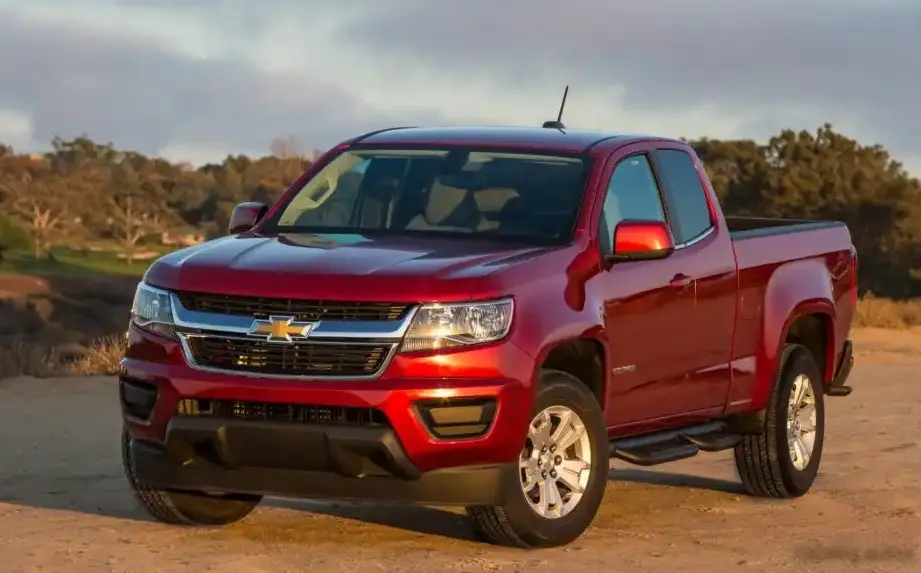
The Chevrolet Colorado II Extended Cab Long Box, specifically the 3.6-liter V6 4WD Automatic variant, represents a significant entry in the mid-size pickup truck market for the 2015 and 2016 model years. Positioned as a versatile and capable option, this configuration aimed to balance power, practicality, and affordability within the Colorado lineup. It was part of the second generation of the Colorado (designated as the Colorado II), which marked a return to a more traditional pickup truck design after the first generation’s somewhat controversial departure from established norms. This model played a key role in Chevrolet’s attempt to regain market share in a segment increasingly dominated by foreign manufacturers.
Technical Specifications
| Brand | Chevrolet |
| Model | Colorado |
| Generation | Colorado II Extended Cab Long Box |
| Type (Engine) | 3.6 V6 (305 Hp) 4WD Automatic |
| Start of production | 2015 |
| End of production | 2016 |
| Powertrain Architecture | Internal Combustion engine |
| Body type | Pick-up |
| Seats | 4 |
| Doors | 2 |
| Fuel consumption (urban) | 13.1 l/100 km (18 US mpg, 21.6 UK mpg, 7.6 km/l) |
| Fuel consumption (extra urban) | 9 l/100 km (26.1 US mpg, 31.4 UK mpg, 11.1 km/l) |
| Fuel Type | Petrol (Gasoline) |
| Weight-to-power ratio | 6.4 kg/Hp, 156 Hp/tonne |
| Weight-to-torque ratio | 5.4 kg/Nm, 186.7 Nm/tonne |
| Power | 305 Hp @ 6800 rpm |
| Power per litre | 85.6 Hp/l |
| Torque | 365 Nm @ 4000 rpm (269.21 lb.-ft. @ 4000 rpm) |
| Engine layout | Front, Longitudinal |
| Engine Model/Code | LFX |
| Engine displacement | 3564 cm3 (217.49 cu. in.) |
| Number of cylinders | 6 |
| Engine configuration | V-engine |
| Cylinder Bore | 94 mm (3.7 in.) |
| Piston Stroke | 85.6 mm (3.37 in.) |
| Compression ratio | 11.5:1 |
| Number of valves per cylinder | 4 |
| Fuel injection system | Direct injection |
| Engine aspiration | Naturally aspirated engine |
| Valvetrain | DOHC, VVT |
| Engine oil capacity | 5.7 l (6.02 US qt | 5.02 UK qt) |
| Coolant | 10.6 l (11.2 US qt | 9.33 UK qt) |
| Kerb Weight | 1955 kg (4310.04 lbs.) |
| Max. weight | 2676 kg (5899.57 lbs.) |
| Max load | 721 kg (1589.53 lbs.) |
| Trunk (boot) space – maximum | 1414 l (49.93 cu. ft.) |
| Fuel tank capacity | 79 l (20.87 US gal | 17.38 UK gal) |
| Permitted trailer load with brakes (12%) | 1588 kg (3500.94 lbs.) |
| Length | 5403 mm (212.72 in.) |
| Width | 1886 mm (74.25 in.) |
| Height | 1785 mm (70.28 in.) |
| Wheelbase | 3258 mm (128.27 in.) |
| Front track | 1586 mm (62.44 in.) |
| Rear (Back) track | 1586 mm (62.44 in.) |
| Ride height (ground clearance) | 212 mm (8.35 in.) |
| Minimum turning circle (turning diameter) | 12.6 m (41.34 ft.) |
| Approach angle | 17.6° |
| Departure angle | 22.3° |
| Ramp-over (brakeover) angle | 19.7° |
| Drivetrain Architecture | The Internal combustion engine (ICE) drives the rear wheels permanently, and the front wheels are driven through an electrically or mechanically operated clutch if necessary. |
| Drive wheel | All wheel drive (4×4) |
| Number of gears and type of gearbox | 6 gears, automatic transmission Hydra-Matic |
| Front suspension | Independent coil spring |
| Rear suspension | Rigid axle suspension, Leaf spring |
| Front brakes | Disc, 310×27 mm |
| Rear brakes | Disc, 324×18 mm |
| Assisting systems | ABS (Anti-lock braking system) |
| Steering type | Steering rack and pinion |
| Power steering | Electric Steering |
| Tires size | 265/70 R16; 255/65 R17 |
| Wheel rims size | 7J x 16; 7.5J x 16; 8J x 17 |
Powertrain & Engine Architecture
At the heart of this Colorado variant lies the 3.6-liter LFX V6 engine. This engine is a naturally aspirated, 24-valve DOHC (Double Overhead Camshaft) engine featuring variable valve timing (VVT). The LFX utilizes direct fuel injection, a technology that improves fuel efficiency and power output by injecting fuel directly into the combustion chamber. The engine produces 305 horsepower at 6800 rpm and 269 lb-ft of torque at 4000 rpm. The engine’s longitudinal mounting and rear-wheel-drive bias, coupled with the available four-wheel-drive system, contribute to its truck-like capabilities. The Hydra-Matic 6L80 six-speed automatic transmission was the sole transmission option for this configuration. This transmission is known for its smooth shifting and durability, and its gear ratios are tuned for a balance of acceleration and fuel economy.
Driving Characteristics
The 3.6L V6 with the 6-speed automatic delivers a respectable driving experience. While not as quick as some of the turbocharged competitors, the Colorado offers sufficient power for everyday driving and towing. The automatic transmission provides smooth gear changes, although it can sometimes feel hesitant during quick acceleration. The 4WD system provides enhanced traction in off-road conditions or inclement weather. Compared to the available 2.5-liter four-cylinder engine, the V6 offers significantly more power and torque, making it a better choice for those who frequently tow or haul heavy loads. However, it doesn’t match the performance of the available Duramax diesel engine, which prioritizes fuel economy and towing capacity.
Equipment & Trim Levels
The 3.6L V6 4WD Automatic was typically offered in mid-range trim levels, such as the LT and Z71. Standard features generally included air conditioning, power windows and locks, a basic audio system, and a rearview camera. The Z71 trim added off-road-focused equipment such as skid plates, an upgraded suspension, and all-terrain tires. Optional extras included a navigation system, a premium audio system, leather upholstery, heated front seats, and a power sunroof. The Extended Cab configuration provided additional rear seating, although it was somewhat cramped compared to the Crew Cab model.
Chassis & Braking
The Colorado II utilizes a body-on-frame construction, providing a robust and durable platform. The front suspension consists of independent coil springs, while the rear suspension employs a traditional leaf spring setup. This configuration is designed to handle heavy loads and provide a comfortable ride. Braking duties are handled by disc brakes on all four wheels, with ABS (Anti-lock Braking System) standard. The braking system is adequate for most driving situations, but it can feel somewhat lacking when towing heavy trailers. The Z71 trim often featured upgraded shock absorbers and a heavier-duty suspension for improved off-road performance.
Market Reception & Comparison
The Chevrolet Colorado II, including the 3.6L V6 4WD Automatic variant, was generally well-received by critics. It was praised for its comfortable ride, spacious interior, and capable powertrain. However, some reviewers noted that the fuel economy was not as competitive as some of its rivals. Compared to the Toyota Tacoma and Nissan Frontier, the Colorado offered a more refined interior and a more comfortable ride, but it lacked the established reputation for reliability of the Tacoma. The diesel engine option was often favored by those prioritizing fuel economy and towing capacity, while the four-cylinder engine appealed to budget-conscious buyers.
Legacy
The 3.6L LFX V6 engine has proven to be a relatively reliable powertrain, with few major issues reported. The Hydra-Matic 6L80 transmission is also known for its durability. In the used car market, the 2015-2016 Chevrolet Colorado II 3.6L V6 4WD Automatic remains a popular choice for those seeking a capable and versatile mid-size pickup truck. Its balance of power, practicality, and affordability makes it a compelling option for both work and play. Regular maintenance, including oil changes and transmission fluid flushes, is crucial to ensuring the long-term reliability of this powertrain.