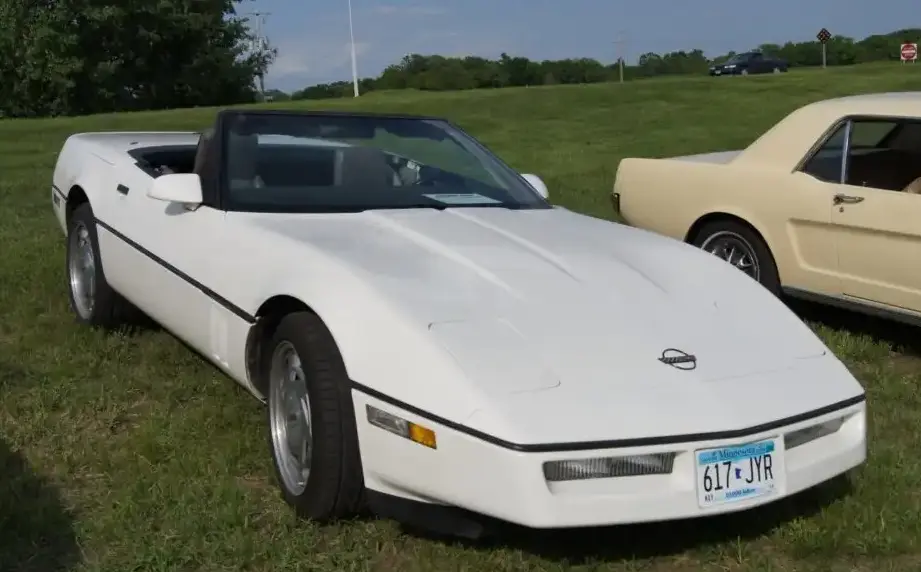
The Chevrolet Corvette C5, produced from 1997 to 2004, represented a significant departure from its predecessors, marking the first complete redesign of the Corvette since 1984. The 5.7i V8 16V (350 Hp) variant, available from 1997 through 2001, served as the standard engine option for the C5 coupe and convertible, establishing a strong foundation for the model’s performance and appeal. This iteration of the C5 aimed to blend traditional Corvette performance with modern technology and improved build quality, targeting enthusiasts seeking a capable and relatively affordable sports car. It was positioned as the entry point into the C5 lineup, offering a compelling balance of power and price.
Technical Specifications
| Brand | Chevrolet |
| Model | Corvette |
| Generation | Corvette Coupe (C5) |
| Type (Engine) | 5.7 i V8 16V (350 Hp) |
| Start of production | 1997 |
| End of production | 2001 |
| Powertrain Architecture | Internal Combustion engine |
| Body type | Coupe |
| Seats | 2 |
| Doors | 2 |
| Fuel consumption (economy) – urban | 13.1 l/100 km (18 US mpg, 21.6 UK mpg, 7.6 km/l) |
| Fuel consumption (economy) – extra urban | 8.4 l/100 km (28 US mpg, 33.6 UK mpg, 11.9 km/l) |
| Fuel Type | Petrol (Gasoline) |
| Acceleration 0 – 100 km/h | 4.7 sec |
| Acceleration 0 – 62 mph | 4.7 sec |
| Acceleration 0 – 60 mph | 4.5 sec |
| Maximum speed | 280 km/h (173.98 mph) |
| Weight-to-power ratio | 4.2 kg/Hp, 239.7 Hp/tonne |
| Weight-to-torque ratio | 3.1 kg/Nm, 325.3 Nm/tonne |
| Power | 350 Hp @ 5600 rpm |
| Power per litre | 61.8 Hp/l |
| Torque | 475 Nm @ 4400 rpm (350.34 lb.-ft. @ 4400 rpm) |
| Engine layout | Front, Longitudinal |
| Engine Model/Code | LS1 |
| Engine displacement | 5665 cm3 (345.7 cu. in.) |
| Number of cylinders | 8 |
| Engine configuration | V-engine |
| Cylinder Bore | 99 mm (3.9 in.) |
| Piston Stroke | 92 mm (3.62 in.) |
| Compression ratio | 10.1:1 |
| Number of valves per cylinder | 2 |
| Fuel injection system | Multi-port manifold injection |
| Engine aspiration | Naturally aspirated engine |
| Engine oil capacity | 6.1 l (6.45 US qt | 5.37 UK qt) |
| Coolant | 12.2 l (12.89 US qt | 10.73 UK qt) |
| Kerb Weight | 1460 kg (3218.75 lbs.) |
| Trunk (boot) space – minimum | 355 l (12.54 cu. ft.) |
| Fuel tank capacity | 72 l (19.02 US gal | 15.84 UK gal) |
| Length | 4564 mm (179.69 in.) |
| Width | 1870 mm (73.62 in.) |
| Height | 1211 mm (47.68 in.) |
| Wheelbase | 2656 mm (104.57 in.) |
| Front track | 1575 mm (62.01 in.) |
| Rear (Back) track | 1577 mm (62.09 in.) |
| Drivetrain Architecture | The Internal combustion engine (ICE) drives the rear wheels of the vehicle. |
| Drive wheel | Rear wheel drive |
| Number of gears and type of gearbox | 6 gears, manual transmission |
| Front suspension | Coil spring |
| Rear suspension | Coil spring |
| Front brakes | Ventilated discs |
| Rear brakes | Disc |
| Assisting systems | ABS (Anti-lock braking system) |
| Steering type | Steering rack and pinion |
| Power steering | Hydraulic Steering |
| Tires size | 245/45 R18; 275/40 R18 |
Introduction
The C5 Corvette, launched in 1997, marked a pivotal moment for Chevrolet’s iconic sports car. Moving away from the traditional body-on-frame construction, the C5 adopted a hydroformed box frame, significantly increasing structural rigidity and improving handling. The 5.7L LS1 V8 engine, producing 350 horsepower and 360 lb-ft of torque, was the cornerstone of the C5’s performance. This engine, coupled with a six-speed manual transmission (as detailed here) or a four-speed automatic, provided a substantial leap in performance over the previous C4 generation. The C5 aimed to compete with established sports cars from Europe and Japan, offering American muscle with a newfound level of refinement.
Powertrain & Engine Architecture
The heart of the C5 Corvette is the LS1 engine, a member of General Motors’ Small-Block V8 family. This engine featured a cast iron block with aluminum cylinder heads, a design that balanced durability with weight savings. The LS1 utilized a multi-port fuel injection system, delivering precise fuel metering for optimal combustion. The engine’s 10.1:1 compression ratio and revised cylinder heads contributed to its increased power output. The 5.7L engine employed a two-valve per cylinder configuration, and the camshaft profile was optimized for a broad torque curve. The six-speed manual transmission, a Borg-Warner T-56, was known for its smooth shifting and robust construction. The four-speed automatic transmission, the 4L60E, offered convenience but generally resulted in slightly slower acceleration times compared to the manual.
Driving Characteristics
The 350 horsepower LS1 engine, paired with the six-speed manual transmission, delivered exhilarating acceleration. Zero to sixty mph times were consistently in the 4.5-second range, making the C5 a genuinely quick car for its time. The manual transmission allowed for precise control over the engine’s power band, while the automatic, though smooth, felt somewhat less responsive. The C5’s chassis provided a stable and predictable handling experience, thanks to its rigid frame and well-tuned suspension. The steering was precise, offering good feedback to the driver. While not as nimble as some European sports cars, the C5 offered a comfortable ride for everyday driving, making it a versatile grand tourer.
Equipment & Trim Levels
The base C5 Corvette came standard with a respectable array of features, including air conditioning, power windows and locks, and a Delco Bose sound system. Interior upholstery was typically cloth, though leather was available as an option. The dashboard featured analog gauges, providing clear and concise information to the driver. Optional extras included heated seats, a heads-up display, and a more powerful Bose audio system. The C5 also offered a variety of exterior color options and wheel designs. The standard trim level focused on providing a performance-oriented experience without excessive luxury.
Chassis & Braking
The C5 Corvette’s hydroformed box frame was a significant advancement in chassis technology. This frame provided exceptional torsional rigidity, improving handling and reducing body flex. The suspension consisted of independent coil springs at all four corners, with transverse fiberglass leaf springs used in the rear. This design helped to reduce unsprung weight, further enhancing handling. The C5 was equipped with ventilated disc brakes at all four corners, providing ample stopping power. An anti-lock braking system (ABS) was standard, enhancing safety and control during hard braking.
Market Reception & Comparison
The C5 Corvette was widely praised by automotive critics for its performance, handling, and value. It was seen as a significant improvement over the C4, offering a more refined and capable driving experience. Compared to other sports cars in its price range, the C5 offered a compelling combination of power, performance, and practicality. The manual transmission version was generally favored by enthusiasts for its superior performance and driver engagement. The automatic transmission, while convenient, was often criticized for its slightly slower acceleration and less engaging driving experience. Fuel economy was respectable for a V8 sports car, averaging around 18 mpg in the city and 28 mpg on the highway.
Legacy
The LS1 engine proved to be remarkably reliable, and many C5 Corvettes continue to provide years of enjoyable driving. The C5’s hydroformed frame also demonstrated its durability, with few reports of structural issues. The C5 remains a popular choice in the used car market, offering a compelling value proposition for those seeking a high-performance sports car. The LS1 engine’s aftermarket support is extensive, allowing owners to easily upgrade and modify their C5s. The C5 Corvette established a new benchmark for American sports cars, paving the way for the even more advanced C6 and C7 generations.