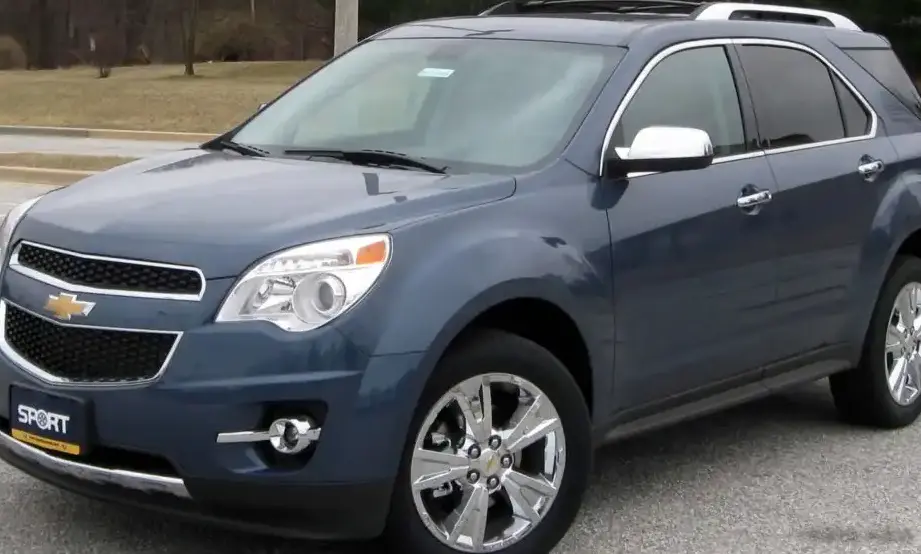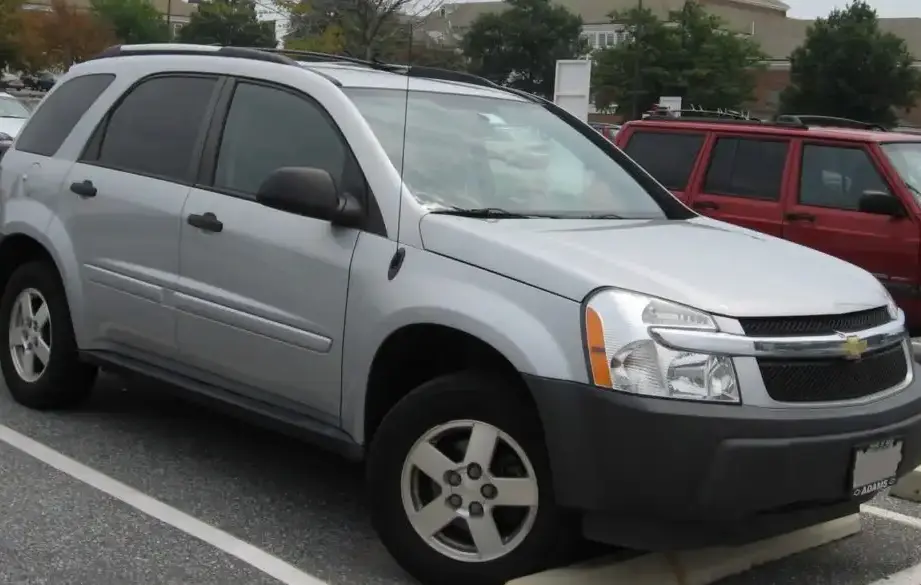
The Chevrolet Equinox 3.4i V6 Automatic, produced from 2005 to 2009, represented a significant step for Chevrolet into the burgeoning crossover SUV market. Part of the first generation Equinox (2005-2010), this variant occupied a mid-range position within the lineup, offering a balance between performance and practicality. It was designed to appeal to families seeking a comfortable and spacious vehicle with the added capability of a V6 engine. The Equinox aimed to compete with established players like the Honda CR-V and Toyota RAV4, offering a distinctly American take on the compact SUV formula.
Technical Specifications
| Brand | Chevrolet |
| Model | Equinox |
| Type (Engine) | 3.4 i V6 (185 Hp) Automatic |
| Start of production | 2005 |
| End of production | 2009 |
| Powertrain Architecture | Internal Combustion engine |
| Body type | SUV |
| Seats | 5 |
| Doors | 5 |
| Fuel consumption (urban) | 12.7 l/100 km (18.5 US mpg) |
| Fuel consumption (extra urban) | 8.6 l/100 km (27.4 US mpg) |
| Fuel consumption (combined) | 10.9 l/100 km (21.6 US mpg) |
| Fuel Type | Petrol (Gasoline) |
| Acceleration 0 – 100 km/h | 9 sec |
| Acceleration 0 – 60 mph | 8.6 sec |
| Maximum speed | 180 km/h (111.85 mph) |
| Weight-to-power ratio | 8.8 kg/Hp |
| Power | 185 Hp @ 5200 rpm |
| Torque | 285 Nm @ 3800 rpm (210.21 lb.-ft. @ 3800 rpm) |
| Engine layout | Front, Transverse |
| Engine Model/Code | LNJ |
| Engine displacement | 3350 cm3 (204.43 cu. in.) |
| Number of cylinders | 6 |
| Engine configuration | V-engine |
| Cylinder Bore | 92 mm (3.62 in.) |
| Piston Stroke | 84 mm (3.31 in.) |
| Compression ratio | 9.5:1 |
| Number of valves per cylinder | 2 |
| Fuel injection system | Multi-port manifold injection |
| Engine oil capacity | 3.8 l (4.02 US qt | 3.34 UK qt) |
| Coolant capacity | 9.9 l (10.46 US qt | 8.71 UK qt) |
| Kerb Weight | 1635 kg (3604.56 lbs.) |
| Trunk (boot) space – minimum | 860 l (30.37 cu. ft.) |
| Fuel tank capacity | 63 l (16.64 US gal | 13.86 UK gal) |
| Length | 4795 mm (188.78 in.) |
| Width | 1835 mm (72.24 in.) |
| Height | 1705 mm (67.13 in.) |
| Wheelbase | 2860 mm (112.6 in.) |
| Front track | 1565 mm (61.61 in.) |
| Rear track | 1570 mm (61.81 in.) |
| Drivetrain | Front wheel drive |
| Number of gears | 5 |
| Gearbox type | Automatic transmission |
| Front suspension | Spring Strut |
| Rear suspension | Transverse stabilizer |
| Front brakes | Ventilated discs |
| Rear brakes | Disc |
| Assisting systems | ABS (Anti-lock braking system) |
| Steering type | Steering rack and pinion |
| Tires size | 235/65 R16 |
| Wheel rims size | 6.5J x 16 |
Powertrain & Engine Architecture
The heart of this Equinox variant was the 3.4-liter LNJ V6 engine. This engine, a member of Chevrolet’s family of pushrod V6s, featured a 90-degree V-angle and utilized a cast iron block with aluminum cylinder heads. The engine employed multi-port fuel injection and a two-valve-per-cylinder configuration. While not a particularly high-tech design by the mid-2000s, it was known for its durability and relatively smooth operation. The 3.4L V6 produced 185 horsepower at 5200 rpm and 285 Nm (210 lb-ft) of torque at 3800 rpm. This power was delivered to the front wheels through a five-speed automatic transmission. The transmission was a conventional hydraulic automatic, prioritizing smooth shifts over outright performance. It was a reliable unit, but not known for its responsiveness or fuel efficiency.
Driving Characteristics
The 3.4i V6 Automatic Equinox offered adequate, but not exhilarating, performance. Acceleration from 0-60 mph took around 8.6 seconds, making it competitive with other crossovers of the time. The automatic transmission, while smooth, could feel somewhat sluggish, particularly during quick overtaking maneuvers. The gear ratios were tuned for comfort and fuel economy rather than sporty driving. Compared to the base 2.4-liter four-cylinder Equinox, the V6 provided a noticeable boost in power and refinement. However, it lacked the responsiveness of a manual transmission. The V6 also felt less nimble than the four-cylinder model due to the added weight over the front axle.
Equipment & Trim Levels
The 3.4i V6 Automatic typically came equipped with features such as air conditioning, power windows and locks, a CD player, and cloth upholstery. Higher trim levels, such as the LT, added features like alloy wheels, upgraded audio systems, and a power driver’s seat. Optional extras included a sunroof, leather upholstery, and a rear entertainment system. The interior design was functional and straightforward, prioritizing practicality over luxury. The Equinox offered a spacious cabin with ample room for passengers and cargo.
Chassis & Braking
The Equinox utilized a front-wheel-drive platform with independent front suspension and a multi-link rear suspension. The suspension was tuned for a comfortable ride, absorbing bumps and imperfections in the road effectively. Front brakes were ventilated discs, while rear brakes were solid discs. Anti-lock brakes (ABS) were standard. The steering was a rack-and-pinion system, providing reasonably precise control. The Equinox’s chassis was designed to prioritize stability and comfort over sporty handling.
Market Reception & Comparison
The Chevrolet Equinox 3.4i V6 Automatic was generally well-received by critics as a practical and comfortable crossover SUV. However, some reviewers noted that the V6 engine’s fuel economy was relatively poor compared to the four-cylinder model. The automatic transmission also drew some criticism for its lack of responsiveness. Compared to competitors like the Honda CR-V and Toyota RAV4, the Equinox offered a more spacious interior and a more powerful engine, but it lacked the same level of refinement and fuel efficiency. The Equinox’s pricing was competitive, making it an attractive option for budget-conscious buyers.
Legacy
The Chevrolet Equinox 3.4i V6 Automatic, while not a groundbreaking vehicle, played an important role in establishing Chevrolet as a contender in the crossover SUV market. The LNJ V6 engine proved to be reasonably reliable, although regular maintenance, including oil changes and timing chain inspections, was crucial. Today, these Equinoxes can be found on the used car market at affordable prices. They represent a decent value for buyers seeking a spacious and comfortable SUV, but potential buyers should be aware of the engine’s potential for oil consumption and the transmission’s tendency to exhibit occasional harsh shifts. The first-generation Equinox laid the foundation for the successful Equinox models that followed, solidifying Chevrolet’s position in the competitive SUV segment.