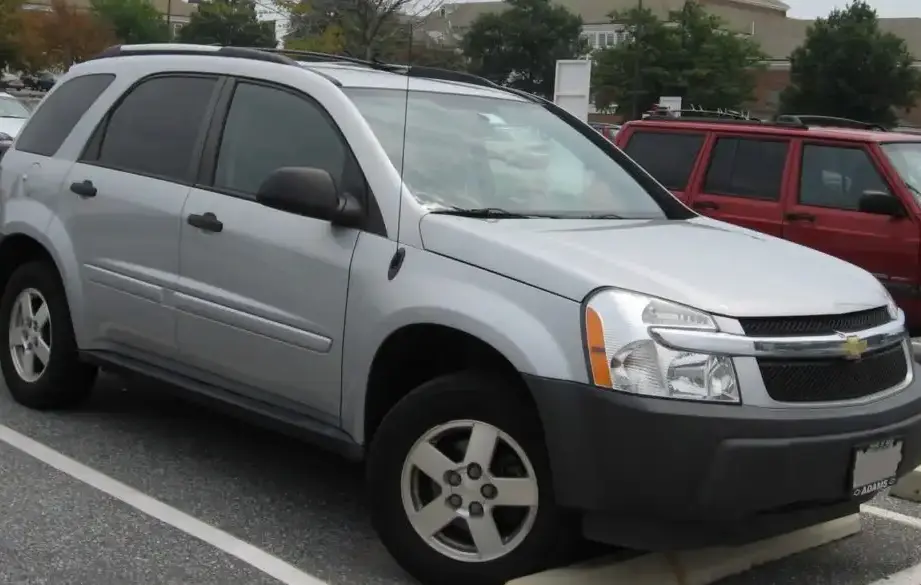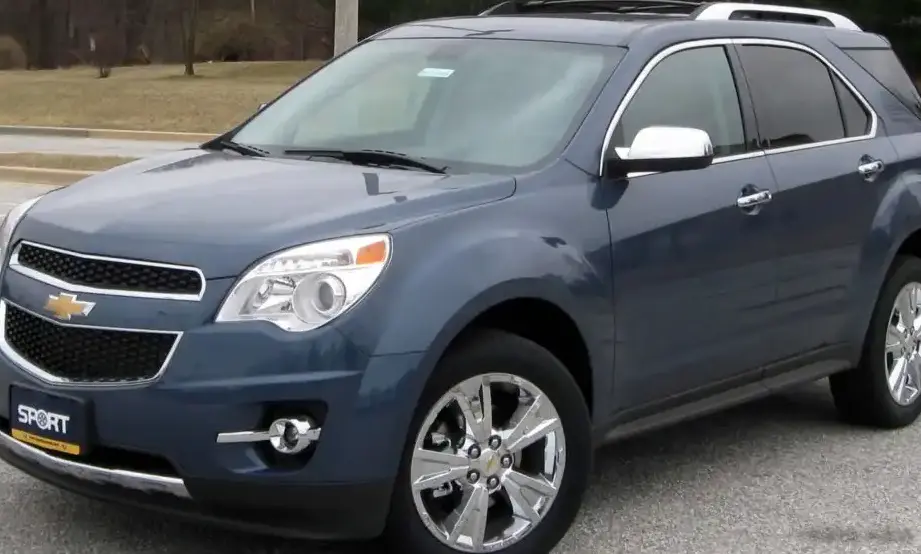
The Chevrolet Equinox II, specifically the 3.0 V6 AWD Automatic variant, was produced from 2009 to 2012. This model represented a significant step forward for Chevrolet’s crossover SUV offerings, positioned as a mid-range option within the Equinox II lineup. It slotted above the base 2.4L four-cylinder models and below any potential higher-performance trims, aiming to provide a balance of power, space, and all-weather capability for families and commuters. The Equinox II was built on the GM Theta platform, shared with other GM vehicles like the GMC Terrain and Buick Equinox, and was designed to compete with popular crossovers like the Honda CR-V and Toyota RAV4.
Technical Specifications
| Brand | Chevrolet |
| Model | Equinox |
| Generation | Equinox II |
| Type (Engine) | 3.0 V6 (264 Hp) AWD Automatic |
| Start of production | June, 2009 |
| End of production | 2012 |
| Powertrain Architecture | Internal Combustion engine |
| Body type | SUV |
| Seats | 5 |
| Doors | 5 |
| Fuel consumption (urban) | 14.7 l/100 km (16 US mpg, 19.2 UK mpg, 6.8 km/l) |
| Fuel consumption (extra urban) | 10.2 l/100 km (23.1 US mpg, 27.7 UK mpg, 9.8 km/l) |
| Fuel Type | Petrol (Gasoline) |
| Power | 264 Hp |
| Power per litre | 88.2 Hp/l |
| Torque | 301 Nm (222.01 lb.-ft.) |
| Engine layout | Front, Transverse |
| Engine Model/Code | LF1 |
| Engine displacement | 2994 cm3 (182.71 cu. in.) |
| Number of cylinders | 6 |
| Engine configuration | V-engine |
| Number of valves per cylinder | 4 |
| Fuel injection system | Direct injection |
| Valvetrain | DOHC |
| Engine oil capacity | 5.7 l (6.02 US qt, 5.02 UK qt) |
| Coolant | 10.2 l (10.78 US qt, 8.97 UK qt) |
| Trunk (boot) space (minimum) | 1804 l (63.71 cu. ft.) |
| Fuel tank capacity | 79 l (20.87 US gal, 17.38 UK gal) |
| Length | 4770 mm (187.8 in.) |
| Width | 1842 mm (72.52 in.) |
| Height | 1760 mm (69.29 in.) |
| Wheelbase | 2858 mm (112.52 in.) |
| Front track | 1598 mm (62.91 in.) |
| Rear track | 1577 mm (62.09 in.) |
| Drivetrain Architecture | All wheel drive (4×4). ICE drives front wheels, rear wheels engaged via clutch. |
| Number of gears | 6 |
| Gearbox type | Automatic transmission |
| Front suspension | Independent coil spring |
| Rear suspension | Independent multi-link spring suspension with stabilizer |
| Front brakes | Disc |
| Rear brakes | Disc |
| Assisting systems | ABS (Anti-lock braking system) |
| Steering type | Steering rack and pinion |
| Power steering | Electric |
| Tires size | 225/65 R17 100T; 235/55 R18 99T; 235/55 R19 101H |
| Wheel rims size | 7J x 17 ET43; 7J x 18 ET46; 7J x 19 ET46 |
Powertrain & Engine Architecture
The heart of this Equinox variant is the LF1 3.0-liter V6 engine. This engine utilizes direct fuel injection, a technology that improves fuel efficiency and power output by injecting fuel directly into the combustion chamber. The engine features a double overhead camshaft (DOHC) valvetrain, optimizing airflow for enhanced performance. The 6-speed automatic transmission was a key component, offering smooth shifts and contributing to the vehicle’s overall drivability. This transmission was designed to handle the V6’s torque output effectively, providing adequate acceleration and cruising ability. The automatic transmission was a standard feature, as a manual transmission was not offered with the 3.0L V6 engine in the US market.
Driving Characteristics
The 3.0L V6 equipped Equinox offered a noticeable performance upgrade compared to the base 2.4L four-cylinder models. With 264 horsepower and 301 Nm (222 lb-ft) of torque, the V6 provided brisk acceleration and confident passing power. The automatic transmission, while smooth, wasn’t particularly sporty. Gear ratios were tuned for comfort and fuel economy rather than aggressive performance. The all-wheel-drive system provided enhanced traction in inclement weather, making it a practical choice for regions experiencing snow or rain. Compared to the 2.4L, the V6 felt more composed when fully loaded with passengers and cargo.
Equipment & Trim Levels
The 3.0L V6 AWD Automatic trim typically came standard with features like air conditioning, power windows and locks, a CD player with auxiliary input, and cruise control. Higher trim levels, such as the LT and LTZ, added features like leather upholstery, a power driver’s seat, a premium sound system, and a rearview camera. Optional extras included a navigation system, a sunroof, and remote start. Interior upholstery was typically cloth on the base trims, upgrading to leather on the LTZ. The dashboard layout was functional and straightforward, prioritizing ease of use over stylistic flair.
Chassis & Braking
The Equinox II featured an independent coil spring suspension in the front and an independent multi-link suspension with a stabilizer bar in the rear. This suspension setup provided a comfortable ride quality, absorbing bumps and irregularities in the road surface effectively. All-wheel-drive models, like this 3.0L variant, featured disc brakes on all four wheels, providing ample stopping power. The anti-lock braking system (ABS) was standard, enhancing safety and control during emergency braking situations. Steering was rack and pinion with electric power assist, offering a responsive and precise feel.
Market Reception & Comparison
Critics generally praised the Equinox II for its spacious interior, comfortable ride, and available V6 engine. The 3.0L V6 AWD Automatic variant was well-received for its balanced performance and all-weather capability. Fuel economy, however, was a common criticism, with the V6 engine consuming more fuel than the base four-cylinder option. Compared to competitors like the Honda CR-V and Toyota RAV4, the Equinox offered a more powerful engine option but often lagged behind in terms of fuel efficiency and overall refinement. Reliability was generally considered average for the segment, with some reports of minor issues with the automatic transmission and electrical systems.
Legacy
The Chevrolet Equinox II 3.0L V6 AWD Automatic remains a relatively common sight on the used car market. The LF1 V6 engine is generally considered to be a reliable powerplant, although regular maintenance is crucial to prevent issues. The automatic transmission, while generally dependable, can be prone to wear and tear with high mileage. Overall, this variant offers a good value proposition for buyers seeking a spacious, capable, and reasonably well-equipped crossover SUV. Its all-wheel-drive system and V6 engine continue to appeal to those prioritizing performance and all-weather traction.