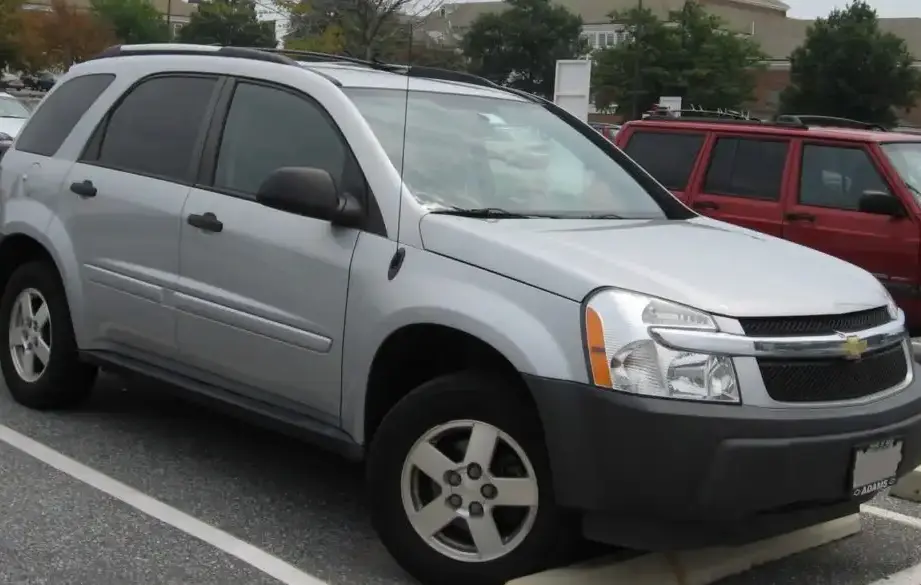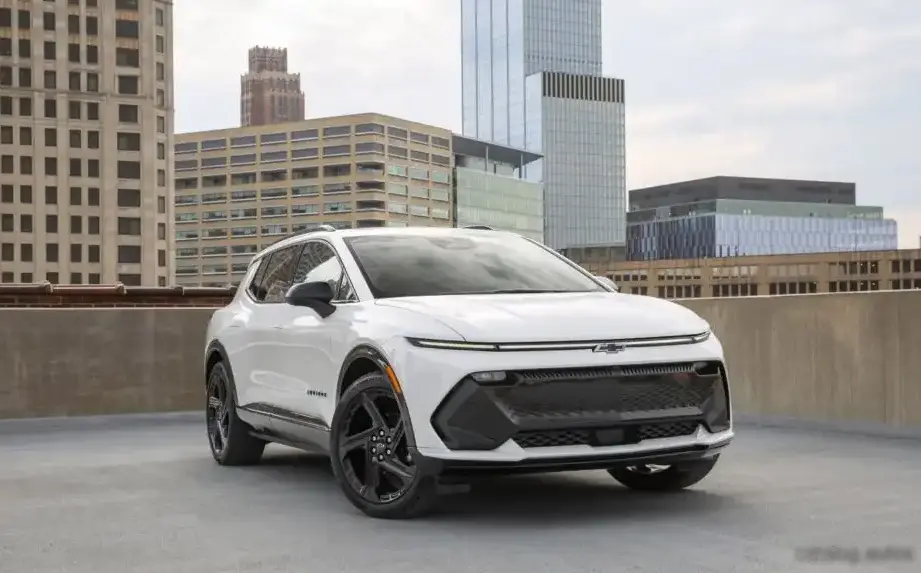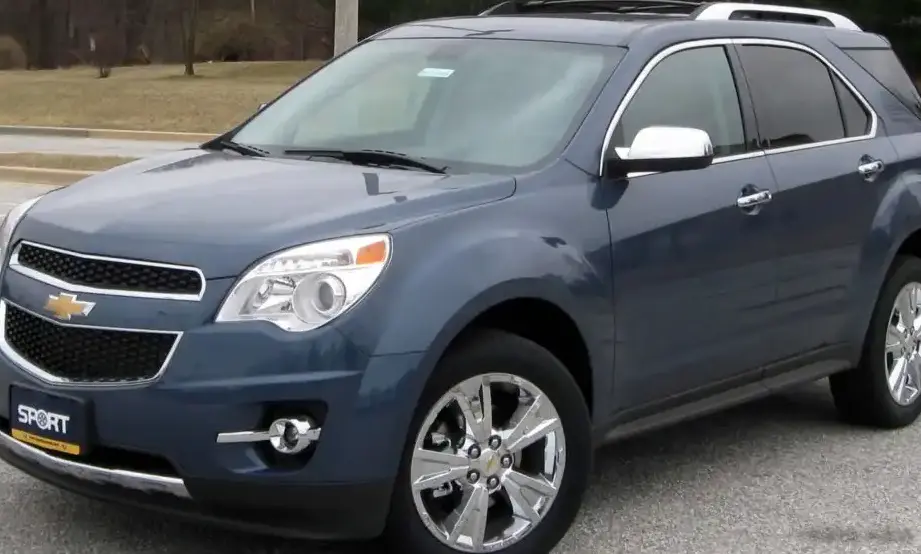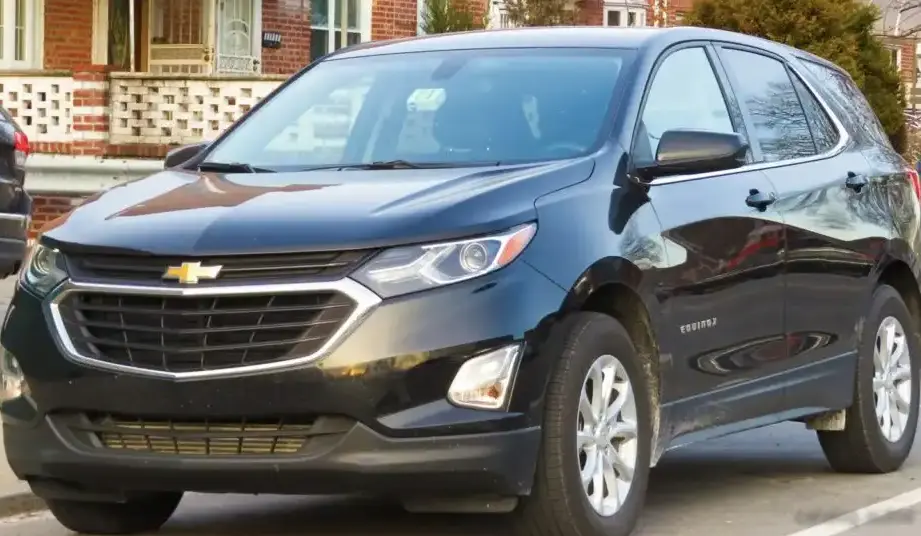
The Chevrolet Equinox III 1.6d (139 hp) Automatic, produced from 2017 to 2021, represents a key variant within the third generation of Chevrolet’s popular compact SUV. Positioned as a fuel-efficient option in the North American market, this model aimed to balance practicality with reasonable performance. It was built on the GM Delta platform, shared with other compact crossovers, and served as a mainstream offering within the Equinox lineup, slotting below the more powerful gasoline engine options. The 1.6d variant was primarily targeted towards buyers prioritizing fuel economy and a comfortable driving experience over outright acceleration.
Technical Specifications
| Brand | Chevrolet |
| Model | Equinox |
| Generation | Equinox III |
| Type (Engine) | 1.6d (139 Hp) Automatic |
| Start of production | 2017 |
| End of production | 2021 |
| Powertrain Architecture | Internal Combustion engine |
| Body type | SUV |
| Seats | 5 |
| Doors | 5 |
| Fuel consumption (urban) | 7.3 l/100 km (32.2 US mpg) |
| Fuel consumption (extra urban) | 5.9 l/100 km (39.9 US mpg) |
| Fuel Type | Diesel |
| Weight-to-power ratio | 11.5 kg/Hp |
| Weight-to-torque ratio | 4.9 kg/Nm |
| Power | 139 Hp @ 3750 rpm |
| Power per litre | 87 Hp/l |
| Torque | 325 Nm @ 2000 rpm (239.71 lb.-ft. @ 2000 rpm) |
| Engine layout | Front, Longitudinal |
| Engine Model/Code | LH7 |
| Engine displacement | 1598 cm3 (97.52 cu. in.) |
| Number of cylinders | 4 |
| Engine configuration | Inline |
| Cylinder Bore | 79.7 mm (3.14 in.) |
| Piston Stroke | 80.1 mm (3.15 in.) |
| Compression ratio | 16:1 |
| Number of valves per cylinder | 4 |
| Fuel injection system | Diesel Commonrail |
| Engine aspiration | Turbocharger, Intercooler |
| Valvetrain | DOHC |
| Engine oil capacity | 5 l (5.28 US qt | 4.4 UK qt) |
| Coolant | 7.5 l (7.93 US qt | 6.6 UK qt) |
| Kerb Weight | 1598 kg (3522.99 lbs.) |
| Trunk (boot) space – minimum | 847 l (29.91 cu. ft.) |
| Trunk (boot) space – maximum | 1798 l (63.5 cu. ft.) |
| Fuel tank capacity | 56 l (14.79 US gal | 12.32 UK gal) |
| Length | 4651 mm (183.11 in.) |
| Width | 1844 mm (72.6 in.) |
| Height | 1661 mm (65.39 in.) |
| Wheelbase | 2725 mm (107.28 in.) |
| Front track | 1580 mm (62.2 in.) |
| Rear (Back) track | 1580 mm (62.2 in.) |
| Minimum turning circle | 11.4 m (37.4 ft.) |
| Drivetrain Architecture | Front wheel drive |
| Number of gears and type of gearbox | 6 gears, automatic transmission Hydra-Matic |
| Front suspension | Independent, type McPherson with coil spring and anti-roll bar |
| Rear suspension | Independent multi-link suspension |
| Front brakes | Ventilated discs |
| Rear brakes | Disc |
| Tires size | 225/65 R17 |
| Wheel rims size | 17 |
Powertrain & Engine Architecture
The heart of the Equinox III 1.6d Automatic is the LH7 engine, a 1.6-liter turbocharged four-cylinder diesel. This engine utilizes a common-rail direct fuel injection system, delivering fuel directly into the combustion chamber at extremely high pressure for improved efficiency and reduced emissions. The engine features a double overhead camshaft (DOHC) valvetrain, optimizing airflow for enhanced performance. The turbocharger, coupled with an intercooler, forces more air into the engine, boosting power output. The six-speed Hydra-Matic automatic transmission was chosen for its smooth shifting and efficiency. This transmission is a conventional torque converter automatic, offering a balance between comfort and responsiveness. The engine’s longitudinal mounting allowed for a more efficient drivetrain layout within the Equinox’s chassis.
Driving Characteristics
The 139 hp and 325 Nm (239.71 lb-ft) of torque provided by the 1.6d engine delivered adequate, though not exhilarating, performance. Acceleration was sufficient for everyday driving, but passing maneuvers required planning. The automatic transmission, while smooth, sometimes felt hesitant to downshift, particularly when needing a quick burst of power. Compared to the available 1.5L and 2.0L gasoline engines, the 1.6d offered less overall power but significantly better fuel economy. The gear ratios were tuned for fuel efficiency rather than outright performance, resulting in a relaxed cruising experience. Drivers accustomed to manual transmissions or more powerful engines might find the 1.6d Automatic somewhat lacking in responsiveness.
Equipment & Trim Levels
The 1.6d Automatic trim typically included standard features such as air conditioning, a touchscreen infotainment system with Apple CarPlay and Android Auto compatibility, a rearview camera, and basic safety features like ABS and stability control. Higher trim levels added features like leather upholstery, heated front seats, a power liftgate, and advanced safety technologies such as blind-spot monitoring and rear cross-traffic alert. Interior upholstery was generally cloth on the base trims, with leather options available on higher-spec models. Dashboard configurations were consistent across the Equinox III range, featuring a user-friendly layout with intuitive controls.
Chassis & Braking
The Equinox III utilized an independent suspension system on both the front and rear axles. The front suspension employed a McPherson strut design, while the rear featured a multi-link setup. This configuration provided a comfortable ride quality, absorbing bumps and irregularities in the road surface effectively. Front brakes were ventilated discs, offering good stopping power, while rear brakes were solid discs. The electric power steering provided light and precise steering feel. The 1.6d variant, due to its lower weight compared to gasoline-powered models, generally exhibited slightly better handling characteristics.
Market Reception & Comparison
The Chevrolet Equinox III 1.6d Automatic received mixed reviews. Critics praised its fuel efficiency and comfortable ride, but some found the engine underpowered, especially when fully loaded. Compared to the 1.5L turbo gasoline engine, the 1.6d offered superior fuel economy but less overall performance. The 2.0L turbo gasoline engine provided significantly more power but at the expense of fuel efficiency. Reliability reports indicated that the 1.6d engine was generally reliable, although some owners reported issues with the diesel particulate filter (DPF) system, a common concern with modern diesel engines.
Legacy
The Chevrolet Equinox III 1.6d Automatic, while not the most powerful or sporty version of the Equinox, carved a niche for itself as a fuel-efficient and practical option. On the used car market, these models are often sought after by buyers prioritizing economy and low running costs. The 1.6d engine, while not without its quirks, proved to be a reasonably durable powertrain when properly maintained. The availability of parts and service remains good, ensuring that these vehicles can be kept on the road for many years to come. The Equinox III, in general, helped solidify Chevrolet’s position in the competitive compact SUV segment, and the 1.6d variant played a role in attracting buyers seeking a diesel-powered option.