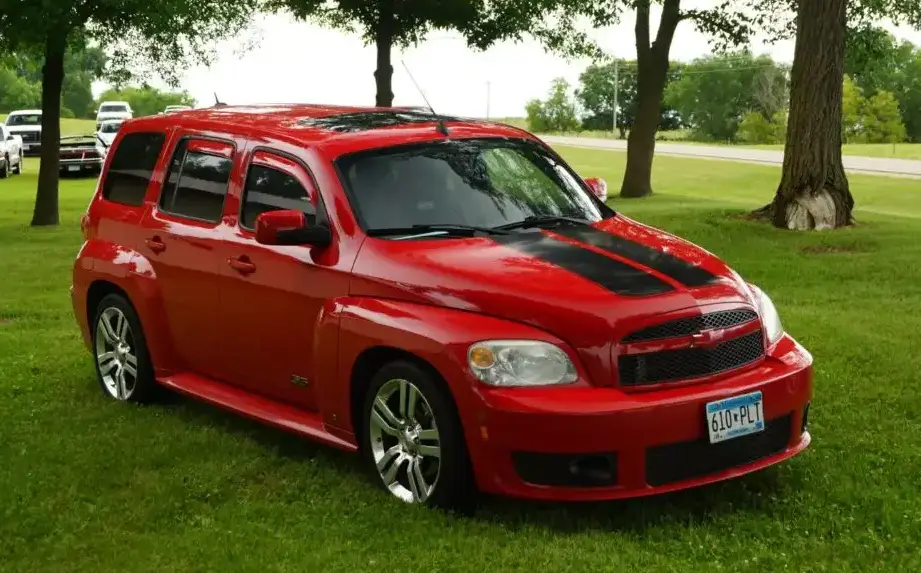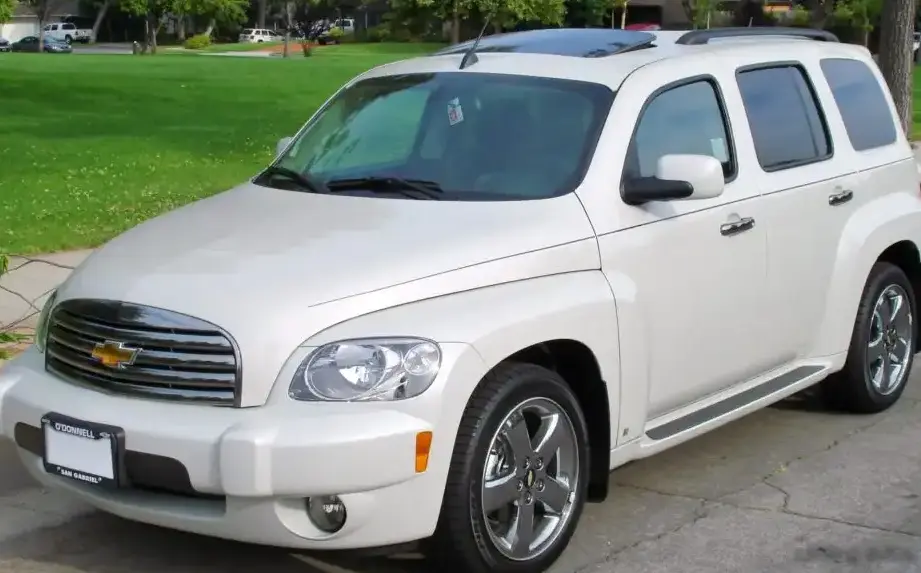
The Chevrolet HHR 2.2i 16V, produced from 2005 to May 2011, represented the entry-level powertrain option for Chevrolet’s retro-styled compact wagon. Positioned within the first generation of the HHR (which spanned its entire production run), this variant aimed to provide an affordable and practical transportation solution. The HHR, standing for Heritage High Roof, was designed to evoke the styling of classic Chevrolet trucks of the 1940s and 50s, while offering the functionality of a modern wagon. The 2.2i model, equipped with a four-speed automatic transmission, was a popular choice for buyers prioritizing ease of use and fuel efficiency over outright performance. It served as a key volume seller in the HHR lineup, appealing to a broad demographic seeking a unique and versatile vehicle.
Technical Specifications
| Brand | Chevrolet |
| Model | HHR |
| Generation | HHR |
| Type (Engine) | 2.2 i 16V (141 Hp) |
| Start of production | 2005 |
| End of production | May, 2011 |
| Powertrain Architecture | Internal Combustion engine |
| Body type | Station wagon (estate) |
| Seats | 5 |
| Doors | 5 |
| Fuel consumption (urban) | 10 l/100 km (23.5 US mpg) |
| Fuel consumption (extra urban) | 8.7 l/100 km (27 US mpg) |
| Fuel consumption (combined) | 9.4 l/100 km (25 US mpg) |
| Fuel Type | Petrol (Gasoline) |
| Weight-to-power ratio | 10.1 kg/Hp |
| Weight-to-torque ratio | 6.8 kg/Nm |
| Power | 141 Hp @ 5600 rpm |
| Power per litre | 64.1 Hp/l |
| Torque | 210 Nm @ 4000 rpm (154.89 lb.-ft. @ 4000 rpm) |
| Engine layout | Front, Transverse |
| Engine Model/Code | L61 |
| Engine displacement | 2198 cm3 (134.13 cu. in.) |
| Number of cylinders | 4 |
| Engine configuration | Inline |
| Cylinder Bore | 86 mm (3.39 in.) |
| Piston Stroke | 94.6 mm (3.72 in.) |
| Compression ratio | 10:1 |
| Number of valves per cylinder | 4 |
| Fuel injection system | Multi-port manifold injection |
| Engine aspiration | Naturally aspirated engine |
| Engine oil capacity | 4.7 l (4.97 US qt | 4.14 UK qt) |
| Coolant capacity | 7 l (7.4 US qt | 6.16 UK qt) |
| Kerb Weight | 1431 kg (3154.81 lbs.) |
| Trunk (boot) space – minimum | 638 l (22.53 cu. ft.) |
| Trunk (boot) space – maximum | 1785 l (63.04 cu. ft.) |
| Fuel tank capacity | 49 l (12.94 US gal | 10.78 UK gal) |
| Length | 4475 mm (176.18 in.) |
| Width | 1755 mm (69.09 in.) |
| Height | 1603 mm (63.11 in.) |
| Wheelbase | 2628 mm (103.46 in.) |
| Front track | 1491 mm (58.7 in.) |
| Rear track | 1491 mm (58.7 in.) |
| Minimum turning circle | 11 m (36.09 ft.) |
| Drivetrain Architecture | Front wheel drive |
| Number of gears | 4 gears, automatic transmission |
| Front suspension | Spring Strut |
| Rear suspension | Transverse stabilizer |
| Front brakes | Ventilated discs |
| Rear brakes | Drum |
| Assisting systems | ABS (Anti-lock braking system) |
| Steering type | Steering rack and pinion |
| Tires size | 215/55 R16 |
| Wheel rims size | 6.5J X 16 |
Powertrain & Engine Architecture
The Chevrolet HHR 2.2i utilized the L61 engine, a 2.2-liter inline four-cylinder powerplant. This engine was a mainstay in numerous General Motors vehicles throughout the 2000s and early 2010s. The L61 featured a cast iron block and an aluminum cylinder head, incorporating multi-port fuel injection and a single overhead camshaft (SOHC) design with four valves per cylinder. The four-speed automatic transmission (4L40-E) was chosen for its reliability and cost-effectiveness, providing smooth shifts for everyday driving. While not a performance-oriented transmission, it was well-suited to the engine’s torque curve. The engine’s relatively simple design contributed to its durability and ease of maintenance.
Driving Characteristics
The 2.2-liter engine paired with the four-speed automatic delivered adequate, though not exhilarating, performance. Acceleration was modest, with a focus on smooth and predictable power delivery. The automatic transmission’s gear ratios were optimized for fuel economy and comfortable cruising rather than quick acceleration. Compared to the optional 2.4-liter Ecotec engine, the 2.2i felt noticeably less powerful, particularly when fully loaded or climbing hills. The automatic transmission, while convenient, lacked the responsiveness of the available five-speed manual. However, for drivers prioritizing ease of use and fuel efficiency, the 2.2i automatic provided a pleasant and practical driving experience.
Equipment & Trim Levels
The HHR 2.2i typically came standard with features such as air conditioning, power windows and locks, and an AM/FM stereo. Higher trim levels, such as the LT, added features like cruise control, upgraded interior trim, and alloy wheels. Optional extras included a premium sound system, sunroof, and rear cargo organizer. Interior upholstery was typically cloth, with the option of leatherette on higher trims. The dashboard layout was functional and straightforward, with easy-to-read gauges and intuitive controls. The HHR’s unique interior design, with its retro-inspired elements, set it apart from many contemporary vehicles.
Chassis & Braking
The HHR utilized a front-wheel-drive platform with a MacPherson strut front suspension and a twist-beam rear suspension. The front suspension incorporated a stabilizer bar to reduce body roll during cornering. Braking duties were handled by ventilated discs at the front and drum brakes at the rear. ABS (Anti-lock Braking System) was standard equipment. The suspension tuning was geared towards comfort and ride quality, rather than sporty handling. The HHR’s relatively high center of gravity and soft suspension contributed to noticeable body roll in corners.
Market Reception & Comparison
The HHR 2.2i was generally well-received as an affordable and practical wagon. Critics praised its unique styling and spacious interior, but noted its lack of performance. Fuel economy was considered average for its class. Compared to other compact wagons of the time, such as the Dodge Caliber or the Toyota Matrix, the HHR offered a distinctive retro aesthetic and a more spacious cargo area. However, its handling and acceleration were generally considered inferior to its competitors. The 2.2i automatic was often seen as a sensible choice for buyers prioritizing value and convenience over performance.
Legacy
The Chevrolet HHR, while not a long-lived model, left a lasting impression with its distinctive styling. The L61 engine, while not known for its high performance, proved to be a reliable and durable powerplant. Today, the HHR 2.2i can be found on the used car market at relatively affordable prices. Common maintenance issues include oil leaks and occasional sensor failures. However, the engine’s simplicity and readily available parts make it relatively easy and inexpensive to repair. The HHR 2.2i remains a popular choice for buyers seeking a unique and practical vehicle with a retro flair.