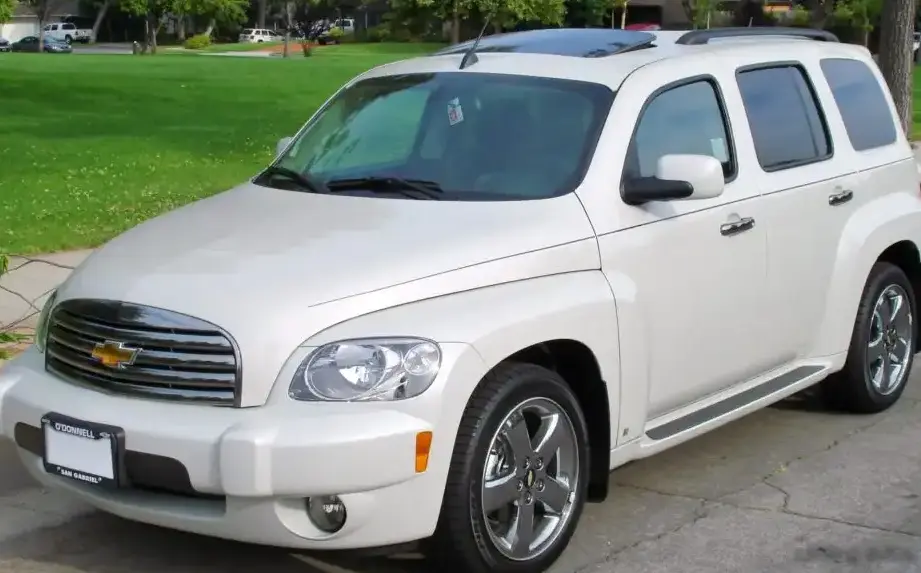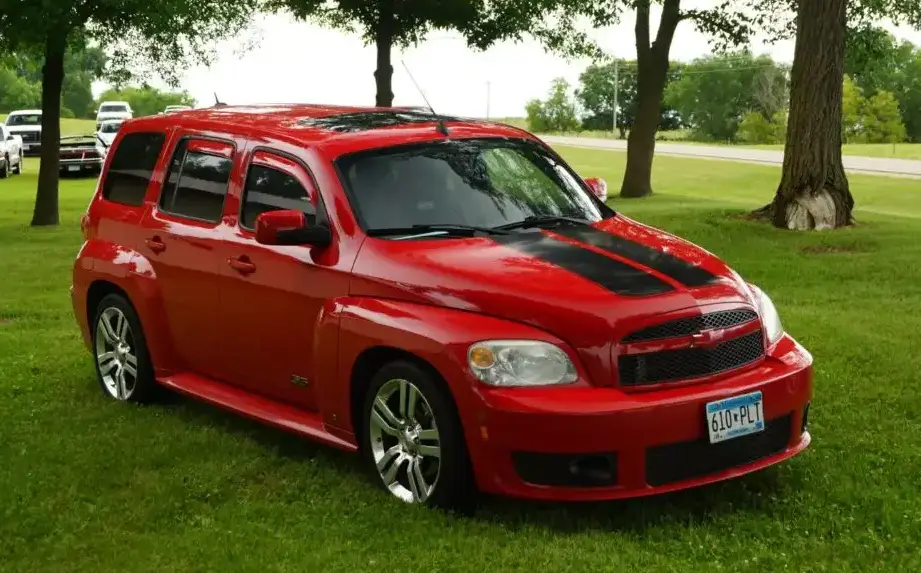
The Chevrolet HHR SS 2.0 Turbo, produced from 2007 to 2010, represented the performance-oriented pinnacle of the HHR (Heritage High Roof) model line. Positioned as the sporty variant, the SS capitalized on the HHR’s retro styling, offering a significantly more powerful engine and enhanced features compared to the base models. It was built on the GM Delta platform, shared with vehicles like the Saturn Ion and Opel Astra, but distinguished itself through its unique body shape and focus on a more engaging driving experience. The HHR SS aimed to blend the practicality of a small wagon with the appeal of a hot hatch, targeting buyers seeking a distinctive and capable vehicle.
Technical Specifications
| Brand | Chevrolet |
| Model | HHR |
| Generation | HHR |
| Type (Engine) | SS 2.0 Turbo (260 Hp) |
| Start of production | August, 2007 |
| End of production | 2010 |
| Powertrain Architecture | Internal Combustion engine |
| Body type | Station wagon (estate) |
| Seats | 5 |
| Doors | 5 |
| Fuel consumption (economy) – urban (EPA) | 11.2 l/100 km (21 US mpg, 25.2 UK mpg, 8.9 km/l) |
| Fuel consumption (economy) – extra urban (EPA) | 8.1 l/100 km (29 US mpg, 34.9 UK mpg, 12.3 km/l) |
| Fuel Type | Petrol (Gasoline) |
| Power | 260 Hp |
| Power per litre | 130.1 Hp/l |
| Torque | 353 Nm (260.36 lb.-ft.) |
| Engine layout | Front, Transverse |
| Engine Model/Code | Ecotec / LNF |
| Engine displacement | 1998 cm3 (121.93 cu. in.) |
| Number of cylinders | 4 |
| Engine configuration | Inline |
| Cylinder Bore | 86 mm (3.39 in.) |
| Piston Stroke | 86 mm (3.39 in.) |
| Number of valves per cylinder | 4 |
| Fuel injection system | Direct injection |
| Engine aspiration | Twin-scroll turbo, Intercooler |
| Valvetrain | DOHC, VVT |
| Engine oil capacity | 4.7 l (4.97 US qt | 4.14 UK qt) |
| Coolant | 8.7 l (9.19 US qt | 7.65 UK qt) |
| Trunk (boot) space – minimum | 430 l (15.19 cu. ft.) |
| Trunk (boot) space – maximum | 1550 l (54.74 cu. ft.) |
| Fuel tank capacity | 61.3 l (16.19 US gal | 13.48 UK gal) |
| Permitted trailer load with brakes (12%) | 454 kg (1000.9 lbs.) |
| Length | 4475 mm (176.18 in.) |
| Width | 1755 mm (69.09 in.) |
| Width including mirrors | 1960 mm (77.17 in.) |
| Height | 1603 mm (63.11 in.) |
| Wheelbase | 2629 mm (103.5 in.) |
| Drivetrain Architecture | The Internal combustion engine (ICE) drives the front wheels of the vehicle. |
| Drive wheel | Front wheel drive |
| Number of gears and type of gearbox | 5 gears, manual transmission |
| Front suspension | Independent, type McPherson with coil spring and anti-roll bar |
| Rear suspension | Torsion |
| Front brakes | Ventilated discs |
| Rear brakes | Disc |
| Assisting systems | ABS (Anti-lock braking system) |
| Steering type | Steering rack and pinion |
| Power steering | Electric Steering |
| Tires size | 225/45 R18 |
| Wheel rims size | 7.5J x 18 |
Powertrain & Engine Architecture
The heart of the HHR SS was the 2.0-liter Ecotec LNF turbocharged inline-four engine. This engine, a member of GM’s Ecotec family, featured direct fuel injection, a twin-scroll turbocharger, and variable valve timing (VVT). The direct injection system allowed for precise fuel delivery, improving efficiency and power output. The twin-scroll turbocharger minimized turbo lag, providing a more responsive driving experience. The engine produced 260 horsepower and 353 Nm (260 lb-ft) of torque. The engine was paired exclusively with a Getrag M32 5-speed manual transmission, chosen for its durability and ability to handle the increased power. The engine’s architecture was designed for compact packaging, allowing it to fit within the HHR’s front-wheel-drive layout without significant modifications to the chassis.
Driving Characteristics
The HHR SS offered a noticeable improvement in performance compared to the base HHR models. The 2.0-liter turbo engine delivered strong acceleration, making the SS a surprisingly quick vehicle. The manual transmission provided precise control, and the relatively short gear ratios helped to maximize the engine’s power band. While not a dedicated sports car, the HHR SS offered a fun and engaging driving experience, particularly for those accustomed to less powerful vehicles. The suspension was tuned to provide a balance between comfort and handling, offering a reasonably compliant ride while still maintaining good body control in corners. Compared to the standard HHR’s 2.2-liter naturally aspirated engine, the SS provided a substantial increase in both horsepower and torque, resulting in a significantly quicker 0-60 mph time.
Equipment & Trim Levels
The HHR SS came standard with a number of features designed to enhance its sporty appeal. These included unique exterior styling cues such as a chrome grille, body-colored rocker panels, and a rear spoiler. Inside, the SS featured sport seats with leatherette upholstery, a leather-wrapped steering wheel, and aluminum pedal covers. Standard equipment also included air conditioning, power windows and locks, and a CD player with MP3 compatibility. Optional extras included a premium Pioneer sound system, sunroof, and remote start. The interior, while functional, was largely similar to other HHR trims, but the SS-specific trim elements helped to differentiate it.
Chassis & Braking
The HHR SS utilized a McPherson strut front suspension and a torsion beam rear suspension. The front suspension featured a stabilizer bar to reduce body roll during cornering. The braking system consisted of ventilated discs at the front and solid discs at the rear. Anti-lock brakes (ABS) were standard. While the suspension and braking systems were adequate for the vehicle’s performance capabilities, they were not particularly sophisticated. The chassis was reinforced in certain areas to handle the increased power and torque of the 2.0-liter turbo engine. The standard tire size was 225/45R18, providing a good balance of grip and ride comfort.
Market Reception & Comparison
The HHR SS received mixed reviews from automotive critics. While many praised its unique styling and improved performance, others criticized its somewhat dated interior and less-than-refined driving dynamics. Compared to other sporty wagons of the era, such as the Volkswagen GTI or the Subaru WRX, the HHR SS offered a more affordable alternative, but lacked the same level of refinement and performance. Fuel economy was reasonable for a turbocharged vehicle, averaging around 21 mpg in the city and 29 mpg on the highway. Reliability was generally good, although some owners reported issues with the turbocharger and fuel injectors.
Legacy
The Chevrolet HHR SS 2.0 Turbo remains a relatively uncommon vehicle on the used car market today. Its distinctive styling and potent engine have made it a favorite among enthusiasts seeking a unique and affordable performance wagon. The Ecotec LNF engine is known for its potential for modification and tuning, and many owners have upgraded their SS models with aftermarket parts to further enhance performance. While the HHR SS may not be a classic in the traditional sense, it represents a unique chapter in Chevrolet’s history and a testament to the brand’s willingness to experiment with different vehicle concepts. The powertrain, when properly maintained, has proven to be reasonably durable, making it a viable option for those seeking a fun and engaging driving experience.