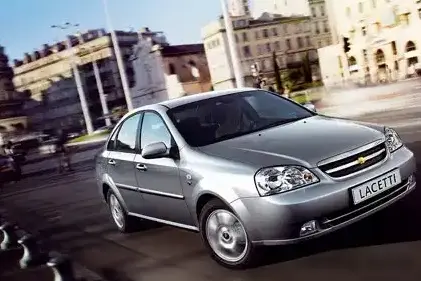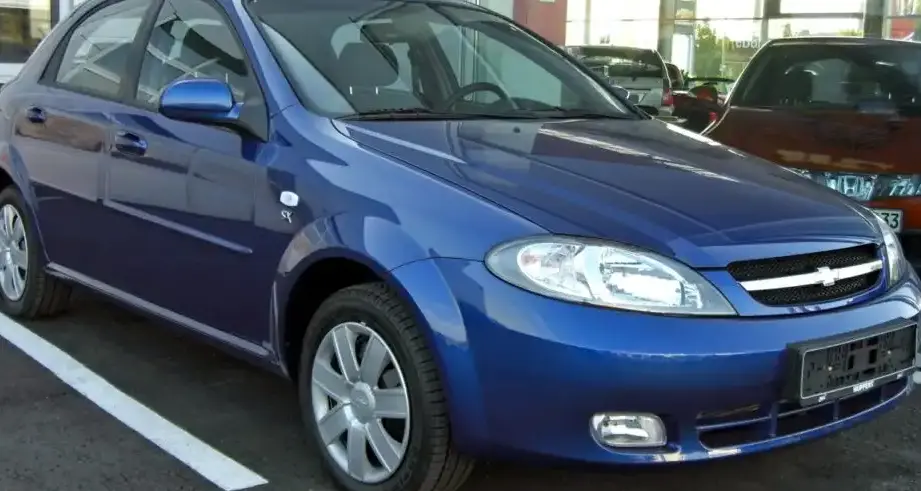
The Chevrolet Lacetti Hatchback 1.8i 16V Automatic, produced between 2004 and 2009, represented a significant step for General Motors in the compact car segment, particularly as a replacement for the aging Cavalier and a key model for attracting buyers in global markets. Built on the GM Delta platform (often referred to as the J-body in North America), the Lacetti aimed to offer a more modern and refined experience than its predecessor. This specific 1.8-liter, 122 horsepower configuration with an automatic transmission occupied a middle ground in the Lacetti lineup, positioned as a practical and comfortable option for buyers prioritizing ease of use over outright performance. It was primarily sold in North America, Europe, and parts of Asia, with varying levels of success depending on the regional market.
Technical Specifications
| Brand | Chevrolet |
| Model | Lacetti |
| Generation | Lacetti Hatchback |
| Type (Engine) | 1.8 i 16V (122 Hp) Automatic |
| Start of production | 2004 |
| End of production | 2009 |
| Powertrain Architecture | Internal Combustion engine |
| Body type | Hatchback |
| Seats | 5 |
| Doors | 5 |
| Fuel consumption (urban) | 12.5 l/100 km (18.8 US mpg, 22.6 UK mpg, 8 km/l) |
| Fuel consumption (extra urban) | 6.9 l/100 km (34.1 US mpg, 40.9 UK mpg, 14.5 km/l) |
| Fuel consumption (combined) | 9.1 l/100 km (25.8 US mpg, 31 UK mpg, 11 km/l) |
| Fuel Type | Petrol (Gasoline) |
| Acceleration 0 – 100 km/h | 10.7 sec |
| Acceleration 0 – 62 mph | 10.7 sec |
| Acceleration 0 – 60 mph | 10.2 sec |
| Maximum speed | 184 km/h (114.33 mph) |
| Weight-to-power ratio | 9.9 kg/Hp, 101.2 Hp/tonne |
| Weight-to-torque ratio | 7.3 kg/Nm, 136.9 Nm/tonne |
| Power | 122 Hp @ 5800 rpm |
| Power per litre | 67.8 Hp/l |
| Torque | 165 Nm @ 4000 rpm (121.7 lb.-ft. @ 4000 rpm) |
| Engine layout | Front, Transverse |
| Engine Model/Code | LDA |
| Engine displacement | 1799 cm3 (109.78 cu. in.) |
| Number of cylinders | 4 |
| Engine configuration | Inline |
| Cylinder Bore | 81.6 mm (3.21 in.) |
| Piston Stroke | 86 mm (3.39 in.) |
| Compression ratio | 9.8:1 |
| Number of valves per cylinder | 4 |
| Fuel injection system | Multi-port manifold injection |
| Engine aspiration | Naturally aspirated engine |
| Valvetrain | DOHC |
| Engine oil capacity | 3.75 l (3.96 US qt | 3.3 UK qt) |
| Coolant | 7.5 l (7.93 US qt | 6.6 UK qt) |
| Kerb Weight | 1205 kg (2656.57 lbs.) |
| Max. weight | 1680 kg (3703.77 lbs.) |
| Max load | 475 kg (1047.2 lbs.) |
| Trunk (boot) space – minimum | 275 l (9.71 cu. ft.) |
| Trunk (boot) space – maximum | 1045 l (36.9 cu. ft.) |
| Fuel tank capacity | 60 l (15.85 US gal | 13.2 UK gal) |
| Length | 4295 mm (169.09 in.) |
| Width | 1725 mm (67.91 in.) |
| Height | 1445 mm (56.89 in.) |
| Wheelbase | 2600 mm (102.36 in.) |
| Front track | 1480 mm (58.27 in.) |
| Rear (Back) track | 1480 mm (58.27 in.) |
| Drivetrain Architecture | Front wheel drive |
| Drive wheel | Front wheel drive |
| Number of gears and type of gearbox | 4 gears, automatic transmission |
| Front suspension | Spring Strut |
| Rear suspension | Double wishbone |
| Front brakes | Ventilated discs |
| Rear brakes | Disc |
| Assisting systems | ABS (Anti-lock braking system) |
| Steering type | Steering rack and pinion |
| Tires size | 195/55 R15 |
| Wheel rims size | 6J x 15 |
Powertrain & Engine Architecture
The heart of this Lacetti variant is the 1.8-liter inline-four cylinder engine, designated as the LDA. This engine is a naturally aspirated powerplant featuring a double overhead camshaft (DOHC) valvetrain with four valves per cylinder. It utilizes a multi-port fuel injection system, delivering fuel directly into the intake ports. The LDA engine produces 122 horsepower at 5800 rpm and 165 Nm (121.7 lb-ft) of torque at 4000 rpm. The engine’s 9.8:1 compression ratio was a compromise between performance and the ability to run on readily available fuel grades. Paired with the engine is a four-speed automatic transmission. While not the most modern transmission available at the time, it provided smooth shifts and contributed to the Lacetti’s overall ease of driving. The transmission was tuned for fuel efficiency and comfortable cruising rather than sporty acceleration.
Driving Characteristics
The 1.8L automatic Lacetti offered a comfortable, if not particularly exciting, driving experience. Acceleration from 0-60 mph took around 10.2 seconds, and top speed was limited to 114.33 mph. The automatic transmission, while smooth, did result in some power loss compared to the available five-speed manual. The gear ratios were optimized for everyday driving, providing adequate power for merging onto highways and navigating city streets. However, aggressive driving revealed the engine’s limitations, with noticeable hesitation during quick overtaking maneuvers. The suspension, tuned for comfort, absorbed bumps well but didn’t offer particularly sharp handling. Overall, this variant prioritized practicality and ease of use over sporty performance.
Equipment & Trim Levels
The 1.8i Automatic Lacetti typically came standard with features such as air conditioning, power windows and locks, and an AM/FM radio with a CD player. Higher trim levels, often denoted by “LS” or “LT” designations, added features like alloy wheels, a sunroof, upgraded audio systems, and cruise control. Interior upholstery was typically cloth, with options for leather available on higher trims. The dashboard layout was functional and straightforward, with easy-to-read gauges and logically placed controls. Safety features included dual front airbags and ABS brakes.
Chassis & Braking
The Lacetti Hatchback utilized a front-wheel-drive layout with a MacPherson strut suspension in the front and a double wishbone suspension in the rear. The front brakes were ventilated discs, providing adequate stopping power, while the rear brakes were solid discs. The suspension was tuned for a comfortable ride, prioritizing smoothness over sporty handling. The steering was a rack-and-pinion system, offering reasonable precision and feedback. Tire size was typically 195/55 R15.
Market Reception & Comparison
The Lacetti 1.8i Automatic received mixed reviews. Critics praised its comfortable ride, spacious interior, and competitive price point. However, they also noted its lackluster performance and somewhat uninspired styling. Compared to other compact cars of the time, such as the Honda Civic and Toyota Corolla, the Lacetti offered a more affordable option but lacked the refinement and driving dynamics of its Japanese competitors. Within the Lacetti lineup, the 1.8L automatic was positioned between the base 1.6L model and the more powerful 2.0L variants. The 1.6L offered better fuel economy but less power, while the 2.0L provided more spirited performance but at a higher price.
Legacy
The Chevrolet Lacetti, while not a runaway success, served as an important stepping stone for GM in the compact car market. The LDA engine, while not known for exceptional reliability, proved to be reasonably durable with proper maintenance. Today, used Laceti models are relatively affordable and can be a good option for budget-conscious buyers. However, potential buyers should be aware of potential issues such as oil leaks and corrosion. The Lacetti’s legacy lies in its role as a practical and affordable compact car that offered a decent level of comfort and features for its price.