
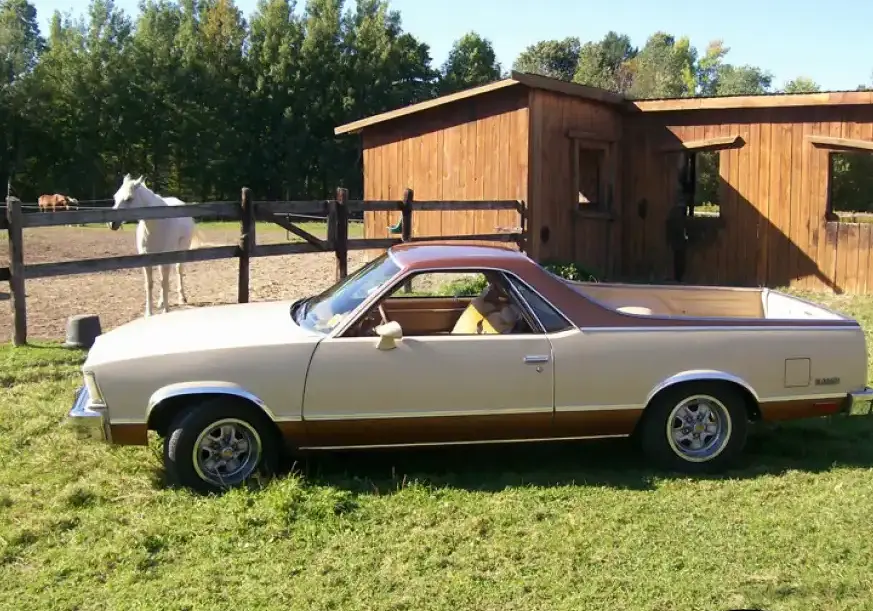
The Chevrolet Malibu El Camino, specifically the 3.8 V6 (105 hp) variant with a CAT automatic transmission, represents a unique and short-lived chapter in Chevrolet’s history. Produced for only two model years, 1977 and 1978, this vehicle combined the traditional car-based styling of the Malibu with the utility of a pickup truck bed. It was positioned as an alternative to traditional pickup trucks, appealing to buyers who desired a more comfortable and stylish vehicle for light-duty hauling. This particular engine and transmission combination represented the base-level powertrain offering for the El Camino, prioritizing affordability and ease of use over outright performance.
Technical Specifications
| Brand | Chevrolet |
| Model | Malibu |
| Generation | Malibu El Camino (Sedan Pickup) |
| Type (Engine) | 3.8 V6 (105 Hp) CAT Automatic |
| Start of production | 1977 |
| End of production | 1978 |
| Powertrain Architecture | Internal Combustion engine |
| Body type | Pick-up |
| Seats | 3 |
| Doors | 2 |
| Fuel Type | Petrol (Gasoline) |
| Weight-to-power ratio | 13.6 kg/Hp, 73.4 Hp/tonne |
| Weight-to-torque ratio | 5.7 kg/Nm, 175.4 Nm/tonne |
| Power | 105 Hp @ 3800 rpm |
| Power per litre | 27.7 Hp/l |
| Torque | 251 Nm @ 2000 rpm, 185.13 lb.-ft. @ 2000 rpm |
| Engine layout | Front, Longitudinal |
| Engine displacement | 3791 cm3, 231.34 cu. in. |
| Number of cylinders | 6 |
| Engine configuration | V-engine |
| Cylinder Bore | 96.5 mm, 3.8 in. |
| Piston Stroke | 86.4 mm, 3.4 in. |
| Compression ratio | 8.2:1 |
| Number of valves per cylinder | 2 |
| Fuel injection system | Carburettor |
| Engine aspiration | Naturally aspirated engine |
| Valvetrain | OHV |
| Engine oil capacity | 4 l, 4.23 US qt | 3.52 UK qt |
| Kerb Weight | 1431 kg, 3154.81 lbs |
| Trunk (boot) space – maximum | 2033 l, 71.79 cu. ft |
| Fuel tank capacity | 66 l, 17.44 US gal | 14.52 UK gal |
| Length | 5121 mm, 201.61 in |
| Width | 1826 mm, 71.89 in |
| Height | 1366 mm, 53.78 in |
| Wheelbase | 2974 mm, 117.09 in |
| Front track | 1486 mm, 58.5 in |
| Rear (Back) track | 1467 mm, 57.76 in |
| Front overhang | 915 mm, 36.02 in |
| Rear overhang | 1232 mm, 48.5 in |
| Ride height (ground clearance) | 147 mm, 5.79 in |
| Approach angle | 20° |
| Departure angle | 15° |
| Ramp-over (brakeover) angle | 13° |
| Drivetrain Architecture | The Internal combustion engine (ICE) drives the rear wheels of the vehicle. |
| Drive wheel | Rear wheel drive |
| Number of gears and type of gearbox | 3 gears, automatic transmission |
| Front suspension | Independent, type McPherson with coil spring and anti-roll bar |
| Rear suspension | dependent spring suspension, Transverse stabilizer, Trailing arm |
| Front brakes | Ventilated discs |
| Rear brakes | Drum |
| Steering type | Steering rack and pinion |
| Tires size | 205/75 R14 |
| Wheel rims size | 6.0J x 14 |
INTRODUCTION
The Chevrolet Malibu El Camino, introduced in 1977, was a response to the growing popularity of compact pickup trucks, particularly the Ford Courier. Chevrolet sought to offer a vehicle that combined the comfort and features of a passenger car with the practicality of a pickup. Built on the A-body platform shared with the Malibu sedan and wagon, the El Camino featured a unique bed integrated into the car’s unibody construction. The 3.8-liter V6 with an automatic transmission was the entry-level powertrain, designed for buyers prioritizing affordability and ease of driving over high performance. Production ceased after the 1978 model year, making these El Caminos relatively rare today.
Powertrain & Engine Architecture
The heart of this El Camino variant was Chevrolet’s 3.8-liter (231 cubic inch) V6 engine. This engine, internally designated as the 230 cubic inch V6, was a relatively simple and durable design. It featured an overhead valve (OHV) valvetrain with two valves per cylinder and utilized a two-barrel carburetor for fuel delivery. The 105 horsepower output at 3800 rpm and 251 Nm (185 lb-ft) of torque at 2000 rpm were modest by contemporary standards. The engine’s longitudinal front-mount configuration drove a rear-wheel drivetrain. The automatic transmission was a three-speed Turbo-Hydramatic 350, known for its reliability and smooth operation. This transmission was a common choice for Chevrolet vehicles of the era and provided a comfortable driving experience, though it wasn’t optimized for fuel efficiency or rapid acceleration.
Driving Characteristics
The 3.8L V6 automatic El Camino offered a relaxed and comfortable driving experience. Acceleration was adequate for everyday driving, but it wasn’t a particularly quick vehicle. The three-speed automatic transmission, while smooth, had relatively wide gear ratios, resulting in noticeable shifts and a lack of responsiveness compared to a manual transmission. The rear-wheel drive configuration provided decent handling, but the El Camino’s weight and relatively soft suspension tuning meant it wasn’t a cornering machine. Compared to the available V8 engines, the 3.8L offered significantly less power and performance. However, it provided better fuel economy and a more refined driving experience than the larger, more powerful engines.
Equipment & Trim Levels
The base-level 3.8L automatic El Camino typically came with a fairly basic set of features. Standard equipment included a bench seat, basic instrumentation, and a standard AM radio. Interior upholstery was typically cloth and vinyl. Optional extras included air conditioning, power steering, power brakes, upgraded audio systems, and various trim packages. The El Camino didn’t offer the same level of luxury features as some of its contemporary competitors, but it provided a comfortable and functional interior for its price point. The trim level was generally considered the base model, with limited cosmetic enhancements compared to higher-trim options.
Chassis & Braking
The El Camino’s chassis was based on the A-body platform, featuring independent front suspension with McPherson struts, coil springs, and an anti-roll bar. The rear suspension utilized a traditional leaf spring setup with a transverse stabilizer. This suspension configuration provided a comfortable ride, but it wasn’t particularly sporty. Braking duties were handled by ventilated disc brakes at the front and drum brakes at the rear. The braking system was adequate for the vehicle’s weight and performance, but it lacked the stopping power of more modern braking systems. The relatively narrow tires (205/75R14) also contributed to less-than-optimal braking performance.
Market Reception & Comparison
The 3.8L automatic El Camino received mixed reviews from automotive critics. While praised for its comfortable ride and stylish design, it was often criticized for its lack of power and performance. Compared to the V8-powered El Caminos, the 3.8L offered significantly less excitement. However, it was generally considered more fuel-efficient and easier to drive. The El Camino competed primarily with the Ford Courier and other compact pickup trucks. The El Camino offered a more car-like driving experience, while the Courier was more focused on utility. Fuel economy was comparable to other vehicles in its class, but the 3.8L automatic wasn’t particularly efficient by modern standards.
Legacy
The Chevrolet Malibu El Camino, particularly the 3.8L automatic variant, has become a sought-after vehicle among collectors and enthusiasts. Its rarity and unique styling contribute to its appeal. The 3.8L V6 and Turbo-Hydramatic 350 transmission are known for their durability and relative simplicity, making them relatively easy to maintain. However, finding parts for these older vehicles can be challenging. Today, these El Caminos are often restored and modified, with many owners opting to upgrade the engine and transmission for improved performance. The 1977-1978 El Camino represents a unique and interesting chapter in Chevrolet’s history, and the 3.8L automatic variant remains a testament to the era’s focus on comfort, style, and practicality.
