
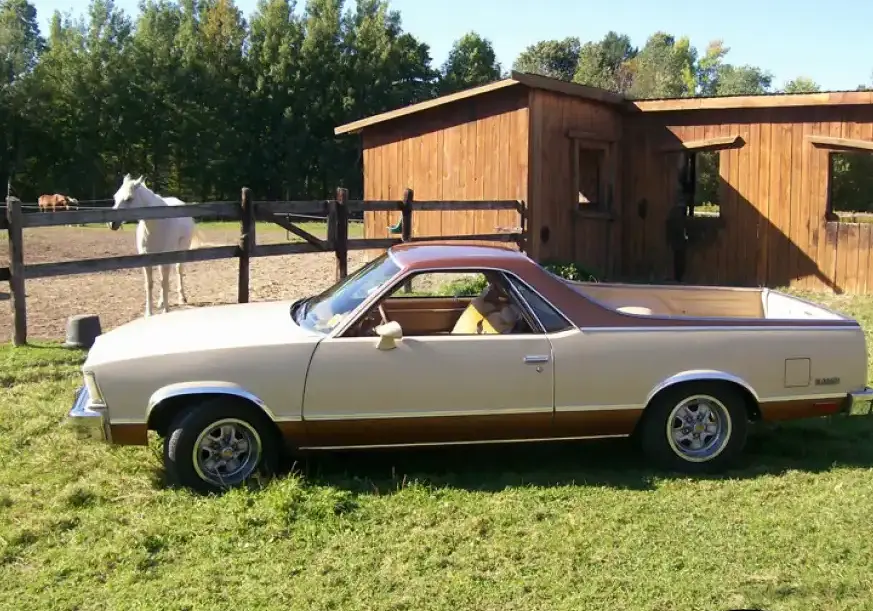
The Chevrolet Malibu El Camino, specifically the 5.0 V8 (160 hp) variant produced between 1978 and 1979, represents a unique chapter in Chevrolet’s history. Positioned as a coupe utility vehicle – essentially a sedan with a pickup bed – it aimed to blend the practicality of a truck with the style of a car. This generation, based on the A-body platform, was a relatively short-lived attempt to capitalize on the dwindling popularity of the traditional El Camino while offering a more modern aesthetic than its earlier iterations. It sat as the performance-oriented trim within the Malibu line, offering a larger engine option compared to the standard six-cylinder offerings.
Technical Specifications
| Brand | Chevrolet |
| Model | Malibu |
| Generation | Malibu El Camino (Sedan Pickup) |
| Type (Engine) | 5.0 V8 (160 Hp) CAT |
| Start of production | 1978 |
| End of production | 1979 |
| Powertrain Architecture | Internal Combustion engine |
| Body type | Pick-up |
| Seats | 3 |
| Doors | 2 |
| Fuel Type | Petrol (Gasoline) |
| Power | 160 Hp @ 4000 rpm |
| Power per litre | 32 Hp/l |
| Torque | 319 Nm @ 2400 rpm / 235.28 lb.-ft. @ 2400 rpm |
| Engine layout | Front, Longitudinal |
| Engine displacement | 5001 cm3 / 305.18 cu. in. |
| Number of cylinders | 8 |
| Engine configuration | V-engine |
| Cylinder Bore | 94.89 mm / 3.74 in. |
| Piston Stroke | 88.39 mm / 3.48 in. |
| Compression ratio | 8.4:1 |
| Number of valves per cylinder | 2 |
| Fuel injection system | Carburettor |
| Engine aspiration | Naturally aspirated engine |
| Valvetrain | OHV |
| Engine oil capacity | 4 l / 4.23 US qt | 3.52 UK qt |
| Trunk (boot) space – maximum | 2033 l / 71.79 cu. ft. |
| Fuel tank capacity | 66 l / 17.44 US gal | 14.52 UK gal |
| Length | 5121 mm / 201.61 in. |
| Width | 1826 mm / 71.89 in. |
| Height | 1366 mm / 53.78 in. |
| Wheelbase | 2974 mm / 117.09 in. |
| Front track | 1486 mm / 58.5 in. |
| Rear (Back) track | 1467 mm / 57.76 in. |
| Front overhang | 915 mm / 36.02 in. |
| Rear overhang | 1232 mm / 48.5 in. |
| Ride height (ground clearance) | 147 mm / 5.79 in. |
| Approach angle | 20° |
| Departure angle | 15° |
| Ramp-over (brakeover) angle | 13° |
| Drivetrain Architecture | The Internal combustion engine (ICE) drives the rear wheels of the vehicle. |
| Drive wheel | Rear wheel drive |
| Number of gears and type of gearbox | 4 gears, manual transmission |
| Front suspension | Independent, type McPherson with coil spring and anti-roll bar |
| Rear suspension | dependent spring suspension, Transverse stabilizer, Trailing arm |
| Front brakes | Ventilated discs |
| Rear brakes | Drum |
| Steering type | Steering rack and pinion |
| Tires size | 205/75 R14 |
| Wheel rims size | 6.0J x 14 |
Powertrain & Engine Architecture
The heart of this El Camino variant was the 305 cubic inch (5.0 liter) Chevrolet small-block V8 engine. This engine, designated with various codes depending on specific calibration, produced 160 horsepower at 4000 rpm and 235 lb-ft of torque at 2400 rpm. It utilized a two-barrel carburetor for fuel delivery, a relatively simple system for the era, and featured an overhead valve (OHV) valvetrain. The catalytic converter, indicated by the “CAT” designation, was a crucial component in meeting increasingly stringent emissions regulations. The engine was longitudinally mounted in the front of the vehicle, driving the rear wheels. The standard transmission was a four-speed manual, although an automatic transmission was available as an option. The 305 V8 was known for its durability and relative ease of maintenance, making it a popular choice for those seeking a balance between performance and reliability.
Driving Characteristics
The 160 hp V8-equipped El Camino offered a noticeable step up in performance compared to the base six-cylinder models. While not a high-performance machine by modern standards, it provided adequate acceleration and cruising ability for its time. The four-speed manual transmission allowed for reasonable control over the engine’s powerband, though the gear ratios were geared more towards fuel economy and relaxed highway driving than outright acceleration. The rear-wheel-drive configuration contributed to a traditional “muscle car” feel, although the El Camino’s weight and relatively soft suspension tuning meant it wasn’t particularly nimble in corners. Compared to potential upgrades like the larger 350 cubic inch V8, this engine offered a more economical option, sacrificing some outright power for improved fuel efficiency.
Equipment & Trim Levels
The 1978-1979 Malibu El Camino 5.0 V8 typically came standard with features like a bench seat, basic instrumentation, and a fairly simple interior trim. Upholstery was typically cloth and vinyl. Optional extras included air conditioning, power steering, power brakes, a tilt steering wheel, and upgraded audio systems. The El Camino didn’t offer the same level of luxury features as some contemporary cars, focusing instead on providing a functional and stylish vehicle for those who needed both passenger and cargo-carrying capabilities. Exterior trim was relatively restrained, with chrome accents and color-keyed bumpers.
Chassis & Braking
The El Camino utilized a body-on-frame construction, typical of American vehicles of the era. The front suspension was independent, employing McPherson struts with coil springs and an anti-roll bar. The rear suspension was a more traditional leaf spring setup with a transverse stabilizer. Braking was accomplished via ventilated discs at the front and drum brakes at the rear. Steering was handled by a rack-and-pinion system. The suspension was tuned for a comfortable ride, prioritizing smoothness over sporty handling. The relatively modest weight of the vehicle, compared to full-size pickup trucks, helped to compensate for the limitations of the braking system.
Market Reception & Comparison
The 1978-1979 Malibu El Camino was generally well-received as a stylish and practical vehicle. Critics praised its unique blend of car-like comfort and truck-like utility. However, the 5.0 V8 variant wasn’t always the most popular choice, as many buyers opted for the more fuel-efficient six-cylinder engines or the more powerful 350 V8. Compared to the six-cylinder models, the V8 offered significantly improved performance, but at the cost of fuel economy. Compared to the 350 V8, it provided a more affordable entry point into the V8-powered El Camino world. Reliability was generally good, although the carburetor could require occasional adjustments.
Legacy
The 1978-1979 Chevrolet Malibu El Camino 5.0 V8 represents a final iteration of a classic American vehicle type. While production numbers weren’t exceptionally high, these El Caminos have developed a following among collectors and enthusiasts. The 305 V8 engine is known for its durability and relative simplicity, making it a relatively easy engine to maintain and repair. In the used car market today, these El Caminos are often sought after for their classic styling and unique character. They represent a piece of automotive history, embodying a time when manufacturers were willing to experiment with different vehicle configurations to meet the diverse needs of American consumers. A well-maintained example can provide a rewarding driving experience and a tangible connection to the past.
