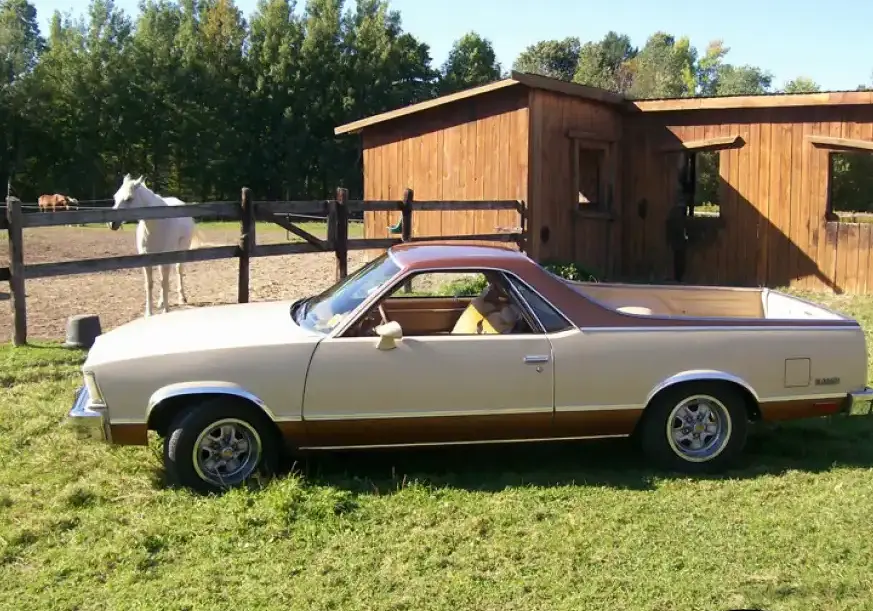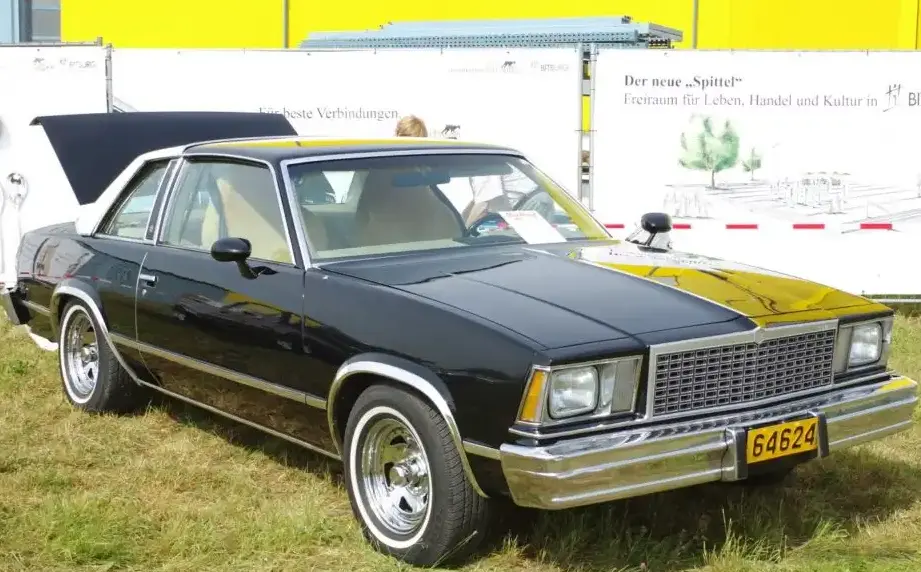
The Chevrolet Malibu IV Sport Coupe, produced for the 1978 and 1979 model years, represented a downsized iteration of Chevrolet’s popular mid-size offering. Positioned as a sporty variant within the fourth-generation Malibu lineup (1978-1983), the Sport Coupe aimed to attract buyers seeking a more performance-oriented experience. This particular version, equipped with the 4.4-liter V8 engine producing 125 horsepower, was a relatively short-lived offering, bridging the gap between the earlier large-bodied Malibus and the more fuel-efficient designs that would follow in the early 1980s. It was offered alongside inline-six and smaller V6 engine options, catering to a broader range of customer preferences.
Technical Specifications
| Brand | Chevrolet |
| Model | Malibu |
| Generation | Malibu IV Sport Coupe |
| Type (Engine) | 4.4 V8 (125 Hp) CAT |
| Start of production | 1978 |
| End of production | 1979 |
| Powertrain Architecture | Internal Combustion engine |
| Body type | Coupe |
| Seats | 6 |
| Doors | 2 |
| Fuel Type | Petrol (Gasoline) |
| Weight-to-power ratio | 11.7 kg/Hp, 85.6 Hp/tonne |
| Weight-to-torque ratio | 5 kg/Nm, 199.3 Nm/tonne |
| Power | 125 Hp @ 3800 rpm |
| Power per litre | 28.5 Hp/l |
| Torque | 291 Nm @ 2400 rpm, 214.63 lb.-ft. @ 2400 rpm |
| Engine layout | Front, Longitudinal |
| Engine displacement | 4389 cm3, 267.83 cu. in. |
| Number of cylinders | 8 |
| Engine configuration | V-engine |
| Cylinder Bore | 88.9 mm, 3.5 in. |
| Piston Stroke | 88.4 mm, 3.48 in. |
| Compression ratio | 8.2:1 |
| Number of valves per cylinder | 2 |
| Fuel injection system | Carburettor |
| Engine aspiration | Naturally aspirated engine |
| Valvetrain | OHV |
| Engine oil capacity | 4 l, 4.23 US qt | 3.52 UK qt |
| Kerb Weight | 1460 kg, 3218.75 lbs |
| Trunk (boot) space – maximum | 470 l, 16.6 cu. ft |
| Fuel tank capacity | 68 l, 17.96 US gal | 14.96 UK gal |
| Length | 4895 mm, 192.72 in |
| Width | 1816 mm, 71.5 in |
| Height | 1354 mm, 53.31 in |
| Wheelbase | 2745 mm, 108.07 in |
| Front track | 1486 mm, 58.5 in |
| Rear (Back) track | 1467 mm, 57.76 in |
| Front overhang | 915 mm, 36.02 in |
| Rear overhang | 1235 mm, 48.62 in |
| Ride height (ground clearance) | 137 mm, 5.39 in |
| Drag coefficient (Cd) | 0.45 |
| Minimum turning circle (turning diameter) | 12.2 m, 40.03 ft |
| Approach angle | 20° |
| Departure angle | 15° |
| Ramp-over (brakeover) angle | 14° |
| Drivetrain Architecture | The Internal combustion engine (ICE) drives the rear wheels of the vehicle. |
| Drive wheel | Rear wheel drive |
| Number of gears and type of gearbox | 4 gears, manual transmission |
| Front suspension | Independent, type McPherson with coil spring and anti-roll bar |
| Rear suspension | dependent spring suspension, Transverse stabilizer, Trailing arm |
| Front brakes | Ventilated discs |
| Rear brakes | Drum |
| Steering type | Steering rack and pinion |
| Tires size | 185/75 R14 |
| Wheel rims size | 6.0J x 14 |
Powertrain & Engine Architecture
The heart of this Malibu variant was the 4.4-liter (268 cubic inch) Chevrolet small-block V8 engine. This engine, designated with various codes depending on specific calibration, produced 125 horsepower at 3800 rpm and 291 Nm (214.63 lb-ft) of torque at 2400 rpm. It utilized a two-barrel carburetor for fuel delivery, a relatively simple system for the era. The engine featured an overhead valve (OHV) valvetrain with two valves per cylinder. The 8.2:1 compression ratio was a compromise between performance and emissions regulations, particularly with the introduction of catalytic converters (“CAT” designation). The engine was mounted longitudinally in the front of the vehicle, driving the rear wheels. The standard transmission was a four-speed manual, contributing to the Sport Coupe’s intended sporty character.
Driving Characteristics
The 125 hp V8, coupled with the four-speed manual transmission, provided adequate, though not exhilarating, performance for the time. Acceleration was respectable, but the car’s weight of approximately 1460 kg (3218.75 lbs) limited its outright speed. The 4.4L engine delivered its peak torque at a relatively low 2400 rpm, making it reasonably responsive in everyday driving situations. Compared to the six-cylinder Malibu variants, the V8 offered a noticeable increase in power and a more satisfying exhaust note. However, it lacked the punch of larger V8s available in other Chevrolet models. The manual transmission allowed for greater driver control, but the gear ratios were spaced to prioritize fuel economy and cruising comfort over aggressive acceleration.
Equipment & Trim Levels
The Sport Coupe trim generally included features aimed at enhancing the driving experience and appearance. Standard equipment typically included color-keyed carpeting, a sport steering wheel, and upgraded interior trim compared to base Malibu models. While not lavishly equipped by modern standards, the Sport Coupe offered a reasonable level of comfort and convenience for the late 1970s. Optional extras included air conditioning, a stereo system, and upgraded upholstery. The interior generally featured a bench seat configuration, accommodating up to six passengers, although bucket seats were sometimes available as an option.
Chassis & Braking
The Malibu IV Sport Coupe utilized a body-on-frame construction, common for American cars of that era. The front suspension was independent, employing a McPherson strut design with coil springs and an anti-roll bar. The rear suspension was a more traditional dependent spring setup with trailing arms and a transverse stabilizer. Braking duties were handled by ventilated discs at the front and drum brakes at the rear. Steering was accomplished via a rack-and-pinion system. The 185/75 R14 tires provided adequate grip for typical driving conditions, but were not particularly performance-oriented.
Market Reception & Comparison
The 4.4L V8 Malibu Sport Coupe received mixed reviews. While praised for its improved performance over the six-cylinder models, critics noted that it wasn’t a true performance car. Fuel economy was a concern, especially as gasoline prices began to rise in the late 1970s. Compared to the more fuel-efficient inline-six and V6 options, the V8 Malibu appealed to a smaller segment of buyers who prioritized power and driving enjoyment. Reliability was generally good, typical of Chevrolet small-block V8s, but maintenance costs were higher due to the more complex engine and carburetor system.
Legacy
The 1978-1979 Chevrolet Malibu IV Sport Coupe with the 4.4L V8 engine represents a transitional period in automotive history. It was one of the last rear-wheel-drive Malibus before the model switched to a front-wheel-drive configuration in 1983. Today, these cars are relatively rare and sought after by collectors and enthusiasts who appreciate classic American muscle cars. The 4.4L V8 engine, while not the most powerful available at the time, is known for its durability and relative simplicity, making it a relatively easy engine to maintain and rebuild. Well-preserved examples command a modest but growing value in the used car market, appealing to those seeking a piece of 1970s automotive nostalgia.