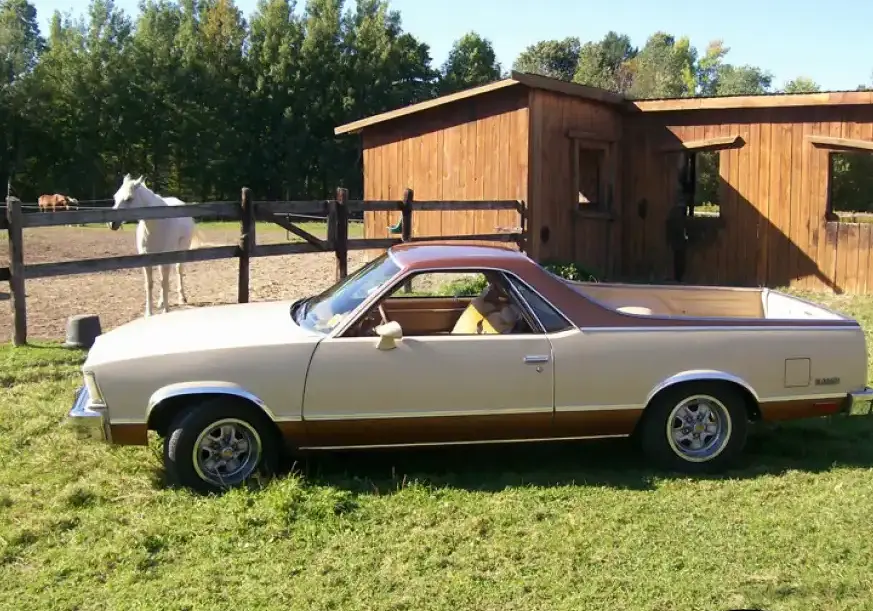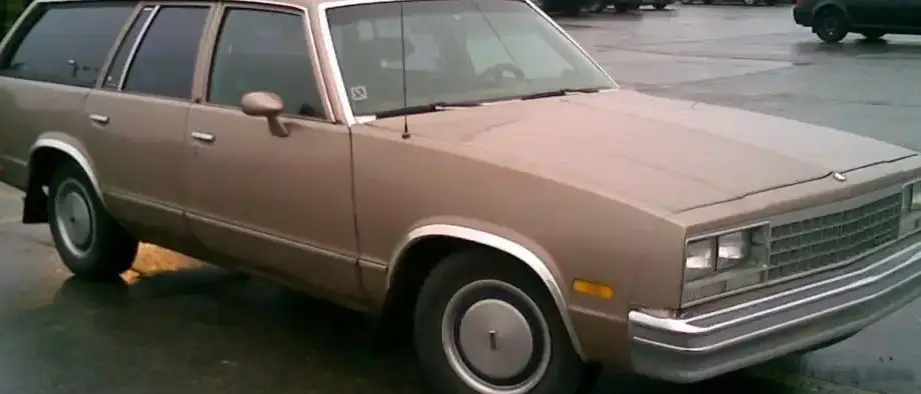
The Chevrolet Malibu IV Wagon, specifically the facelifted version produced from 1981 to 1983, represented a significant offering in the American station wagon market. This iteration of the Malibu, built on the A-body platform, aimed to provide families with a spacious and comfortable vehicle. The 5.0 V8 (145 hp) CAT Automatic variant occupied a middle ground in the Malibu wagon lineup, offering a balance between performance and fuel economy, though leaning towards the former given the engine size. It was positioned above the smaller six-cylinder options and below any potential high-performance trims, catering to buyers who desired a robust powertrain for towing or hauling while still maintaining reasonable running costs.
Technical Specifications
| Brand | Chevrolet |
| Model | Malibu |
| Generation | Malibu IV Wagon (facelift 1981) |
| Type (Engine) | 5.0 V8 (145 Hp) CAT Automatic |
| Start of production | 1981 |
| End of production | 1983 |
| Powertrain Architecture | Internal Combustion engine |
| Body type | Station wagon (estate) |
| Seats | 6 |
| Doors | 5 |
| Fuel Type | Petrol (Gasoline) |
| Weight-to-power ratio | 11 kg/Hp, 90.6 Hp/tonne |
| Weight-to-torque ratio | 4.9 kg/Nm, 203.1 Nm/tonne |
| Power | 145 Hp @ 4000 rpm |
| Power per litre | 29 Hp/l |
| Torque | 325 Nm @ 1600 rpm, 239.71 lb.-ft. @ 1600 rpm |
| Engine layout | Front, Longitudinal |
| Engine Model/Code | LG4 |
| Engine displacement | 4998 cm3, 305 cu. in. |
| Number of cylinders | 8 |
| Engine configuration | V-engine |
| Cylinder Bore | 95 mm, 3.74 in. |
| Piston Stroke | 88.4 mm, 3.48 in. |
| Compression ratio | 8.6:1 |
| Number of valves per cylinder | 2 |
| Fuel injection system | Carburettor |
| Engine aspiration | Naturally aspirated engine |
| Valvetrain | OHV |
| Engine oil capacity | 3.8 l, 4.02 US qt | 3.34 UK qt |
| Coolant | 15.7 l, 16.59 US qt | 13.81 UK qt |
| Kerb Weight | 1600 kg, 3527.4 lbs |
| Trunk (boot) space – minimum | 1131 l, 39.94 cu. ft |
| Trunk (boot) space – maximum | 2050 l, 72.4 cu. ft |
| Fuel tank capacity | 67 l, 17.7 US gal | 14.74 UK gal |
| Length | 4911 mm, 193.35 in |
| Width | 1826 mm, 71.89 in |
| Height | 1418 mm, 55.83 in |
| Wheelbase | 2745 mm, 108.07 in |
| Front track | 1486 mm, 58.5 in |
| Rear (Back) track | 1467 mm, 57.76 in |
| Front overhang | 915 mm, 36.02 in |
| Rear overhang | 1251 mm, 49.25 in |
| Ride height (ground clearance) | 158 mm, 6.22 in |
| Minimum turning circle (turning diameter) | 13.0 m, 42.65 ft |
| Approach angle | 23.5° |
| Departure angle | 16.7° |
| Ramp-over (brakeover) angle | 15.6° |
| Drivetrain Architecture | The Internal combustion engine (ICE) drives the rear wheels of the vehicle. |
| Drive wheel | Rear wheel drive |
| Number of gears and type of gearbox | 3 gears, automatic transmission |
| Front suspension | Independent, type McPherson with coil spring and anti-roll bar |
| Rear suspension | dependent spring suspension, Transverse stabilizer, Trailing arm |
| Front brakes | Ventilated discs |
| Rear brakes | Drum |
| Steering type | Steering rack and pinion |
| Tires size | 195/75 R14 |
| Wheel rims size | 6.0J x 14 |
Powertrain & Engine Architecture
The heart of this Malibu wagon was the Chevrolet 305 cubic inch (4998 cc) small-block V8 engine, designated the LG4. This engine, a staple of General Motors vehicles for decades, utilized a traditional overhead valve (OHV) configuration with two valves per cylinder. Fuel delivery was managed by a carburetor, a common feature for the time, though increasingly being replaced by fuel injection in other vehicles. The LG4 produced 145 horsepower at 4000 rpm and 325 Nm (239.71 lb-ft) of torque at 1600 rpm. The torque figure was particularly noteworthy, providing ample low-end grunt for everyday driving and towing. The engine was mounted longitudinally in the front of the vehicle. The three-speed automatic transmission, a TH350 likely, was chosen for its simplicity and reliability, prioritizing smooth operation over outright performance. This transmission was a common pairing for the 305 V8 in Chevrolet vehicles of this era.
Driving Characteristics
The 145 hp V8 and automatic transmission combination delivered a comfortable, if not particularly sporty, driving experience. Acceleration was adequate for merging onto highways and passing slower traffic, but it wasn’t a vehicle designed for quick sprints. The automatic transmission, while smooth, lacked the responsiveness of a manual gearbox. The gear ratios were optimized for cruising, resulting in a relaxed driving experience at highway speeds. Compared to the six-cylinder Malibu wagons, the V8 offered significantly more power and torque, making it a better choice for those who frequently towed trailers or carried heavy loads. However, it came at the cost of increased fuel consumption. The rear-wheel-drive layout provided a balanced feel, but the suspension, while adequate, wasn’t particularly sophisticated, resulting in some body roll during cornering.
Equipment & Trim Levels
The 1981-1983 Malibu IV Wagon with the 5.0 V8 and automatic transmission typically came standard with features considered essential for family vehicles of the time. These included cloth upholstery, a basic AM/FM radio, and power steering. Air conditioning was often included, though it could have been an optional extra depending on the specific package. Interior trim was generally functional and durable, prioritizing practicality over luxury. Optional extras could include upgraded sound systems, cruise control, and power windows. The exterior typically featured brightwork trim, including chrome bumpers and window frames. Wagon-specific features like a rear window wiper and fold-flat rear seats were standard.
Chassis & Braking
The Malibu wagon utilized a body-on-frame construction, common for American cars of the era. The front suspension was an independent McPherson strut design with coil springs and an anti-roll bar, providing a reasonable level of ride comfort. The rear suspension was a more traditional dependent spring setup with a transverse stabilizer and trailing arms. Braking duties were handled by ventilated discs at the front and drum brakes at the rear. While adequate for normal driving conditions, the braking system wasn’t particularly powerful by modern standards. The steering was a rack-and-pinion system, providing reasonably precise steering feel.
Market Reception & Comparison
The 5.0 V8 Malibu wagon received generally positive reviews, particularly from buyers who valued its spacious interior and robust powertrain. Critics noted that the V8 engine provided ample power for a family vehicle, but also acknowledged that fuel economy was not a strong point. Compared to other station wagons of the time, such as the Ford Country Squire or the Chrysler LeBaron wagon, the Malibu offered a good balance of price, features, and performance. The six-cylinder Malibu wagons were more fuel-efficient but lacked the V8’s power. The V8 version was a popular choice for families who needed a vehicle capable of handling both everyday commuting and occasional towing.
Legacy
The Chevrolet Malibu IV Wagon with the 5.0 V8 and automatic transmission has become a popular choice among classic car enthusiasts. The LG4 V8 engine is known for its reliability and relative simplicity, making it a relatively easy engine to maintain and repair. Parts availability is generally good, thanks to the engine’s widespread use in other GM vehicles. While not a high-performance machine, these wagons offer a comfortable and nostalgic driving experience. Today, well-maintained examples command reasonable prices in the used car market, appealing to those seeking a classic American station wagon with a capable V8 engine.