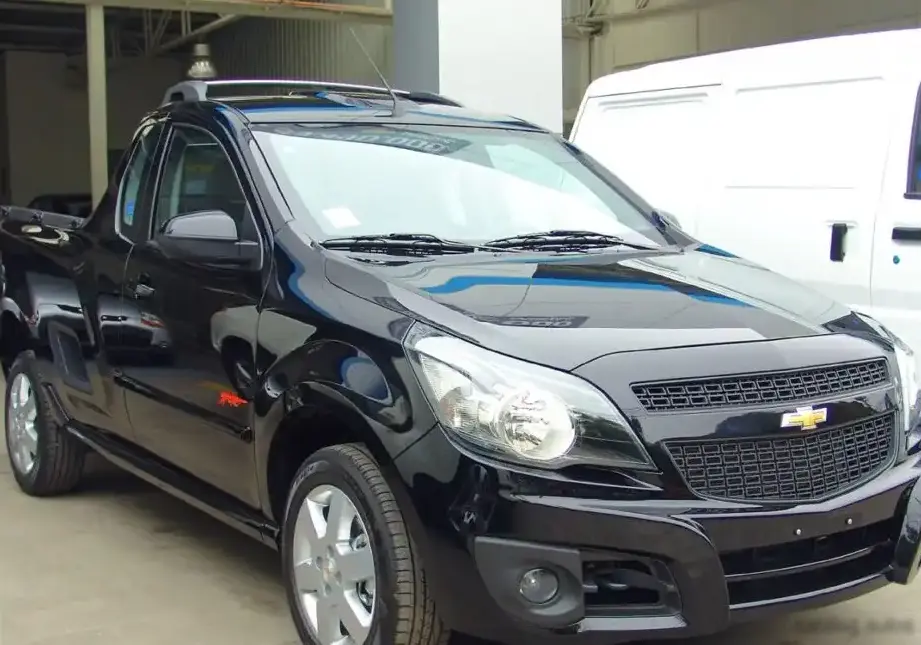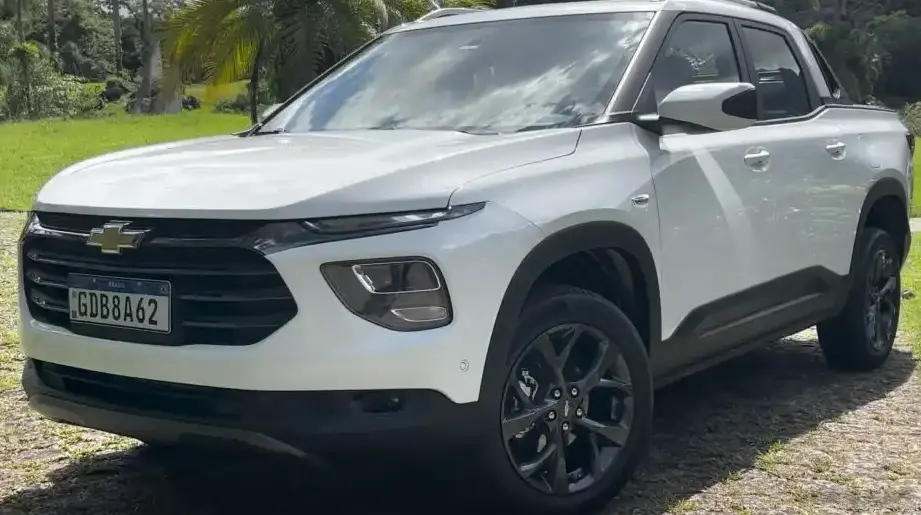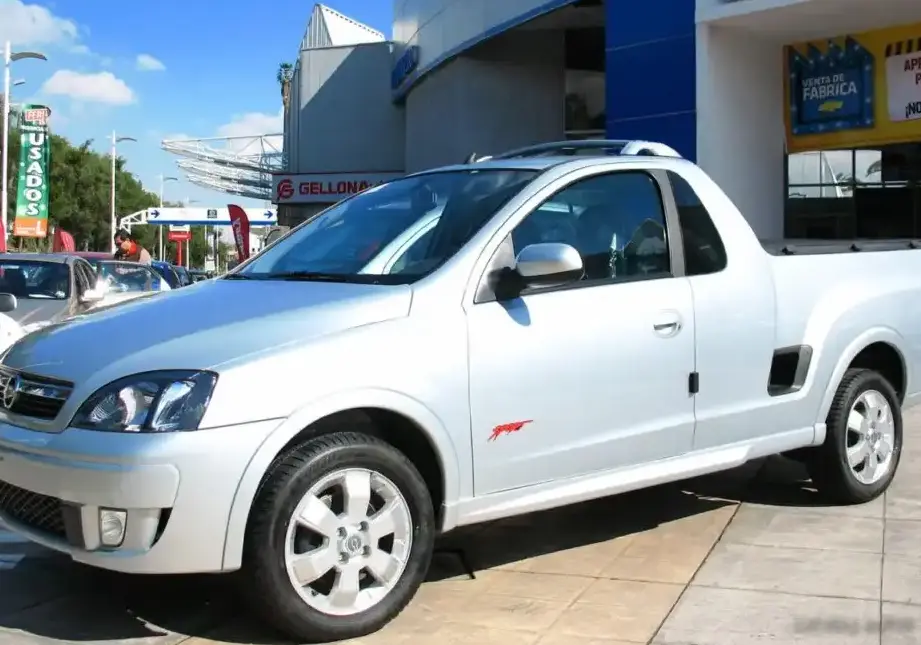
The Chevrolet Montana I 1.8, produced from 2003 to 2011, represents a unique entry in the compact pickup truck segment, primarily targeted towards the South American market. This variant, equipped with a 1.8-liter gasoline engine producing 102 horsepower, served as a foundational offering within the Montana I range (designated as the 730 series in Brazil). Positioned as the entry-level trim, it aimed to provide affordable and practical transportation for both commercial and personal use. The Montana I itself was a significant vehicle for Chevrolet in Brazil, offering a car-like driving experience in a small pickup format, filling a niche not widely addressed by other manufacturers at the time. It was built on a modified version of the Corsa B platform, sharing many components with the popular subcompact car.
Technical Specifications
| Brand | Chevrolet |
| Model | Montana |
| Generation | Montana I |
| Type (Engine) | 1.8 (102 Hp) |
| Start of production | 2003 |
| End of production | 2011 |
| Powertrain Architecture | Internal Combustion engine |
| Body type | Pick-up |
| Seats | 2 |
| Doors | 2 |
| Fuel Type | Petrol (Gasoline) |
| Weight-to-power ratio | 11.2 kg/Hp, 89.6 Hp/tonne |
| Weight-to-torque ratio | 6.9 kg/Nm, 145 Nm/tonne |
| Power | 102 Hp @ 5200 rpm |
| Power per litre | 56.8 Hp/l |
| Torque | 165 Nm @ 2800 rpm (121.7 lb.-ft. @ 2800 rpm) |
| Maximum engine speed | 6400 rpm |
| Engine layout | Front, Transverse |
| Engine displacement | 1796 cm3 (109.6 cu. in.) |
| Number of cylinders | 4 |
| Engine configuration | Inline |
| Cylinder Bore | 80.5 mm (3.17 in.) |
| Piston Stroke | 88.2 mm (3.47 in.) |
| Compression ratio | 9.4:1 |
| Fuel injection system | Multi-port manifold injection |
| Engine aspiration | Naturally aspirated engine |
| Engine oil capacity | 3.5 l (3.7 US qt | 3.08 UK qt) |
| Coolant | 5.4 l (5.71 US qt | 4.75 UK qt) |
| Kerb Weight | 1138 kg (2508.86 lbs.) |
| Max. weight | 1850 kg (4078.55 lbs.) |
| Max load | 712 kg (1569.69 lbs.) |
| Trunk (boot) space – minimum | 1143 l (40.36 cu. ft.) |
| Fuel tank capacity | 52.5 l (13.87 US gal | 11.55 UK gal) |
| Permitted trailer load with brakes (12%) | 1200 kg (2645.55 lbs.) |
| Permitted trailer load without brakes | 450 kg (992.08 lbs.) |
| Length | 4422 mm (174.09 in.) |
| Width including mirrors | 1954 mm (76.93 in.) |
| Height | 1519 mm (59.8 in.) |
| Wheelbase | 2714 mm (106.85 in.) |
| Front track | 1417 mm (55.79 in.) |
| Rear (Back) track | 1440 mm (56.69 in.) |
| Front overhang | 755 mm (29.72 in.) |
| Rear overhang | 953 mm (37.52 in.) |
| Ride height (ground clearance) | 153 mm (6.02 in.) |
| Minimum turning circle (turning diameter) | 11.64 m (38.19 ft.) |
| Drivetrain Architecture | The Internal combustion engine (ICE) drives the front wheels of the vehicle. |
| Drive wheel | Front wheel drive |
| Number of gears and type of gearbox | 5 gears, manual transmission |
| Front suspension | Independent, type McPherson with coil spring and anti-roll bar |
| Rear suspension | Torsion |
| Front brakes | Disc |
| Rear brakes | Drum |
| Assisting systems | ABS (Anti-lock braking system) |
| Steering type | Steering rack and pinion |
| Tires size | 185/60 R15 |
| Wheel rims size | 5.5J x 15 |
Powertrain & Engine Architecture
The heart of the Montana I 1.8 is the Chevrolet Family I engine, specifically the 1800cc (1.8L) variant. This engine, designated with various codes depending on the market (often X18XE in some regions), is a naturally aspirated, inline-four cylinder unit. It utilizes a multi-port fuel injection system, providing adequate fuel delivery for its modest power output. The engine features a single overhead camshaft (SOHC) valvetrain, operating two valves per cylinder. The 1.8L engine was known for its relative simplicity and durability, making it a cost-effective choice for Chevrolet. The engine’s 9.4:1 compression ratio was a compromise between efficiency and performance. The five-speed manual transmission was the standard offering for this trim, providing a reasonable balance between fuel economy and drivability. An automatic transmission was available in some markets, but it was less common and generally considered to detract from the vehicle’s performance.
Driving Characteristics
The 102 horsepower and 165 Nm (121.7 lb-ft) of torque delivered by the 1.8-liter engine in the Montana I resulted in adequate, but not exhilarating, performance. Acceleration was modest, and the vehicle was best suited for city driving and light-duty hauling. The five-speed manual transmission allowed drivers to keep the engine in its optimal power band, improving responsiveness. Compared to the more powerful engine options available in the Montana I range (such as the 1.4L turbo), the 1.8L automatic felt noticeably slower, particularly when fully loaded. The gear ratios were tuned for fuel efficiency rather than outright speed. The front-wheel-drive configuration provided predictable handling, but lacked the all-weather capability of a four-wheel-drive system.
Equipment & Trim Levels
The 1.8-liter Montana I typically came with a basic level of equipment. Standard features generally included power steering, central locking, and a basic audio system. Interior upholstery was typically vinyl or a durable cloth material. Air conditioning was often an optional extra. The dashboard layout was functional and straightforward, prioritizing practicality over aesthetics. Higher trim levels of the Montana I offered features such as alloy wheels, electric windows, and a more sophisticated audio system. However, the base 1.8L model was intentionally kept simple to maintain its affordability.
Chassis & Braking
The Montana I utilized a McPherson strut front suspension with a torsion beam rear suspension. This setup provided a comfortable ride quality, but wasn’t particularly sporty. The front brakes were disc brakes, while the rear brakes were drum brakes – a common configuration for vehicles in this price range. ABS (Anti-lock Braking System) was often included as standard equipment, enhancing safety. The chassis was reinforced to handle the demands of light-duty hauling, but it wasn’t designed for heavy loads or off-road use. Stabilizer bars were present, contributing to reduced body roll during cornering.
Market Reception & Comparison
The Chevrolet Montana I 1.8 was generally well-received in its target market, particularly in Brazil and other South American countries. Critics praised its practicality, affordability, and car-like driving experience. However, some reviewers noted its lack of power and basic interior. Compared to other pickups in the segment, the Montana I offered a more refined driving experience, but lacked the ruggedness and towing capacity of larger trucks. The 1.8L engine offered a reasonable balance between fuel economy and performance, making it a popular choice for buyers who prioritized practicality over speed. The 1.4L turbo offered better fuel economy, while the more powerful engines provided significantly more performance, but at a higher price point.
Legacy
The Chevrolet Montana I 1.8, while not a performance icon, established a solid foundation for the Montana line. The 1.8L engine proved to be relatively reliable, and many examples are still on the road today. In the used car market, the Montana I 1.8 remains an affordable and practical option for those seeking a small pickup truck. Its simplicity and durability make it relatively easy and inexpensive to maintain. The Montana I, and specifically the 1.8L variant, played a key role in popularizing the compact pickup truck segment in South America, paving the way for future generations of the model.