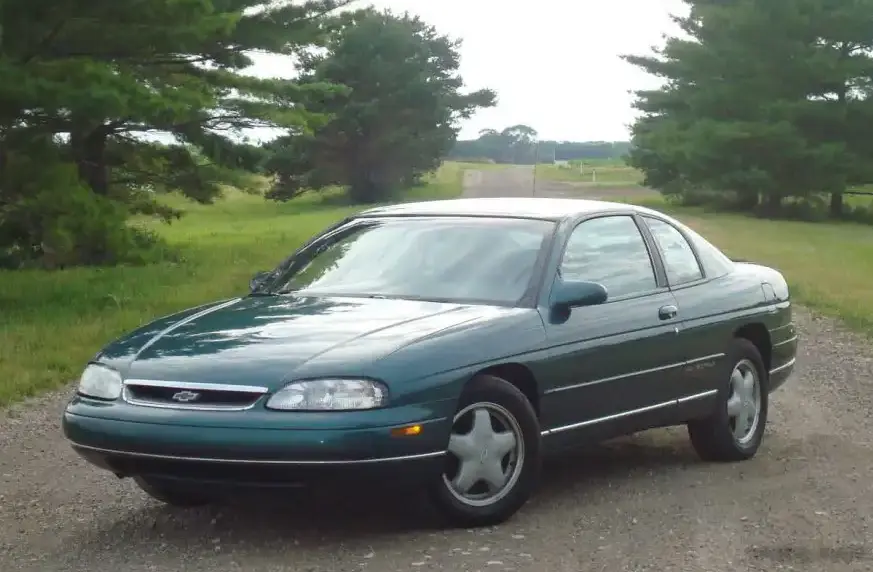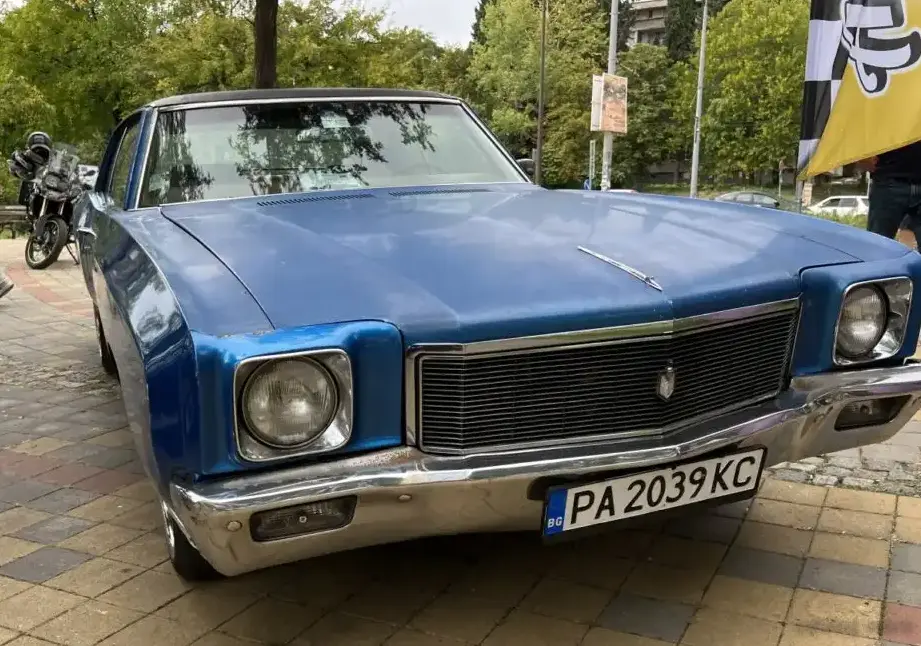
The Chevrolet Monte Carlo I, specifically the 5.7 V8 Turbo-Fire variant with an automatic transmission, represented a significant entry into the personal luxury coupe market for Chevrolet. Produced for the 1972 and 1973 model years, this initial generation of the Monte Carlo (designated as the 1HX0 series) was built on the A-body platform, shared with other GM vehicles like the Pontiac Grand Prix and Buick Regal. This particular configuration, boasting 165 horsepower, aimed to provide a balance of performance and comfort for the American driver, positioning itself as a step up from more basic A-body offerings but below the higher-performance muscle car derivatives.
Technical Specifications
| Brand | Chevrolet |
| Model | Monte Carlo |
| Generation | Monte Carlo I |
| Type (Engine) | 5.7 V8 Turbo-Fire (165 Hp) Automatic |
| Start of production | 1972 |
| End of production | 1973 |
| Powertrain Architecture | Internal Combustion engine |
| Body type | Coupe |
| Seats | 5 |
| Doors | 2 |
| Fuel Type | Petrol (Gasoline) |
| Weight-to-power ratio | 9.2 kg/Hp, 108.3 Hp/tonne |
| Weight-to-torque ratio | 4 kg/Nm, 249.3 Nm/tonne |
| Power | 165 Hp @ 4000 rpm |
| Power per litre | 28.8 Hp/l |
| Torque | 380 Nm @ 2400 rpm, 280.27 lb.-ft. @ 2400 rpm |
| Engine layout | Front, Longitudinal |
| Engine displacement | 5735 cm3, 349.97 cu. in. |
| Number of cylinders | 8 |
| Engine configuration | V-engine |
| Cylinder Bore | 101.6 mm, 4 in. |
| Piston Stroke | 88.4 mm, 3.48 in. |
| Compression ratio | 8.5:1 |
| Number of valves per cylinder | 2 |
| Fuel injection system | Carburettor |
| Valvetrain | OHV |
| Engine oil capacity | 4.7 l, 4.97 US qt | 4.14 UK qt |
| Coolant | 15.1 l, 15.96 US qt | 13.29 UK qt |
| Kerb Weight | 1524 kg, 3359.84 lbs |
| Trunk (boot) space – maximum | 365 l, 12.89 cu. ft |
| Fuel tank capacity | 60 l, 15.85 US gal | 13.2 UK gal |
| Length | 5245 mm, 206.5 in |
| Width | 1920 mm, 75.59 in |
| Height | 1344 mm, 52.91 in |
| Wheelbase | 2946 mm, 115.98 in |
| Front track | 1532 mm, 60.31 in |
| Rear (Back) track | 1506 mm, 59.29 in |
| Ride height (ground clearance) | 119 mm, 4.69 in |
| Minimum turning circle (turning diameter) | 12.8 m, 41.99 ft |
| Drivetrain Architecture | The Internal combustion engine (ICE) drives the rear wheels of the vehicle. |
| Drive wheel | Rear wheel drive |
| Number of gears and type of gearbox | 3 gears, automatic transmission |
| Front suspension | Coil spring, Independent multi-link suspension |
| Rear suspension | Rigid axle suspension, Trailing arm, Coil spring |
| Front brakes | Disc |
| Rear brakes | Drum |
| Steering type | Cone worm with recirculation balls |
| Wheel rims size | 7J x 15 |
Powertrain & Engine Architecture
The heart of the 1972-1973 Monte Carlo I 5.7 V8 was the Chevrolet 350 cubic inch (5.7 liter) small-block V8 engine, specifically the “Turbo-Fire” variant. This engine utilized a cast iron block and cylinder heads, with a two-barrel carburetor managing fuel delivery. The OHV (Overhead Valve) valvetrain, a traditional design for the era, employed two valves per cylinder. The engine’s 8.5:1 compression ratio was a compromise between performance and the increasing demands of emissions regulations. The three-speed automatic transmission, a GM-built unit (likely the TH350), was standard equipment. This transmission was chosen for its smoothness and ease of use, aligning with the Monte Carlo’s luxury-oriented positioning. The engine was longitudinally mounted, driving the rear wheels.
Driving Characteristics
The 165 horsepower and 280 lb-ft of torque delivered by the 5.7L V8 and automatic transmission provided adequate, but not exhilarating, performance. Acceleration was respectable for the time, but noticeably slower than the higher-output versions of the 350 available in other Chevrolet models, or the larger 454 cubic inch engines found in some performance-oriented cars. The automatic transmission’s gear ratios were geared towards comfortable cruising rather than aggressive acceleration. The Monte Carlo I with this powertrain was best suited for relaxed highway driving and city commuting. Compared to a manual transmission equipped Monte Carlo, the automatic version sacrificed some responsiveness for ease of operation.
Equipment & Trim Levels
The Monte Carlo I 5.7 V8 Automatic typically came standard with features expected of a personal luxury coupe in the early 1970s. These included a vinyl bench seat (cloth and leather options were available), a full-length floor console, carpeting, and basic instrumentation. Power steering and power brakes were often included. Optional extras included air conditioning, a stereo system, upgraded interior trim, and various exterior cosmetic enhancements. The trim level of the 5.7L automatic model generally fell in the mid-range of the Monte Carlo lineup, offering a step up in refinement compared to the base models but lacking some of the premium features found on higher-spec versions.
Chassis & Braking
The Monte Carlo I utilized a traditional body-on-frame construction. The front suspension featured an independent multi-link design with coil springs, providing a relatively comfortable ride. The rear suspension employed a solid axle with coil springs and trailing arms. Braking duties were handled by disc brakes at the front and drum brakes at the rear. While adequate for the vehicle’s weight and performance, the drum brakes on the rear were a point of criticism compared to the all-disc brake setups found on some competing models. A stabilizer bar was included at the front to reduce body roll during cornering.
Market Reception & Comparison
The 1972-1973 Chevrolet Monte Carlo was generally well-received by the automotive press and the public. Critics praised its stylish design, comfortable ride, and spacious interior. However, the 5.7L V8 automatic combination was often seen as a compromise. While it provided sufficient power for most drivers, it lacked the punch of the more powerful engine options. Fuel economy, while typical for the era, was not a strong point. Compared to the higher-output Monte Carlo variants, the 5.7L automatic offered a lower price point and potentially better long-term reliability due to the reduced stress on the powertrain. It appealed to buyers who prioritized comfort and convenience over outright performance.
Legacy
The Chevrolet Monte Carlo I 5.7 V8 Turbo-Fire Automatic, while not the most sought-after version of the first-generation Monte Carlo, remains a popular classic car among enthusiasts. The 350 small-block V8 is known for its durability and relative ease of maintenance, making it a relatively affordable classic to own and operate. Parts availability is generally good. Today, these cars are often found in restored condition or as project cars for those looking to experience a piece of 1970s American automotive history. The combination of a V8 engine and automatic transmission continues to appeal to collectors and enthusiasts who appreciate the classic American cruiser experience.