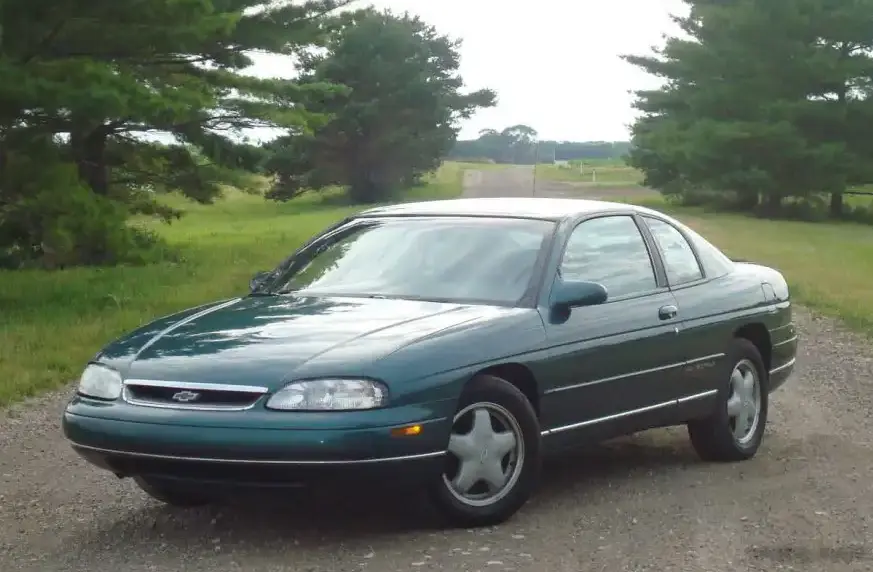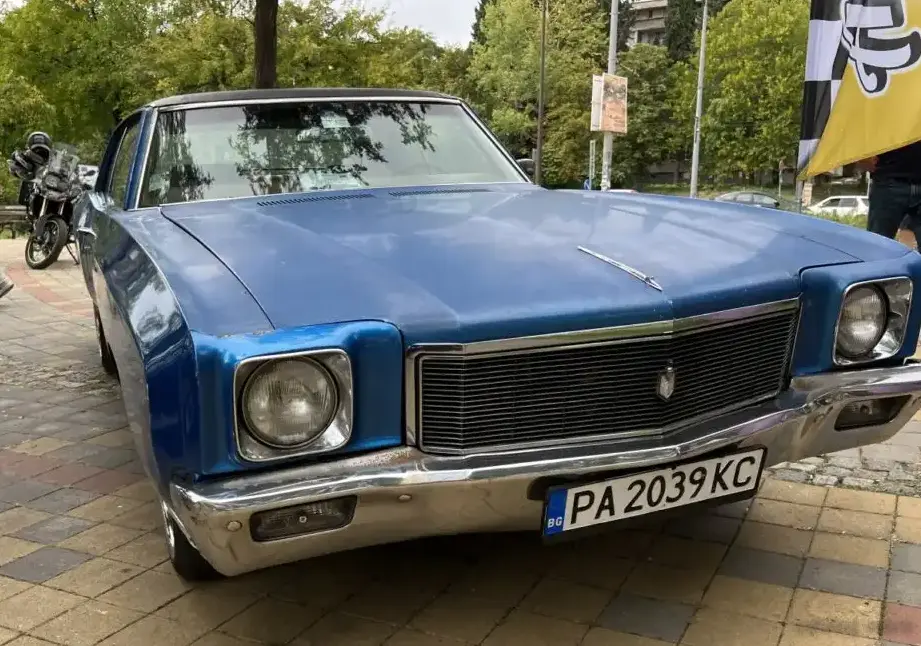
The Chevrolet Monte Carlo I, equipped with the 6.6-liter V8 Turbo-Jet engine producing 240 horsepower and paired with a Hydra-Matic automatic transmission, represents a significant entry in the personal luxury coupe segment of the early 1970s. Produced for the 1972 and 1973 model years, this variant occupied a middle ground within the first generation Monte Carlo lineup, offering a balance between performance and comfort. It was positioned above the base engine options but below the higher-performance versions that would appear in later years. The Monte Carlo, as a whole, aimed to provide a more refined and luxurious experience compared to Chevrolet’s more utilitarian offerings, competing directly with models like the Ford Grand Torino and Chrysler Cordoba.
Technical Specifications
| Brand | Chevrolet |
| Model | Monte Carlo |
| Generation | Monte Carlo I |
| Engine Type | 6.6 V8 Turbo-Jet (240 Hp) Hydra-matic |
| Production Years | 1972-1973 |
| Powertrain Architecture | Internal Combustion engine |
| Body Type | Coupe |
| Seats | 5 |
| Doors | 2 |
| Fuel Type | Petrol (Gasoline) |
| Weight-to-power ratio | 6.8 kg/Hp, 146.9 Hp/tonne |
| Weight-to-torque ratio | 3.5 kg/Nm, 286.4 Nm/tonne |
| Power | 240 Hp @ 4400 rpm |
| Power per litre | 36.4 Hp/l |
| Torque | 468 Nm @ 3200 rpm (345.18 lb.-ft. @ 3200 rpm) |
| Engine Layout | Front, Longitudinal |
| Engine Displacement | 6588 cm3 (402.02 cu. in.) |
| Number of Cylinders | 8 |
| Engine Configuration | V-engine |
| Cylinder Bore | 104.8 mm (4.13 in.) |
| Piston Stroke | 95.5 mm (3.76 in.) |
| Compression Ratio | 8.5:1 |
| Valves per Cylinder | 2 |
| Fuel Injection System | Carburettor |
| Valvetrain | OHV |
| Engine Oil Capacity | 4.7 l (4.97 US qt | 4.14 UK qt) |
| Coolant Capacity | 18.9 l (19.97 US qt | 16.63 UK qt) |
| Kerb Weight | 1634 kg (3602.35 lbs) |
| Trunk Space (max) | 365 l (12.89 cu. ft.) |
| Fuel Tank Capacity | 60 l (15.85 US gal | 13.2 UK gal) |
| Length | 5245 mm (206.5 in.) |
| Width | 1920 mm (75.59 in.) |
| Height | 1344 mm (52.91 in.) |
| Wheelbase | 2946 mm (115.98 in.) |
| Front Track | 1532 mm (60.31 in.) |
| Rear Track | 1506 mm (59.29 in.) |
| Ride Height | 119 mm (4.69 in.) |
| Turning Circle | 12.8 m (41.99 ft.) |
| Drivetrain | Rear wheel drive |
| Gearbox | 3 gears, automatic transmission Turbo Hydra-matic |
| Front Suspension | Coil spring, Independent multi-link suspension |
| Rear Suspension | Rigid axle suspension, Trailing arm, Coil spring |
| Front Brakes | Disc |
| Rear Brakes | Drum |
| Steering | Cone worm with recirculation balls |
| Wheel Rims | 7J x 15 |
Powertrain & Engine Architecture
The heart of this Monte Carlo variant is Chevrolet’s 402 cubic inch (6.6-liter) V8 engine, designated the Turbo-Jet. This engine utilized a cast iron block and cylinder heads, with a two-barrel carburetor managing fuel delivery. The overhead valve (OHV) configuration, common for the era, employed pushrods to actuate the valves. The 402 was known for its robust construction and relatively simple design, making it fairly reliable for the time. The Turbo Hydra-Matic transmission, a three-speed automatic, was a staple of General Motors vehicles during this period. It offered smooth, if not particularly quick, shifts. The transmission was fully automatic, with a standard shift lever on the steering column. The engine and transmission combination was longitudinally mounted, sending power to the rear wheels.
Driving Characteristics
The 240 horsepower and 345 lb-ft of torque provided by the 6.6-liter V8 and Turbo Hydra-Matic offered adequate, but not exhilarating, performance. Acceleration from 0 to 60 mph was typically in the 8-9 second range. The automatic transmission, while convenient, did sap some power compared to the available manual transmissions. The gear ratios were optimized for cruising comfort rather than outright speed. The Monte Carlo I with this powertrain felt substantial and planted on the road, prioritizing a smooth ride over sporty handling. Compared to the later, higher-output versions of the 402, or even the smaller displacement engines, this combination offered a more relaxed driving experience.
Equipment & Trim Levels
The 1972-1973 Monte Carlo I with the 6.6L V8 and automatic transmission came standard with features expected of a personal luxury coupe. These included a vinyl bench seat (cloth and leather options were available), full carpeting, a woodgrain-accented dashboard, and a basic AM radio. Power steering and power brakes were typically included. Optional extras included air conditioning, a stereo system, cruise control, and upgraded interior trim packages. The exterior typically featured brightwork around the windows and body, and a variety of paint colors were available.
Chassis & Braking
The Monte Carlo I utilized a body-on-frame construction, typical of American cars of the era. The front suspension was an independent multi-link design with coil springs, providing a relatively comfortable ride. The rear suspension employed a solid axle with coil springs and trailing arms. Braking duties were handled by disc brakes at the front and drum brakes at the rear. While adequate for the car’s weight and performance, the braking system wasn’t particularly sophisticated by modern standards. Stabilizer bars were included to reduce body roll during cornering.
Market Reception & Comparison
The Monte Carlo I was generally well-received by critics and the public. It was praised for its stylish design, comfortable ride, and spacious interior. The 6.6-liter V8 with the automatic transmission was considered a good all-around combination, offering a balance of performance and convenience. However, some critics noted that the car felt large and heavy, and that the automatic transmission dulled the engine’s potential. Fuel economy, unsurprisingly, was not a strong point, averaging around 12-15 mpg. Compared to the base engine options, the 6.6L offered a noticeable performance upgrade, but at the cost of increased fuel consumption and a slightly higher price.
Legacy
The Chevrolet Monte Carlo I, particularly the 6.6-liter V8/Hydra-Matic combination, remains a popular classic car today. The engine is known for its durability and relative simplicity, making it relatively easy to maintain and repair. Parts availability is generally good, although some components can be difficult to find. While not a high-performance machine by modern standards, the Monte Carlo I offers a nostalgic driving experience and a stylish reminder of the personal luxury coupe era. Values for well-maintained examples have been steadily increasing in recent years, reflecting the growing interest in classic American automobiles.