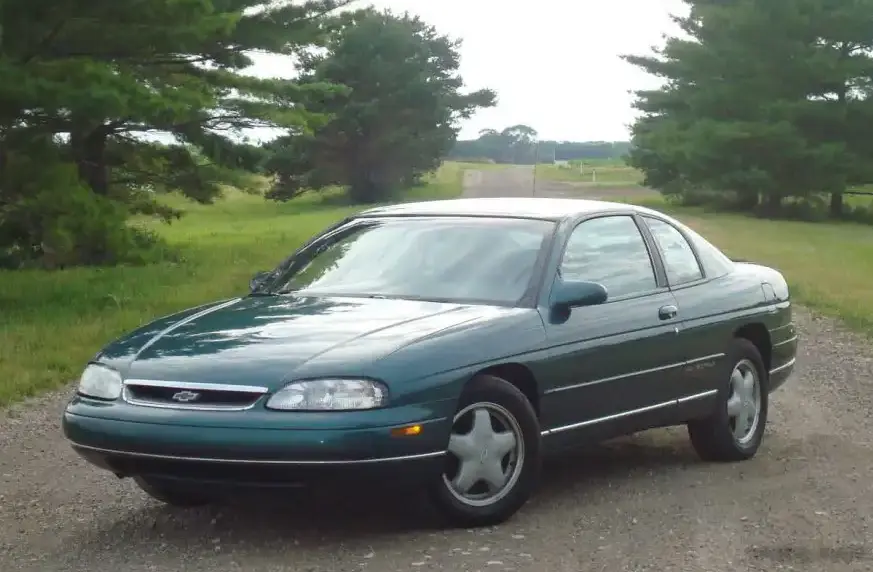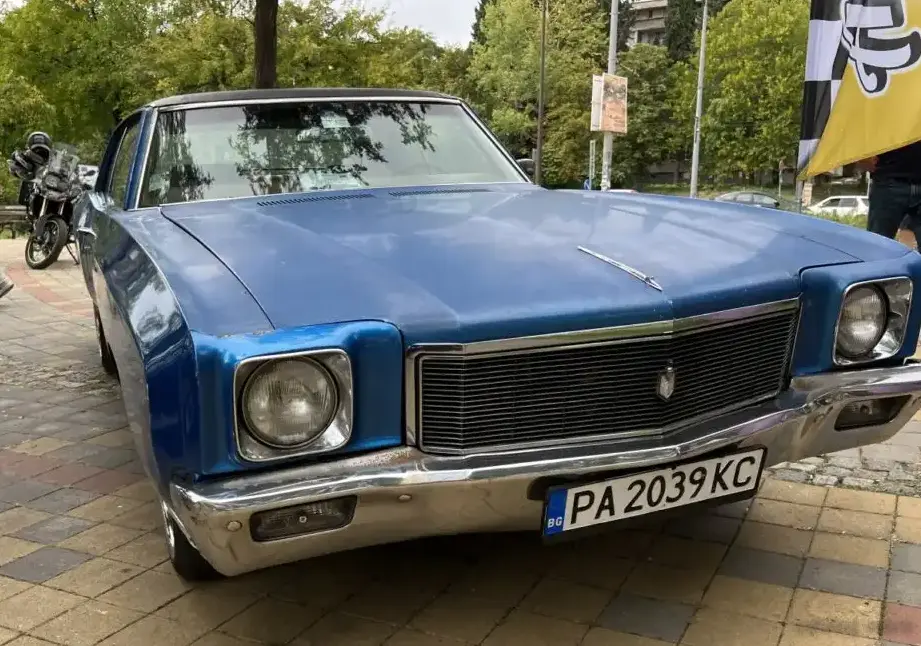
The Chevrolet Monte Carlo I, specifically equipped with the 7.4-liter (454 cubic inch) V8 Turbo-Jet engine producing 270 horsepower and paired with a Hydra-Matic automatic transmission, represents a significant entry in the personal luxury coupe segment of the early 1970s. Produced for the 1972 and 1973 model years, this variant occupied a position as the top-tier performance offering within the first generation Monte Carlo lineup. It aimed to blend comfortable cruising with respectable power, appealing to buyers seeking a stylish and capable grand tourer.
Technical Specifications
| Brand | Chevrolet |
| Model | Monte Carlo |
| Generation | Monte Carlo I |
| Engine Type | 7.4 V8 Turbo-Jet (270 Hp) Hydra-matic |
| Production Years | 1972-1973 |
| Powertrain Architecture | Internal Combustion Engine |
| Body Type | Coupe |
| Seats | 5 |
| Doors | 2 |
| Fuel Type | Petrol (Gasoline) |
| Weight-to-Power Ratio | 6.1 kg/Hp, 165.2 Hp/tonne |
| Weight-to-Torque Ratio | 3.1 kg/Nm, 323.7 Nm/tonne |
| Power | 270 Hp @ 4000 rpm |
| Power per Liter | 36.3 Hp/l |
| Torque | 529 Nm @ 3200 rpm (390.17 lb.-ft. @ 3200 rpm) |
| Engine Layout | Front, Longitudinal |
| Engine Displacement | 7440 cm3 (454.02 cu. in.) |
| Number of Cylinders | 8 |
| Engine Configuration | V-engine |
| Cylinder Bore | 107.98 mm (4.25 in.) |
| Piston Stroke | 101.6 mm (4 in.) |
| Compression Ratio | 8.5:1 |
| Valves per Cylinder | 2 |
| Fuel Injection System | Carburetor |
| Valvetrain | OHV |
| Engine Oil Capacity | 4.7 l (4.97 US qt | 4.14 UK qt) |
| Coolant Capacity | 21.8 l (23.04 US qt | 19.18 UK qt) |
| Kerb Weight | 1634 kg (3602.35 lbs.) |
| Trunk Space (Max) | 365 l (12.89 cu. ft.) |
| Fuel Tank Capacity | 60 l (15.85 US gal | 13.2 UK gal) |
| Length | 5245 mm (206.5 in.) |
| Width | 1920 mm (75.59 in.) |
| Height | 1344 mm (52.91 in.) |
| Wheelbase | 2946 mm (115.98 in.) |
| Front Track | 1532 mm (60.31 in.) |
| Rear Track | 1506 mm (59.29 in.) |
| Ride Height | 119 mm (4.69 in.) |
| Turning Circle | 12.8 m (41.99 ft.) |
| Drivetrain | Rear Wheel Drive |
| Gearbox | 3-speed Automatic (Turbo Hydra-matic) |
| Front Suspension | Coil Spring, Independent Multi-Link |
| Rear Suspension | Rigid Axle, Trailing Arm, Coil Spring |
| Front Brakes | Disc |
| Rear Brakes | Drum |
| Steering | Cone Worm with Recirculation Balls |
| Wheel Rim Size | 6J x 15 |
Powertrain & Engine Architecture
The heart of this Monte Carlo variant is Chevrolet’s 7.4-liter (454 cu. in.) small-block V8, designated the Turbo-Jet. This engine, utilizing a cast iron block and cylinder heads, was a staple of Chevrolet performance during the muscle car era. The 1972-73 version employed a four-barrel carburetor for fuel delivery, a relatively simple system compared to later fuel injection technologies. The overhead valve (OHV) configuration, with two valves per cylinder, was typical for the time. The engine’s 8.5:1 compression ratio was a compromise between performance and the increasing demands of emissions regulations. The Turbo Hydra-matic transmission, a three-speed automatic, was chosen for its smoothness and ease of use, aligning with the Monte Carlo’s luxury-oriented positioning. This transmission featured a torque converter, providing smooth launches and contributing to the car’s comfortable driving experience.
Driving Characteristics
The combination of the 454 V8 and the Turbo Hydra-matic resulted in a driving experience that prioritized effortless cruising and readily available power. While not as overtly aggressive as some of the lighter, more focused muscle cars of the era, the Monte Carlo I 7.4L delivered strong acceleration. The automatic transmission’s gear ratios were tuned for relaxed highway driving, with a focus on smooth shifts rather than aggressive downshifts. Compared to the smaller engine options available on the Monte Carlo (like the 350 cubic inch V8), this variant offered significantly more torque, making it more capable of handling highway passing maneuvers and maintaining speed on inclines. However, the added weight of the larger engine and the automatic transmission did slightly diminish overall agility compared to manual transmission equipped models.
Equipment & Trim Levels
The 7.4-liter Monte Carlo typically came well-equipped, reflecting its position as the premium trim level. Standard features included a plush interior with cloth or vinyl upholstery, a woodgrain-trimmed dashboard, and full carpeting. Power steering and power brakes were also standard. Optional extras included air conditioning, a stereo system, and upgraded interior trim packages. The exterior typically featured brightwork, including chrome bumpers and trim, and a vinyl roof was a popular option. The Monte Carlo’s interior was designed to be comfortable and spacious, offering a refined experience for both driver and passengers.
Chassis & Braking
The Monte Carlo I utilized a body-on-frame construction, common for American cars of the period. The front suspension employed an independent multi-link design with coil springs, providing a relatively comfortable ride. The rear suspension featured a solid axle with coil springs and trailing arms. Braking duties were handled by disc brakes at the front and drum brakes at the rear. While adequate for the car’s weight and intended use, the braking system wasn’t particularly sophisticated by modern standards. Stabilizer bars were included to reduce body roll during cornering, but the Monte Carlo was primarily designed for straight-line stability and comfort rather than sporty handling.
Market Reception & Comparison
The 1972-1973 Chevrolet Monte Carlo with the 7.4-liter V8 received generally positive reviews. Critics praised its comfortable ride, spacious interior, and strong performance. However, some noted the car’s considerable weight and its relatively high price compared to other personal luxury coupes. Compared to the smaller-engined Monte Carlos, the 7.4L offered a significant performance upgrade, but at the cost of slightly reduced fuel economy. The 7.4L variant was often compared to competitors like the Ford Grand Torino and the Buick LeSabre, offering a similar blend of luxury and power.
Legacy
The Chevrolet Monte Carlo I 7.4L V8 remains a desirable classic car today, particularly among collectors and enthusiasts of 1970s American automobiles. The 454 engine is known for its durability and relative simplicity, making it a relatively easy engine to maintain and rebuild. While fuel economy is poor by modern standards, the car’s robust construction and readily available parts supply ensure that it can be kept on the road for years to come. The Turbo Hydra-matic transmission, while not as efficient as modern automatics, is also known for its reliability. Values for well-maintained examples have been steadily increasing in recent years, reflecting the growing appreciation for this iconic American coupe.