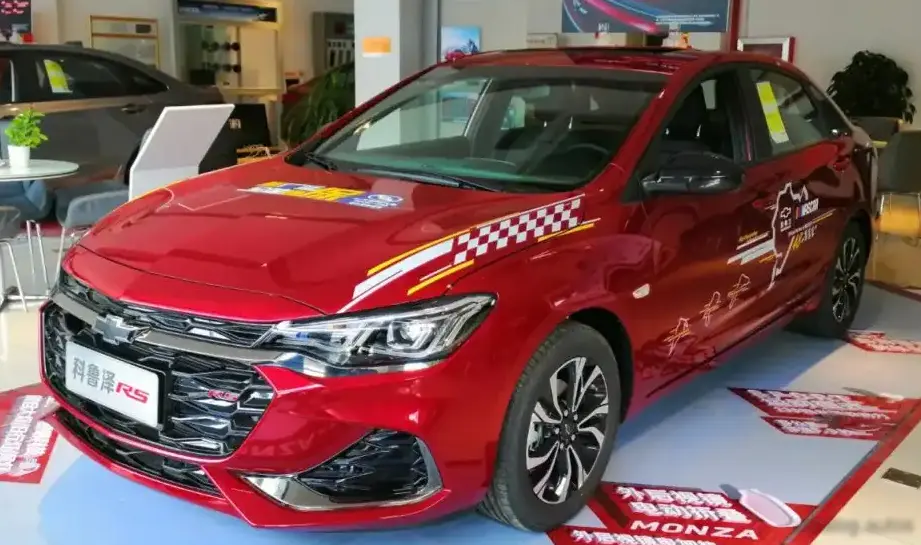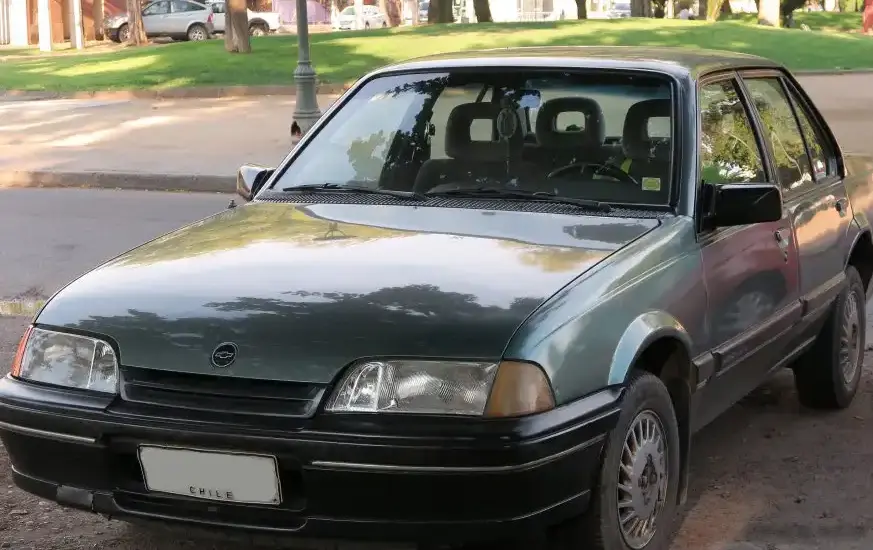
The Chevrolet Monza 1.8 i SL (98 hp) was a popular variant of the Brazilian-market Chevrolet Monza, produced from 1982 to 1996. Positioned as a mid-range offering within the Monza lineup, it provided a balance between affordability and performance, appealing to a broad segment of Brazilian car buyers. The Monza itself was a significant vehicle for General Motors do Brasil, representing a modern, domestically produced option in a market increasingly influenced by import restrictions and a desire for locally-engineered vehicles. This particular 1.8-liter, single-point injection engine paired with an automatic transmission was a relatively uncommon configuration, offering convenience at the expense of outright speed compared to the manual transmission options.
Technical Specifications
| Brand | Chevrolet |
| Model | Monza |
| Generation | Monza (Brazil) |
| Type (Engine) | 1.8 i SL (98 Hp) |
| Start of production | 1982 |
| End of production | 1996 |
| Powertrain Architecture | Internal Combustion engine |
| Body type | Sedan |
| Seats | 5 |
| Doors | 3/5 |
| Fuel consumption (combined) | 8 l/100 km (29.4 US mpg, 35.3 UK mpg, 12.5 km/l) |
| Fuel Type | Petrol (Gasoline) |
| Acceleration 0 – 100 km/h | 12 sec |
| Acceleration 0 – 62 mph | 12 sec |
| Acceleration 0 – 60 mph | 11.4 sec |
| Maximum speed | 170 km/h (105.63 mph) |
| Weight-to-power ratio | 10.8 kg/Hp, 92.3 Hp/tonne |
| Weight-to-torque ratio | 7.4 kg/Nm, 134.7 Nm/tonne |
| Power | 98 Hp @ 5800 rpm |
| Power per litre | 54.6 Hp/l |
| Torque | 143 Nm @ 3600 rpm (105.47 lb.-ft. @ 3600 rpm) |
| Engine layout | Front, Transverse |
| Engine displacement | 1796 cm3 (109.6 cu. in.) |
| Number of cylinders | 4 |
| Engine configuration | Inline |
| Cylinder Bore | 84.8 mm (3.34 in.) |
| Piston Stroke | 79.5 mm (3.13 in.) |
| Compression ratio | 8.8:1 |
| Number of valves per cylinder | 2 |
| Fuel injection system | Single-point injection |
| Engine aspiration | Naturally aspirated engine |
| Valvetrain | OHC |
| Kerb Weight | 1062 kg (2341.31 lbs.) |
| Max. weight | 1553 kg (3423.78 lbs.) |
| Max load | 491 kg (1082.47 lbs.) |
| Trunk (boot) space – minimum | 510 l (18.01 cu. ft.) |
| Fuel tank capacity | 57 l (15.06 US gal | 12.54 UK gal) |
| Length | 4493 mm (176.89 in.) |
| Width | 1642 mm (64.65 in.) |
| Height | 1380 mm (54.33 in.) |
| Wheelbase | 2574 mm (101.34 in.) |
| Front track | 1406 mm (55.35 in.) |
| Rear (Back) track | 1406 mm (55.35 in.) |
| Drivetrain Architecture | The Internal combustion engine (ICE) drives the front wheels of the vehicle. |
| Drive wheel | Front wheel drive |
| Number of gears and type of gearbox | 5 gears, manual transmission |
| Front suspension | Spring Strut |
| Rear suspension | Coil spring |
| Front brakes | Ventilated discs |
| Rear brakes | Drum |
| Assisting systems | ABS (Anti-lock braking system) |
| Tires size | 185/70 R13 S |
Powertrain & Engine Architecture
The heart of the Monza 1.8 i SL was the Chevrolet 1796 cc inline-four cylinder engine. This engine, designated with codes like ABS or ADZ depending on the specific year and minor revisions, was a relatively simple design featuring a single overhead camshaft (OHC) and two valves per cylinder. The single-point fuel injection system, while less sophisticated than multi-point injection systems becoming common elsewhere, was a step up from carburation, offering improved fuel efficiency and reduced emissions. The engine produced 98 horsepower at 5800 rpm and 143 Nm (105.47 lb-ft) of torque at 3600 rpm. The automatic transmission was typically a three-speed unit, chosen for its convenience but contributing to slightly slower acceleration times compared to the five-speed manual versions.
Driving Characteristics
The Monza 1.8 i SL Automatic offered a comfortable, if not particularly sporty, driving experience. The automatic transmission, while providing ease of use, resulted in a noticeable difference in acceleration compared to the manual transmission models. The 0-60 mph time of around 11.4 seconds was respectable for the era, but the engine felt somewhat strained when pushed hard. The gear ratios were optimized for fuel economy and everyday driving rather than performance. The Monza’s front-wheel-drive layout provided predictable handling, but the relatively soft suspension tuning prioritized ride comfort over sharp cornering.
Equipment & Trim Levels
The “SL” trim level represented a mid-range offering. Standard equipment typically included cloth upholstery, a basic instrument cluster, and manual windows and locks. Air conditioning was often an optional extra, as were features like a radio/cassette player and upgraded interior trim. The dashboard layout was functional and straightforward, reflecting the car’s focus on practicality. The 3/5 door configuration offered flexibility in terms of passenger and cargo space, with the five-door version being more popular for families.
Chassis & Braking
The Monza utilized a front-wheel-drive chassis with a MacPherson strut suspension in the front and a coil spring suspension in the rear. The front brakes were ventilated discs, providing adequate stopping power, while the rear brakes were drums. ABS (Anti-lock Braking System) was available, but not standard on all models. The suspension was tuned for comfort, providing a relatively smooth ride on Brazil’s often-challenging road surfaces. The relatively light curb weight of around 1062 kg (2341.31 lbs) helped to mitigate the performance limitations of the 98 hp engine.
Market Reception & Comparison
The Monza 1.8 i SL Automatic was generally well-received in the Brazilian market as a practical and reliable family car. Critics noted its comfortable ride and relatively spacious interior. However, the automatic transmission was often criticized for its sluggish performance compared to the manual versions. Compared to the higher-performance Monza models equipped with larger engines (like the 2.0-liter), the 1.8 i SL offered a more affordable entry point into the Monza range. Fuel economy was a key selling point, averaging around 8 liters per 100 kilometers (29.4 US mpg).
Legacy
The Chevrolet Monza, and specifically the 1.8 i SL variant, holds a nostalgic place in the hearts of many Brazilian car enthusiasts. The engine, while not particularly powerful by modern standards, proved to be durable and relatively easy to maintain. Today, well-maintained examples are sought after by collectors and enthusiasts. The Monza’s legacy lies in its role as a symbol of Brazilian automotive independence and its contribution to the development of the domestic automotive industry. The availability of parts can be a challenge, but the Monza’s simple mechanical design makes it a relatively straightforward vehicle to repair and restore. The automatic transmission, while less desirable to some, provides a unique and increasingly rare configuration within the Monza model range.