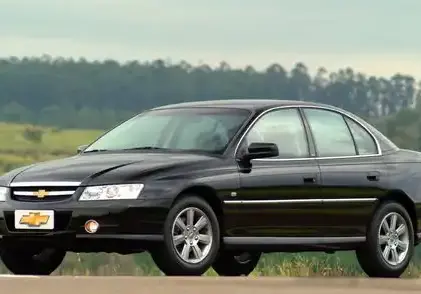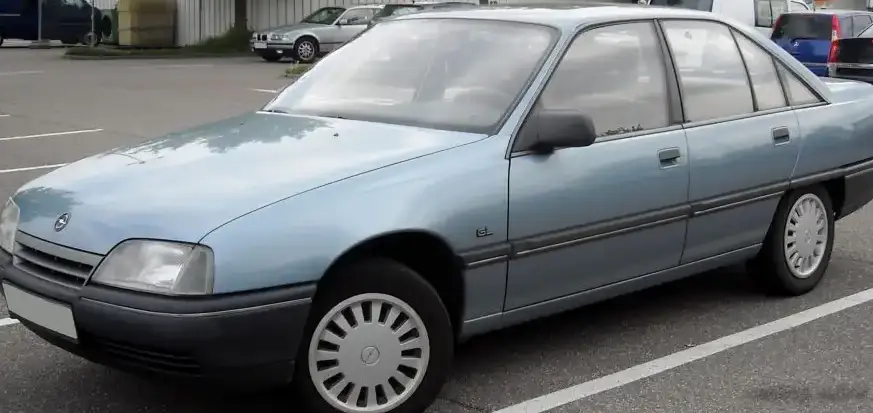
The Chevrolet Omega 3.0 i CD, produced between 1992 and 1998, represented a significant offering in the mid-size sedan segment, particularly within the Brazilian automotive market where it was primarily sold. Positioned as a more upscale and spacious alternative to domestic competitors, the Omega was based on the GM V80 platform, sharing underpinnings with the Opel Omega sold in Europe. The “3.0 i CD” designation specifically refers to the 3.0-liter inline-six engine paired with a five-speed manual transmission, representing a mid-range trim level within the broader Omega lineup. This variant aimed to balance performance with relative affordability, appealing to buyers seeking a comfortable and well-equipped family sedan.
Technical Specifications
| Brand | Chevrolet |
| Model | Omega |
| Generation | Omega |
| Type (Engine) | 3.0 i CD (165 Hp) |
| Start of production | 1992 |
| End of production | 1998 |
| Powertrain Architecture | Internal Combustion engine |
| Body type | Sedan |
| Seats | 5 |
| Doors | 4 |
| Fuel consumption (combined) | 11 l/100 km (21.4 US mpg, 25.7 UK mpg, 9.1 km/l) |
| Fuel Type | Petrol (Gasoline) |
| Acceleration 0 – 100 km/h | 10 sec |
| Acceleration 0 – 62 mph | 10 sec |
| Acceleration 0 – 60 mph | 9.5 sec |
| Maximum speed | 210 km/h (130.49 mph) |
| Weight-to-power ratio | 8.8 kg/Hp, 113.8 Hp/tonne |
| Weight-to-torque ratio | 6.3 kg/Nm, 158.6 Nm/tonne |
| Power | 165 Hp @ 5800 rpm |
| Power per litre | 55.6 Hp/l |
| Torque | 230 Nm @ 4200 rpm (169.64 lb.-ft. @ 4200 rpm) |
| Engine layout | Front, Longitudinal |
| Engine displacement | 2969 cm3 (181.18 cu. in.) |
| Number of cylinders | 6 |
| Engine configuration | Inline |
| Cylinder Bore | 95 mm (3.74 in.) |
| Piston Stroke | 69.8 mm (2.75 in.) |
| Compression ratio | 9.2:1 |
| Number of valves per cylinder | 2 |
| Fuel injection system | Multi-port manifold injection |
| Engine aspiration | Naturally aspirated engine |
| Kerb Weight | 1450 kg (3196.7 lbs.) |
| Max. weight | 1985 kg (4376.18 lbs.) |
| Max load | 535 kg (1179.47 lbs.) |
| Trunk (boot) space – minimum | 520 l (18.36 cu. ft.) |
| Trunk (boot) space – maximum | 870 l (30.72 cu. ft.) |
| Fuel tank capacity | 75 l (19.81 US gal | 16.5 UK gal) |
| Length | 4740 mm (186.61 in.) |
| Width | 1760 mm (69.29 in.) |
| Height | 1420 mm (55.91 in.) |
| Wheelbase | 2730 mm (107.48 in.) |
| Front track | 1460 mm (57.48 in.) |
| Rear (Back) track | 1480 mm (58.27 in.) |
| Drivetrain Architecture | The Internal combustion engine (ICE) drives the rear wheels of the vehicle. |
| Drive wheel | Rear wheel drive |
| Number of gears and type of gearbox | 5 gears, manual transmission |
| Front suspension | Coil spring |
| Rear suspension | Coil spring |
| Front brakes | Ventilated discs |
| Rear brakes | Disc |
| Assisting systems | ABS (Anti-lock braking system) |
| Steering type | Steering rack and pinion |
| Power steering | Hydraulic Steering |
| Tires size | 195/65 R15 V |
Powertrain & Engine Architecture
The heart of the Omega 3.0 i CD is the C20SE inline-six engine. This 2,969 cc (181.18 cu. in.) engine features a cast-iron block and an aluminum cylinder head, employing a single overhead camshaft (SOHC) design with two valves per cylinder. The multi-port fuel injection system, a hallmark of the era, delivered fuel directly to each intake port, optimizing combustion efficiency. The engine’s 9.2:1 compression ratio contributed to its respectable power output of 165 horsepower at 5,800 rpm and 230 Nm (169.64 lb.-ft.) of torque at 4,200 rpm. The five-speed manual transmission provided a relatively direct connection to the rear wheels, offering drivers a degree of control over the engine’s power band. The transmission’s gear ratios were tuned for a balance of acceleration and highway cruising, though it wasn’t particularly sporty compared to some European counterparts.
Driving Characteristics
The Omega 3.0 i CD offered a comfortable and refined driving experience. The inline-six engine provided smooth and linear power delivery, making it well-suited for everyday driving and long highway journeys. While the 0-60 mph time of around 9.5 seconds wasn’t particularly quick by modern standards, the engine’s torque made it feel responsive in most situations. The rear-wheel-drive configuration contributed to balanced handling, although it lacked the agility of front-wheel-drive or all-wheel-drive vehicles. Compared to the base 2.0-liter four-cylinder Omega models, the 3.0 i CD offered a significant performance upgrade, providing noticeably more power and torque. However, it didn’t match the performance of the later, more powerful V6 versions that became available.
Equipment & Trim Levels
The “CD” trim level for the Omega 3.0 i CD indicated a relatively well-equipped vehicle. Standard features typically included power windows, power locks, air conditioning, and a basic audio system. Interior upholstery was usually cloth, though leather options were available. The dashboard layout was functional and straightforward, prioritizing ease of use over flashy design. Optional extras could include a sunroof, upgraded audio systems, and alloy wheels. The Omega generally offered a more generous level of standard equipment than many of its domestic competitors in Brazil.
Chassis & Braking
The Omega’s chassis featured a traditional body-on-frame construction, providing a robust and durable platform. Suspension consisted of coil springs all around, with an independent front suspension and a solid rear axle. The braking system utilized ventilated discs at the front and solid discs at the rear, providing adequate stopping power for the vehicle’s weight and performance. Anti-lock braking system (ABS) was included as a standard safety feature. The suspension was tuned for comfort, prioritizing a smooth ride over sporty handling. Stabilizer bars were fitted to both the front and rear axles to reduce body roll during cornering.
Market Reception & Comparison
The Chevrolet Omega 3.0 i CD was generally well-received by Brazilian automotive critics and consumers. It was praised for its spacious interior, comfortable ride, and relatively powerful engine. Fuel economy, however, was a common criticism, with the 3.0-liter engine consuming around 11 liters per 100 kilometers (21.4 US mpg). Compared to the 2.0-liter Omega models, the 3.0 i CD offered a significant performance advantage but at the cost of increased fuel consumption. Reliability was generally good, although maintenance costs could be higher due to the complexity of the inline-six engine. The Omega competed primarily with the Ford Versailles and Volkswagen Santana in the Brazilian market.
Legacy
The Chevrolet Omega 3.0 i CD remains a popular classic car in Brazil, appreciated for its spaciousness, comfort, and distinctive styling. The C20SE engine is known for its durability, although finding replacement parts can be challenging as the vehicle ages. Well-maintained examples command a premium in the used car market. The Omega’s legacy lies in its role as a comfortable and reliable family sedan that offered a taste of European engineering and refinement to Brazilian consumers. While not a performance icon, the 3.0 i CD variant provided a compelling blend of power, comfort, and practicality for its time.