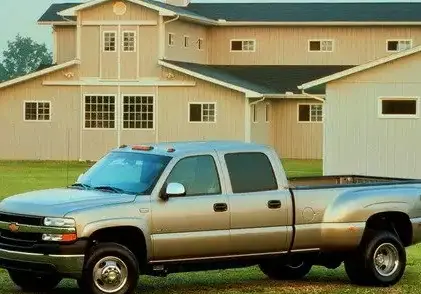
The Chevrolet Silverado 1500 IV Crew Cab Short Box 2.7 Turbo (310 Hp) 4WD Automatic, produced from 2018 to 2021, represents a significant iteration in Chevrolet’s long-running full-size pickup truck lineage. This variant occupied a middle ground within the fourth generation (2016-2022) Silverado 1500 lineup, offering a balance between capability, fuel efficiency, and affordability. It was positioned as an alternative to the larger V8 engines, appealing to buyers who didn’t require maximum towing capacity but still desired a capable and comfortable full-size truck. The 2.7-liter turbocharged four-cylinder engine, paired with an eight-speed automatic transmission and four-wheel drive, aimed to deliver a modern driving experience while maintaining the Silverado’s reputation for ruggedness.
Technical Specifications
| Brand | Chevrolet |
| Model | Silverado 1500 |
| Generation | Silverado 1500 IV Crew Cab Short Box |
| Type (Engine) | 2.7 Turbo (310 Hp) 4WD Automatic |
| Start of production | 2018 |
| End of production | 2021 |
| Powertrain Architecture | Internal Combustion engine |
| Body type | Pick-up |
| Seats | 5 |
| Doors | 4 |
| Fuel consumption (urban) | 13 l/100 km (18.1 US mpg) |
| Fuel consumption (extra urban) | 11.2 l/100 km (21 US mpg) |
| Fuel Type | Petrol (Gasoline) |
| Weight-to-power ratio | 7.2 kg/Hp |
| Weight-to-torque ratio | 4.7 kg/Nm |
| Power | 310 Hp @ 5600 rpm |
| Power per litre | 113.7 Hp/l |
| Torque | 473 Nm @ 1500-4000 rpm (348.87 lb.-ft.) |
| Engine layout | Front, Longitudinal |
| Engine Model/Code | L3B |
| Engine displacement | 2727 cm3 (166.41 cu. in.) |
| Number of cylinders | 4 |
| Engine configuration | Inline |
| Cylinder Bore | 92.25 mm (3.63 in.) |
| Piston Stroke | 102 mm (4.02 in.) |
| Compression ratio | 10:1 |
| Number of valves per cylinder | 4 |
| Fuel injection system | Direct injection |
| Engine aspiration | Turbocharger, Intercooler |
| Valvetrain | DOHC, VVT DI |
| Engine oil capacity | 5.7 l (6.02 US qt | 5.02 UK qt) |
| Coolant capacity | 11.8 l (12.47 US qt | 10.38 UK qt) |
| Kerb Weight | 2241 kg (4940.56 lbs.) |
| Max. weight | 3175 kg (6999.68 lbs.) |
| Max load | 934 kg (2059.12 lbs.) |
| Fuel tank capacity | 91 l (24.04 US gal | 20.02 UK gal) |
| Permitted trailer load with brakes (12%) | 2994 kg (6600.64 lbs.) |
| Length | 5885 mm (231.69 in.) |
| Width including mirrors | 2063 mm (81.22 in.) |
| Height | 1918 mm (75.51 in.) |
| Wheelbase | 3745 mm (147.44 in.) |
| Drivetrain Architecture | All wheel drive (4×4) |
| Number of gears and type of gearbox | 8 gears, automatic transmission Hydra-Matic |
| Front suspension | Independent coil spring |
| Rear suspension | Rigid axle suspension, Leaf spring |
| Front brakes | Ventilated discs, 345 mm |
| Rear brakes | Ventilated discs, 360 mm |
| Steering type | Steering rack and pinion |
| Power steering | Electric Steering |
| Tires size | 255/70 R17; 265/70 R17; 265/65 R18 |
| Wheel rims size | 8.0J x 17; 8.5J x 18 |
Powertrain & Engine Architecture
The heart of this Silverado variant is the GM L3B 2.7-liter turbocharged inline-four engine. This engine utilizes direct injection and a twin-scroll turbocharger to deliver a respectable 310 horsepower and 473 lb-ft of torque. The engine’s design incorporates features like active thermal management and cylinder deactivation to improve fuel economy. The Hydra-Matic 8L45 eight-speed automatic transmission was specifically tuned to work with the engine’s torque curve, providing smooth shifts and efficient power delivery. This transmission offered a wide gear ratio spread, optimizing both acceleration and highway cruising. The engine is longitudinally mounted, driving all four wheels through a two-speed transfer case.
Driving Characteristics
The 2.7-liter turbo Silverado offered a different driving experience compared to its V6 and V8 siblings. While it didn’t possess the raw acceleration of the larger engines, the turbocharger provided a broad, usable torque band, making it feel responsive in everyday driving situations. The eight-speed automatic transmission helped keep the engine in its optimal power range. Compared to the 5.3L V8, the 2.7T felt less powerful during initial acceleration, but the turbocharger would spool up, providing strong mid-range pull. The 4WD system provided confident traction in various conditions, making it suitable for both on-road and light off-road use. The ride quality, typical of a full-size truck, was generally comfortable, though the leaf spring rear suspension could feel firm when unloaded.
Equipment & Trim Levels
The 2.7 Turbo engine was available across several Silverado 1500 trim levels, including the LS, LT, RST, and LTZ. Standard features typically included air conditioning, a basic infotainment system with a touchscreen display, Bluetooth connectivity, and a rearview camera. Higher trim levels added features like leather upholstery, heated and ventilated front seats, a premium audio system, and advanced safety technologies such as lane departure warning and automatic emergency braking. The Crew Cab configuration provided ample space for passengers in both rows, making it a practical choice for families. Optional extras included a sunroof, navigation system, and various appearance packages.
Chassis & Braking
The Silverado 1500 IV utilized a fully boxed frame, contributing to its strength and rigidity. The front suspension featured independent coil springs, while the rear suspension employed a traditional leaf spring setup. This configuration balanced ride comfort with load-carrying capability. Braking duties were handled by ventilated disc brakes on all four wheels, providing adequate stopping power for the truck’s weight. ABS (Anti-lock Braking System) was standard. The steering system was a rack-and-pinion setup with electric power steering, offering a responsive and precise feel.
Market Reception & Comparison
The 2.7-liter turbo Silverado received mixed reviews. Critics praised its fuel efficiency and surprisingly strong torque output, but some found it lacked the refinement and power of the V8 engines. Compared to the 5.3L V8, the 2.7T offered better fuel economy (around 17-18 mpg combined versus 15-16 mpg for the V8) but less overall towing capacity. The 2.7T was generally considered more reliable than some of the earlier iterations of GM’s smaller turbocharged engines, but long-term durability remained a concern for some buyers. It positioned itself as a good option for those prioritizing fuel economy and daily drivability over maximum towing or hauling.
Legacy
The 2.7-liter turbocharged engine has become a mainstay in Chevrolet’s truck and SUV lineup. While the initial iterations of the engine had some reported issues with timing chain durability, GM addressed these concerns with revisions in later model years. Today, the 2.7-liter turbo Silverado represents a relatively affordable entry point into the full-size truck market. Used examples are readily available, and with proper maintenance, the powertrain can provide years of reliable service. The engine’s combination of power and efficiency continues to appeal to a wide range of buyers, solidifying its place as a viable alternative to traditional V6 and V8 engines in the full-size truck segment.