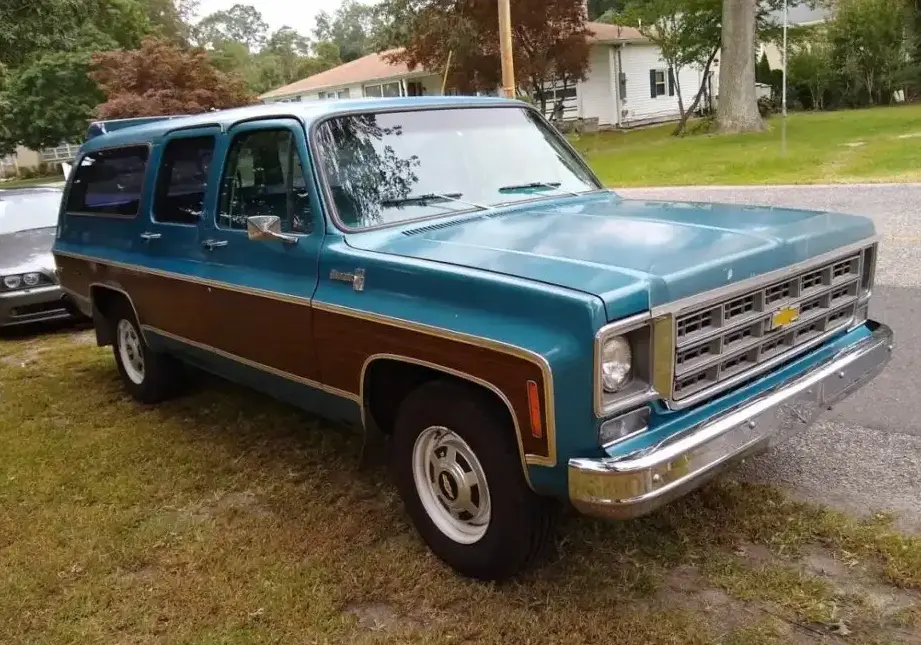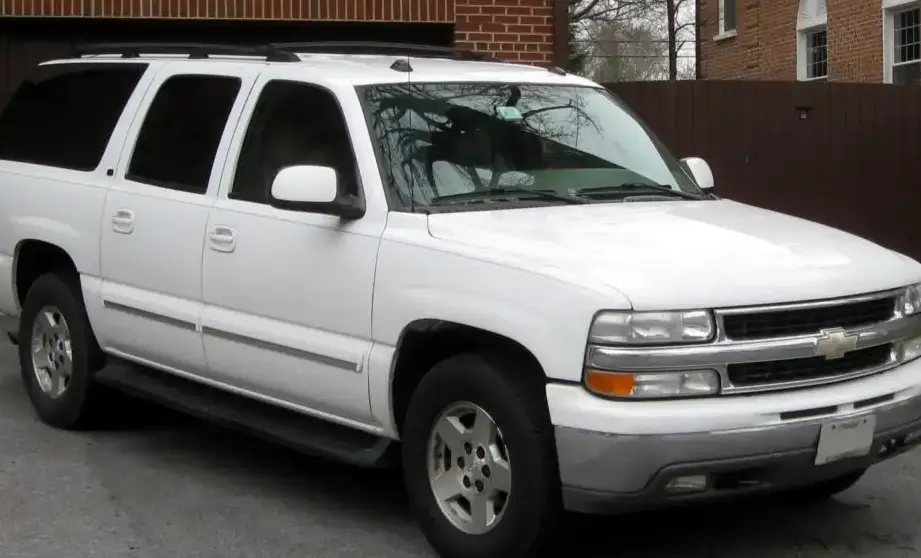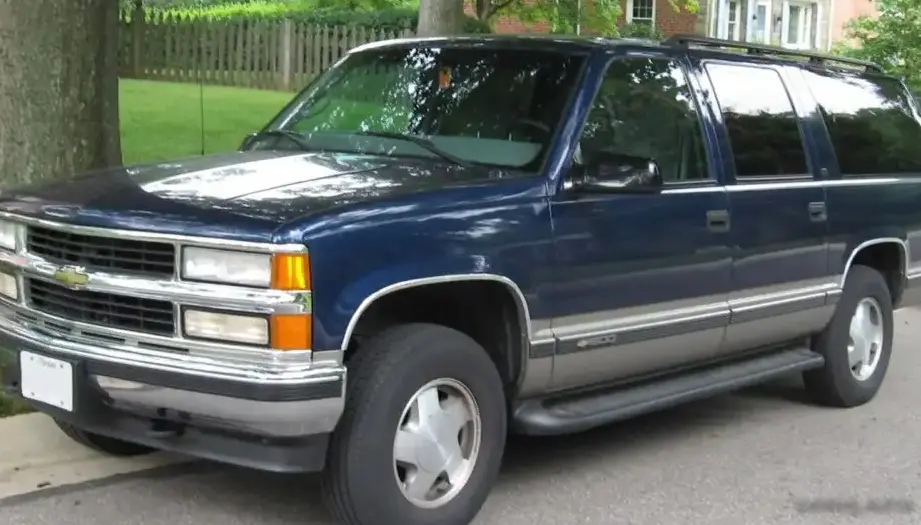
The Chevrolet Suburban (GMT400) 5.7L V8 4WD, produced from 1991 to 1999, represents a significant iteration of Chevrolet’s long-running full-size SUV. Part of the fourth-generation Suburban series, the GMT400 platform brought substantial updates in terms of size, comfort, and capability compared to its predecessors. This particular variant, equipped with the 5.7-liter V8 engine and a four-speed automatic transmission, served as a popular choice for buyers needing a robust, spacious vehicle for family transport, towing, and all-weather capability. It occupied a middle ground in the Suburban lineup, offering a balance between performance and affordability, positioned below the more powerful 6.5L diesel option but above the smaller 5.0L V8.
Technical Specifications
| Brand | Chevrolet |
| Model | Suburban |
| Generation | Suburban (GMT400) |
| Type (Engine) | 5.7 i V8 4WD (210 Hp) |
| Start of production | 1991 year |
| End of production | 1999 year |
| Powertrain Architecture | Internal Combustion engine |
| Body type | SUV |
| Seats | 9 |
| Doors | 5 |
| Fuel consumption (economy) – urban | 19.6 l/100 km (12 US mpg, 14.4 UK mpg, 5.1 km/l) |
| Fuel consumption (economy) – extra urban | 14.7 l/100 km (16 US mpg, 19.2 UK mpg, 6.8 km/l) |
| Fuel consumption (economy) – combined | 18.1 l/100 km (13 US mpg, 15.6 UK mpg, 5.5 km/l) |
| Fuel Type | Petrol (Gasoline) |
| Weight-to-power ratio | 11 kg/Hp, 91.3 Hp/tonne |
| Weight-to-torque ratio | 5.7 kg/Nm, 177 Nm/tonne |
| Power | 210 Hp @ 4000 rpm |
| Power per litre | 36.6 Hp/l |
| Torque | 407 Nm @ 2800 rpm (300.19 lb.-ft. @ 2800 rpm) |
| Engine layout | Front, Longitudinal |
| Engine Model/Code | L05 |
| Engine displacement | 5733 cm3 (349.85 cu. in.) |
| Number of cylinders | 8 |
| Engine configuration | V-engine |
| Cylinder Bore | 101.6 mm (4 in.) |
| Piston Stroke | 88.4 mm (3.48 in.) |
| Compression ratio | 9.1:1 |
| Number of valves per cylinder | 2 |
| Fuel injection system | Single-point injection |
| Engine aspiration | Naturally aspirated engine |
| Engine oil capacity | 4.8 l (5.07 US qt | 4.22 UK qt) |
| Coolant | 16.5 l (17.44 US qt | 14.52 UK qt) |
| Kerb Weight | 2300 kg (5070.63 lbs.) |
| Max. weight | 3250 kg (7165.02 lbs.) |
| Max load | 950 kg (2094.39 lbs.) |
| Fuel tank capacity | 150 l (39.63 US gal | 33 UK gal) |
| Length | 5575 mm (219.49 in.) |
| Width | 1956 mm (77.01 in.) |
| Height | 1910 mm (75.2 in.) |
| Wheelbase | 3340 mm (131.5 in.) |
| Front track | 1610 mm (63.39 in.) |
| Rear (Back) track | 1600 mm (62.99 in.) |
| Drive wheel | All wheel drive (4×4) |
| Number of gears and type of gearbox | 4 gears, automatic transmission |
| Front suspension | Double wishbone |
| Rear suspension | Leaf spring |
| Front brakes | Disc |
| Rear brakes | Drum |
| Assisting systems | ABS (Anti-lock braking system) |
| Power steering | Hydraulic Steering |
| Tires size | 285/70 R16 T |
Powertrain & Engine Architecture
The heart of this Suburban variant is the Chevrolet L05 5.7-liter (349.85 cubic inch) small-block V8 engine. This engine, a staple of General Motors vehicles for decades, is a pushrod design featuring a cast iron block and aluminum cylinder heads. The L05 utilizes a central-port fuel injection system, a relatively simple setup compared to multi-port injection, contributing to its reliability but also limiting its overall efficiency and power output. The engine produces 210 horsepower at 4000 rpm and 300 lb-ft of torque at 2800 rpm. The torque figure is particularly important for a vehicle of this size, providing ample pulling power for towing and hauling. The engine is paired with a 4L60E four-speed automatic transmission, known for its durability and smooth shifting characteristics. This transmission was a common choice for full-size trucks and SUVs of the era.
Driving Characteristics
The 5.7L V8 and 4L60E automatic combination delivers adequate, though not exhilarating, performance. Acceleration is best described as leisurely, with a 0-60 mph time estimated around 9-10 seconds. The automatic transmission’s gear ratios are tuned for towing and everyday driving, prioritizing smooth operation over outright speed. Compared to the manual transmission versions, the automatic sacrifices some responsiveness, but offers greater convenience. Against the more powerful 6.5L diesel, the 5.7L feels noticeably less capable when heavily loaded or towing substantial trailers. However, the 5.7L offers a smoother, quieter driving experience than the diesel, and its lighter weight contributes to slightly better handling.
Equipment & Trim Levels
The 5.7L Suburban typically came standard with features like air conditioning, power steering, power brakes, and a tilt steering wheel. Interior upholstery was usually cloth, though leather was available as an option. Trim levels varied, but generally included base models and more upscale LT (Luxury Touring) trims. LT models added features like upgraded interior trim, premium sound systems, and additional convenience items. Optional extras included a sunroof, rear air conditioning, and a towing package. The spacious interior comfortably accommodated up to nine passengers, making it a popular choice for large families.
Chassis & Braking
The GMT400 Suburban utilizes a body-on-frame construction, providing a robust and durable platform. The front suspension consists of an independent double wishbone setup, while the rear suspension employs a traditional leaf spring design. This configuration prioritizes load-carrying capacity and durability over refined handling. Braking duties are handled by disc brakes at the front and drum brakes at the rear. Anti-lock brakes (ABS) were available, enhancing safety, particularly in slippery conditions. The Suburban’s large size and weight necessitate a robust braking system, and while adequate, it doesn’t offer the stopping power of more modern SUVs.
Market Reception & Comparison
The 5.7L Suburban was generally well-received by consumers seeking a large, capable SUV. Critics praised its spacious interior, comfortable ride, and strong towing capacity. However, fuel economy was a common complaint, with the 5.7L engine averaging around 13 mpg in combined driving. Compared to the 6.5L diesel, the 5.7L offered lower initial cost and a more refined driving experience, but lacked the diesel’s superior torque and fuel efficiency when towing heavy loads. Against smaller SUVs, the Suburban offered significantly more space and towing capacity, but at the expense of maneuverability and fuel economy.
Legacy
The GMT400 Suburban 5.7L V8 4WD has proven to be a remarkably durable vehicle. Many examples remain on the road today, a testament to the robustness of the engine and chassis. While maintenance costs can increase with age, parts availability is generally good. The L05 engine is known for its reliability, though regular maintenance is crucial to prevent issues like oil leaks and valve train wear. In the used car market, these Suburbans are often sought after by those needing a capable tow vehicle or a spacious family hauler, and they often command reasonable prices, making them an affordable option for those seeking a classic American SUV.