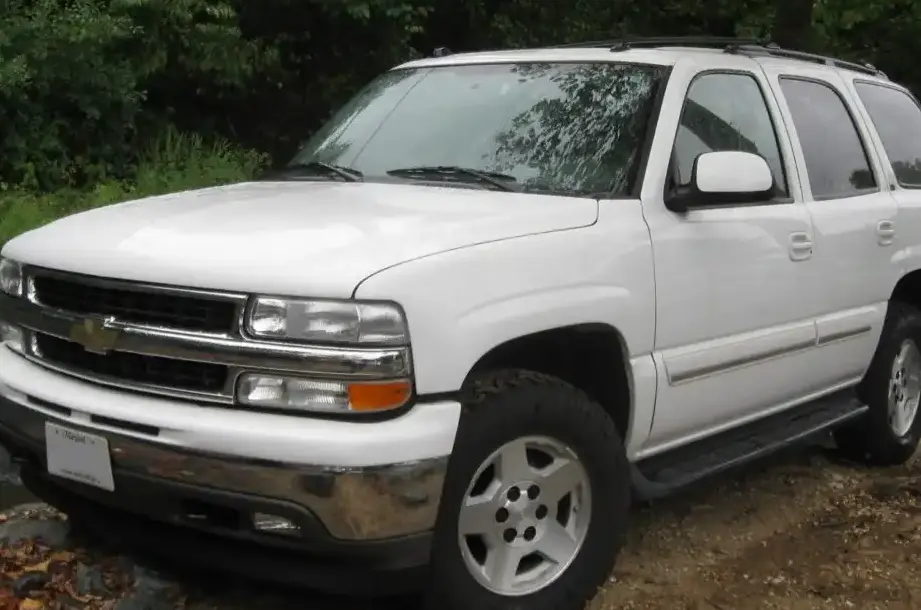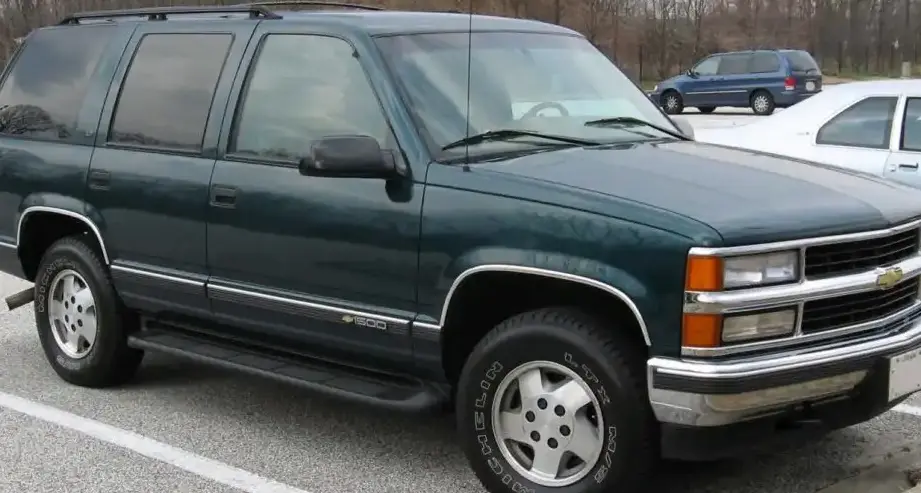
The Chevrolet Tahoe (GMT410) 5.7L V8 Automatic, produced from 1995 to 1999, represents a significant iteration of Chevrolet’s full-size SUV offering. This particular variant, characterized by its 5.7-liter V8 engine paired with a four-speed automatic transmission, occupied a middle ground within the Tahoe lineup, offering a balance between capability and affordability. It was a key player in the burgeoning SUV market of the mid-1990s, appealing to families and those needing a versatile vehicle for both daily driving and light-duty work. The GMT410 platform was a substantial redesign for the Tahoe, moving away from the older, truck-based chassis to a more refined and comfortable ride.
Technical Specifications
| Brand | Chevrolet |
| Model | Tahoe |
| Generation | Tahoe (GMT410) |
| Type (Engine) | 5.7 i V8 (3 dr) (200 Hp) Automatic |
| Start of production | 1995 year |
| End of production | 1999 year |
| Powertrain Architecture | Internal Combustion engine |
| Body type | SUV |
| Seats | 5 |
| Doors | 3 |
| Fuel consumption (economy) – combined | 16.2 l/100 km |
| Fuel consumption (economy) – combined | 14.5 US mpg |
| Fuel consumption (economy) – combined | 17.4 UK mpg |
| Fuel consumption (economy) – combined | 6.2 km/l |
| Fuel Type | Petrol (Gasoline) |
| Weight-to-power ratio | 10.5 kg/Hp |
| Weight-to-power ratio | 95.6 Hp/tonne |
| Weight-to-torque ratio | 5 kg/Nm |
| Weight-to-torque ratio | 200.8 Nm/tonne |
| Power | 200 Hp @ 4000 rpm |
| Power per litre | 34.9 Hp/l |
| Torque | 420 Nm @ 2400 rpm |
| Torque | 309.78 lb.-ft. @ 2400 rpm |
| Engine layout | Front, Longitudinal |
| Engine displacement | 5733 cm3 |
| Engine displacement | 349.85 cu. in. |
| Number of cylinders | 8 |
| Engine configuration | V-engine |
| Cylinder Bore | 101.6 mm |
| Cylinder Bore | 4 in. |
| Piston Stroke | 88.4 mm |
| Piston Stroke | 3.48 in. |
| Compression ratio | 9.3:1 |
| Number of valves per cylinder | 2 |
| Fuel injection system | Single-point injection |
| Engine aspiration | Naturally aspirated engine |
| Engine oil capacity | 4.8 l |
| Engine oil capacity | 5.07 US qt |
| Engine oil capacity | 4.22 UK qt |
| Coolant | 16.5 l |
| Coolant | 17.44 US qt |
| Coolant | 14.52 UK qt |
| Kerb Weight | 2092 kg |
| Kerb Weight | 4612.07 lbs. |
| Fuel tank capacity | 113 l |
| Fuel tank capacity | 29.85 US gal |
| Fuel tank capacity | 24.86 UK gal |
| Length | 4788 mm |
| Length | 188.5 in. |
| Width | 1958 mm |
| Width | 77.09 in. |
| Height | 1839 mm |
| Height | 72.4 in. |
| Wheelbase | 2832 mm |
| Wheelbase | 111.5 in. |
| Front track | 1628 mm |
| Front track | 64.09 in. |
| Rear (Back) track | 1613 mm |
| Rear (Back) track | 63.5 in. |
| Drive wheel | All wheel drive (4×4) |
| Number of gears and type of gearbox | 4 gears, automatic transmission |
| Front suspension | Torsion |
| Rear suspension | Leaf spring |
| Front brakes | Disc |
| Rear brakes | Drum |
| Assisting systems | ABS (Anti-lock braking system) |
| Power steering | Hydraulic Steering |
| Tires size | 225/75 R16 |
| Wheel rims size | 16 |
Powertrain & Engine Architecture
The heart of this Tahoe variant is the 5.7-liter (349.85 cubic inch) Chevrolet small-block V8 engine. Specifically, engines produced during this period often utilized the central injection system. This engine, a member of the GM Vortec family, produced 200 horsepower at 4000 rpm and 309.78 lb-ft of torque at 2400 rpm. The engine featured a 9.3:1 compression ratio and two valves per cylinder. The single-point fuel injection system, while less sophisticated than multi-port injection, provided adequate fuel delivery for the engine’s output. The engine’s longitudinal mounting and rear-wheel-drive bias (with available four-wheel drive) were typical of body-on-frame SUVs of the era. The four-speed automatic transmission, a 4L60E, was chosen for its durability and suitability for towing and hauling. It provided relatively smooth shifts, but wasn’t known for its particularly quick acceleration.
Driving Characteristics
The 5.7L V8 Automatic Tahoe offered a comfortable, if not particularly sporty, driving experience. The automatic transmission, while reliable, wasn’t geared for rapid acceleration. The 0-60 mph time was estimated to be around 9-10 seconds, which was adequate for the time but slower than the manual transmission or higher-output versions. The torque output, however, provided good low-end grunt, making it capable of towing trailers and navigating off-road terrain. The suspension, tuned for comfort, absorbed bumps reasonably well, but the body-on-frame construction resulted in some noticeable body roll during cornering. The four-wheel-drive system, when equipped, added to its all-weather and off-road capabilities.
Equipment & Trim Levels
The 1995-1999 Tahoe 5.7L Automatic typically came standard with features like air conditioning, power windows and locks, and an AM/FM stereo. Higher trim levels, such as the LT, added features like leather upholstery, upgraded sound systems, and alloy wheels. Optional extras included a sunroof, rear air conditioning, and a towing package. The interior was generally functional and durable, with a focus on practicality rather than luxury. The three-door configuration limited rear seat access compared to the five-door models, but it did offer a more compact footprint for maneuvering in tight spaces.
Chassis & Braking
The GMT410 Tahoe utilized a body-on-frame construction, providing a robust and durable chassis. The front suspension consisted of torsion bars, while the rear suspension employed leaf springs. This setup prioritized load-carrying capacity and durability over handling precision. The braking system featured disc brakes on the front wheels and drum brakes on the rear. Anti-lock brakes (ABS) were available as an option, enhancing safety during emergency braking situations. The steering was hydraulic power steering, providing relatively easy maneuverability.
Market Reception & Comparison
The Chevrolet Tahoe 5.7L Automatic was generally well-received by consumers and critics alike. It was praised for its spacious interior, comfortable ride, and strong towing capacity. However, its fuel economy (around 14.5 mpg) was a common criticism, as were its handling characteristics. Compared to the 4.3L V6 Tahoe, the 5.7L offered significantly more power and torque, making it a better choice for those who needed to tow or haul heavy loads. Compared to the later introduction of the 6.5L diesel engine, the 5.7L provided a smoother and quieter driving experience, but lacked the diesel’s exceptional fuel economy and low-end torque.
Legacy
The GMT410 Tahoe 5.7L Automatic remains a popular choice among used car buyers, particularly those seeking a capable and affordable SUV. The 5.7L V8 engine is known for its reliability and durability, although regular maintenance is essential to prevent issues. Common problems include oil leaks, cooling system failures, and wear and tear on the automatic transmission. Despite these potential issues, the Tahoe’s robust construction and readily available parts make it a relatively easy vehicle to maintain. Today, these vehicles are often found in the hands of enthusiasts and those who appreciate their classic SUV charm and capability.