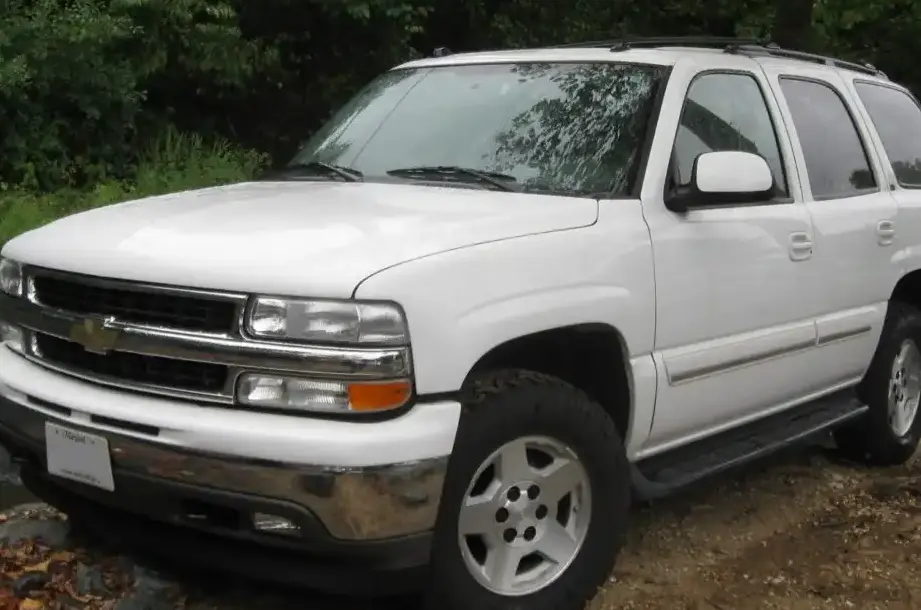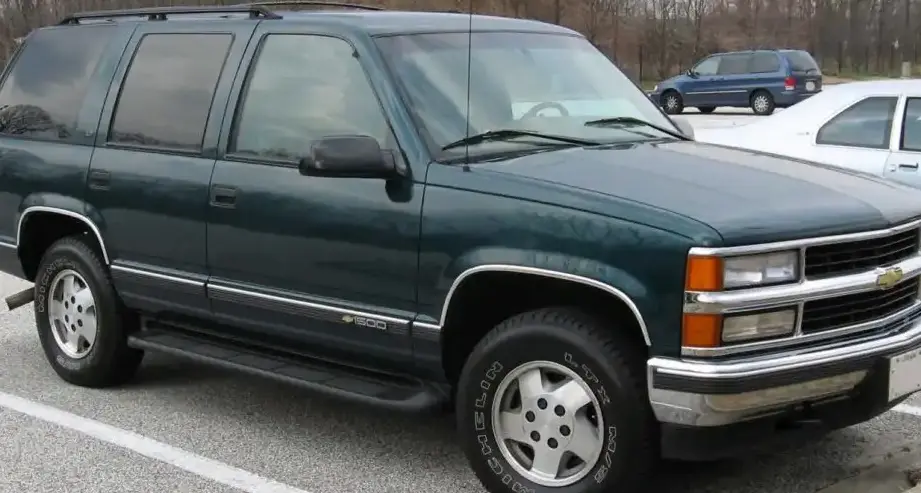
The Chevrolet Tahoe (GMT410) 6.5L V8 Turbo Diesel 4WD, produced from 1996 to 1999, represented a unique offering within the second generation of the Tahoe full-size SUV. Positioned as a heavy-duty option, this variant catered to buyers needing substantial towing capacity and durability, particularly in markets where diesel engines were favored for their longevity and fuel efficiency. It occupied a niche between the gasoline-powered Tahoe models and the heavier-duty Suburban, offering a blend of capability and relative comfort. The GMT410 platform, shared with the GMC Yukon, marked a significant redesign for the Tahoe, improving interior space and ride quality compared to its predecessor.
Technical Specifications
| Brand | Chevrolet |
| Model | Tahoe |
| Generation | Tahoe (GMT410) |
| Type (Engine) | 6.5L i V8 TD 4WD (182 Hp) |
| Start of production | 1996 |
| End of production | 1999 |
| Powertrain Architecture | Internal Combustion engine |
| Body type | SUV |
| Seats | 5 |
| Doors | 3 |
| Fuel Type | Diesel |
| Maximum speed | 160 km/h (99.42 mph) |
| Weight-to-power ratio | 16.1 kg/Hp, 62.2 Hp/tonne |
| Weight-to-torque ratio | 6 kg/Nm, 166.8 Nm/tonne |
| Power | 182 Hp @ 3400 rpm |
| Power per litre | 28.1 Hp/l |
| Torque | 488 Nm @ 1800 rpm (359.93 lb.-ft. @ 1800 rpm) |
| Engine layout | Front, Longitudinal |
| Engine Model/Code | L56 |
| Engine displacement | 6466 cm3 (394.58 cu. in.) |
| Number of cylinders | 8 |
| Engine configuration | V-engine |
| Cylinder Bore | 103 mm (4.06 in.) |
| Piston Stroke | 97 mm (3.82 in.) |
| Compression ratio | 21.5:1 |
| Number of valves per cylinder | 2 |
| Fuel injection system | Diesel Commonrail |
| Engine aspiration | Turbocharger |
| Engine oil capacity | 6.6 l (6.97 US qt | 5.81 UK qt) |
| Kerb Weight | 2926 kg (6450.73 lbs.) |
| Max. weight | 3175 kg (6999.68 lbs.) |
| Max load | 249 kg (548.95 lbs.) |
| Trunk (boot) space – minimum | 1481 l (52.3 cu. ft.) |
| Trunk (boot) space – maximum | 2815 l (99.41 cu. ft.) |
| Fuel tank capacity | 114 l (30.12 US gal | 25.08 UK gal) |
| Length | 4787 mm (188.46 in.) |
| Width | 1958 mm (77.09 in.) |
| Height | 1839 mm (72.4 in.) |
| Wheelbase | 2832 mm (111.5 in.) |
| Front track | 1628 mm (64.09 in.) |
| Rear (Back) track | 1613 mm (63.5 in.) |
| Drive wheel | All wheel drive (4×4) |
| Number of gears and type of gearbox | 4 gears, automatic transmission |
| Front suspension | Torsion |
| Rear suspension | Leaf spring |
| Front brakes | Disc |
| Rear brakes | Drum |
| Assisting systems | ABS (Anti-lock braking system) |
| Steering type | Steering rack and pinion |
| Power steering | Hydraulic Steering |
| Tires size | 235/75 R15 |
Powertrain & Engine Architecture
The heart of this Tahoe variant was the 6.5-liter (394.58 cu. in.) L56 Detroit Diesel V8 engine. This engine, a naturally aspirated diesel, was a workhorse known for its durability and high torque output. The L56 featured a cast iron block and cylinder heads, contributing to its robust construction. It utilized a direct injection system, delivering fuel directly into the combustion chamber under extremely high pressure. The engine was turbocharged, enhancing its power and torque characteristics. The 4L80-E four-speed automatic transmission was the sole transmission option, chosen for its ability to handle the engine’s substantial torque. This transmission featured electronic control for smoother shifting and improved efficiency. The transmission’s gear ratios were optimized for towing and hauling, prioritizing low-end grunt over outright acceleration.
Driving Characteristics
The 182 horsepower and 488 lb-ft of torque delivered by the 6.5L diesel provided ample power for towing and hauling, but resulted in relatively slow acceleration. Zero to sixty mph times were typically in the 10-12 second range. The 4L80-E transmission, while robust, wasn’t known for quick shifts. The focus was on providing smooth, consistent power delivery, making it ideal for long-distance driving and demanding tasks. Compared to the gasoline-powered Tahoe variants, the diesel offered significantly more low-end torque, making it easier to tow heavy loads. However, the gasoline engines provided quicker acceleration and a more responsive driving experience. The diesel’s higher weight also impacted handling, making it feel less nimble than its gasoline counterparts.
Equipment & Trim Levels
The 6.5L diesel Tahoe typically came with a fairly basic trim level, reflecting its focus on utility. Standard features included air conditioning, a tilt steering wheel, and cloth upholstery. Power windows and locks were often optional. The interior was generally functional and durable, prioritizing practicality over luxury. Optional extras included a heavy-duty suspension package, a trailer towing package, and upgraded audio systems. The exterior typically featured black plastic trim and relatively simple styling, emphasizing its work-oriented nature.
Chassis & Braking
The GMT410 Tahoe utilized a body-on-frame construction, providing a solid and durable platform. The front suspension consisted of torsion bars, while the rear suspension employed leaf springs. This setup was designed to handle heavy loads and provide a comfortable ride. Brakes were disc brakes in the front and drum brakes in the rear. ABS (Anti-lock Braking System) was standard, enhancing safety during emergency braking situations. The rear leaf spring suspension, while capable, could sometimes result in a somewhat bouncy ride, especially when unladen.
Market Reception & Comparison
The 6.5L diesel Tahoe received mixed reviews. Critics praised its towing capacity and fuel efficiency, particularly compared to gasoline-powered trucks and SUVs. However, the engine’s relatively low horsepower and slow acceleration were often criticized. Compared to the 5.7L V8 gasoline engine, the diesel offered better fuel economy and significantly more torque, but less overall power. The diesel was also generally more expensive to purchase initially. Reliability was generally good, but the diesel engine required more frequent maintenance than the gasoline engines, including regular injector cleaning and fuel filter replacements.
Legacy
The Chevrolet Tahoe (GMT410) 6.5L V8 Turbo Diesel 4WD holds a unique place in Tahoe history. While not a high-volume seller, it remains a sought-after vehicle among enthusiasts who appreciate its durability and towing capability. The L56 diesel engine is known for its longevity, and well-maintained examples can still provide reliable service today. However, finding parts for these older diesel engines can be challenging. In the used car market, these Tahoes typically command a premium over comparable gasoline-powered models, reflecting their rarity and desirability among those seeking a robust and capable full-size SUV.